
The perpetual state of a lived-in home, especially one bustling with the boundless energy of children, often finds itself defined by one ubiquitous characteristic: the mess. It’s a universal truth for parents, an inescapable reality that permeates every corner, every surface, and every fleeting moment of calm. This isn’t just about a misplaced item; it’s about the very fabric of family life, woven with threads of exploration, creativity, and inevitable disarray. The journey from initial frustration to a profound understanding and acceptance of this chaos is a transformative one, leading to a deeper appreciation for the vibrant, sometimes turbulent, rhythm of raising a family.
My own recent encounter with the monumental mess perfectly illustrates this point, anchoring the daily struggles in a very real, very greasy experience. Just this morning, my kitchen transformed into an unexpected battlefield of oil and water, a direct result of my spirited three-year-old’s fervent desire to “cook.” In her innocent exploration of culinary arts, she generously poured water into a pan of oil standing on the stove. My immediate, albeit ill-fated, solution was to place the pan on the fire, hoping a bit of heat would magically evaporate the excess water. What ensued was less a scientific remedy and more a chaotic, theatrical display of culinary physics: an explosive splatter party that propelled oil onto every imaginable surface – the cabinets, the floor, the walls, and even into tiny crevices I never knew existed. I’ve attempted to clean it, armed with every cleaning solution and towel I could find, but the sheer volume and widespread reach of the oil are daunting. The mess, in its glistening, pervasive glory, felt utterly unconquerable, leading to a desperate, silent plea for an endless supply of paper towels.
But the oil calamity is merely a snapshot, a particularly potent example of the ongoing domestic disarray. Step into my living room, and you’ll navigate a treacherous minefield of tiny, colorful toys, each a potential foot-piercing hazard. The kitchen table, despite constant wiping, perpetually collects an array of crumbs and sticky residues, requiring what feels like a thousand cleanings a day. My floors, once pristine, are now a landscape of half-eaten snacks, solitary socks, and mysterious objects that, by all rational accounts, should not exist there. These aren’t signs of neglect; they are badges of honor, testament to the vibrant, active lives unfolding within these walls. They are the undeniable evidence that, alas, I have children.
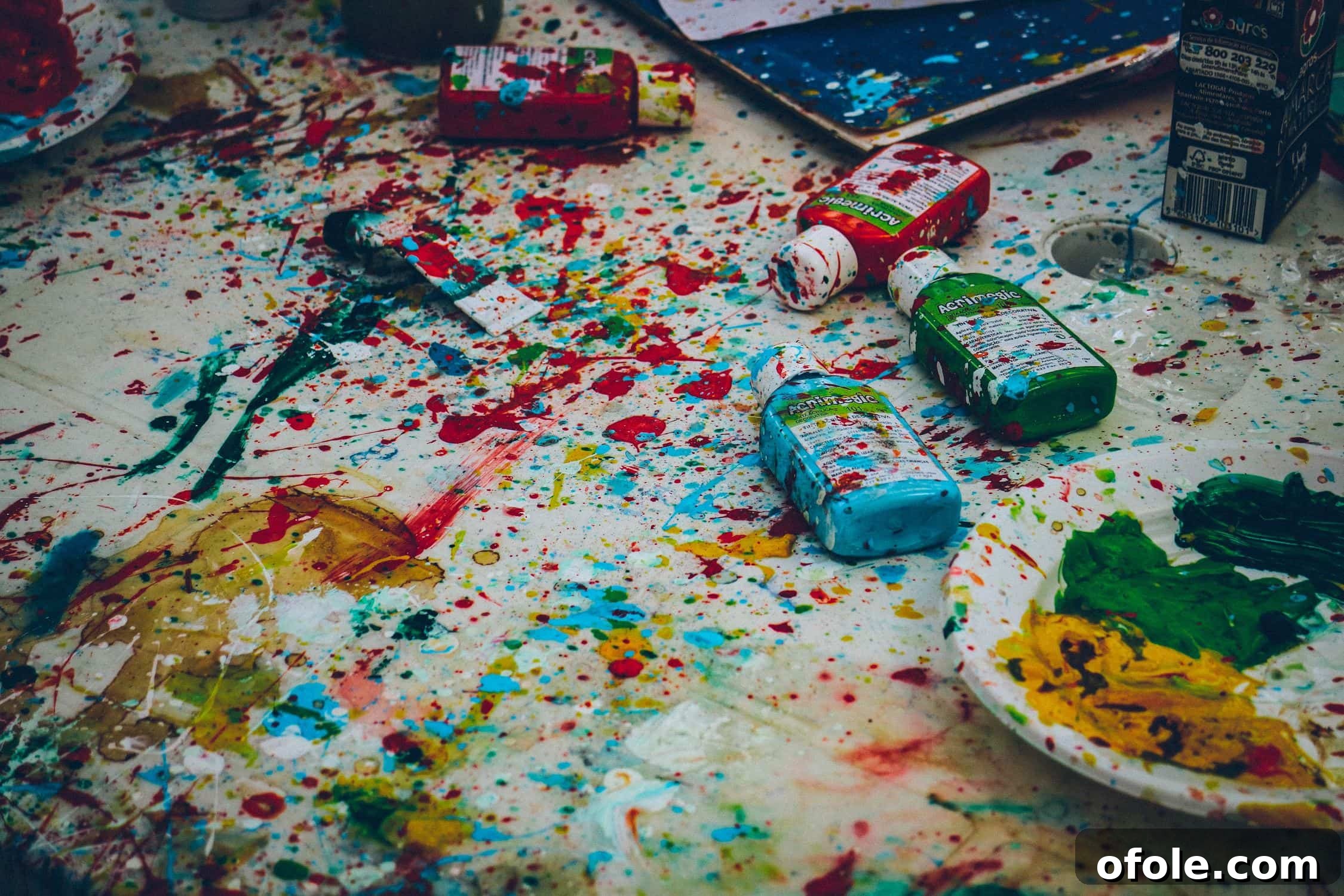
And then there are the papers. Oh, the papers! Every flat surface becomes an impromptu canvas, adorned with a kaleidoscope of drawings, scribbles, and nascent masterpieces. My daughter, a self-proclaimed “budding artist,” dedicates her entire day to the noble pursuit of drawing and coloring, leaving a trail of artistic expression and paper fragments in her wake. These scattered treasures, while endearing, contribute significantly to the perceived chaos, transforming order into a distant memory.
For far too long, my life felt undesirably characterized by this incessant mess. My immediate reaction was often anger, frustration bubbling to the surface. “Why can’t everything just be in perfect order?” I’d silently lament. “Why are there always dishes to wash? Why, why, why?” This constant battle for control, this yearning for an unattainable pristine environment, was exhausting. It was a mental and emotional drain that overshadowed the very joys of parenting, creating a chasm between the ideal home I envisioned and the vibrant, messy reality I inhabited.
Then, a gentle shift occurred, a profound nudge that began to reframe my perspective. Whether a whisper of divine insight or simply the accumulated wisdom of observing my children, I started to understand that the mess wasn’t an adversary but an integral, even vital, component of growth. How, I began to reason, could my children truly grow, learn, and explore if every space had to remain immaculately clean, prim, and proper at all times? To impose such rigid order would be to stifle their natural curiosity, to deny them the very experiences that foster development – experiences that, more often than not, result in a glorious mess.
Consider the kitchen. If I were to cook alone, the process would be efficient, precise, and relatively tidy. But if I don’t invite my children to assist me, to stand on their stools and engage with ingredients, how will they ever learn the fundamental skills of cooking? Their “assistance,” though well-intentioned, invariably means spills, fallen ingredients, and a kitchen that ends up significantly messier than if I had handled it solo. Flour dusts the counters, a spoon clatters to the floor, and a splash of milk misses the bowl. Yet, in those moments, they are not just making a mess; they are learning about measurements, textures, the cause and effect of gravity, and the satisfaction of creating something. They are building foundational life skills, one messy step at a time.
The same logic applies to chores, like washing dishes. If I insist on doing all the dishes myself to avoid water splashes and soap suds on the floor, how will they ever master this essential life skill? When they take on the task, the sink becomes a frothy wonderland, water often finds its way beyond the confines of the basin, and the surrounding floor might resemble a small pond. More mess! Yet, with each attempt, they are improving their fine motor skills, understanding the sequence of cleaning, and embracing responsibility. The mess becomes a testament to their effort and a marker of their progress. It’s an inconvenient truth that learning is inherently messy.
Indeed, every time they try something new, every time they explore a boundary or experiment with a novel idea, a mess is often the byproduct. And with each mess, something new is learned. The mess, therefore, isn’t just an incidental nuisance; it is an essential catalyst for their growth and development. It’s the canvas upon which their understanding of the world is painted.
This realization has led me to a profound acceptance: I have learned to embrace the mess. It is not just a necessary part of my life; it is a fundamental aspect of the human experience, especially during times of intense growth. Think of the journey from infancy to self-sufficiency: there will be countless potty accidents before a child masters toilet training. There will be culinary disasters, ingredients mixed incorrectly, and scorched pans before a budding chef learns to cook competently. There will be spills, oil splatters, crayon marks on walls, and every conceivable type of disarray in between. These aren’t failures; they are milestones.
In the midst of all this chaos, I find immense solace. I look at the scattered toys, the paint-stained hands, the flour-dusted clothes, and I see not merely disorder, but tangible evidence of growth. My little people are actively learning, exploring, and engaging with their world. They are being transformed every single day, one glorious mess at a time. While my aspiration is for them to grow into neat, organized individuals, I understand that for now, accidents are precursors to mastery. Mistakes are invaluable lessons that pave the way for doing things the “right” way. This phase is temporary, a fleeting period of intense discovery that, while challenging, is undeniably beautiful.
Despite this newfound understanding, moments of frustration still creep in. The sight of a fresh spill or a particularly widespread clutter can still trigger a pang of anger or bitterness. But I am actively practicing the art of acceptance, reminding myself that this mess is necessary. Allowing anger to consume me serves no purpose. Instead, I choose to view the mess as a crucial element of their development. As their mama, my role transcends mere cleanup; it is to provide a safe space for exploration, to guide them through the learning process, to offer comfort and encouragement, and yes, to eventually clean up the aftermath of their magnificent discoveries. It is about providing a message from the mess: “It’s okay to try, it’s okay to make mistakes, and it’s okay to be messy while you learn.”
To expect a life devoid of mess when raising children is akin to expecting the sun not to set; it’s an unrealistic, even harmful, ideal. It sets parents up for disappointment and denies children the freedom to truly engage with their environment. So, to all the parents out there, we must learn to embrace the mess, not as an enemy, but as an ally in the grand adventure of parenthood. We must learn to navigate around it, to develop strategies for managing it, and most importantly, to find profound solace in the knowledge that this mess is not just for us to endure, but for our children to experience. It is through these tangible, often chaotic, interactions that they truly grow, transform, and prepare for the world.
What are the particularly messy situations that test your patience and drive you a little crazy at home? And speaking of particularly tricky messes, I’m still very much in search of wisdom: does anyone have brilliant, unconventional, or even miraculously effective ideas on how I can thoroughly clean a significant amount of oil from my kitchen cabinets, floor, stove, and all those tiny, hard-to-reach places? Your insights would be a true blessing!
This reflection, initially penned a couple of years ago, retains its poignant relevance today, underscoring the timeless nature of this universal parenting challenge.