
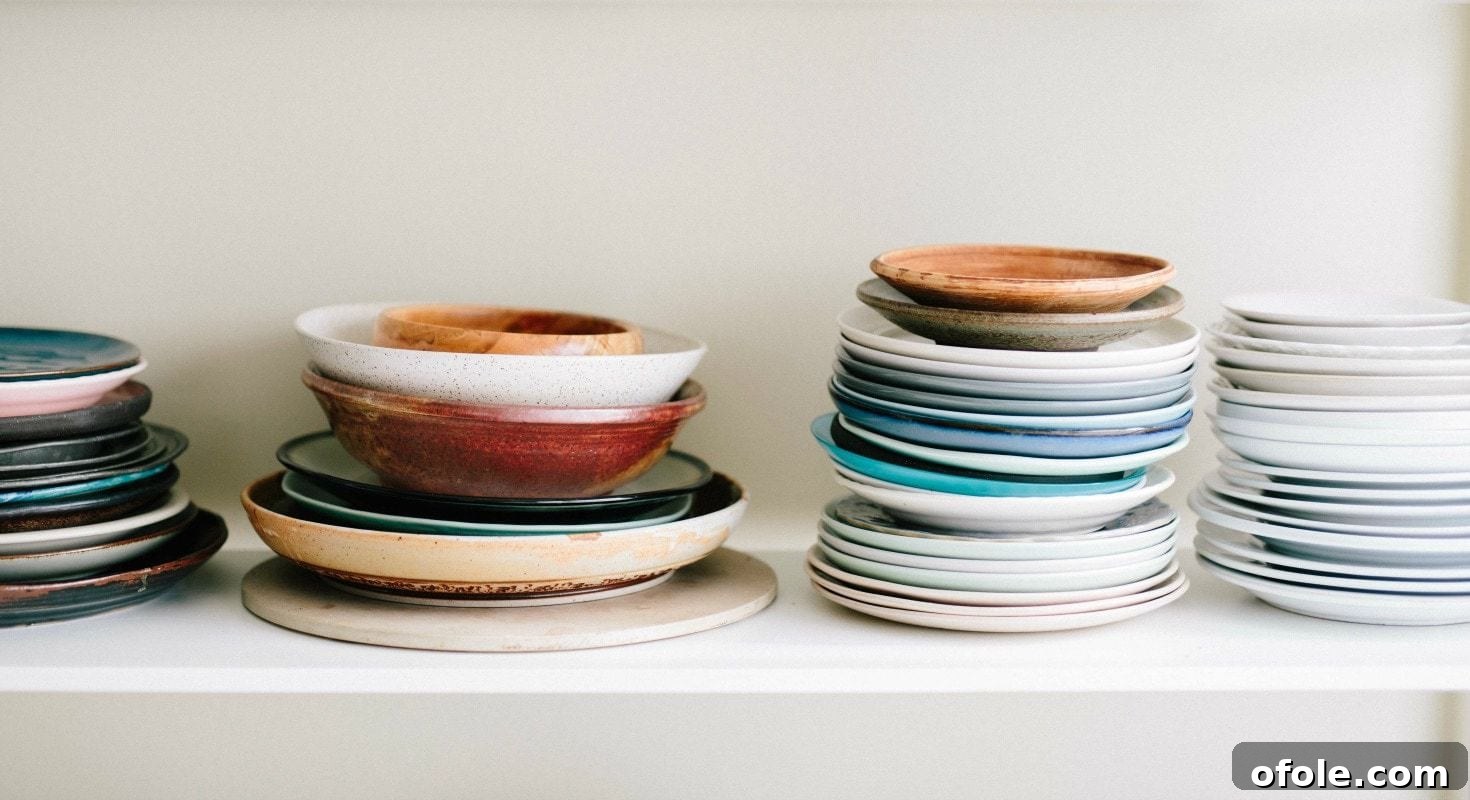
Hey friends! I previously shared my commitment to embarking on a 7-week journey towards a more minimalist lifestyle, with updates every Tuesday. Today marks the exciting beginning of this transformation, starting with the very heart of my home: the kitchen. This rectangular space isn’t just where meals are prepared; it’s where life happens, where family gathers, and often, where clutter accumulates. For too long, my kitchen had morphed into a storage unit for countless forgotten items, creating an overwhelming and inefficient environment. The moment I decided to declutter it was liberating, and the process has left me feeling incredibly light and unburdened. The kitchen no longer feels like a chaotic battleground but a serene and functional space. Allow me to walk you through how I meticulously decluttered and revitalized my kitchen.
Embracing the “Three-Month Rule”: The Foundation of My Kitchen Decluttering
My decluttering strategy was simple yet profoundly effective: the “three-month rule.” I began by placing two large, empty boxes right in the center of my kitchen floor. These boxes were destined to become temporary homes for anything and everything I hadn’t used in the past three months. The logic is straightforward: if an item hasn’t been touched or utilized in a quarter of a year, chances are, it’s not essential to my daily kitchen operations. This timeframe felt realistic and provided a clear boundary for decision-making, helping me detach from the “what if I need it someday?” mentality. It’s a powerful filter that quickly revealed the true necessities from the long-forgotten inhabitants of my cabinets and drawers. This initial step was crucial in breaking down the overwhelming task into manageable decisions.
Unveiling the Contents of Box Number 1: Identifying the Seldom-Used
Box number one quickly filled up with a surprising array of items. It was an eye-opening experience to see just how much non-essential clutter had accumulated over time. Here’s a glimpse into its contents and the thought process behind their removal:
- Trays – A Multitude I Didn’t Need: I discovered an astonishing number of trays. While a couple of functional trays are certainly useful for serving or organizing, I had amassed far more than I could ever reasonably use. Many were decorative but impractical, taking up valuable cabinet space. I realized that my practical needs were met by just a handful, which now reside neatly in a designated cabinet spot. The rest? A definite “goodbye.”
- Kids’ Portion Control Plates – A Brief Experiment: These plates were purchased with good intentions, aiming to guide my children’s eating habits. However, after trying them out perhaps once, I quickly realized they simply weren’t part of our routine. They sat unused, occupying prime real estate. My family’s mealtime flow didn’t benefit from them, so they were an easy decision to let go of.
- Baskets – The Collector’s Dilemma: I confess, I’ve always been drawn to pretty baskets. They seem so useful for storage and decor. However, many of the baskets I owned weren’t actually serving any functional purpose beyond collecting dust and occupying valuable cabinet and counter space. While I still appreciate beautiful baskets, these specific ones were simply dead weight. They won’t be missed.
- Seasonal and Niche Items – Beyond Their Prime: This category included Christmas-themed containers that saw use once a year (if that), novelty drinking cups, a calorie-counting book from a fleeting weight-loss phase, and numerous other single-use gadgets or items that had long outlived their perceived usefulness. These were prime examples of items that held onto space without contributing to daily life.
The process of identifying these items and acknowledging their lack of utility was incredibly liberating. It’s not about denying oneself nice things, but about ensuring that what you own genuinely serves a purpose or brings joy.
Delving into Box Number 2: Confronting Duplicates and “Just-in-Case” Items
Box number two revealed a different kind of clutter – one rooted in abundance and the fear of “not having enough.” Apart from a lone plastic cup vying for attention at the top, this box was predominantly filled with breakable items, carefully wrapped in paper shopping bags for safe transport. It was a stark reminder of how easily we accumulate multiples.
- Excess Drinking Glasses – The Illusion of Need: I discovered I had nearly ten drinking glasses that had gone entirely unused for years. My rationale was always, “I might need them for guests.” Yet, in the past three years, they hadn’t been touched. Realistically, my household uses a specific set of glasses daily, and even for entertaining, a smaller, more versatile collection suffices. Letting go of these was a tangible step towards understanding true needs over perceived ones.
- The Overflowing Mug Cabinet – One Sip at a Time: My tea mug cabinet was a prime example of overabundance. It was so packed that I often had to double-stack mugs just to fit them all in. The irony, as I realized, was profound: I can only drink from one mug at a time. The sheer volume of mugs was illogical and created daily frustration. Why hold onto so many when only a fraction sees regular use? This realization brought a sense of freedom and allowed me to curate a collection that truly serves my family’s actual consumption patterns.
Reclaiming the Plates Cabinet: Space and Sanity Restored
One of the most challenging but ultimately rewarding areas to tackle was my plates cabinet. It was a constant struggle to make everything fit, a daily reminder of the spatial limitations imposed by excessive ownership. The simple rule I adopted here was, “If there’s no space for it, give it away.” This principle guided me in making decisive choices. I significantly reduced my collection, keeping only one complete matching dinner set and a selection of versatile bowls. Interestingly, many of these remaining bowls also serve a dual purpose as props for my food photography, highlighting how items can be both functional and contribute to creative pursuits. The transformation was dramatic:
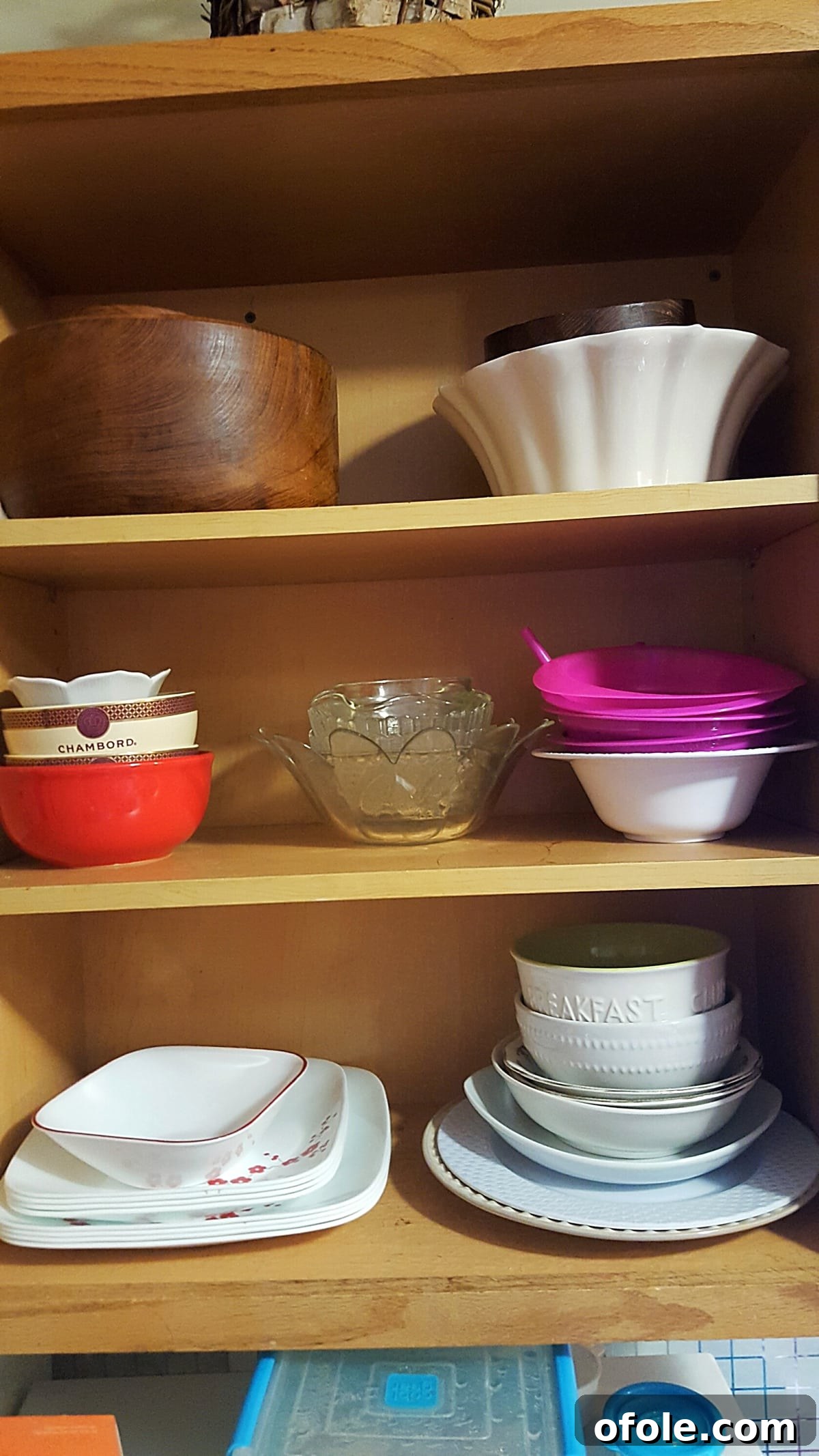
The sense of relief and calm that came with an organized, spacious cabinet was immense. It’s no longer a source of daily frustration but a functional, aesthetically pleasing part of my kitchen.
Addressing Unused Appliances and Clearing Countertops
Beyond the cabinets, appliances often become silent space-eaters. My coffee maker was a prime example. While Mr. N once used it, it sat unused for days afterward, a testament to our non-coffee-drinking household. My occasional coffee cravings are easily satisfied with instant coffee, rendering a bulky machine unnecessary. This realization led me to put away other appliances that claimed valuable counter or storage space but rarely saw the light of day – from specialized juicers to rarely used bread makers. The goal was to ensure every item earned its place through regular use.
During this comprehensive decluttering effort, I also kept a couple of trash bags handy. These quickly filled with broken items, expired food, and things that were beyond repair or donation. It’s an essential step to ensure true trash doesn’t linger, masquerading as potential future usefulness. Both boxes of donatable items are now ready for a trip to the thrift store, where they can find new homes and serve new purposes, contributing to a cycle of reuse rather than waste.
Invaluable Lessons from the Kitchen Decluttering Process
My kitchen decluttering wasn’t just about clearing physical space; it was a journey of self-discovery and learning. Here are some profound insights gained:
- Decluttering Demands Time and Patience: This is no quick fix. It took me approximately three full days to meticulously go through all the cupboards, drawers, and surfaces in my kitchen, and I still have one drawer awaiting its transformation. Approaching decluttering as a marathon, not a sprint, is key. Break it down into smaller, manageable tasks, focusing on one cabinet or drawer at a time. Unless your kitchen is already minimalist and just needs a light purge, prepare to invest significant time. If that’s you, high five, sister!
- It’s a Holistic Process: Decluttering, Cleaning, and Organizing Go Hand-in-Hand: You cannot truly declutter without cleaning and reorganizing. As items are removed, surfaces become exposed, revealing dust, crumbs, and forgotten spills. This process naturally leads to wiping down shelves, washing containers, and thoughtfully reorganizing the remaining items for optimal accessibility and functionality. It’s a comprehensive refresh for your space.
- The Emotional and Mental Rewards are Immense: After the initial hard work, the feeling of accomplishment and lightness is incredibly gratifying. A decluttered kitchen isn’t just visually appealing; it reduces mental clutter, stress, and makes daily tasks feel less daunting. It’s a genuine breath of fresh air, transforming a once overwhelming space into a source of calm and efficiency.
- Decluttering is an Ongoing Commitment, Not a One-Time Event: This is perhaps the most crucial lesson. Decluttering is not the ultimate end goal; it’s a powerful beginning. To maintain a minimalist kitchen, one must cultivate conscious consumption habits. It means actively choosing not to purchase more non-essential items, resisting impulse buys, and regularly re-evaluating what truly belongs in your space. Otherwise, you’ll find yourself trapped in a continuous cycle of decluttering to re-clutter.
Beyond the Physical: Nurturing a Minimalist Kitchen Lifestyle
My kitchen now houses only the absolute essentials, items that are frequently used, deeply loved, or truly functional. But my journey isn’t static. In three months, I plan to revisit every cupboard and drawer, conducting another purge of any “impurities”—items that, despite the initial clear-out, still prove to be unnecessary. This cyclical approach ensures sustained minimalism.
The immediate benefits are already profound. I feel an incredible sense of lightness. The thought of moving house, whenever that may be, no longer feels like a monumental task because there are significantly fewer items to pack and transport. This ease of living is a powerful “win” in the minimalist lifestyle.
Beyond decluttering material possessions, my minimalist journey has also prompted more mindful and healthier food choices. This is an integral part of creating a truly nourishing and efficient kitchen:
- Conscious Sugar Choices: I’ve ceased purchasing refined sugar. My kitchen now exclusively uses unrefined sugar. While it may be three times the price, the health benefits are undeniable, making it a worthwhile investment in my well-being. It’s used for all my baking and sweetening needs, often supplemented with natural honey. This change reflects a broader commitment to understanding what goes into my body.
- Prioritizing Organic Produce and Products: Living in America has made me acutely aware that many products marketed as “food” are often genetically modified or laden with additives. Initially, I purchased items blindly. Now, checking labels for “organic” certification is a non-negotiable step before any purchase. This commitment led me to shop regularly at Whole Foods Market, where quality organic products are readily available, aligning with my desire for pure, wholesome ingredients.
- An Abundance of Fruits and Vegetables: A day rarely passes without me consuming a generous amount of fruits and/or vegetables. I ensure my home is consistently stocked with a variety of fresh produce, making it easy to grab a healthy snack throughout the day. This shift has also reignited my passion for making vibrant and nutritious salads, which have become a staple in my diet.
Your Journey to a Simpler Kitchen Awaits
And there you have it, folks! My kitchen is now decluttered, organized, and optimized for a minimalist lifestyle. The transformation has brought immense clarity, calm, and efficiency to my daily routine, leaving me feeling lighter and significantly better. I sincerely hope that sharing my experience inspires you to embark on your own decluttering adventure, whether it’s in the kitchen or another area of your home.
If you’re looking for more practical guidance on organizing your kitchen, you might find valuable insights in this post I wrote a while ago, detailing a previous kitchen makeover.
Up next on my minimalist journey is the wardrobe. I’m eager to cleanse it of all its “iniquities”—those clothes I no longer wear or truly need. Be sure to check back next Tuesday, January 31st, to see the report on my wardrobe transformation. Update: You can now read the post on how I decluttered my wardrobe.
Meanwhile, do you have any brilliant kitchen maintenance or decluttering tips? Perhaps some thoughts on living a more minimalist life, especially concerning food choices? Please share your wisdom and insights in the comments below. I’d genuinely love to hear from you and learn from your experiences!