
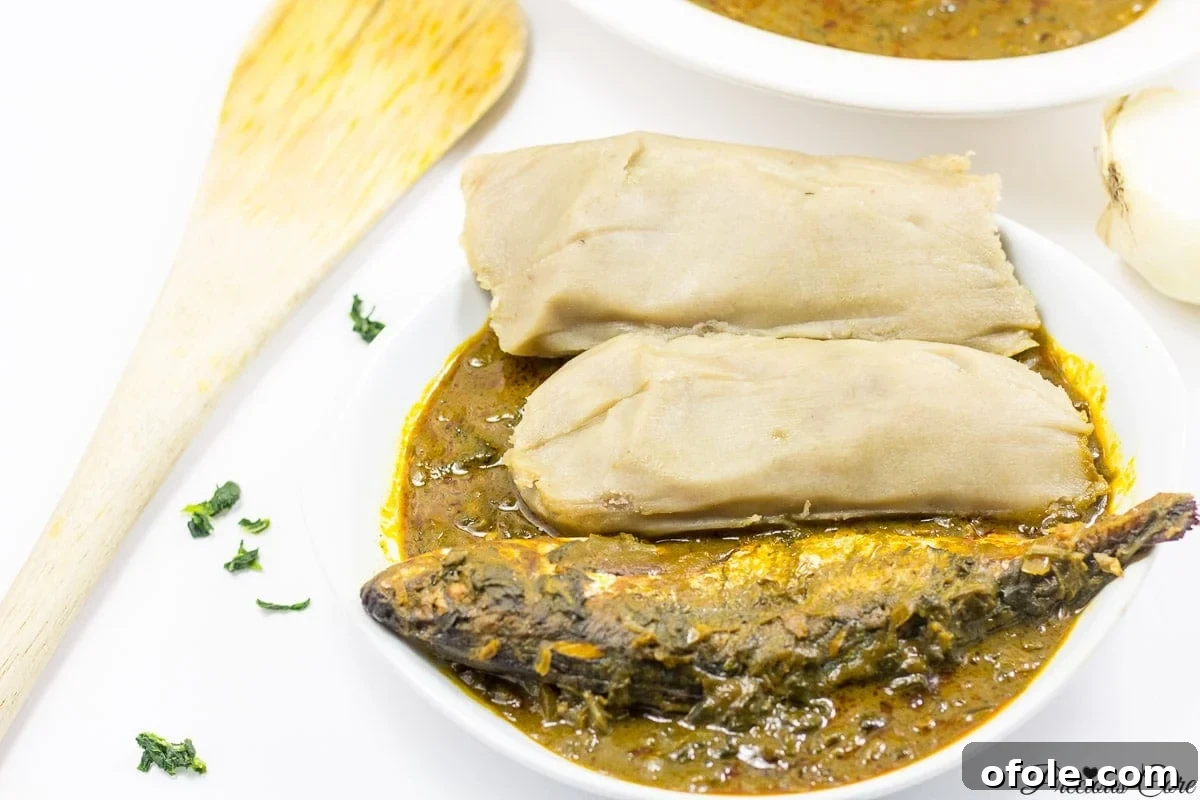
Kwacoco and Banga Soup: Discovering Cameroon’s Flavorful Bakweri Tradition
As I meticulously prepared my pots of Kwacoco and Banga Soup, a nostalgic melody from the past echoed in my mind, a playful tune deeply rooted in Cameroonian culture:
If you want to marry Bakweri woman, prepare! You have to prepare! Prepare to eat Timanambusa. Prepare!
This catchy verse resonates with anyone familiar with the vibrant culinary traditions of Southern Cameroon. Kwacoco and Banga Soup is not just a meal; it’s a cultural cornerstone, the quintessential traditional dish of the Bakweri people. Affectionately known as “Timanambusa” in local parlance, purists will tell you the correct pronunciation is “Timba na mbusa.” When uttered quickly – tim-ba-na-mbu-sa – it’s said to mean “you eat and you come back.” And indeed, this dish is so irresistibly delicious that you’ll always return for more. It truly is a taste sensation, no be lie.
Watch My Kwacoco and Banga Soup Recipe Video
For a visual guide to preparing this authentic Cameroonian delicacy, watch the video below:
A Personal Connection to Cameroonian Cuisine
My journey into the heart of Cameroonian cooking is a deeply personal one, shaped by my upbringing and travels across the diverse regions of my homeland. Recently, I prepared a fresh batch of Kwacoco and Banga Soup for a friend who had just welcomed a new baby. A week prior, I’d asked her, “Do you eat Kwacoco and Banga Soup?” You see, like me, she hails from Bamenda (a ‘Bamda geh,’ as we affectionately say, though I prefer the slightly distorted version for its charm!). Our traditional meal in the North West region is Achu and Yellow Soup, a stark contrast to the Southern delights.
Having spent a significant portion of my life in Cameroon’s South West region, my mother’s ancestral home, I grew up intimately familiar with a pantheon of regional delicacies. Dishes like Eru, Ekwang, and Kwacoco Bible are staples I hold dear. However, this level of culinary exposure isn’t universal, even among those from the same country.
The Unexpected Delight: A Friend’s First Taste
My friend, with a hint of curiosity, responded, “Yes, I do eat it!” She then recounted a memorable story of her first encounter with Kwacoco and Banga Soup. Visiting her aunt’s house, she was presented with this intriguing dish. Observing the rich banga soup generously drizzled over the Kwacoco, she initially mistook it for plantain porridge and politely declined. However, her aunt’s gentle persuasion led her to try just a spoonful. The moment it hit her palate, an explosion of flavors ensued. BAAM! She was instantly hooked, a testament to the irresistible allure of this unique meal.
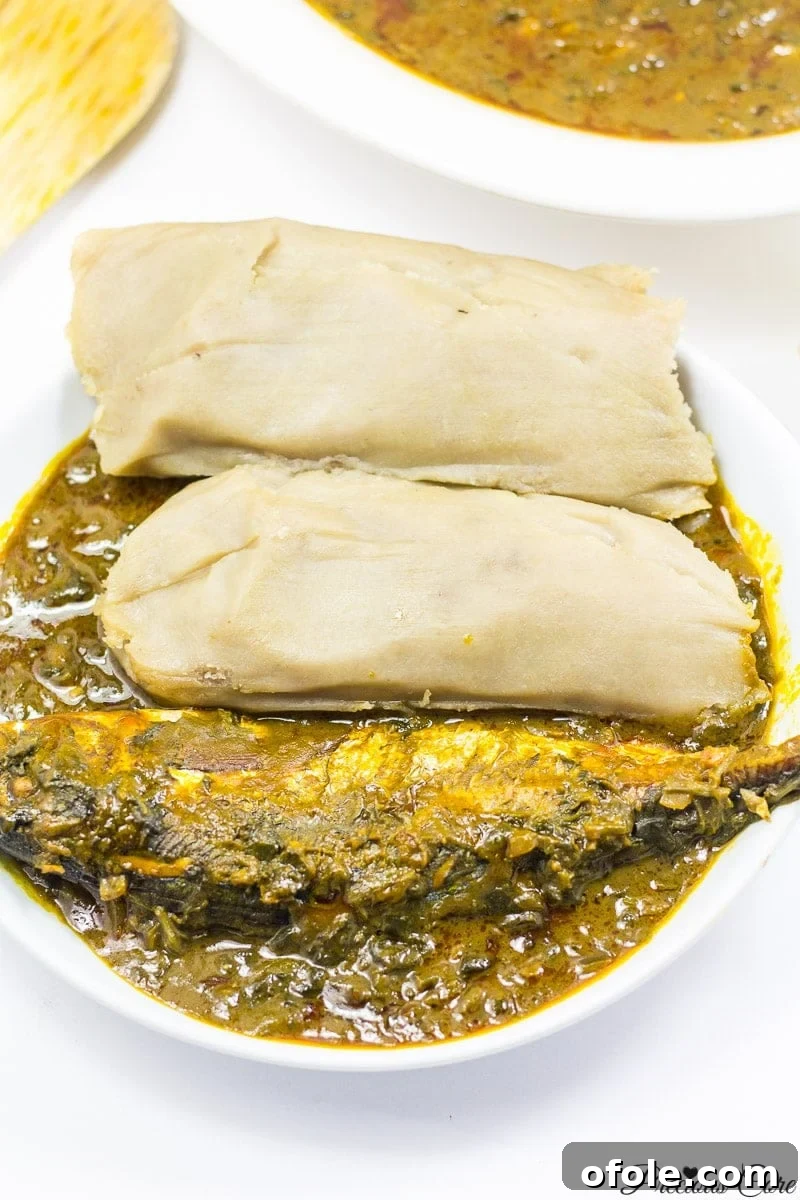
Kwacoco and Banga Soup: A True Finger-Licking Experience
Kwacoco and Banga Soup is the embodiment of “finger-licking good.” In fact, I implore you to abandon all cutlery when indulging in this meal. The tactile experience of eating with your hands is an integral part of savoring its authentic flavors and texture. The meal’s foundation is the Kwacoco, a distinct preparation of cocoyams (taro) that differs significantly from Kwacoco Bible.
Understanding Kwacoco: The Steamed Cocoyam Delicacy
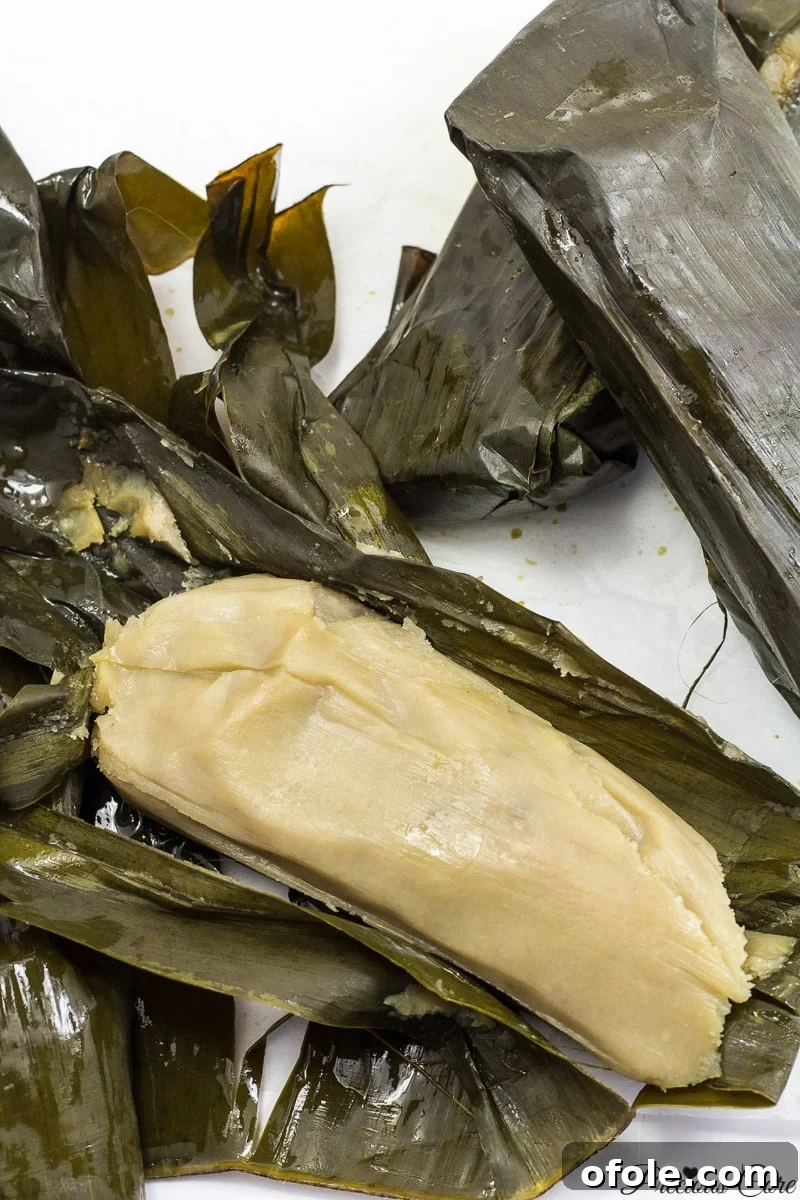
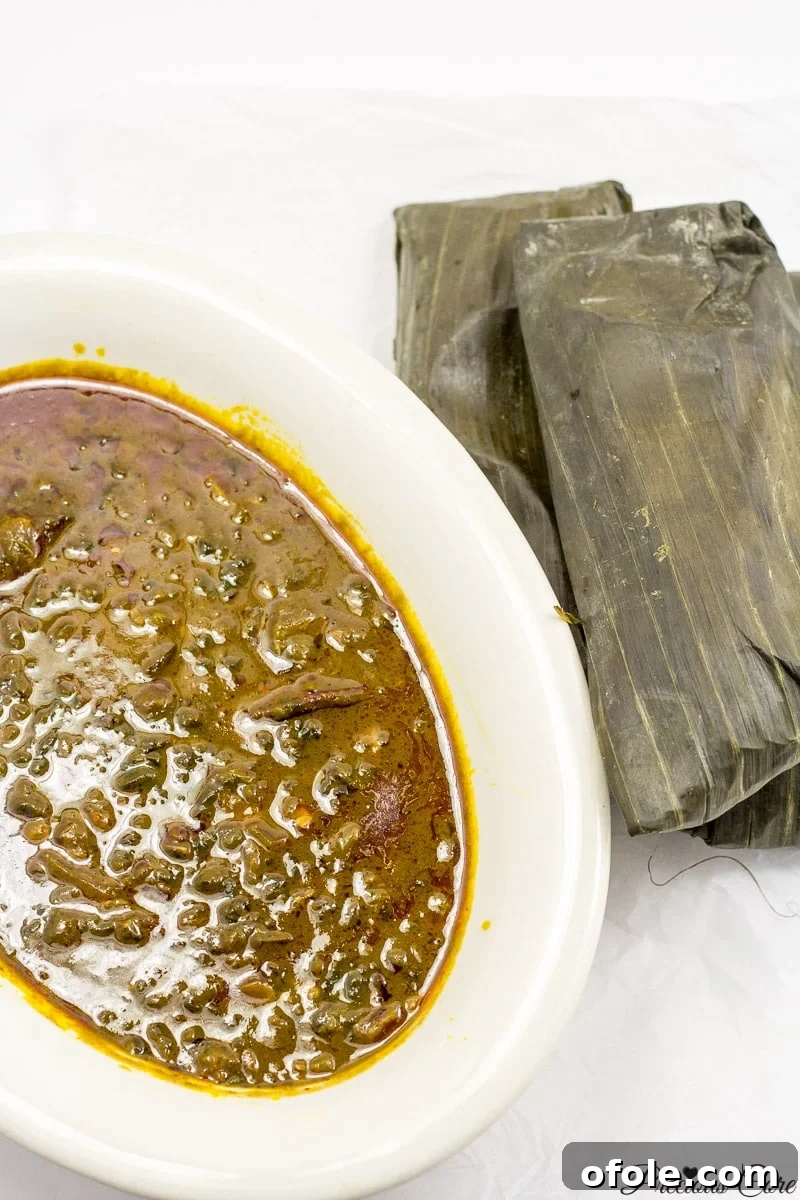
This particular Kwacoco is prepared by simply grating cocoyams or processing them into a fine paste using a food processor. This paste is then seasoned with a touch of salt. The magic happens next: portions of the seasoned cocoyam paste are meticulously wrapped in banana leaves, forming small logs, and then steamed to perfection. If banana leaves are unavailable, aluminum foil makes an excellent substitute, ensuring the Kwacoco retains its moisture and unique texture.
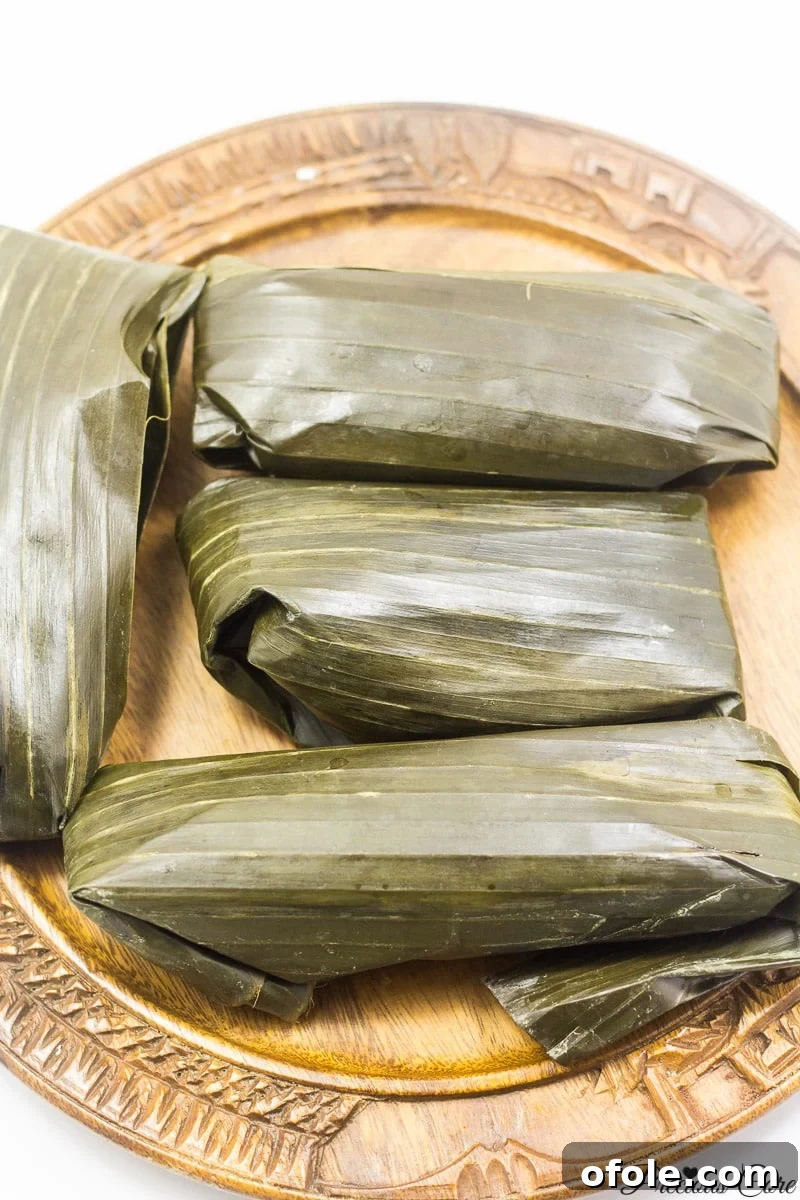
The steaming process transforms the grated cocoyams into delightful, slightly sticky lumps of starchy goodness. In French-speaking regions, this wrapped cocoyam is often referred to as “macabo wrappé.” It’s incredibly versatile and pairs wonderfully with other Cameroonian staples, such as groundnut soup, creating another beloved and delicious Cameroonian combo. The earthy flavor and satisfying chewiness of Kwacoco make it the perfect vehicle for the rich and aromatic Banga Soup.
Crafting Banga Soup: The Rich Palm Nut Elixir
The steamed Kwacoco is traditionally enjoyed with Banga Soup, a savory soup made from fresh palm nuts. This vibrant soup is a culinary jewel, popular not only in Cameroon but across numerous West African countries. Known universally as Banga Soup, its preparation begins with boiling fresh palm nuts until tender. These nuts are then crushed to extract their rich, oily pulp, which is subsequently sieved to achieve a smooth consistency.
To this flavorful base, a medley of other ingredients is added to enhance its depth and character. Crayfish, smoked fish, and fiery hot pepper are common additions, culminating in a creamy, intensely tasty, and delightfully earthy soup that tantalizes the senses. Each ingredient plays a crucial role, contributing to the soup’s complex flavor profile and its comforting aroma.
Sourcing Ingredients: A Modern Twist for International Kitchens
Living in the United States, obtaining fresh palm nuts can be a challenge. The traditional method of boiling and pounding fresh palm nuts, while deeply authentic, requires significant time and effort. Thankfully, I discovered palm nut concentrate readily available at African grocery stores. This concentrate offers an incredible convenience without compromising on flavor. It tastes just as good as soup made from scratch, and it drastically simplifies the cooking process, making this beloved dish accessible to home cooks outside of West Africa. This modern alternative is a true win for busy kitchens and international food enthusiasts alike!
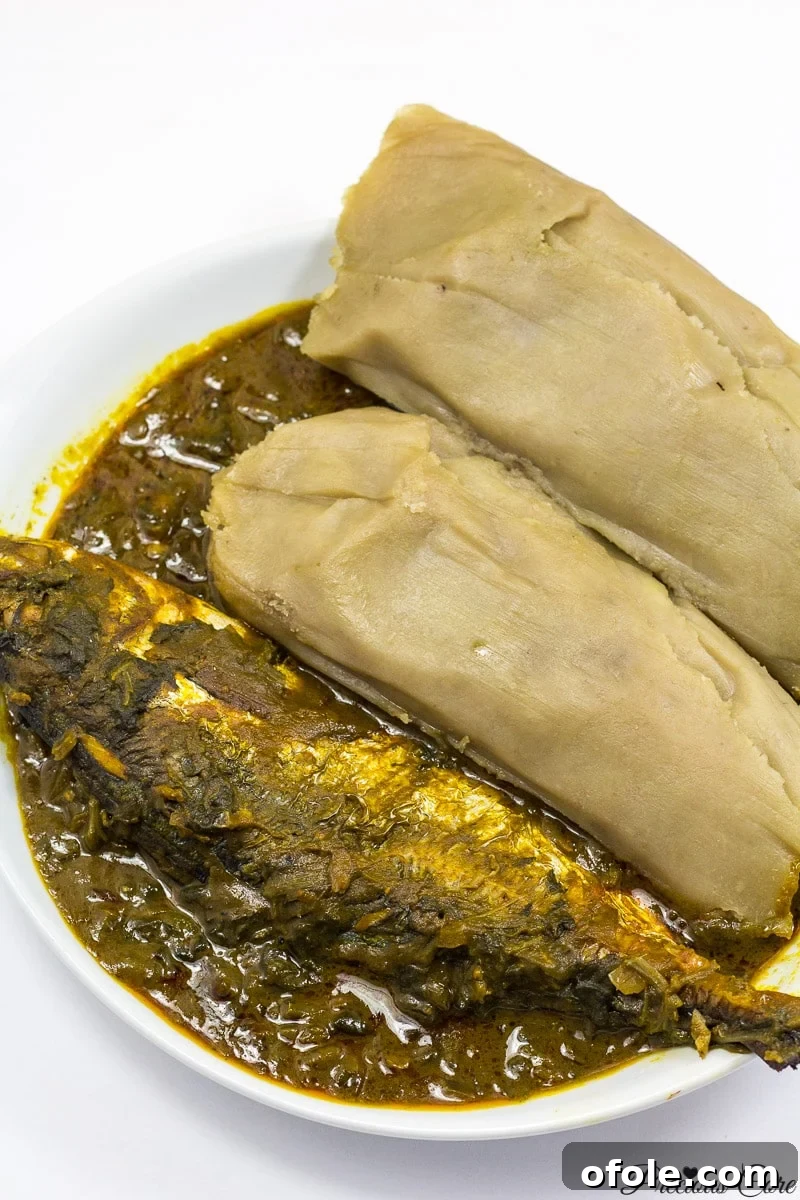
Did I mention again that this is a finger-licking good meal? A gentle reminder: no cutlery allowed! Embrace the tradition and dig in with your hands to fully appreciate the experience of this amazing Cameroonian dish.
Kwacoco and Banga Soup: Authentic Cameroonian Recipe
Rate
Print Recipe
Ingredients
- 7 large cocoyams (taro)
- 10-12 banana leaves – cut into rectangles and warmed over fire or in hot water for wrapping
- 1 can palm nut pulp concentrate (28 oz/800 g) or 1 kg fresh palmnuts
- 3 small seasoning cubes (Maggi)
- 1/2 cup crayfish (coarsely ground)
- 1 habanero (hot) pepper
- 2 pounds smoked fish of choice (about 1 kg)
- 1 teaspoon salt
- 1 medium onion – chopped
- 1 handful chopped spinach or any leafy green
Instructions
Kwacoco Preparation
-
1. Peel the cocoyams thoroughly and wash them until clean. Grate them or process them in a food processor until a smooth paste is formed.
-
2. Line a large pot with either softened banana leaves (warmed over fire or in hot water to make them pliable) or aluminum foil.
-
3. Take approximately one cup of the cocoyam paste and wrap it securely in each banana leaf (or foil) to form log-shaped portions.
-
4. Arrange all the wrapped Kwacoco logs neatly in the prepared pot. Add two cups of hot water to the pot and steam for about 1 to 2 hours. Ensure to add more hot water every 10-15 minutes as needed to prevent the pot from drying out and to ensure even cooking, until the Kwacoco is fully tender and cooked through.
Banga Soup Preparation
-
1. If you are using fresh palm nuts: Boil the palm nuts until they are tender. Once tender, transfer them to a mortar and pound them thoroughly to extract the pulp. Add about 4 cups of hot water to the pounded nuts, then sieve the mixture to separate the rich palm nut pulp from the fibers and skins. Transfer the extracted pulp into a clean cooking pot.
-
2. If you are using canned palm nut concentrate: Simply pour the entire can of concentrate into a pot and add 2 cups of water. This greatly simplifies the initial steps.
-
3. To the palm nut pulp (freshly extracted or from concentrate), add the chopped onion. Allow the mixture to boil gently for approximately ten minutes, allowing the flavors to meld.
-
4. Next, incorporate the salt, seasoning cubes (Maggi), habanero pepper (whole or crushed, depending on desired heat level), coarsely ground crayfish, and the smoked fish of your choice. Add another 2 cups of water to the pot and let the soup simmer for an additional 10 minutes. During this time, regularly check the consistency of your soup. If it appears too thick, gradually add more water until you achieve your preferred consistency. Also, taste and adjust the seasoning as necessary to ensure a perfect balance of flavors.
-
5. Finally, stir in the chopped spinach or any other leafy green you prefer. Allow the soup to simmer for just 2 more minutes, just long enough for the greens to wilt and infuse their goodness without overcooking. And there you have it! Your authentic Kwacoco and Banga Soup is now ready to be savored.
-
6. Serve hot with the steamed Kwacoco. Remember to enjoy with your hands for the most authentic and truly finger-licking experience!
Chef’s Notes for Perfection
– When preparing the Banga Soup, resist the urge to stir vigorously once you’ve added the smoked fish. This helps to keep the fish intact, ensuring you have satisfying big chunks of fish in every delicious serving. The substantial pieces of fish are a cherished part of the Banga Soup experience!
Nutrition Information (per serving)
Carbohydrates: 28g |
Protein: 38g |
Fat: 8g |
Saturated Fat: 2g |
Polyunsaturated Fat: 2g |
Monounsaturated Fat: 2g |
Cholesterol: 188mg |
Sodium: 1012mg |
Potassium: 1344mg |
Fiber: 4g |
Sugar: 2g |
Vitamin A: 737IU |
Vitamin C: 9mg |
Calcium: 98mg |
Iron: 1mg
Additional Information
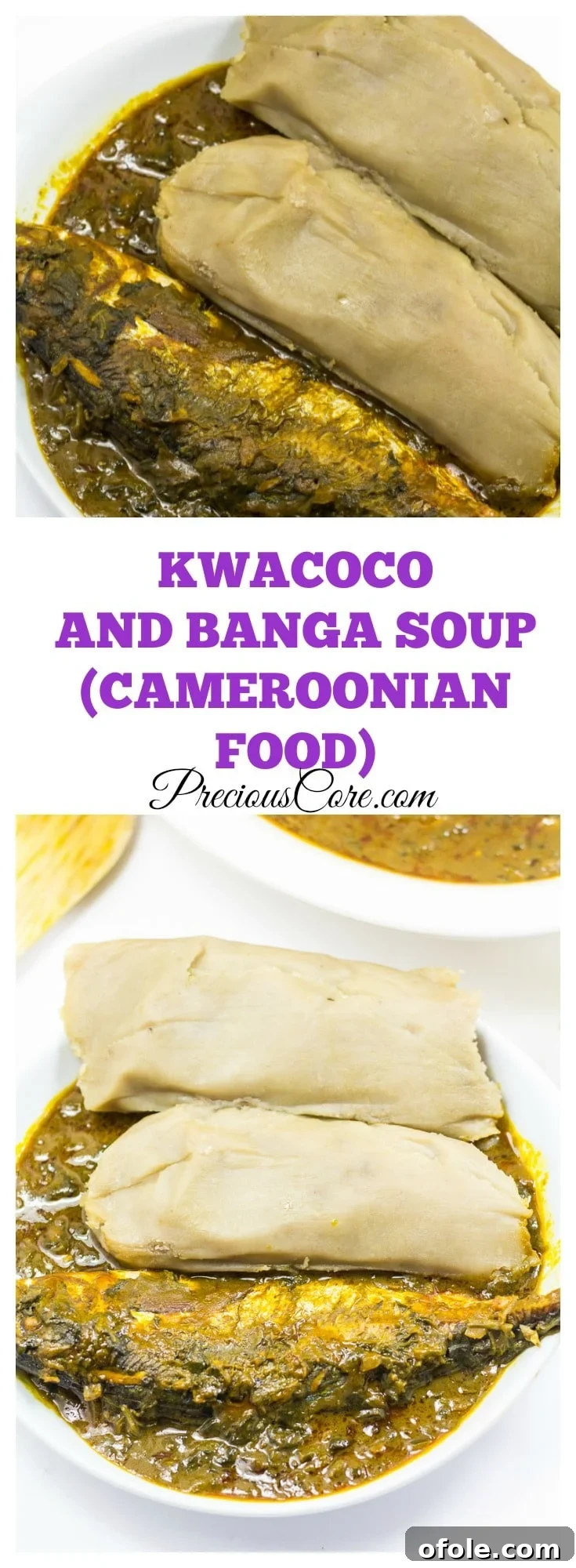
Pin this delicious Kwacoco and Banga Soup recipe for later:
Share Your Culinary Creations!
I absolutely adore seeing your culinary adventures! If you decide to make this delectable Kwacoco and Banga Soup, please don’t hesitate to share your photos and tag me on Instagram: @preciouscore. You can also post a picture on our Facebook page. I can’t wait to see your authentic Cameroonian creations!
Embrace the vibrant flavors and rich culinary heritage of Cameroon. This meal is more than just food; it’s a celebration of culture, community, and tradition. Enjoy every delicious bite!