
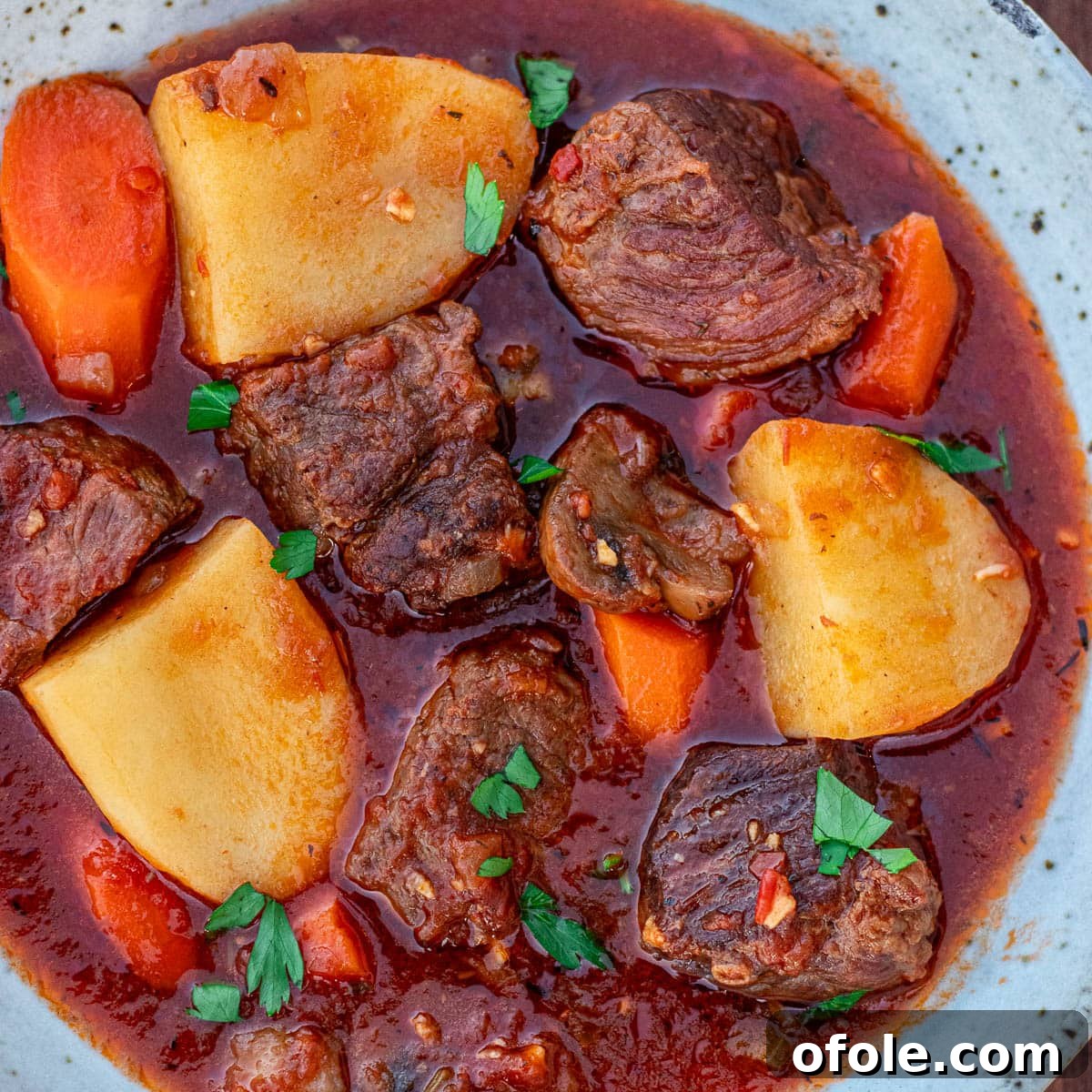
Embrace the warmth and comfort of a classic, hearty meal with this recipe for super tasty Beef Stew Without Wine. Featuring succulent, tender chunks of beef, sweet carrots, and creamy potatoes, all enveloped in a rich, savory, and incredibly satisfying sauce, this stew is pure comfort in a bowl. It’s a wholesome, homemade delight designed to warm you from the inside out.
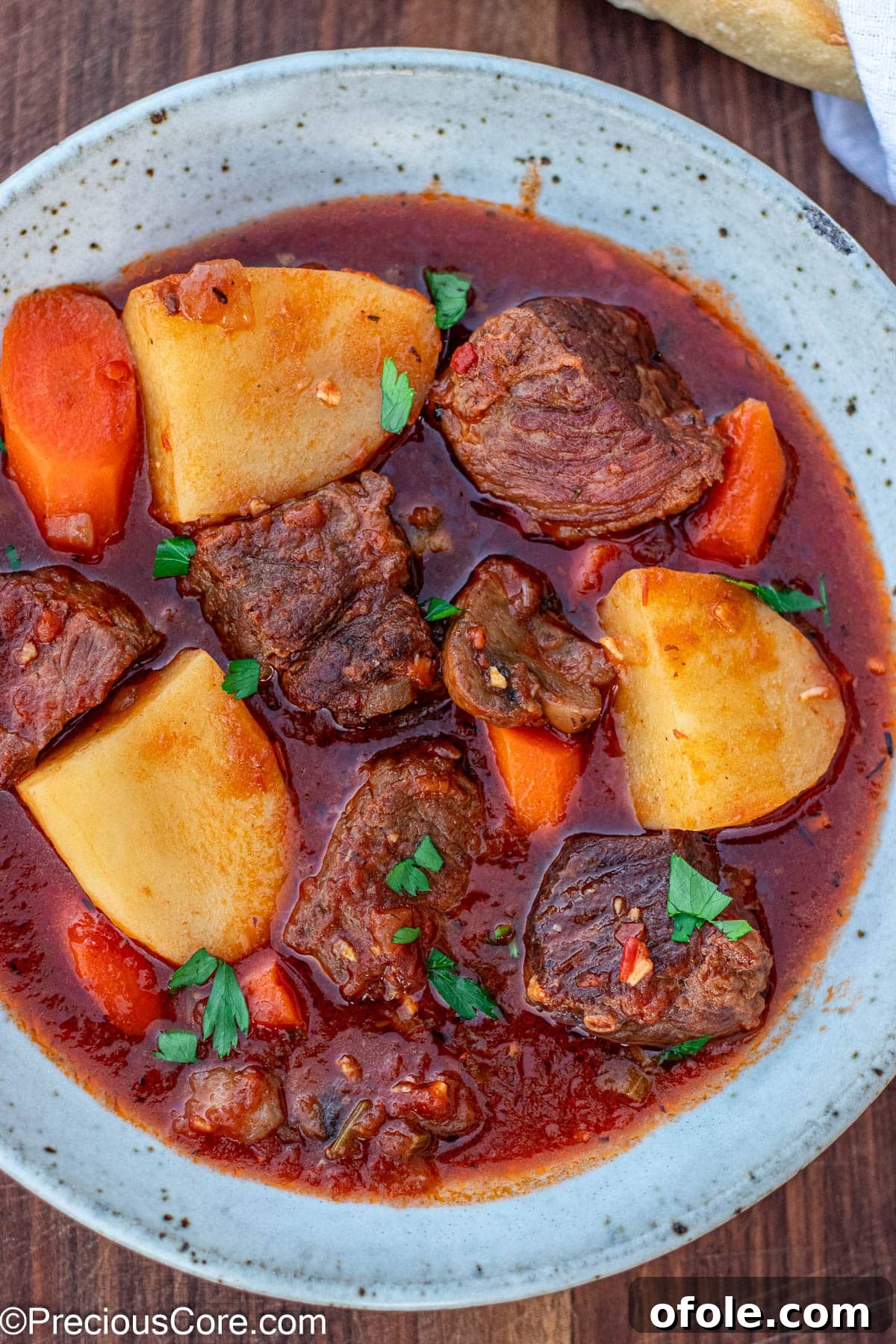
As autumn leaves begin to fall and the air turns crisp, there’s nothing quite like gathering your loved ones around a steaming pot of beef stew. This old-fashioned recipe stands out because it masterfully creates a glossy, thick, and unbelievably flavorful stew without the addition of wine or flour. It’s a testament to how simple, quality ingredients can combine to create a dish that is both hearty and incredibly wholesome. If you’re seeking a robust, deeply satisfying, and easy-to-make beef stew, your search ends here!
This versatile beef stew can be enjoyed as a complete meal on its own, providing all the nourishment and flavor you need. For an even more indulgent experience, consider pairing it with a side of Easy Homemade French Bread, perfect for soaking up every last drop of the luscious sauce, or a delightful Sourdough Bread Grilled Cheese for an extra layer of comfort.
Table of Contents
- The Ultimate Stovetop Beef Stew Without Wine
- Why This No-Wine Beef Stew Stands Out
- Essential Ingredients For a Flavorful Beef Stew
- Step-by-Step Guide: How To Make Beef Stew Without Wine
- Expert Tips For Stovetop Beef Stew Success
- Beef Stew Substitutions and Alternatives
- Delicious Variations To Try
- Frequently Asked Questions About Beef Stew
- Complementary Recipes For Comfort Food Lovers
- Perfect Pairings: What To Serve With Beef Stew
- Hearty Beef Stew Without Wine Recipe Card
The Ultimate Stovetop Beef Stew Without Wine
This recipe revolutionizes the traditional beef stew by demonstrating that you don’t need expensive wine or thickening agents to achieve incredible depth of flavor and perfect consistency. Our method for Stovetop Beef Stew Without Wine utilizes humble yet powerful ingredients like rich crushed tomatoes and robust beef stock to create a stew that is both effortlessly thick and profoundly savory. It’s a delightful surprise for anyone accustomed to the usual additions.
What truly sets this recipe apart is its simplicity and accessibility. Forget about fancy kitchen gadgets; this isn’t a slow cooker beef stew or an instant pot beef stew. Instead, it honors the timeless art of cooking on the stovetop, allowing the flavors to meld beautifully over a gentle simmer. You won’t need a pressure cooker or a crock pot to achieve melt-in-your-mouth tender beef. This classic stovetop approach guarantees a deeply satisfying meal using just a single pot – your trusty Dutch oven.
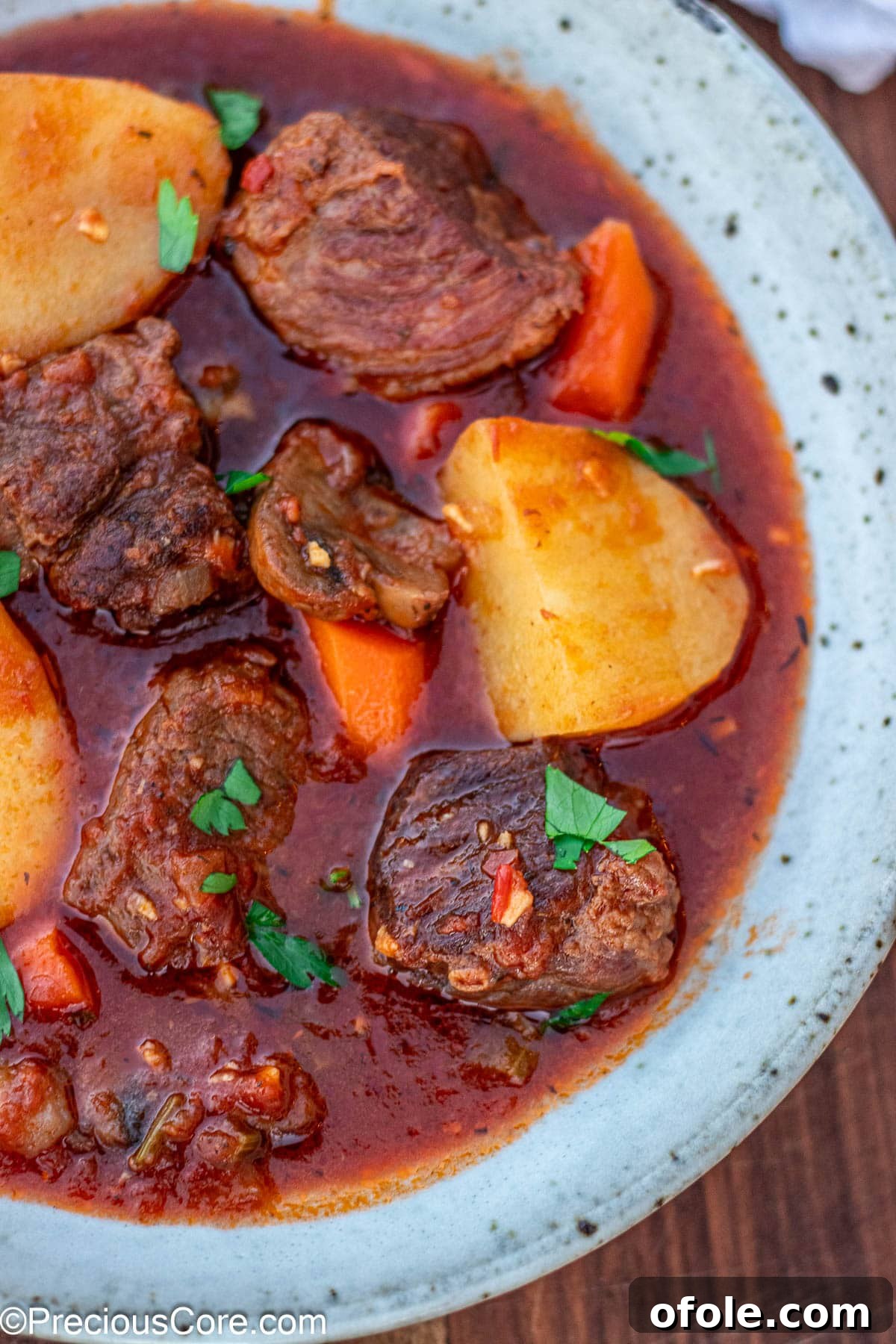
Why This No-Wine Beef Stew Stands Out
My culinary journey has involved years of testing various beef stew recipes. While many popular versions call for wine, such as beef bourguignon, I consistently found that the wine’s flavor profile wasn’t to my family’s liking. We also preferred to avoid alcohol in our everyday cooking where possible. This led me to explore easy beef stew recipes without wine. However, the common practice of adding all-purpose flour for thickness often resulted in an unnecessarily heavy and “gloopy” texture. Even a small amount of cornstarch could sometimes lead to a similar undesirable consistency.
Through extensive experimentation, I discovered that simply omitting flour altogether yielded a far superior result. The consistency was just right – naturally thick and luscious – and the flavors of the lovely spices and herbs truly bloomed without any masking agents. Flour, while a traditional thickener, often mutes the delicate nuances of other ingredients. By removing it, the natural richness of the beef and the freshness of the vegetables could shine.
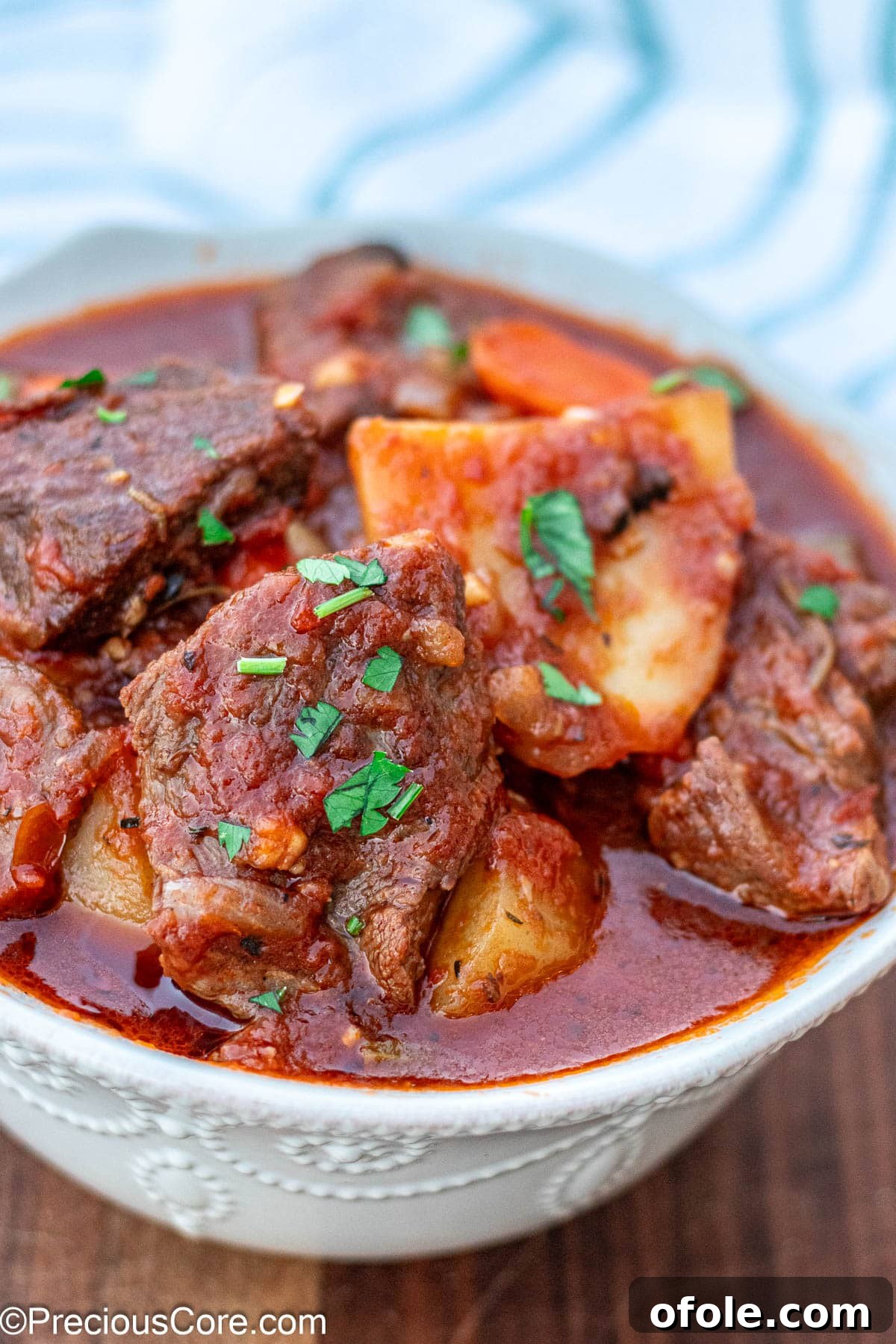
The secret to achieving that perfect, non-gloopy thickness lies in using crushed tomatoes. These provide an ideal balance of texture – not too chunky, not too smooth – and offer sufficient body to the stew, completely eliminating the need for flour. Beyond their thickening capabilities, crushed tomatoes also introduce a crucial element of acidity, a role often played by wine in other recipes. This natural acidity beautifully balances the rich, savory notes of the beef, creating a harmonious and well-rounded flavor profile.
Furthermore, the starch released by the potatoes as they cook naturally contributes to the stew’s thickness, creating a comforting, silken texture without any artificial additions. This combination of crushed tomatoes and potatoes ensures a naturally wholesome, flavorful, and perfectly thick beef stew every time.
This recipe has quickly become our family’s undisputed favorite version of Stovetop Beef Stew Without Wine. My kids often request it weekly, especially when the weather turns cold. I sincerely hope it becomes a cherished staple at your family table too. It’s truly the best thing on a chilly day or cold night – a complete, one-pot meal that delivers on both flavor and warmth. For more hearty and easy recipes, be sure to explore my insanely good Roasted Tomato and Garlic Soup, which is equally delightful served with some yummy crusty bread.
Essential Ingredients For a Flavorful Beef Stew
Crafting this traditional beef stew requires a selection of simple yet high-quality ingredients. Here’s what you’ll need, along with some important notes on how each component contributes to the stew’s exceptional flavor and texture:
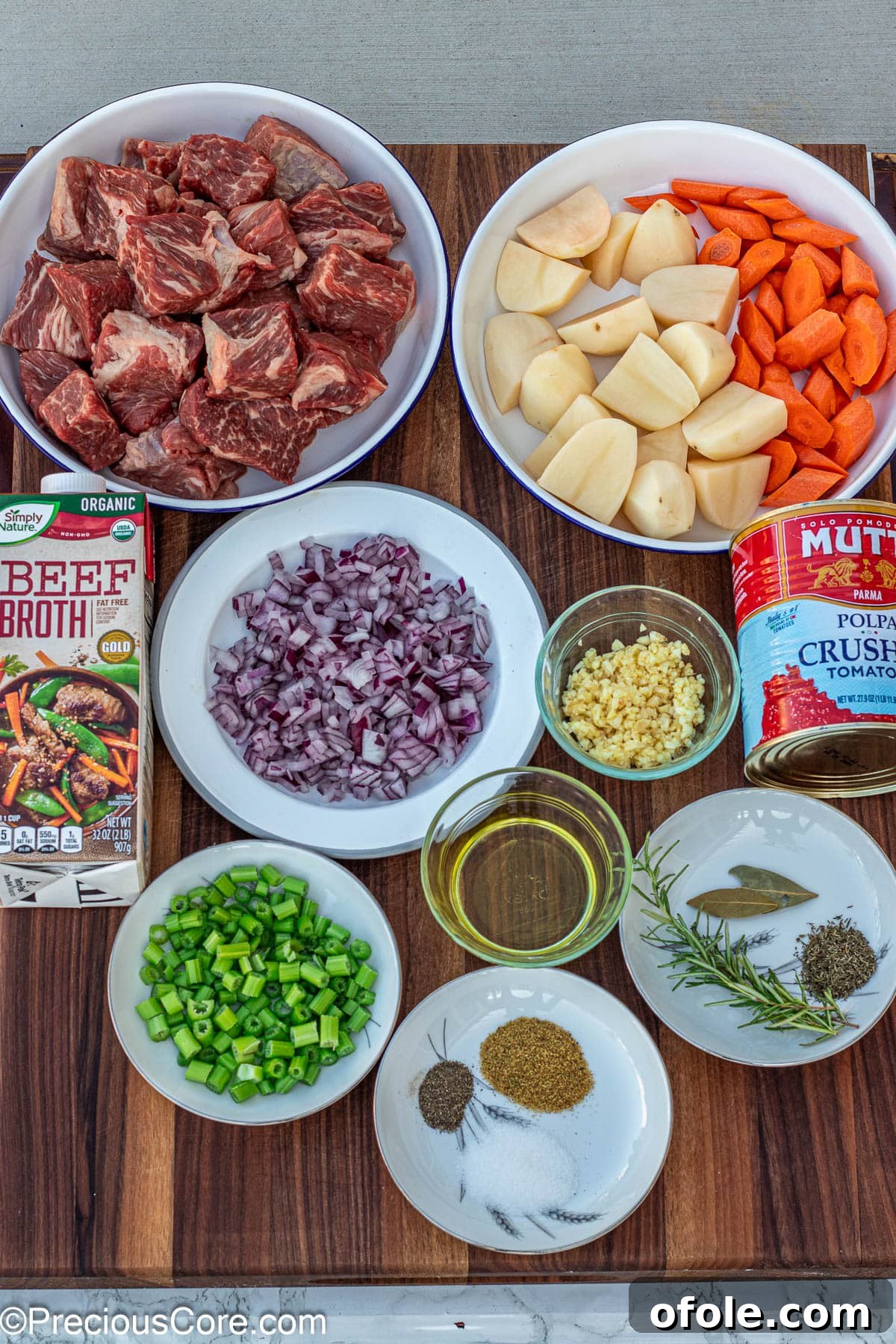
- Beef: The foundation of any great beef stew is the meat itself. For unparalleled tenderness and flavor, opt for a chuck roast with a good marbling of fat. Look for those visible veins of fat running through the meat, as they will render down during cooking, adding incredible moisture and richness. Avoid pre-cut “stew meat” packages, as these often contain leaner, tougher cuts that won’t become as tender as a well-marbled chuck roast. The quality and cut of beef are truly paramount.
- Beef Bouillon Powder: This is our secret ingredient for boosting the beefy flavor to new heights. A good quality beef bouillon powder significantly enhances the overall savory profile, making the stew taste richer and more complex. We highly recommend Knorr Beef Bouillon Powder for its robust flavor.
- Crushed Tomatoes: These are a game-changer in this recipe! Crushed tomatoes eliminate the need for tomato paste, tomato sauce, and diced tomatoes, streamlining the ingredient list. They provide an ideal consistency – neither too chunky nor too smooth – adding a pleasant texture while effectively thickening the stew. More importantly, the natural acidity of the tomatoes balances all the rich flavors beautifully, serving as an excellent substitute for red wine.
- Beef Stock or Broth: To maintain control over the salt content in your stew, always choose a low-sodium beef stock or broth. This allows you to season the dish precisely to your taste without it becoming overly salty.
- Aromatic Herbs: A thoughtful combination of dried thyme, fresh rosemary, and bay leaves infuses the stew with a wonderfully fragrant and complex aroma. These herbs are critical for developing the traditional, comforting flavors of beef stew. You can also add fresh parsley at the very end for a burst of fresh flavor and vibrant color. Always check the recipe card for specific quantities of dried versus fresh herbs.
- Minced Garlic: An indispensable ingredient for any truly tasty stew, garlic provides a pungent, aromatic base that complements the beef beautifully. Ensure your garlic is finely minced – either by chopping it on a board, pressing it through a garlic press, or grating it on a microplane zester – to ensure its flavor is evenly distributed.
For the complete list of ingredients with precise measurements, please refer to the detailed recipe card below. It contains all the information you need to create this comforting masterpiece.
Step-by-Step Guide: How To Make Beef Stew Without Wine
Follow these simple steps to create a rich, hearty, and flavorful beef stew without the need for wine or flour. Each step is designed to build layers of flavor, resulting in a truly exceptional meal.
- First, thoroughly season the beef with salt, pepper, and beef bouillon powder. This initial seasoning is crucial for infusing the beef with a deep, savory flavor right from the start. The beef bouillon powder acts as my secret weapon, guaranteeing that every piece of beef is bursting with taste before it even hits the pot.
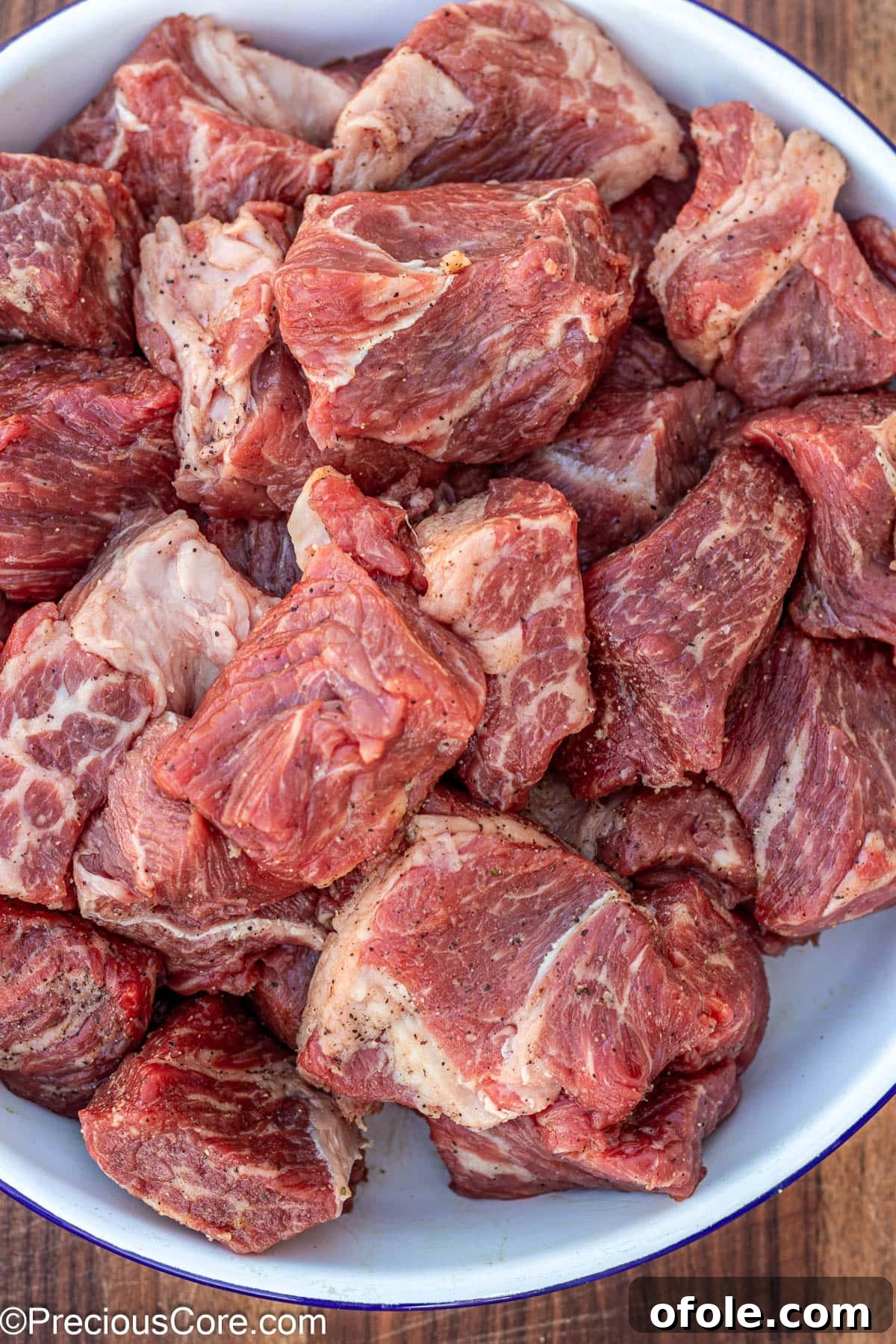
- Heat a bit of olive oil or vegetable oil in a large, heavy-bottomed Dutch oven and brown the beef in batches. Browning the beef is a fundamental step that locks in flavor and creates a beautiful caramelized crust (the Maillard reaction!). Cooking in batches is essential; overcrowding the pan will cause the beef to steam rather than sear, preventing that desirable golden-brown crust. Take your time with this step, as the simple yet perfect seasoning on the beef is so delicious, you might be tempted to sneak a few pieces before they make it into the stew! (No judgment here.)
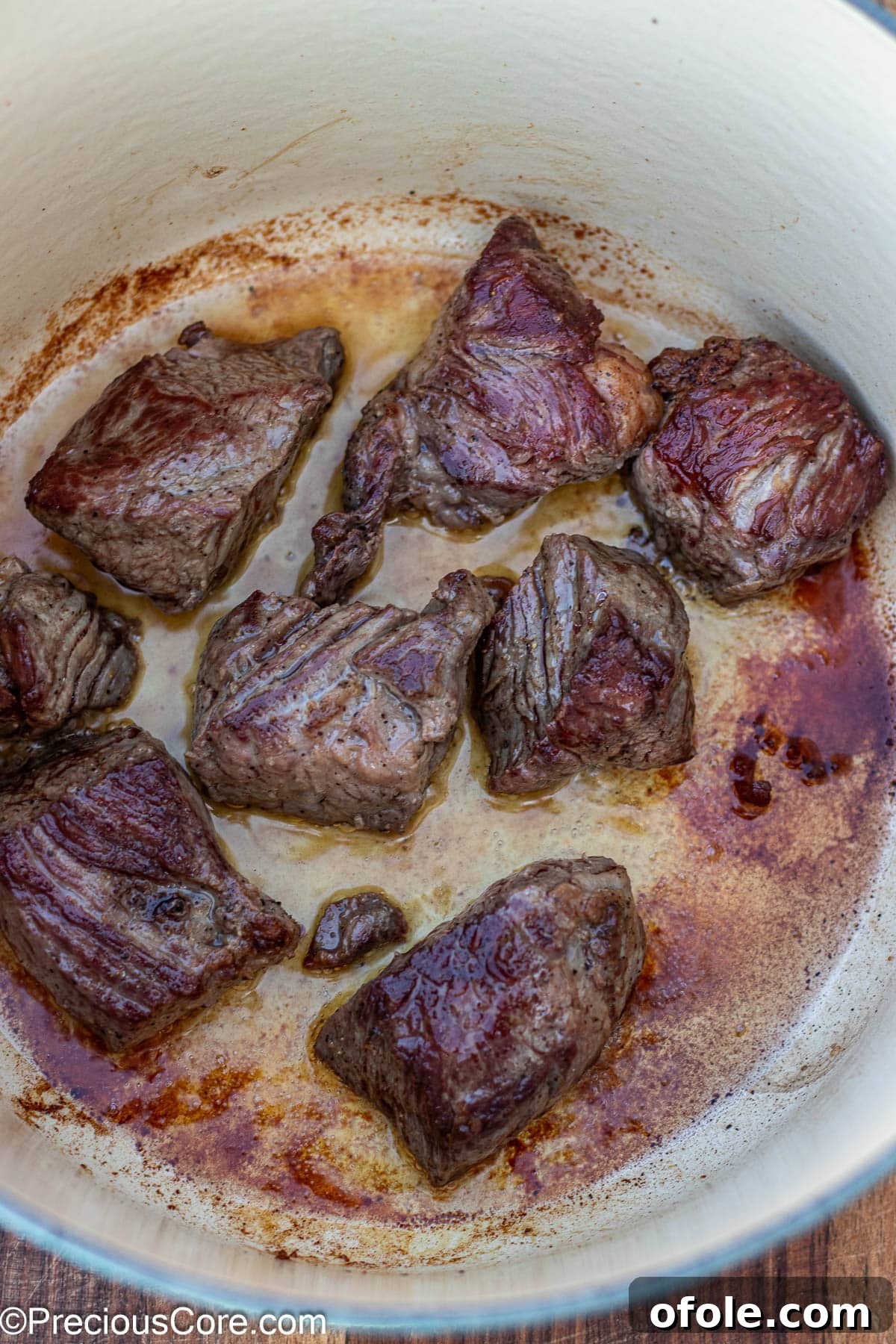
- Once the beef is browned and removed, cook the diced onions and celery in the remaining beef fat and flavorful browned bits left in the Dutch oven until they soften and break down. This step creates the aromatic flavor base that will infuse the entire stew with incredible depth. These caramelized bits, often called “fond,” are packed with savory goodness.
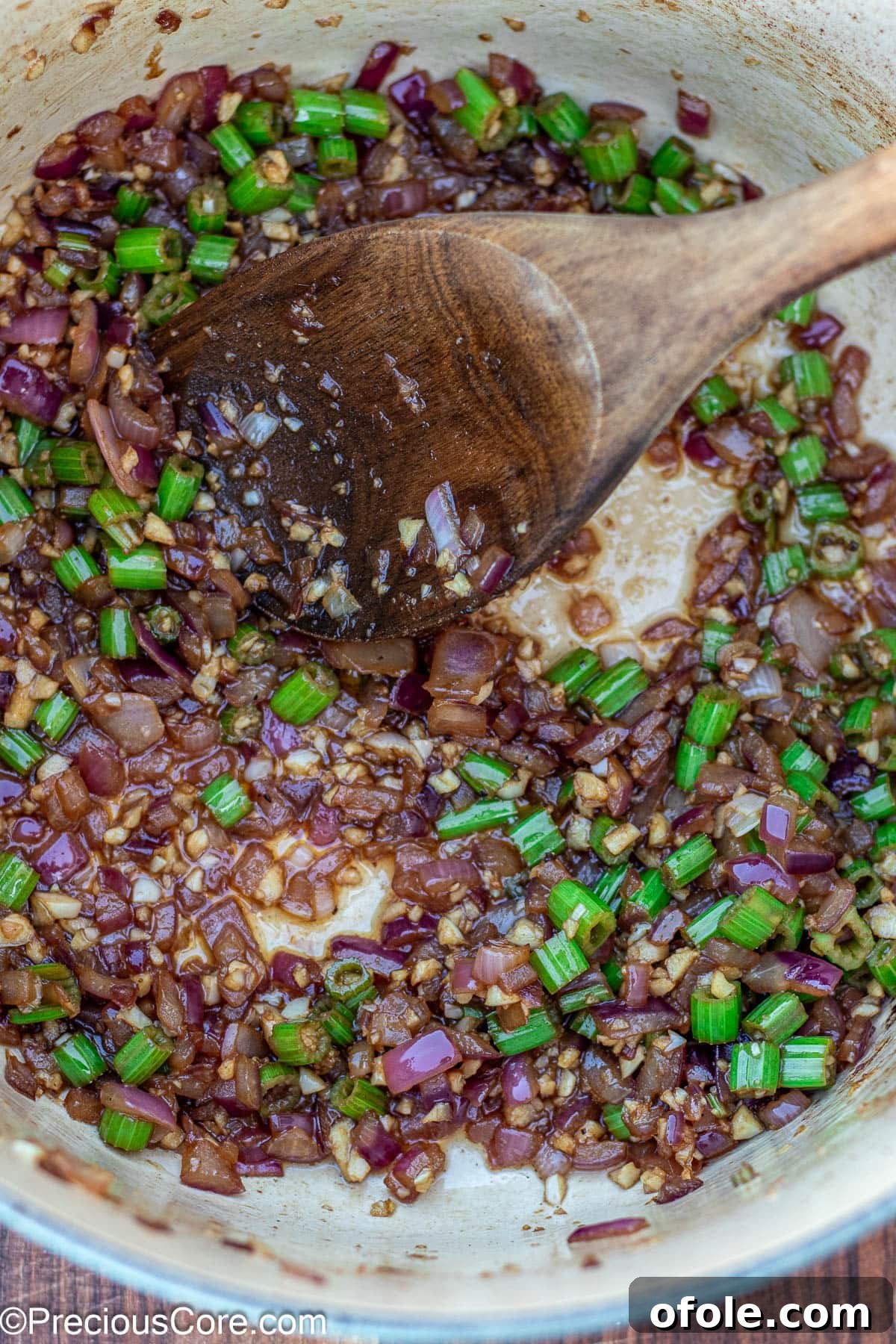
- Add the minced garlic to the softened vegetables and cook for just about 30 seconds to release its fragrant flavors. Be very careful with the garlic’s cook time; it can burn quickly and become bitter if overcooked. This is also an excellent point to add some sliced mushrooms if you desire. While optional, mushrooms contribute a wonderful umami richness, additional texture, and valuable nutrients to the stew.
- Now, return the browned beef to the hot pan and add the crushed tomatoes, beef broth, bay leaves, dried thyme, and fresh rosemary. Give everything a good, thorough stir with your wooden spoon, ensuring all the ingredients are well combined. This is where the magic begins, as all the components come together in the large pot for their slow, simmering transformation.
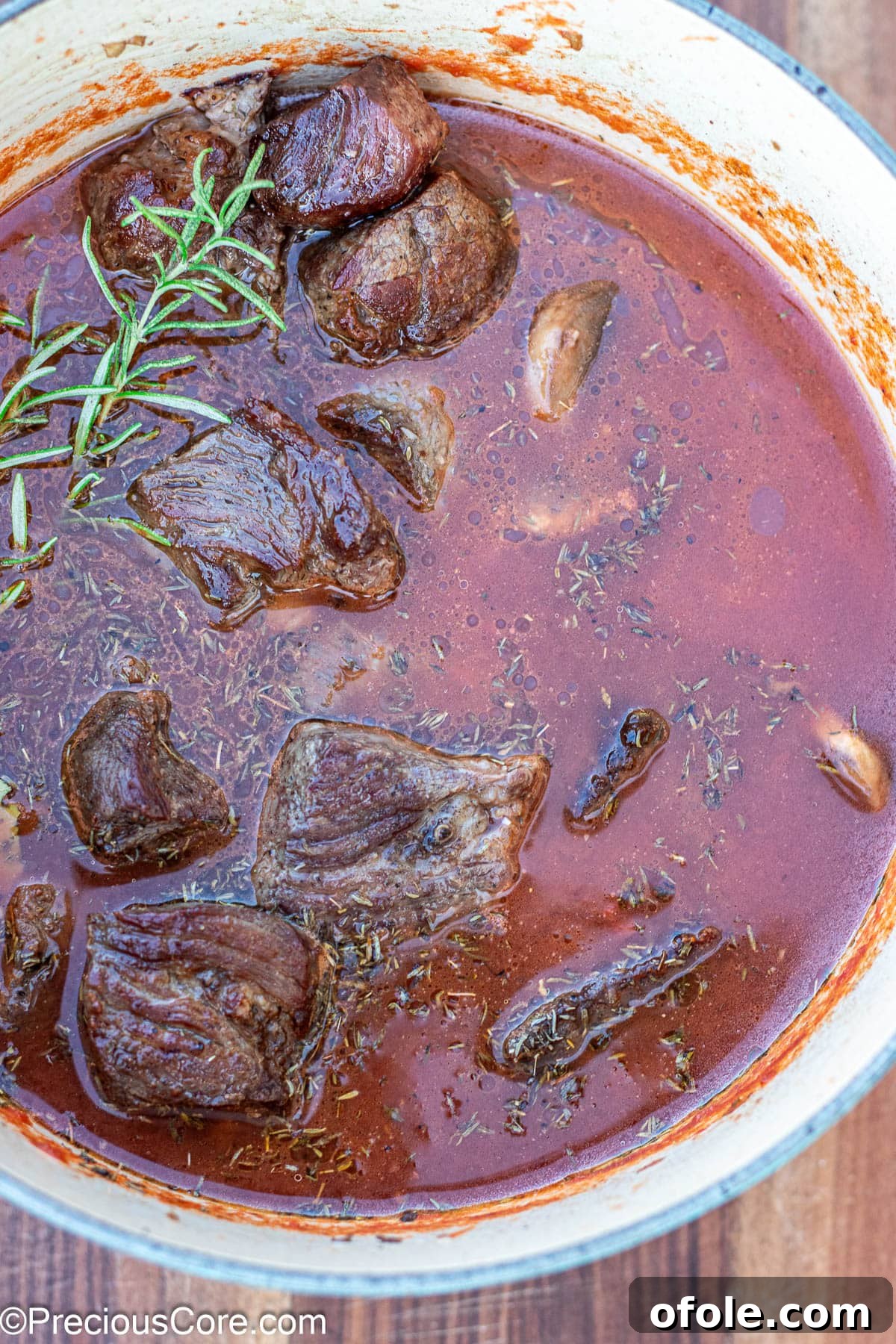
- Bring the stew to a boil, then reduce the heat to a gentle simmer and cook until the beef is tender but still holds its shape. This simmering period is where patience pays off. Your house will begin to fill with the most inviting, delicious aromas as this stovetop beef stew slowly cooks. Allow ample time for the beef to become incredibly fork-tender.
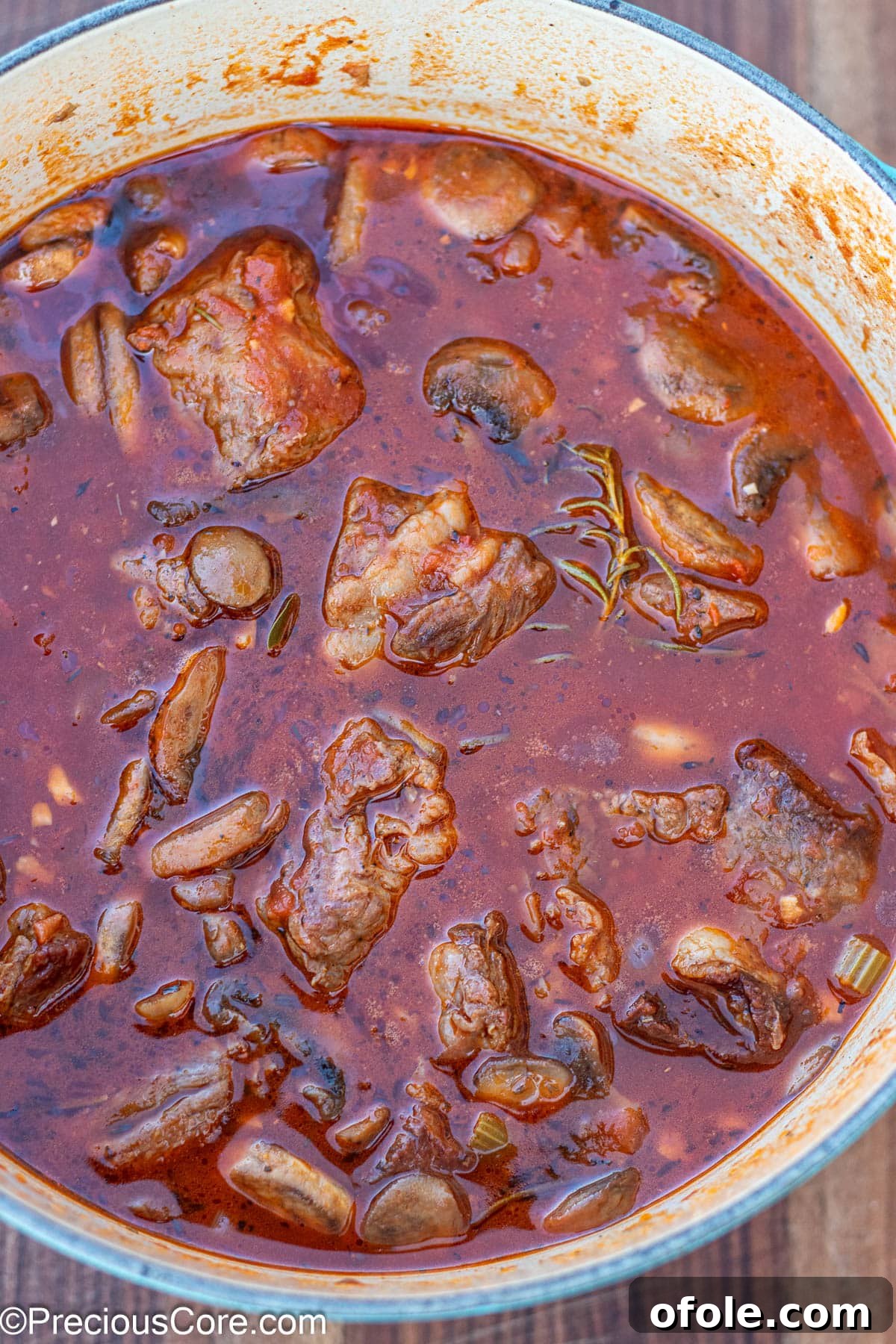
- Next, add the carrots and potatoes to the pot. The beef stew already looks fantastic at this stage, but these classic additions elevate it even further, adding sweetness, texture, and making it a complete, nourishing meal.
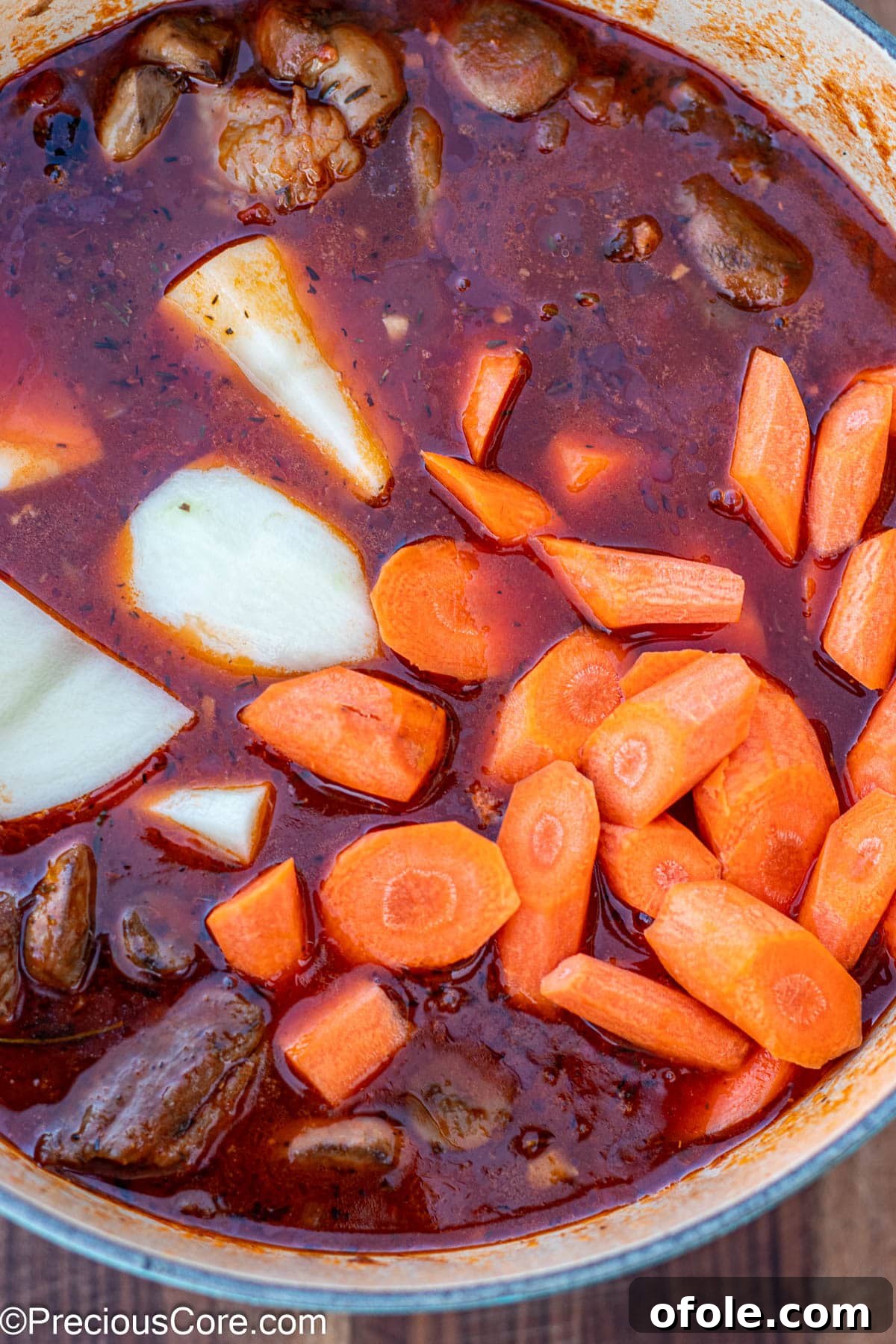
- Continue to cook until the potatoes are fork-tender. This usually takes more than just 10-15 minutes, closer to 25 to 30 minutes, depending on the size of your potato chunks. Keep the stovetop heat at a gentle medium simmer to ensure even cooking and prevent the bottom of the pot from scorching.
- Taste the stew and adjust its texture and seasoning as needed. If the stew is too thick for your preference, you can add a bit more beef stock to reach the desired consistency. Conversely, if it’s too runny, increase the heat to medium-high and let it simmer uncovered for a bit longer to reduce and thicken. At this stage, I often add a little more beef bouillon powder and a fresh grind of black pepper to really make the flavors sing. Once you’re satisfied with the taste and consistency, carefully remove the rosemary sprigs and bay leaves before serving.
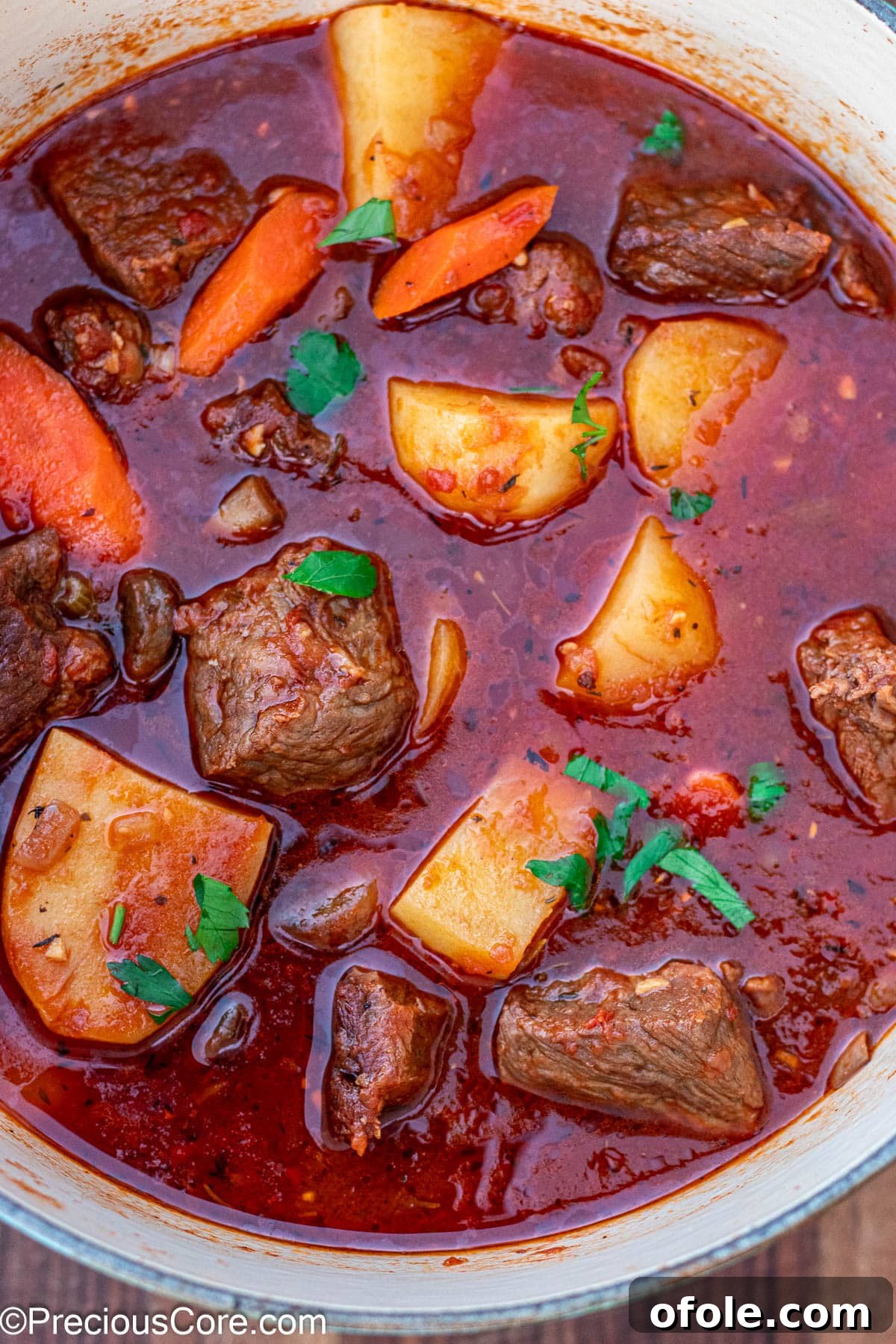
- Finally, garnish and serve your magnificent stew. A sprinkle of freshly chopped parsley or chives over the top adds a vibrant color, a fresh herbaceous note, and that professional, cheffy finishing touch.
Serve this Beef Stew Without Wine warm and inviting, either as a stand-alone meal or alongside your favorite complementary side dishes. Consider pairing it with a basket of Easy Dinner Rolls, perfect for dipping, or a refreshing Lettuce Salad to cut through the richness.
Expert Tips For Stovetop Beef Stew Success
Achieving a truly outstanding beef stew involves more than just following steps; it’s about understanding the nuances that elevate the dish. Here are some expert tips to ensure your Stovetop Beef Stew Without Wine turns out perfectly every time:
- Choose the Right Pot: Make sure to use an adequately large, heavy-duty pot or Dutch oven, such as a Le Creuset. A heavy pot distributes heat evenly, preventing scorching, and a generous size ensures you have enough room to comfortably stir and develop flavors without overcrowding. The last thing you want is to run out of room when simmering a rich stew!
- Master Herb Timing: Herbs add incredible aroma and flavor, but their timing matters. Hardy herbs like rosemary and thyme can be added during cooking to infuse the stew deeply. However, delicate fresh herbs like parsley or chives should only be added at the very end, just before serving. This preserves their vibrant color, fresh flavor, and prevents them from wilting or losing their punch.
- Patience is Key: Good stew takes time. Resist the urge to rush the cooking process with excessively high heat. If you cook the stew on high heat for too long, the bottom can burn, and the beef will likely turn out tough and chewy instead of meltingly tender. A low and slow simmer allows the beef to break down gently and all the flavors to meld beautifully.
- Uniform Meat Cuts: For even cooking, cut your beef into uniform pieces. Aim for cubes that are roughly 1½ inches. They don’t have to be perfectly square; a rustic, rough-cut appearance is perfectly fine and often preferred for stew. Consistent sizing ensures that all pieces cook at the same rate, preventing some from becoming overcooked and dry while others remain tough.
- Chunky Vegetables: Similarly, chop your vegetables into chunky pieces, around 1 to 1½ inch cubes. If you cut them too small, they will overcook, break down excessively, and blend into the thick sauce, losing their distinct texture. Keeping them chunky ensures you get satisfying bites of tender vegetables in every spoonful.
- Smart Storage and Freezing: If you have leftovers, transfer them to an airtight container and store them in the refrigerator for up to 5 days. This beef stew also freezes exceptionally well. For space-saving in your freezer, my preferred method is to store cooled stew in freezer bags. Lay the bags flat in the freezer until they harden, then you can stack them efficiently. Thaw frozen stew in the refrigerator overnight before gently reheating on the stovetop or in the microwave.
Crucial Browning Technique: When browning the beef, never overcrowd your pan. If you try to cook all the beef at once, it will steam instead of searing, and you won’t achieve that beautiful, flavor-rich brown crust. Proper browning and caramelization require patience and space, so always brown your beef in small, manageable batches for the best results.
Beef Stew Substitutions and Alternatives
While this recipe is perfected for beef, it’s also incredibly adaptable. Don’t hesitate to experiment with these simple substitutions to tailor the stew to your preferences or what you have on hand:
- Lamb – For a different but equally rich flavor, you can easily substitute the beef with lamb. Opt for lamb shoulder or neck for best results, cut into similar 1½-inch chunks. The cooking time will be comparable.
- Chicken – If you prefer poultry, consider using boneless, skinless chicken thighs instead of beef. Cut them into larger chunks to prevent them from drying out or shredding too early. The cooking time will be significantly shorter (around 30-45 minutes), so add the chicken later in the simmering process.
- Vegetarian – For a delicious plant-based option, replace the beef with an assortment of hearty mushrooms, such as cremini, shiitake, or portobello. You can also add other robust vegetables like parsnips, turnips, or butternut squash.
- Potatoes– While russet potatoes work wonderfully for their starchiness, you can also use Yukon Gold potatoes for a slightly creamier texture or baby potatoes (halved) for a quicker-cooking, rustic touch. Sweet potatoes are another excellent option, adding a touch of natural sweetness.
- Broth– Beef broth is undoubtedly the best option for enhancing the rich beef flavor. However, if you find yourself without it, a good quality chicken broth can be used as a substitute. Be aware that this will alter the overall flavor profile, making it slightly lighter. Vegetable broth is also a viable option for a more neutral base.
Delicious Variations To Try
Once you’ve mastered the basic recipe, feel free to get creative with these delicious variations to customize your beef stew and add new dimensions of flavor:
- Peas: For a touch of sweetness and vibrant color, add a cup of frozen peas to the stew during the last 5 minutes of cooking. This ensures they cook through without losing their bright green hue and firm texture.
- Spicy Kick: If you enjoy a bit of heat, introduce red pepper flakes or a pinch of cayenne pepper with the other spices. Start with a small amount and add more to taste.
- Global Flavors: Transform your stew with international flair! Add a teaspoon of ground cumin and a pinch of cinnamon for a subtly spiced, Moroccan-inspired stew. For an extra layer of savory depth, a splash of Worcestershire sauce, a teaspoon of soy sauce, or a drizzle of balsamic vinegar can work wonders. These ingredients provide umami and acidity that round out the flavors beautifully.
- Noodles: For a heartier meal, stir in your favorite egg noodles or wide pasta shapes towards the end of the cooking process. Cook them directly in the stew until al dente, ensuring they absorb all the wonderful flavors of the sauce.
- Root Vegetables: Beyond carrots and potatoes, consider adding other root vegetables like parsnips, celery root, or even chunks of butternut squash for added sweetness and complexity.
Craving more comforting stews? Also, check out this flavorful African Chicken Stew and the wholesome Lentil Stew.
Frequently Asked Questions About Beef Stew
Instead of wine, you can effectively use beef stock or beef broth to provide a rich liquid base. Another excellent option is a combination of beef bouillon powder dissolved in cold water, which offers a concentrated beef flavor without any alcohol.
Absolutely, you can definitely skip red wine in beef stew. While red wine contributes flavor and can aid in tenderizing meat, it is by no means an essential ingredient. As this recipe demonstrates, you can still create an incredibly delicious and flavorful beef stew using alternative liquids and proper cooking techniques.
Red wine traditionally adds an extra layer of complex flavor and its acidity helps to break down the meat fibers, contributing to tenderness. However, its importance can be overstated. You can achieve a deeply flavorful and tender stew by utilizing robust beef broth or stock, coupled with sufficient simmering time on the stovetop. Ingredients like crushed tomatoes also provide the necessary acidity to balance richness and tenderize the beef effectively.
This recipe demonstrates two excellent ways to naturally thicken beef stew without flour or cornstarch: crushed tomatoes and potatoes. Crushed tomatoes add body and reduce down to a rich consistency, while the starch released from potatoes as they cook creates a satisfyingly thick sauce. Long, slow simmering also naturally reduces the liquid, concentrating flavors and thickening the stew.
For the most tender and flavorful beef stew, chuck roast is highly recommended. Its rich marbling of fat breaks down beautifully during slow cooking, resulting in incredibly succulent and melt-in-your-mouth beef. Other good options include beef short ribs or round roast, but chuck roast remains the top choice.
Complementary Recipes For Comfort Food Lovers
If you loved this Hearty Beef Stew Without Wine Recipe, you’ll surely enjoy these other incredibly comforting and flavorful recipes:
Quick Chicken Noodle Soup
Cameroonian Pepper Soup
Lentil Stew
Nigerian Beef Stew
Perfect Pairings: What To Serve With Beef Stew
Enhance your beef stew experience with these delicious and easy-to-make side dishes:
Cornbread Without Buttermilk
Garlic Butter Rolls
Honey Whole Wheat Dinner Rolls
Easy Dinner Rolls
If you make this heartwarming recipe, please take a moment to leave a star rating below. Your feedback and rating not only help other home cooks discover this delicious recipe, but I truly love hearing from you! Thank you for cooking with us!
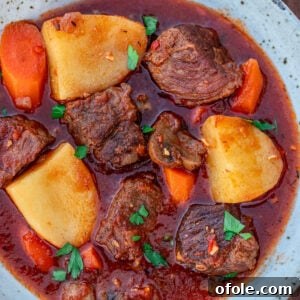
Beef Stew Without Wine
30 minutes
1 hour
1 hour 30 minutes
8 servings
Rate
Print Recipe
Ingredients
- 2 Tablespoons olive oil
- 3 pounds chuck roast cut into 1½ inch chunks
- 1 teaspoon salt
- ¼ teaspoon ground black pepper
- 1 teaspoon beef bouillon powder
- 1 medium onion diced
- 2 celery stalks diced
- 2 Tablespoons minced garlic from about 8 cloves
- 28 oz crushed tomatoes
- 4 medium carrots peeled and cut into 1-inch chunks
- 4 cups beef stock
- 1 pound russet potatoes about 4 medium potatoes, peeled and cut into 1½-inch chunks
- 1 teaspoon dried thyme
- 3 sprigs fresh rosemary
- 2 bay leaves
- Minced parsley or chives for garnish
- Crusty bread for serving
Instructions
-
Season the beef: In a large bowl, add the cut beef chuck roast. Sprinkle generously with salt, ground black pepper, and beef bouillon powder. Toss the beef thoroughly with your hands to ensure every chunk is well-coated with the seasoning. This step is foundational for deep flavor.
-
Brown the beef: Place a sturdy, medium to large Dutch oven or heavy-bottomed pot over high heat. Add the olive oil and allow it to heat up for about two minutes until shimmering. Carefully add a single layer of the seasoned beef chunks to the pot, ensuring not to overcrowd. Brown the beef vigorously on all sides until a rich, dark crust forms. You will need to brown the beef in multiple batches to achieve a proper sear and prevent it from steaming. Remove browned beef to a plate and set aside.
-
Sauté the aromatics: With the beef fat and browned bits remaining in the pot, add the diced onion and celery. Cook, stirring occasionally, for about 4 to 6 minutes until the onions soften and become translucent. Next, add the minced garlic and sauté for only 30 seconds more, until fragrant. It’s crucial not to overcook the garlic, as it can quickly burn and impart a bitter taste to your stew. If adding mushrooms, stir them in now and cook until softened.
-
Combine and simmer: Return the browned beef to the pot. Add the crushed tomatoes, beef stock, dried thyme, fresh rosemary sprigs, and bay leaves. Stir all the ingredients together thoroughly with a wooden spoon, ensuring the browned bits from the bottom of the pot are scraped up and incorporated into the liquid. Bring the mixture to a rolling boil over high heat, then reduce the heat to a gentle medium-low to maintain a steady simmer. Cover the pot and let it cook for about 10-15 minutes to begin tenderizing the beef and melding the initial flavors.
-
Add carrots and potatoes: After the initial simmer, add the peeled and chopped carrots and potatoes to the pot. Stir gently to submerge them in the stew. Cover the pot again and continue to simmer for an additional 25 to 30 minutes, or until the potatoes are fork-tender and the carrots are soft. Taste the stew and adjust the seasoning as needed; I often find adding an extra ½ teaspoon of beef bouillon powder at this stage really brightens the flavor.
-
Adjust the stew’s consistency: If the stew appears too soupy for your liking, remove the lid and increase the heat slightly to a medium setting, allowing it to gently cook down and reduce to your desired thickness. If it’s too thick, add a small amount of additional beef stock or water. Before serving, remember to remove the rosemary sprigs and bay leaves from the pot.
-
Garnish and serve: Ladle the warm, comforting beef stew into bowls. Garnish generously with freshly minced parsley or chives for a pop of color and fresh herbaceous flavor. Serve immediately with your favorite crusty bread for dipping, and enjoy this wholesome, satisfying meal.
Notes
Potato Preparation: After peeling and cutting your potatoes into chunks, it’s a good practice to soak them in cold water. This simple step helps prevent oxidization, which can cause the potatoes to turn an unappetizing brown or grey color before they even hit the pot.
Adding Mushrooms: Mushrooms are a fantastic addition to this beef stew, adding an earthy depth and umami flavor. If you choose to include them, use about 8 ounces of sliced mushrooms. Sauté them in the same pot after you’ve cooked the aromatics (onions, celery, garlic) and before you add the liquids, allowing them to release their moisture and brown slightly.
Storage and Freezing: This beef stew makes for excellent leftovers! Refrigerate any unused portions in an airtight container for up to 5 days. For longer storage, the stew freezes beautifully for up to 3 months. Ensure the stew is completely cooled before transferring it to freezer-safe containers or bags. Thaw overnight in the refrigerator before reheating gently on the stovetop or in the microwave.
Nutrition
Carbohydrates: 43g |
Protein: 55g |
Fat: 34g |
Saturated Fat: 14g |
Polyunsaturated Fat: 3g |
Monounsaturated Fat: 17g |
Trans Fat: 1g |
Cholesterol: 129mg |
Sodium: 31407mg |
Potassium: 1751mg |
Fiber: 4g |
Sugar: 27g |
Vitamin A: 5344IU |
Vitamin C: 16mg |
Calcium: 162mg |
Iron: 7mg
Additional Info