
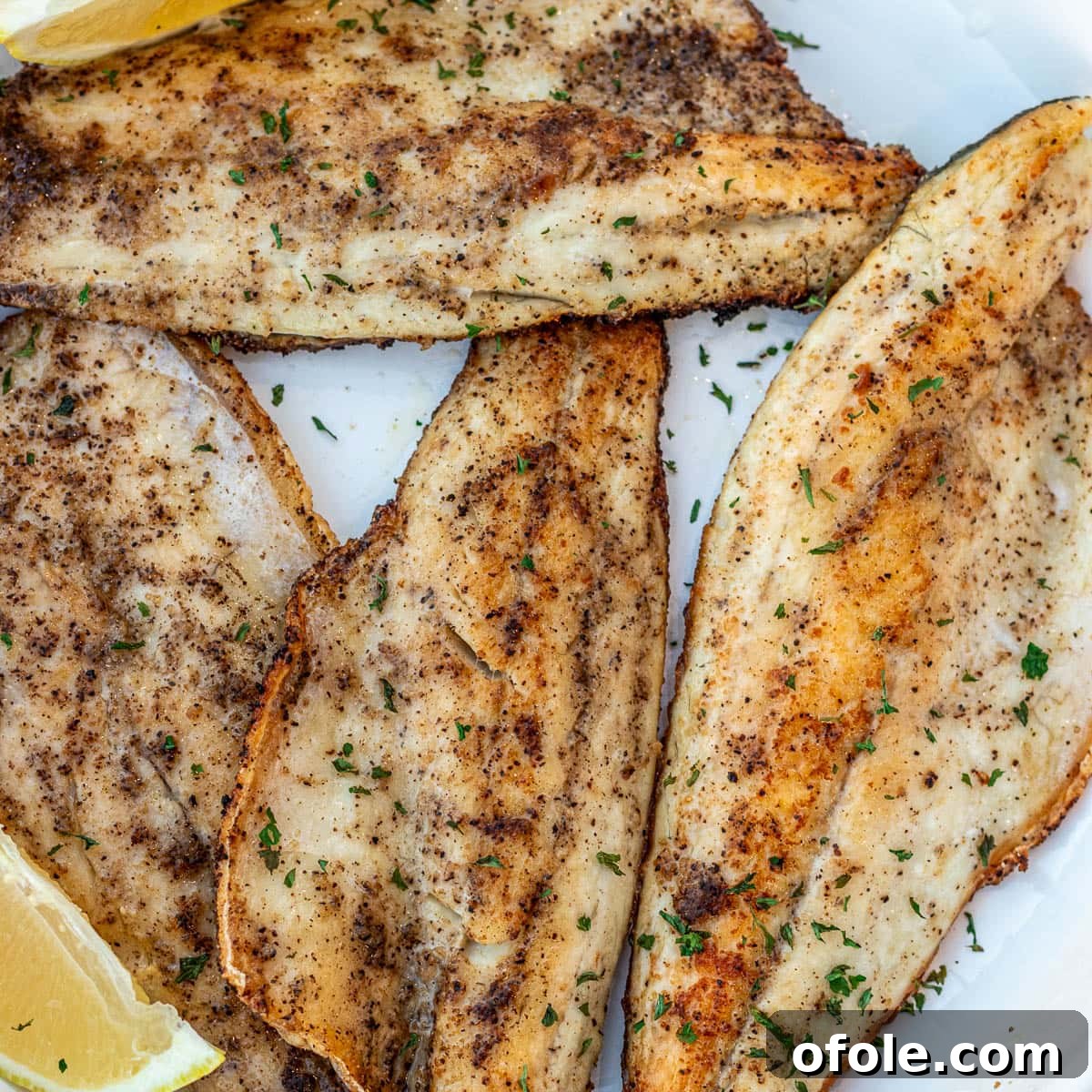
Prepare to be amazed by this effortlessly delicious Pan Seared Sea Bass! With just 7 simple ingredients, you can have a restaurant-quality meal on your table in less than 15 minutes. This recipe guarantees perfectly crispy edges, tender, flaky flesh, and an intensely mouthwatering flavor that will impress everyone.
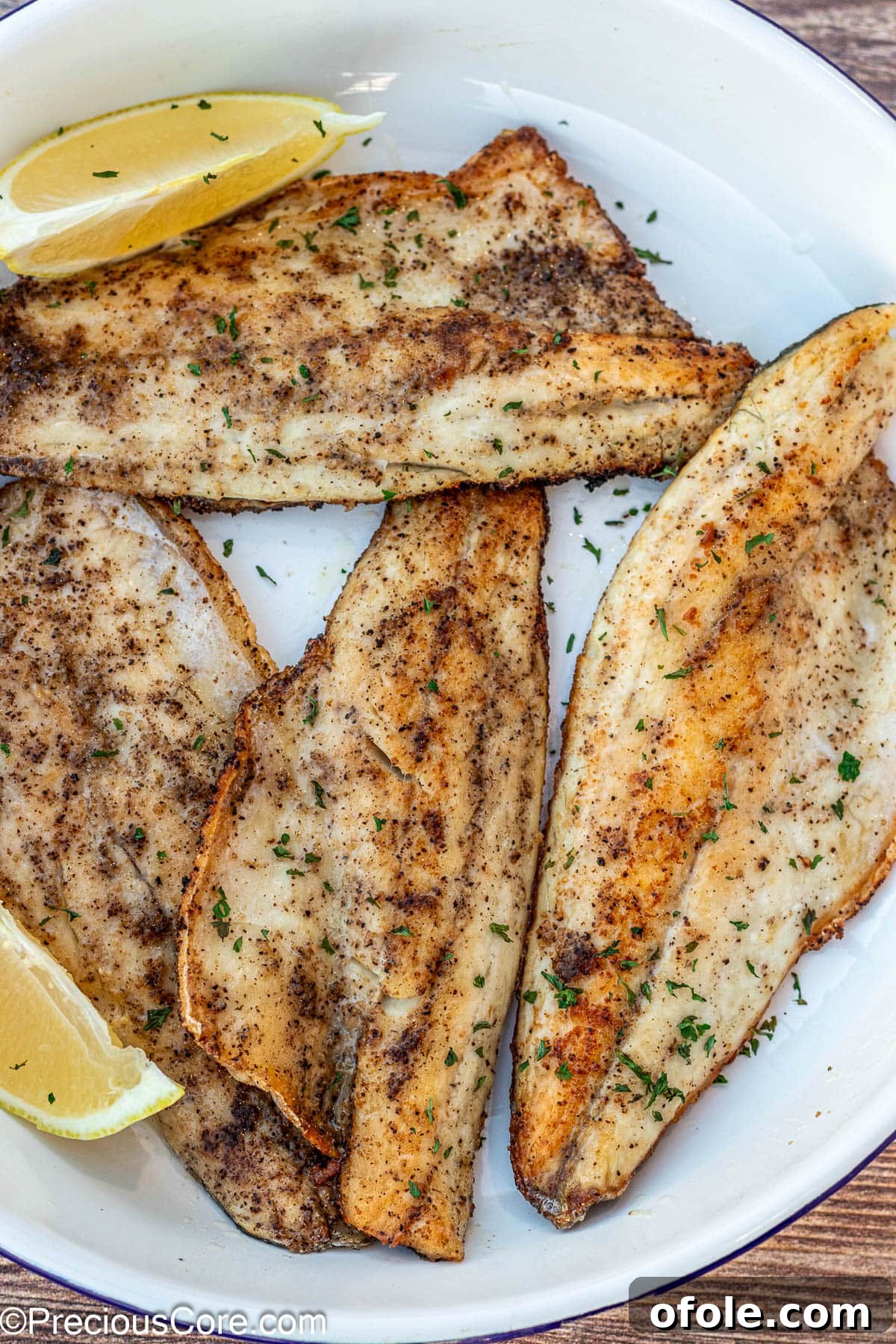
Whether you’re looking for a quick and healthy everyday dinner, planning a romantic date night, or seeking an elegant dish for entertaining guests on special occasions, this pan-seared sea bass fits the bill. It’s so simple that even my 10-year-old can whip up this tantalizing, flaky fish with ease!
Enhance your meal by pairing this delectable sea bass with vibrant Garlic Herb Rice and a refreshing Mango Avocado Salad. You’ll be astonished at how much flavor you can infuse into fish fillets in such a short amount of time, transforming basic ingredients into an extraordinary culinary experience.
If you’re a fan of easy dinner recipes that come together in 20 minutes or less, be sure to explore these other quick seafood and poultry options: Pan Seared Tilapia, Lemon Pepper Tilapia, and Pan Seared Chicken Tenders.
Table of Contents
- What is Sea Bass?
- Why This Pan Seared Sea Bass Recipe Works
- Essential Ingredients for Pan Seared Sea Bass
- Step-by-Step Guide: How To Cook Pan Seared Sea Bass
- Expert Tips and Recommendations for Perfect Fish
- Recipe FAQs: Your Sea Bass Questions Answered
- Serving Pan Seared Sea Bass: Delicious Pairings
- Similar Quick & Easy Recipes
- Pan Seared Sea Bass Recipe Card
What is Sea Bass?
Sea bass is a broad term that encompasses a wide variety of marine fish, known for their firm texture and delicate flavor. While diverse in species, a common characteristic among most sea bass varieties is their typically gray skin and pearly white, flaky flesh. This mild flavor profile makes sea bass an ideal candidate for absorbing the delicious notes of spices and herbs, allowing your chosen seasonings to truly shine.
You’ll find several kinds of sea bass available, including Barred Sand Bass, Barramundi, Black Sea Bass, and European Sea Bass. When shopping, look for fresh or frozen sea bass fillets in your local grocery store’s seafood section. Trader Joe’s, for instance, often carries high-quality European Sea Bass, which is what I personally used for this specific recipe, yielding fantastic results.
It’s worth noting that the fish often labeled “Chilean Sea Bass” is not true sea bass but rather the Antarctic and Patagonian toothfish, rebranded to enhance its market appeal. While delicious in its own right, it’s a distinct species from the sea bass we typically refer to. For our recipe, focus on genuine sea bass fillets to achieve that authentic, delicate taste and texture.
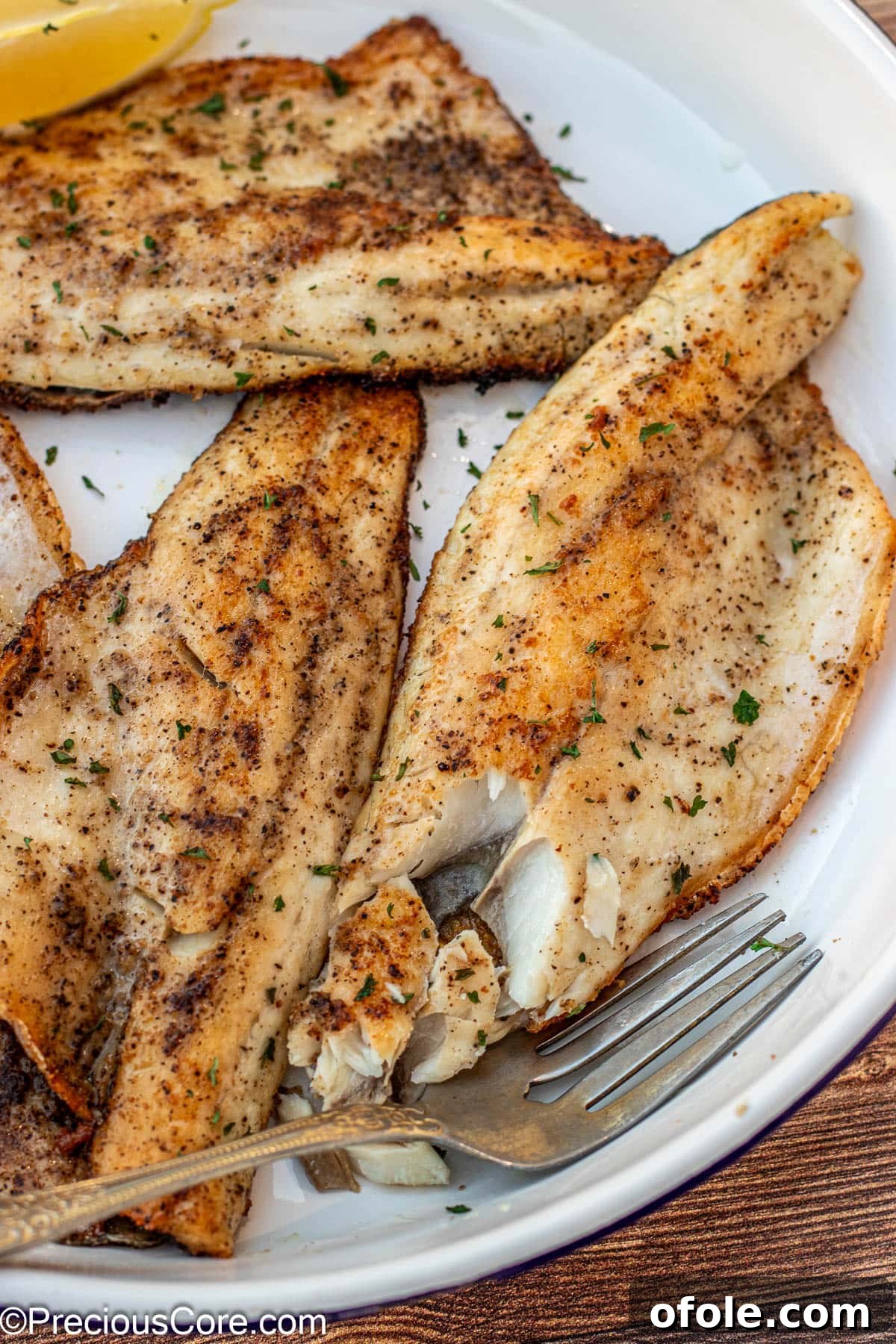
Why This Pan Seared Sea Bass Recipe Works
Cooking fish is a passion of mine! Whether it’s creating Pan Grilled Salmon or preparing Lemon Butter Tilapia, fish is a regular staple in my home and frequently appears on my recipe testing schedule. There are numerous compelling reasons why this Pan Seared Sea Bass recipe stands out and quickly becomes a household favorite:
- Incredibly Easy & Fast: This recipe is a true marvel in its simplicity and speed. From start to finish, dinner is on the table in less than 15 minutes, with the fish cooking in a mere 3-4 minutes per side. In today’s demanding, fast-paced world, this recipe is an absolute winner. You can effortlessly fit making a wholesome, delicious dinner into even the busiest schedules. Imagine pan-searing your fish on one burner while simultaneously preparing some Sauteed Vegetables on another – a complete, satisfying meal ready in under a quarter-hour!
- Excellent Source of Protein & Nutrients: Sea bass is not only delicious but also a powerhouse of nutrition. It’s remarkably high in lean protein, low in calories, and an outstanding source of Omega-3 fatty acids, which are crucial for heart health and brain function. Health experts often recommend consuming up to 12 ounces (equivalent to about two average meals) of fish and shellfish per week, particularly those lower in mercury, making sea bass a smart and healthy choice for your diet.
- Highly Adaptable: Can’t find sea bass at your local market? No problem! This recipe is incredibly forgiving and adaptable. You can easily substitute sea bass with any other firm-fleshed white fish fillets you can find. Excellent alternatives include salmon (though it has a stronger flavor), whiting fish, trout, snapper, or responsibly farmed tilapia. This flexibility ensures you can enjoy this quick and tasty meal no matter what’s available.
- Universally Family-Friendly: This dish is a hit with everyone, from the youngest eaters to adults. The mild flavor and tender texture make it a crowd-pleaser, ensuring that each family member will enjoy their own perfectly cooked piece of fish. If you have a large family, like mine, the recipe can be easily scaled up to feed everyone without compromising on quality or cooking time. It’s also elegant enough to be the star of a special date night dinner, proving its versatility for any occasion.
- Restaurant-Quality at Home: Achieve that perfectly crispy skin and moist, flaky interior often found only in high-end restaurants, right in your own kitchen. The simple technique and minimal ingredients highlight the natural deliciousness of the fish, making you feel like a gourmet chef without the complex steps.
Top Tip: Cooking fish in a hot cast iron skillet is a game-changer! It imparts an unparalleled crispiness to the skin and a beautiful golden-brown color. If you haven’t added a cast iron skillet to your kitchen arsenal yet, I highly recommend getting one. They are extremely useful, versatile, and essential tools for achieving perfectly seared dishes.
Essential Ingredients for Pan Seared Sea Bass
Crafting this quick and flavorful Pan-Seared Sea Bass requires just seven staple ingredients, including your basic salt and pepper. Here’s a closer look at what you’ll need and why each component is essential:
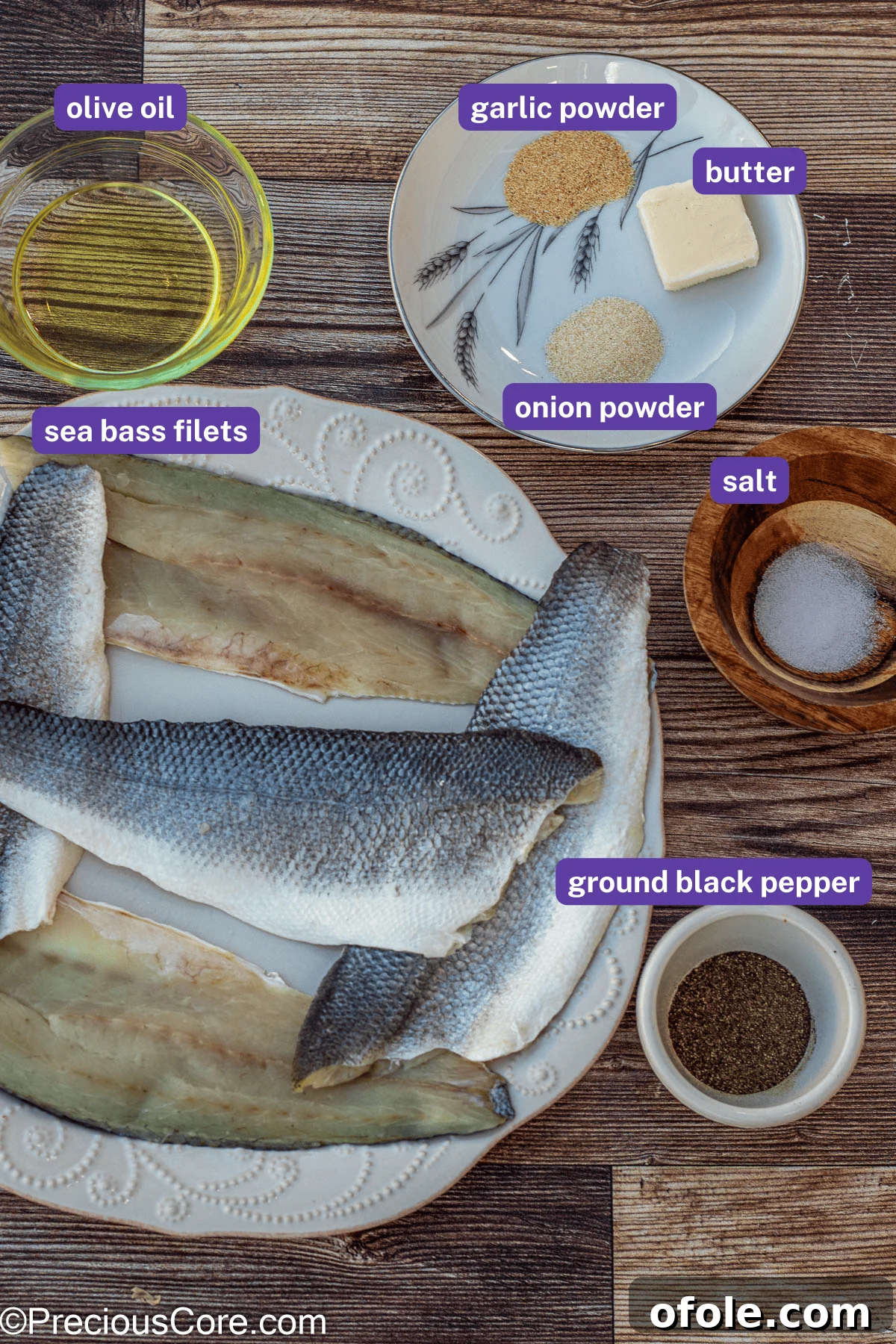
- Sea Bass Fillets: The star of our dish! You can typically source high-quality sea bass from the fresh seafood counter or frozen section of your local grocery store. As mentioned, European Sea Bass is an excellent choice for its mild flavor and firm texture. Remember, if sea bass isn’t available, feel free to substitute with other firm-fleshed fish fillets like salmon, snapper, or even tilapia.
- Olive Oil: Essential for searing! Olive oil serves two primary purposes: it generously coats the pan, creating a non-stick surface that allows the fish to cook evenly and flip easily, and it contributes to that coveted golden-brown, crispy exterior. Don’t be shy with the oil – a good amount ensures your fish won’t stick. For an alternative, avocado oil works wonderfully due to its high smoke point and neutral flavor.
- Onion Powder & Garlic Powder: These two simple, aromatic spices are the secret to elevating the flavor of your sea bass from good to exceptional. They provide a foundational savory depth that complements the fish’s mildness without overpowering it, creating a truly irresistible taste profile.
- Salt & Black Pepper: Fundamental seasonings that enhance the natural flavors of the fish. Use a good quality salt (like sea salt or kosher salt) and freshly ground black pepper for the best results. These act as flavor enhancers, bringing out the delicate nuances of the sea bass.
- Unsalted Butter: Added towards the end of cooking, a pat of butter melts into a rich, flavorful basting liquid. This finishing touch infuses the fish with a luxurious, buttery essence, adding finesse and a glossy sheen that makes the dish even more appealing.
- Minced Fresh Parsley (for garnish): While optional, a sprinkle of fresh minced parsley adds a beautiful pop of color and a fresh, herbaceous note that brightens the entire dish.
- Lemon Slices or Wedges (for serving): A squeeze of fresh lemon juice over cooked fish is transformative. It adds a vibrant, zesty freshness that cuts through the richness and truly brings the flavors to life. Always serve your pan-seared sea bass with plenty of lemon on the side.
For a complete list of ingredients with precise measurements, please refer to the detailed recipe card at the bottom of this page.
Step-by-Step Guide: How To Cook Pan Seared Sea Bass to Perfection
Pan-searing is arguably one of the easiest and most effective ways to cook sea bass fillets, yielding a delightful crispy exterior and tender interior. The key to even cooking and optimal texture is to always bring your fish to room temperature before it hits the pan. Here’s how to achieve perfectly Pan Seared Sea Bass every time:
- Prepare the Fish: Remove your sea bass fillets from the refrigerator approximately 30 minutes before you plan to cook them. This allows the fish to come closer to room temperature, promoting more even cooking. Critically, pat both sides of the fish fillets thoroughly dry with paper towels. This step is non-negotiable for achieving that desirable crispy skin! You may rinse them first if you wish, but ensure they are perfectly dry afterward.
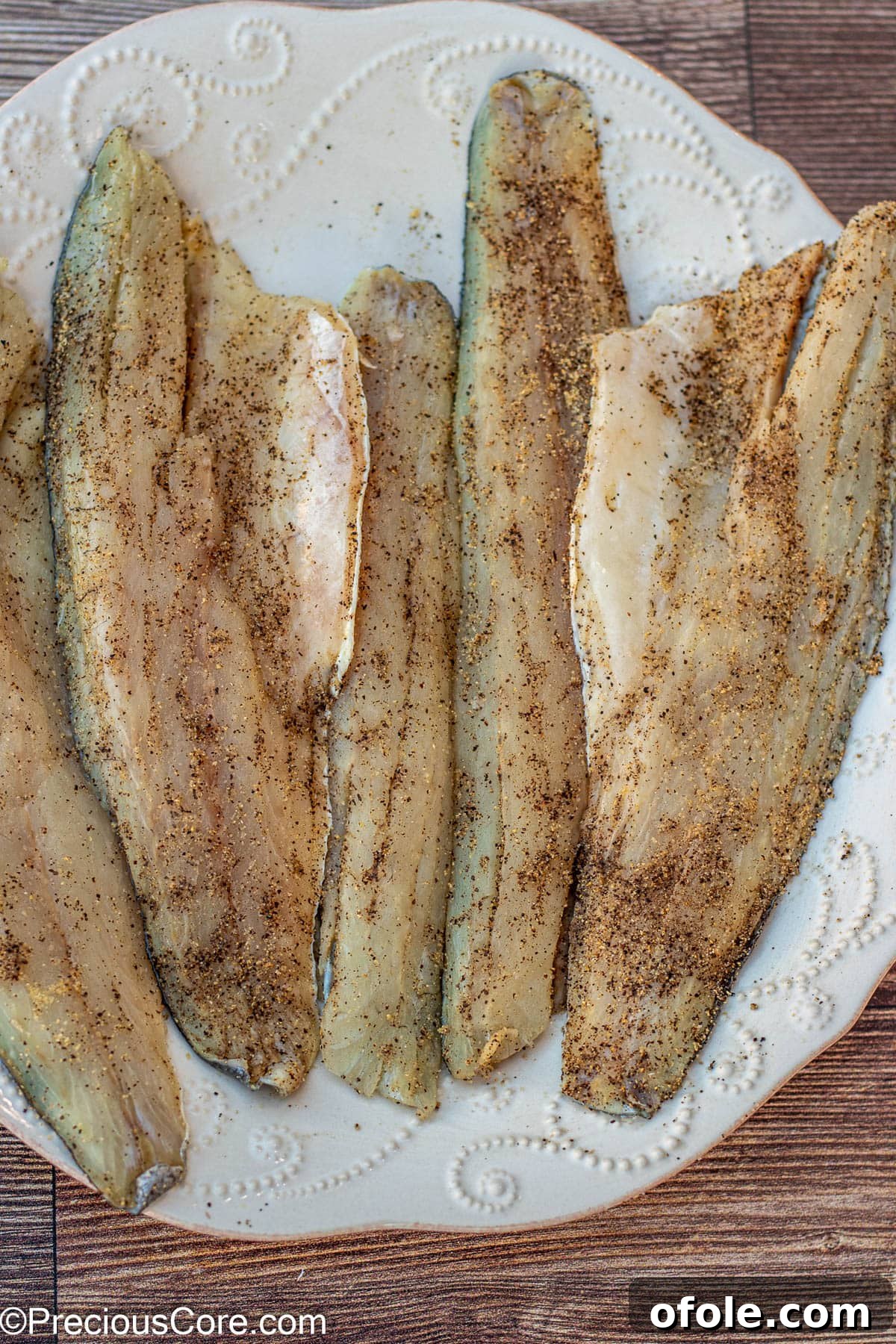
- Season Generously: Once the fish is dry, season both sides evenly with salt, ground black pepper, garlic powder, and onion powder. Don’t be afraid to be generous; sea bass has a mild flavor and can absorb these aromatics beautifully.
- Heat Your Skillet: Place a large, heavy-bottomed skillet – a cast iron skillet is highly recommended for its superior heat retention and even cooking – over medium-high heat. Allow it to get very hot. Add the olive oil (or avocado oil) and swirl it around to completely coat the bottom of the pan. The oil should shimmer but not smoke, indicating it’s ready.
- Add the Fish to the Pan: Carefully place the seasoned sea bass fillets into the hot skillet, skin-side down first. If your fillets have skin, cooking them skin-side down initially helps render the fat and achieve a wonderfully crispy skin. Gently press down on each fillet with a spatula for a few seconds to ensure full contact with the hot pan, which promotes even searing and prevents curling. If you are using a smaller skillet, cook the fish in batches to avoid overcrowding the pan, which can steam the fish instead of searing it.
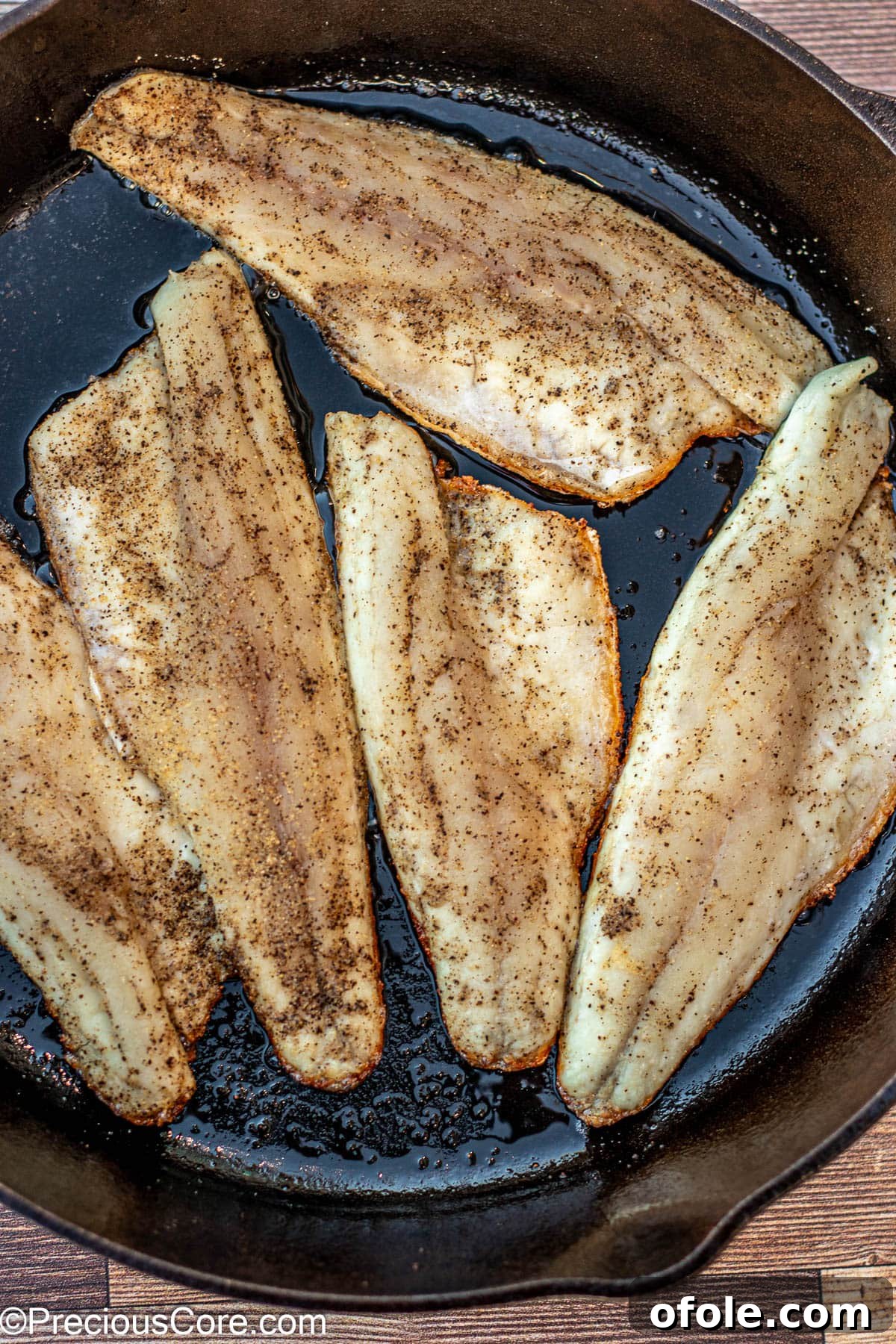
Top Tip: Always start by cooking the fish skin-side down first. This technique is crucial for developing that irresistible, crispy skin while also protecting the delicate flesh from overcooking too quickly.
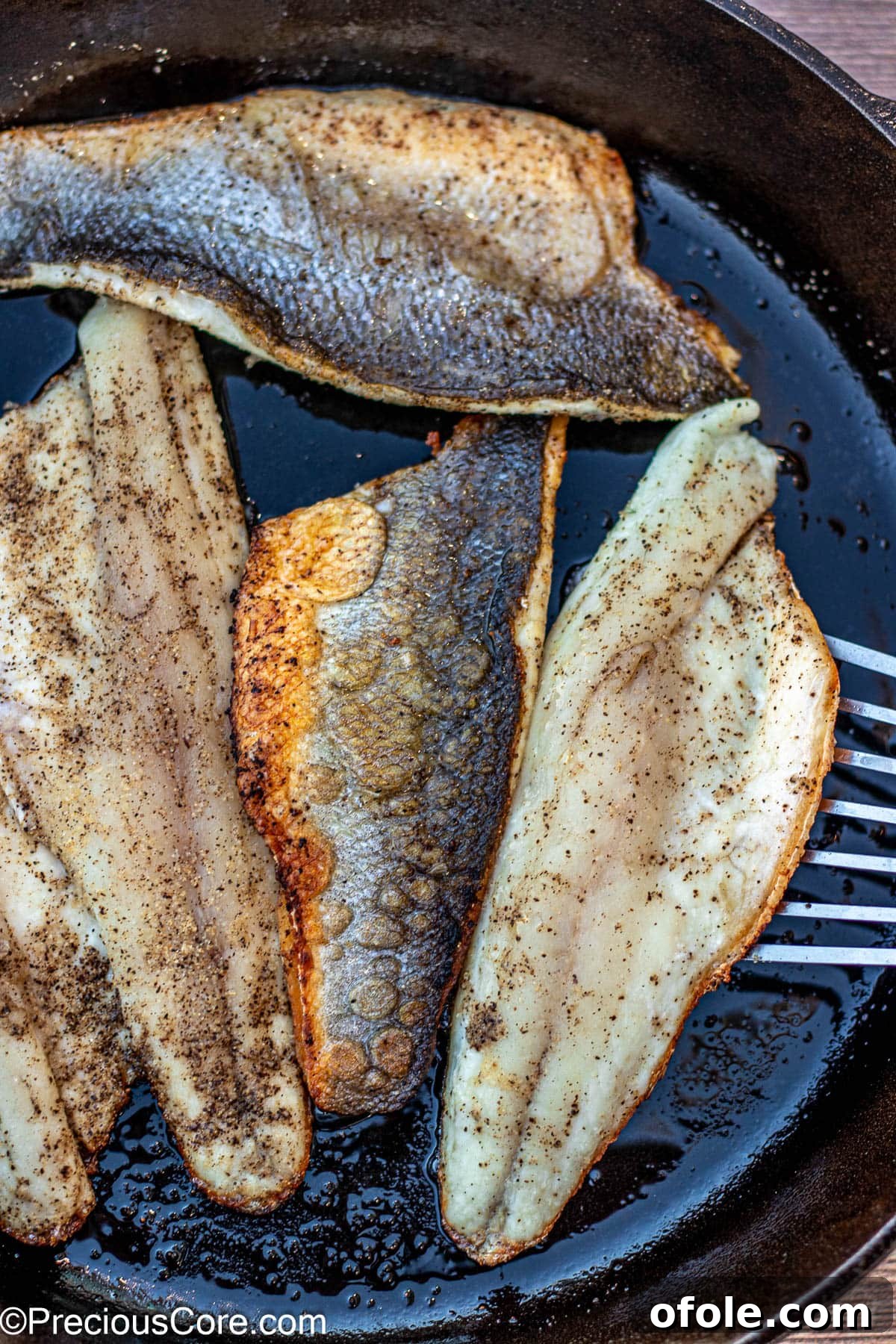
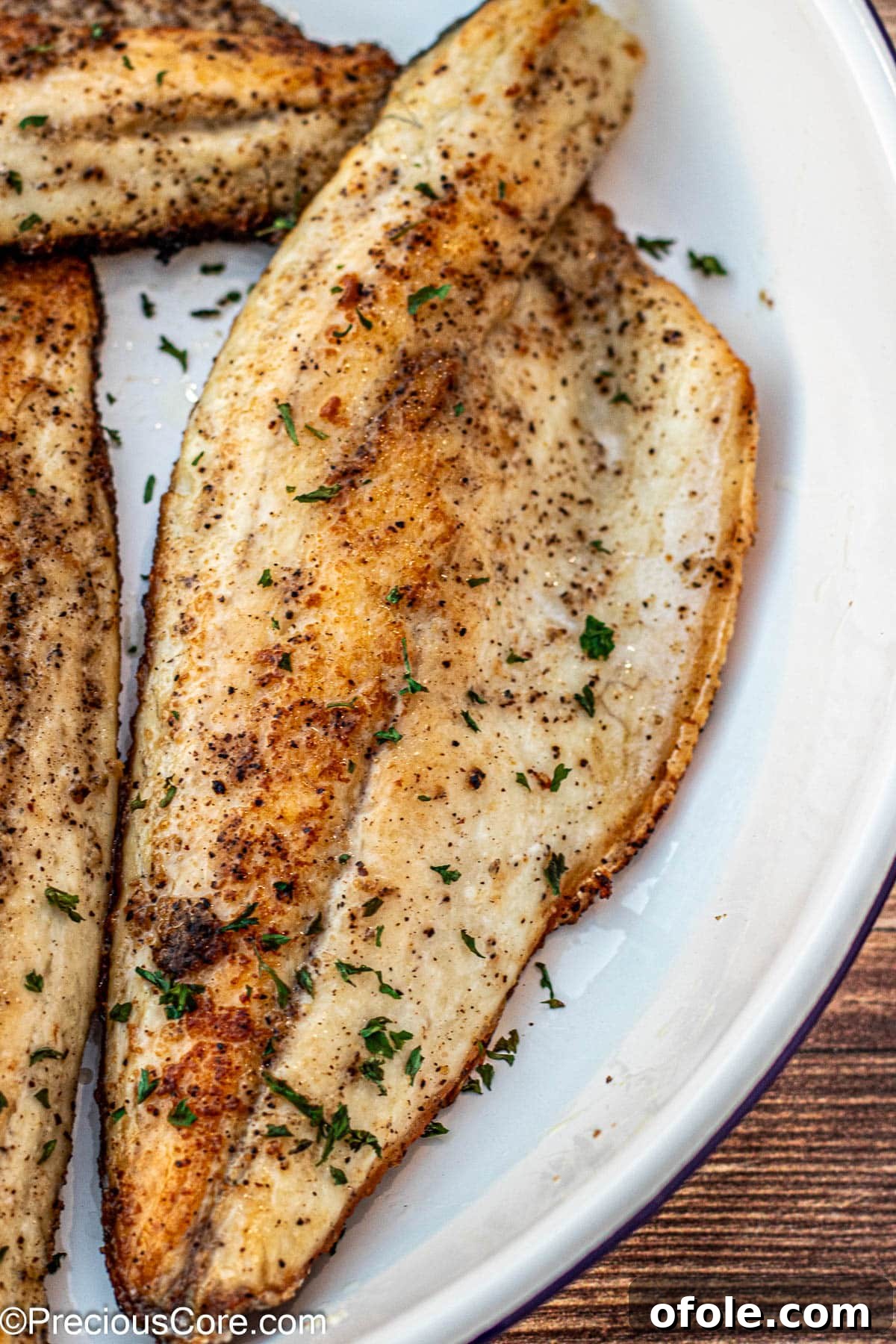
- Pan Sear to Golden Perfection: Cook the fish for approximately 2-3 minutes on the first side (skin-side down) until the skin is beautifully crispy and golden brown. Cooking times will vary slightly depending on the thickness of your fillets. Once the first side is cooked, carefully flip each fillet to the other side using a fish spatula.
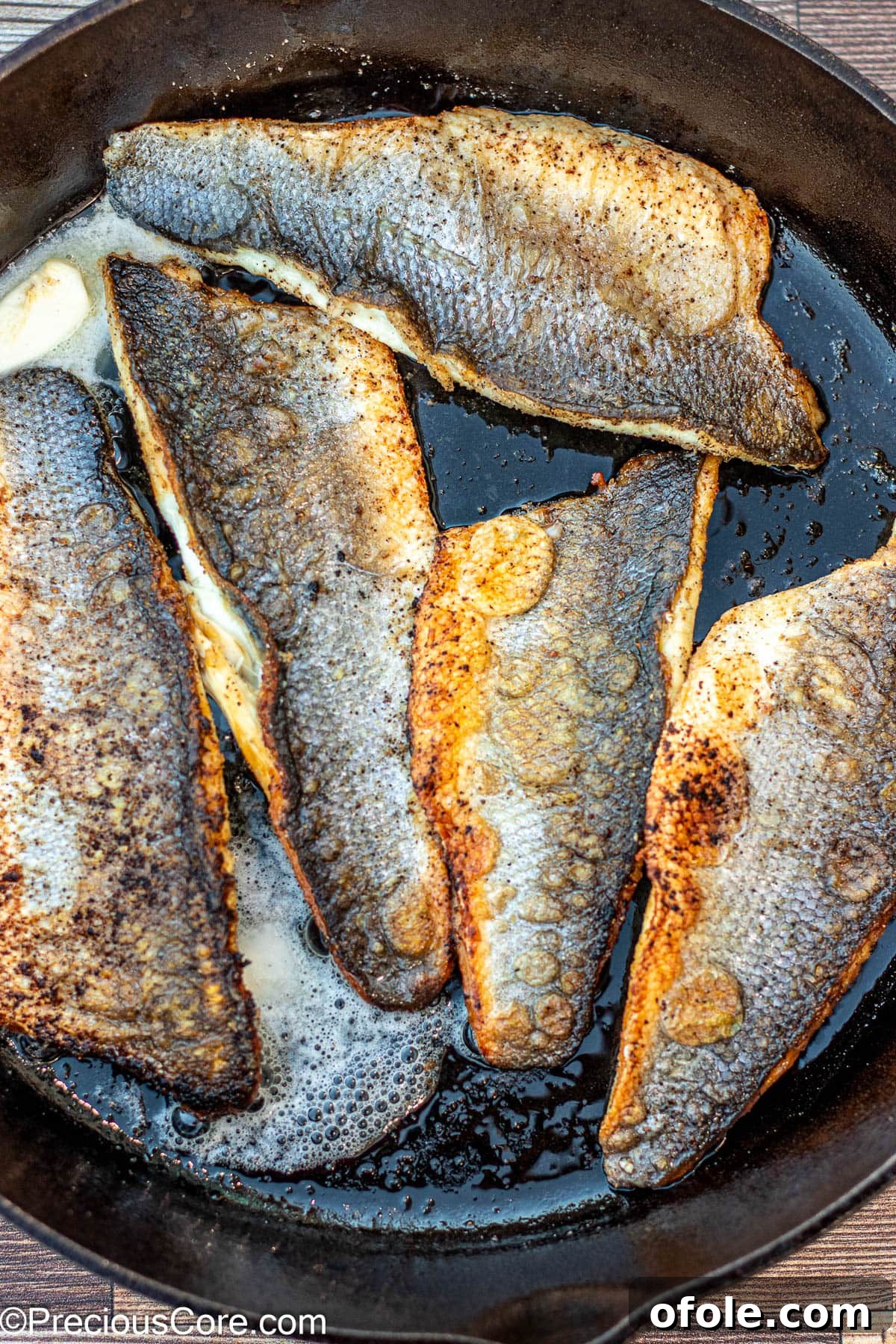
- Finish Cooking & Baste with Butter: Cook on the second side for another 1-2 minutes, or until the fish is opaque throughout and flakes easily with a fork. Be careful not to overcook, as sea bass can dry out quickly. At this point, add the unsalted butter to the pan. As it melts, tilt the pan slightly and use a spoon to baste the melted butter over the cooked fish fillets. This adds incredible flavor and moisture.
- Serve & Garnish: Remove the sea bass from the pan and transfer to serving plates. Garnish immediately with freshly minced parsley and serve with plenty of lemon slices or wedges on the side. A final squeeze of fresh lemon juice just before eating brightens the flavors and adds a refreshing tang. You can also experiment with other fresh herbs you have on hand, such as dill or chives, for varied flavor profiles.
Expert Tips and Recommendations for Perfect Fish
Achieving perfectly pan-seared sea bass is simple, but a few expert tips can elevate your dish from good to unforgettable. Follow these recommendations for the best results every time:
- Source Quality Fish: Always purchase your sea bass from a reputable fishmonger or a grocery store with a high-turnover seafood section. Ensure that the label on the fish indicates it is responsibly farmed or sustainably sourced. This not only supports ethical fishing practices but also generally means you’re getting a higher quality product.
- Check for Freshness: Fresh fish should have a mild, clean, ocean-like scent – sometimes described as sweet or salty. If the fillets smell distinctly “fishy” or strong, it’s a clear indicator that the fish is past its prime, and you should avoid buying it.
- Pat Dry for Crispiness: This step cannot be overstated! Always pat fish fillets thoroughly dry with paper towels before seasoning and cooking. Excess moisture prevents the fish from searing properly, leading to a steamed texture rather than a crispy, golden-brown crust. Rinsing the fish before drying is fine, but ensure complete dryness afterward.
- Inspect for Bones: Even “boneless” fillets can sometimes have stray pin bones. Before seasoning, gently run your fingers along the length of the fillet to check for any small, sharp bones the fishmonger might have missed. Use a pair of clean tweezers to carefully remove any you find.
- Ensure a Hot, Greased Pan: Make sure your pan (especially if using cast iron) is well-heated and generously greased with oil before adding the fish. The oil should be shimmering hot, but not smoking. This prevents the fish from sticking to the pan and helps create that beautiful, professional sear.
- Don’t Overcrowd the Pan: If you’re cooking multiple fillets and your skillet isn’t large enough to accommodate them without touching, cook the fish in batches. Overcrowding cools down the pan temperature, which results in steaming the fish rather than searing it, leading to a less crispy and less flavorful outcome.
- Consider a Simple Sauce: While this sea bass is delicious on its own, a quick sauce can add another layer of flavor. For a delightful accompaniment, try making an easy lemon butter sauce, similar to the one I used in my Fish In White Sauce recipe. It’s a perfect complement to the delicate fish.
- Flavor Variations: Feel free to experiment with different herb and spice combinations. A pinch of paprika can add color and a smoky note, while dried dill or oregano can bring a Mediterranean touch.
Don’t forget to also check out my recipe for Mediterranean Baked Fish, a healthy and tasty baked dinner alternative!
Recipe FAQs: Your Sea Bass Questions Answered
The best way to cook sea bass for a crispy exterior and tender interior is to sear it in a hot pan with a good amount of oil. Ensure both the pan and the oil are adequately heated before adding the sea bass. This crucial step guarantees a beautiful, golden-brown crust and prevents the fish from sticking.
For fillets that are about half an inch thick, sea bass typically cooks for 2 to 3 minutes per side. Thinner fillets may cook faster, in as little as 1 minute per side, while thicker cuts might require an additional minute or two. The entire pan-frying process for sea bass can be completed in less than 10 minutes, making it an incredibly quick meal.
Yes, branzino is indeed a type of sea bass. It is the Italian name for European and Mediterranean sea bass. So, if you see branzino at your fish market, you can confidently use it as a delicious substitute for sea bass in this recipe.
Sea bass is cooked when its flesh turns opaque throughout and flakes easily when gently prodded with a fork. You should see distinct layers of muscle that separate easily. Avoid overcooking, as this can make the fish dry and tough.
Yes, you can cook frozen sea bass, but it’s best to thaw it first for optimal results. Thaw overnight in the refrigerator or use the cold water method (place sealed fish in a bowl of cold water). Ensure it’s completely thawed and patted very dry before seasoning and searing, as extra moisture will prevent proper browning.
Serving Pan Seared Sea Bass: Delicious Pairings
This versatile Pan Seared Sea Bass pairs beautifully with a wide array of side dishes, from fresh salads to hearty grains and vegetables. Here are some of my favorite recommendations to complete your meal:
Garlic Butter Green Beans
Avocado Salad
Crisp Lettuce Salad
Corn Avocado Salad
Garlic Herb Rice
Buttermilk Mashed Potatoes
More Delicious Fish & Seafood Recipes to Explore
If you loved this simple and flavorful Pan Seared Sea Bass recipe, you’re sure to enjoy these other fantastic fish and seafood dishes that are just as easy to make:
Mediterranean Baked Fish
Catfish Pepper Soup
Lemon Butter Tilapia
Sheet Pan Salmon and Broccoli
If you make this recipe, please consider leaving a star rating and a comment below! Your feedback helps others discover the recipe, and I always love hearing from you. Thank you!
Pan Seared Sea Bass
Thin sea bass fillets are perfectly seasoned and pan-seared to create a quick, flavorful, and healthy meal. May this Pan Seared Sea Bass become a regular on your dinner table. You can easily replace sea bass with any other firm-fleshed fish if preferred.
Ingredients
- 1 pound sea bass fillets (I used 5 thin fillets per pound)
- ½ teaspoon salt
- ⅛ teaspoon ground black pepper
- ½ teaspoon garlic powder
- ½ teaspoon onion powder
- 2 Tablespoons olive oil
- Minced parsley for garnish
- Lemon wedges for serving
Instructions
- Prep fish: Remove fish fillets from the fridge 30 minutes before cooking so they can come to room temperature. Pat the fillets thoroughly dry with paper towels. This is key for crispy skin.
- Season fish: Sprinkle both sides of the fish with salt, pepper, garlic powder, and onion powder, ensuring even coating.
- Heat skillet and add fish: Place a large skillet, preferably a cast iron skillet, over medium-high heat until hot. Add the olive oil and swirl to coat the pan. Carefully add the fish, skin side down, to the hot skillet, pressing gently to ensure full contact with the pan.
- Pan sear fish: Cook on the skin side for about 2-3 minutes until the skin crisps up and turns golden brown. Then, flip the fillets and cook on the other side for another 1-2 minutes. Cooking times will vary based on fillet thickness; thinner fillets cook extremely fast. Be careful not to overcook the fish; it’s done when it flakes easily with a fork.
- Serve: Serve immediately with lemon wedges and garnished with fresh minced parsley for a bright, fresh flavor.
Notes
- Patting fish dry: Don’t skip the step of patting the fish dry with paper towels. This is essential for achieving a nice, crispy crust.
- Cook in batches: If you have a smaller skillet, cook the fish in batches to avoid overcrowding. A large 12-inch cast iron skillet often allows for cooking all fillets at once.
- Scale the recipe: This recipe can easily be scaled to suit your needs. For larger families, consider doubling or tripling the ingredients.
Nutrition Information (per serving)
- Calories:
- 174 kcal
- Carbohydrates:
- 1g
- Protein:
- 20g
- Fat:
- 10g
- Saturated Fat:
- 2g
- Polyunsaturated Fat:
- 2g
- Monounsaturated Fat:
- 6g
- Cholesterol:
- 91mg
- Sodium:
- 369mg
- Potassium:
- 298mg
- Fiber:
- 0.1g
- Sugar:
- 0.03g
- Vitamin A:
- 102 IU
- Vitamin C:
- 0.1mg
- Calcium:
- 19mg
- Iron:
- 1mg
Additional Info
- Course:
- Dinner
- Cuisine:
- Western