
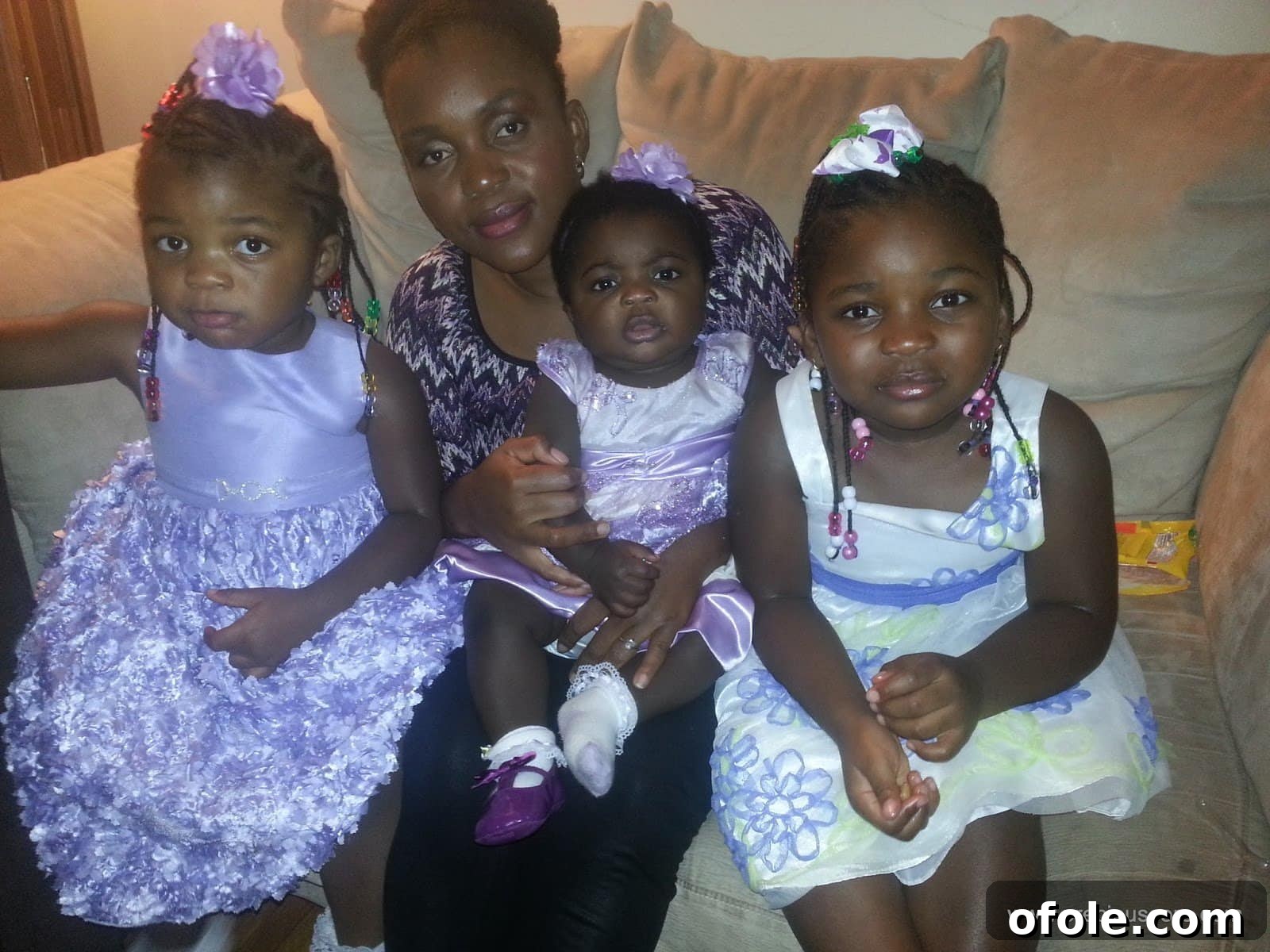
Celebrating Daughters: Breaking the Cycle of Gender Preference in African Societies
As Women’s Month concludes, it’s a poignant moment to reflect on the invaluable role and unique charm of daughters in our lives. This discussion aims to spotlight the often-overlooked significance of girl children, especially within cultural contexts where gender preference can unfortunately overshadow their inherent worth. Join us as we explore the challenges faced by mothers of daughters and advocate for a renewed appreciation for every child.
Scrolling through my social media feed recently, I came across a heartwarming post from a friend. She was ecstatically thanking God for the birth of her “prince.” This joy was particularly profound for her, as she had welcomed three daughters into the world before finally having a son. Her celebratory tone resonated with a common narrative in many African societies, where the birth of a male child often signifies a sense of completion or societal validation for a family.
The comments section beneath her post, however, quickly revealed a deeper, more complex layer of cultural expectations. One friend’s comment, written in Cameroonian Pidgin English, stood out: “You should thank God that you have given birth to your husband’s successor. If you didn’t get a son, your husband would have sent you packing from that marriage.” This blunt statement, while perhaps an exaggeration, starkly highlights the immense pressure and the precarious position many women face when they do not bear a male heir.
The Cultural Burden: “Chop Chair” and the Undervaluation of Girls
In many parts of Cameroon, a male child is traditionally referred to as the “chop chair” of his father. This term carries significant weight, signifying that he is the rightful and primary heir, destined to succeed his father, inherit family property, and perpetuate the family name. This cultural designation often places an overwhelming emphasis on male offspring, inadvertently diminishing the perceived value and future role of female children. Daughters, in this traditional framework, are rarely accorded this prestigious position, leading to a profound gender disparity right from birth.
Consequently, when a woman gives birth to a female child, the event may not be celebrated with the same enthusiasm or receive the same societal recognition as the birth of a boy. This disparity can create a deeply unsettling experience for mothers. A woman who has given birth to two or more daughters before having a son often describes the arrival of her male child as stepping “into light after darkening moments of daughters only.” This metaphor vividly illustrates the societal pressure and the psychological burden she carries, feeling that her worth as a woman and a wife is somehow tied to her ability to produce sons.
This widespread phenomenon, which I term the “daughter-only syndrome,” is not merely an observation but a lived reality for many. It is an issue that I have not only witnessed firsthand within my community but have also experienced personally, underscoring its pervasive and deeply ingrained nature in our society. The term “cankerworm,” though erroneously coined by some, captures the destructive impact of this bias on families and individuals.
Personal Encounter: The Weight of Expectation
My own journey brought this issue into sharp focus after the birth of my second daughter. While I was enveloped in the joy and ravishing beauty of my newborn, a phone call from my sister-in-law disrupted this peace. Her opening words were direct and laced with cultural disappointment: “We hear you are only giving birth to girls.” As is typical for some African women steeped in traditional beliefs, she openly expressed her dismay, implying that I had failed to produce a “chop chair” for my husband, instead offering another female child.
Such comments are not isolated incidents; they are symptomatic of a broader societal problem. This is precisely where violence against women often begins – subtly, with the devaluation of a girl child from the moment of her birth. She is frequently overlooked, undervalued, and, in some extreme cases, made to feel unwanted, even by those closest to her. This initial subtle rejection can lay the groundwork for a lifetime of gender-based discrimination and bias.
Societal Pressures and Their Devastating Consequences
The relentless societal pressure on mothers to bear a son is immense. Women are implicitly, and sometimes explicitly, pushed to conceive again rapidly, driven by the fervent hope that “It’s a boy this time.” The anticipation, the anxious waiting for news of the baby’s gender, can be agonizing. When the outcome is another girl, the disappointment can be crushing, leading to feelings of desperation and inadequacy. Tragically, this despair can sometimes manifest as ill-treatment towards the very child, a “God-sent queen,” who becomes an unintended recipient of her mother’s frustration and societal shame.
The psychological toll is profound. Mothers who only bear daughters often develop an inferiority complex, especially when juxtaposed with those who are “proud” mothers of strong boys. This internal struggle is fueled by external comparisons and the pervasive notion that their family line is incomplete without a male heir. Many women, trapped in this cycle, continue to produce a “chain of female children” in their desperate quest for a son, only to find their hope diminishing with each successive birth, eventually feeling “stuck with daughters only.”
The consequences extend far beyond emotional distress. In some cases, husbands may resort to taking second wives, explicitly for the purpose of bearing sons, placing an even greater burden on the first wife. Beyond enduring verbal abuse for their perceived “incapacity” to produce sons, these women then face the added challenge of battling competitive co-wives. Some, in their desperation, even visit traditional healers or witch doctors, seeking supernatural interventions to “cleanse their wombs” and enable them to conceive “real” children, highlighting the depth of their anguish and the pressure they face.
Is it not abundantly clear that the stigma attached to women who bear only daughters has devastating and harmful effects? I refer to this pervasive issue as the “accepted madness” because it is a discriminatory practice that, despite its profound harm, is often normalized and accepted within society. Recognizing the severe implications of this bias, even medical institutions in Cameroon are beginning to challenge and actively put a “STOP sign” to it.
A Medical Stance: Promoting Equality from the Womb
A prime example of this progressive stance is the Mbingo Baptist Health Center in Douala, Cameroon’s economic capital. This facility was where I underwent an ultrasound during my first pregnancy. While I understood and appreciated the crucial medical benefits of having my womb examined by a radiologist, I also harbored a personal desire to know my baby’s sex, eagerly anticipating whether I should plan for blue or pink baby items. To my initial disappointment, the medical specialist firmly declined to reveal the baby’s gender to me. However, her subsequent explanation provided profound clarity and solidified my understanding of their policy.
According to a midwife who taught our antenatal class at the same hospital, the decision to withhold information about a baby’s sex was a direct response to the negative emotional reactions observed in mothers. Many women, intensely desiring boys, became visibly frustrated and disheartened when ultrasound images revealed they were carrying girls. This despondency was not only detrimental to the mothers’ mental well-being but, more critically, it was recognized as harmful to the unborn child. Carrying a feeling of rejection, even subconsciously, towards a baby based on its gender is profoundly detrimental to the child’s overall well-being and development once born.
The dedicated maternal health workers at the Mbingo Baptist Health Center are staunch believers in the widely recognized Pidgin English saying, “Pikin na pikin.” This powerful and succinct phrase translates to “every child is valuable, no matter their sex.” This philosophy underpins their decision, emphasizing that all children, regardless of gender, deserve to be welcomed, cherished, and celebrated equally from the very beginning of their lives. By not revealing gender, they aim to foster unconditional acceptance and love.
Global Echoes: Economic Disparity and Inheritance Rights
This issue of gender preference and its associated economic disparities is not confined to one region. A report by the Huffington Post highlighted a chilling example from Nigeria, where a “baby factory” uncovered months ago in the southeastern region sold infant boys for significantly more money than girls. This shocking revelation underscores the deep-seated economic value placed on male children over female children in some contexts, treating human lives as commodities in a grim marketplace driven by gender bias.
Furthermore, the same Huffington Post report cited former Nigerian judge Oby Nwankwo, who stated, “Widows and daughters have faced massive obstacles when trying to inherit family resources after the death of a patriarch.” This discriminatory practice in inheritance laws further explains why women and girls often feel disadvantaged. They are denied equal access to crucial resources and opportunities that could ensure their financial independence and well-being, perpetuating a cycle of dependency and perceived lesser value compared to men and boys.
Redefining Value: A Mother’s Unwavering Pride
As someone from a typical African society, I unequivocally declare that a girl is not, by any measure, a less important child. While I may cherish the thought of having a son in the future, this desire stems not from a feeling of being “handicapped” as a mother of only girls, nor from seeking societal approval. Instead, it is a personal wish to experience the unique joys and challenges that come with raising children of both sexes, enriching my understanding of parenthood and human development. I am not seeking validation from the propagators of this “accepted madness” that perpetuates gender bias.
If bearing only girls is considered a crime by some, then I gladly embrace the role of the “culprit.” If the prevailing thought is that having only daughters renders a mother inferior, then for me, it only serves to make me superior – a champion of strength, resilience, and unconditional love. My pride in my daughters is boundless and unwavering.
Consider a prominent example that challenges this archaic mindset: the President of the United States, Barack Obama, has two beautiful daughters. Are Malia and Sasha not endearing, intelligent, and poised young women? Is Michelle Obama, the former First Lady, in any way “handicapped” or considered lesser because she bore only girls? The answer, resounding and emphatic, is a definitive “No!” This high-profile example serves as a powerful testament that a family built around daughters can be one of strength, influence, and profound joy.
It is undeniable that our culture has, for too long, perpetuated the insidious idea that boys are inherently better than girls. Sadly, this narrative continues to be “bought” by far too many mothers, leading to generations of internalized bias and unfulfilled potential for girls. It is time, unequivocally, to change this “weird line of thinking.” We must actively challenge and dismantle these outdated beliefs that diminish the worth of half of our population.
Embrace and Empower: A Call to Action
Let us make a conscious and collective effort to celebrate our daughters at every stage of their lives: from the moment they are conceived in our wombs, to their birth, and throughout their journey into adulthood. Let us proudly “flaunt and flaunt them” – not to provoke, but to inspire, to demonstrate the immense joy, potential, and strength that girl children bring to our families and communities. Let our unwavering pride become a catalyst, turning the envy of those who still cling to the belief in boys as “better kids” into a realization of the intrinsic value of every daughter.
Just recently, my daughter approached me, wrapped her arms around me, and in her sweet, innocent voice, whispered, “Mummy, I love you.” In that moment, the depth of her affection, her genuine warmth, and her radiant spirit reaffirmed a truth I hold dear: daughters are truly and uniquely sweet. They bring a distinct kind of love, companionship, and strength into our lives that is irreplaceable.
To echo and amplify the beautiful sentiment from our culture, “Pikin na pikin and girl pikin na better pikin!” This powerful Pidgin English phrase translates to: “Every child is special, and girls are super special!” It’s a message of profound equality, celebrating the unique brilliance and preciousness of girl children, urging us all to embrace and uplift them as the remarkable individuals they are destined to become.
First published in my journal at WorldPulse.com