
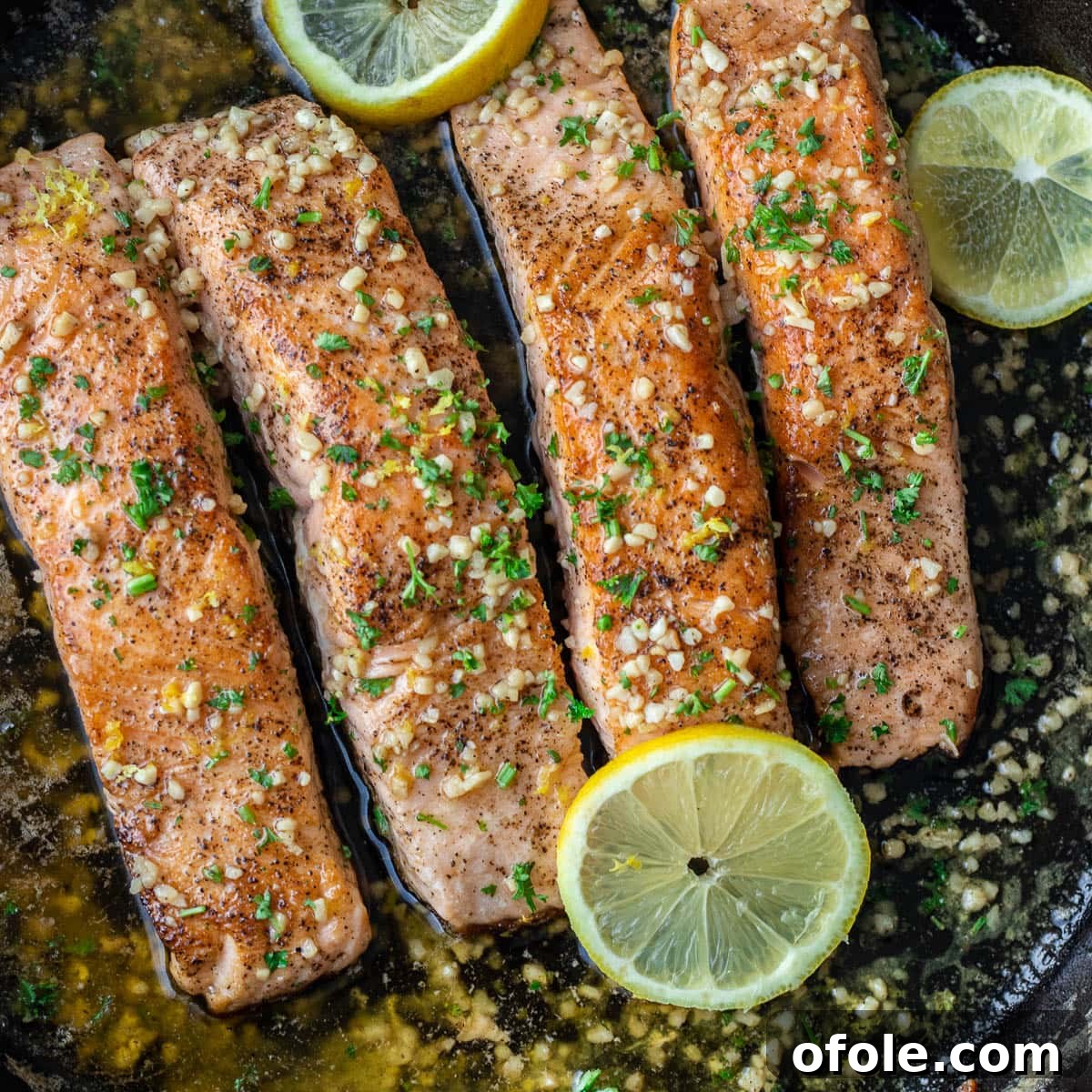
Prepare to elevate your weeknight dinners with this exceptional Lemon Butter Salmon recipe, ready to serve in 30 minutes or less! Crafted with just a handful of primary ingredients, this dish delivers an incredibly flaky, succulent salmon that rivals, if not surpasses, your favorite restaurant experiences. It’s a culinary delight that proves gourmet doesn’t have to mean complicated or time-consuming.
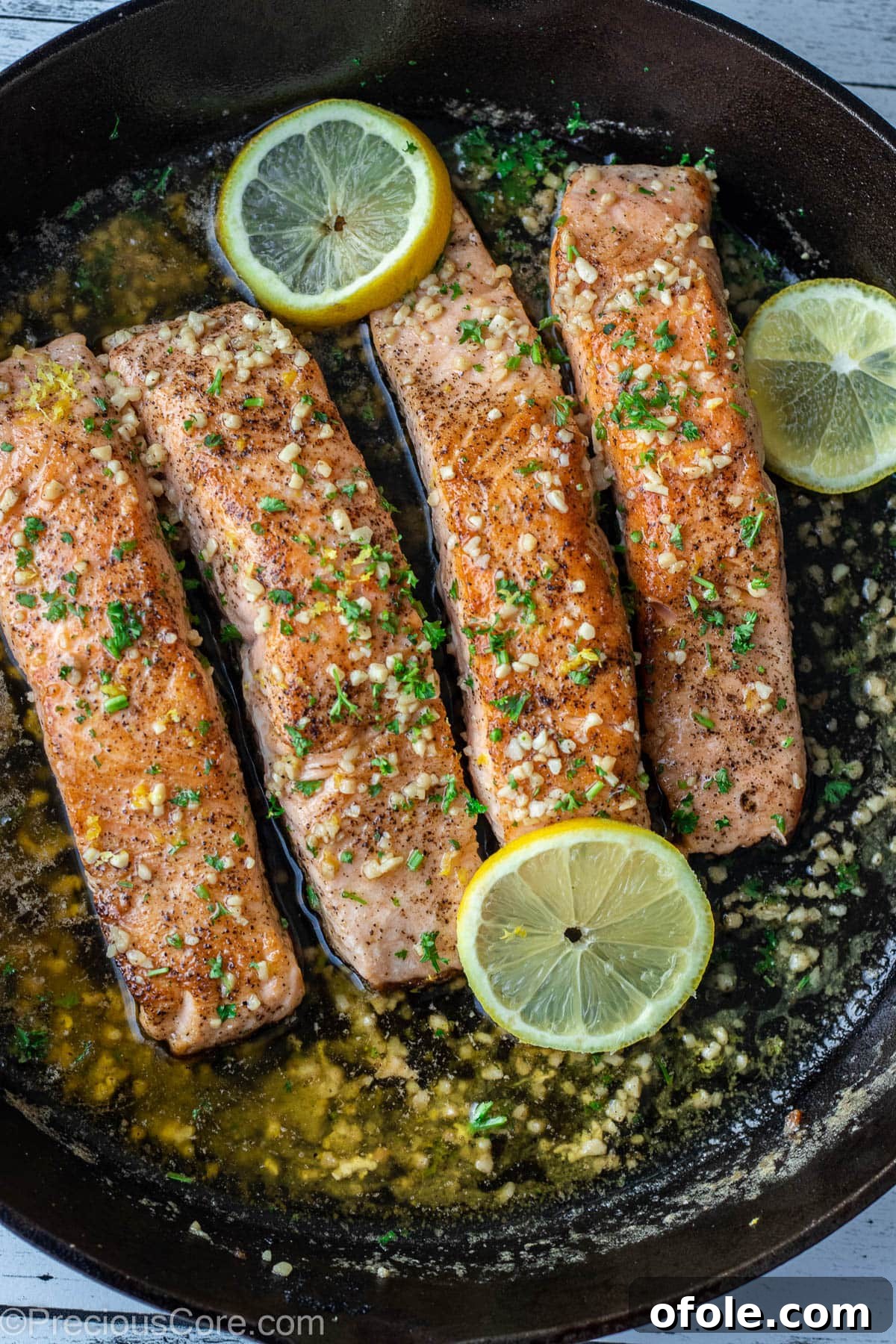
If you yearn for salmon that is wonderfully lemony, luxuriously buttery, subtly garlicky, and cooked to absolute perfection, then your search ends here. This isn’t just a recipe; it’s a revelation. Each bite of this pan-seared salmon is infused with a vibrant, flavorful sauce that transforms simple ingredients into an extraordinary meal. It’s the ideal choice for anyone looking to enjoy a healthy, protein-rich dish without sacrificing taste or spending hours in the kitchen.
Inspired by the simplicity and deliciousness of our Pan Grilled Salmon, this Lemon Butter Salmon takes classic flavors and amplifies them with a truly unforgettable lemon-infused butter sauce. Its rich aroma and exquisite taste are guaranteed to make it a staple in your cooking repertoire. Whether you’re a seasoned chef or a beginner in the kitchen, you’ll find this recipe incredibly approachable and immensely rewarding.
For more convenient and delicious salmon creations, be sure to explore our Salmon and Broccoli Sheet Pan recipe – a fantastic one-pan dinner solution. Don’t miss our speedy 17-minute Pan-Fried Teriyaki Salmon for an Asian-inspired twist, or our incredibly simple Baked Cajun Salmon for a spicy kick. Each recipe offers a unique way to enjoy this versatile and healthy fish.
Table of Contents
- The Magic of Lemon Butter Salmon
- Essential Ingredients for Success
- Tips for Thawing Salmon Properly
- Step-by-Step Guide to Perfect Lemon Butter Salmon
- Crafting the Irresistible Lemon Butter Sauce
- Mastering Salmon Doneness: A Cooking Guide
- Smart Salmon Buying Guide
- Understanding Different Types of Salmon
- The Abundant Health Benefits of Salmon
- Delicious Fish Substitutions for Salmon
- Exciting Flavor Variations
- Recommended Kitchen Equipment
- Top Tip for Flawless Salmon
- Frequently Asked Questions
- Storing and Reheating Leftover Salmon
- More Delicious Fish Recipes
- Perfect Side Dishes for Lemon Butter Salmon
- Lemon Butter Salmon Recipe Card
The Magic of Lemon Butter Salmon
There’s something truly magical about the combination of fresh salmon, bright lemon, and rich butter. This classic trio comes together to create a dish that’s both elegant and incredibly comforting. Our recipe focuses on maximizing these flavors, ensuring each fillet is succulent, tender, and bursting with zest. The beauty of this dish lies in its simplicity – high-quality ingredients allowed to shine through minimal, yet impactful, preparation. It’s a testament to the fact that sometimes, the best meals are the ones that celebrate natural flavors.
Essential Ingredients for Success
Creating extraordinary Lemon Butter Salmon begins with selecting the right ingredients. Beyond the basics of salt, pepper, and olive oil, here’s a closer look at the stars of this dish and why their quality matters:
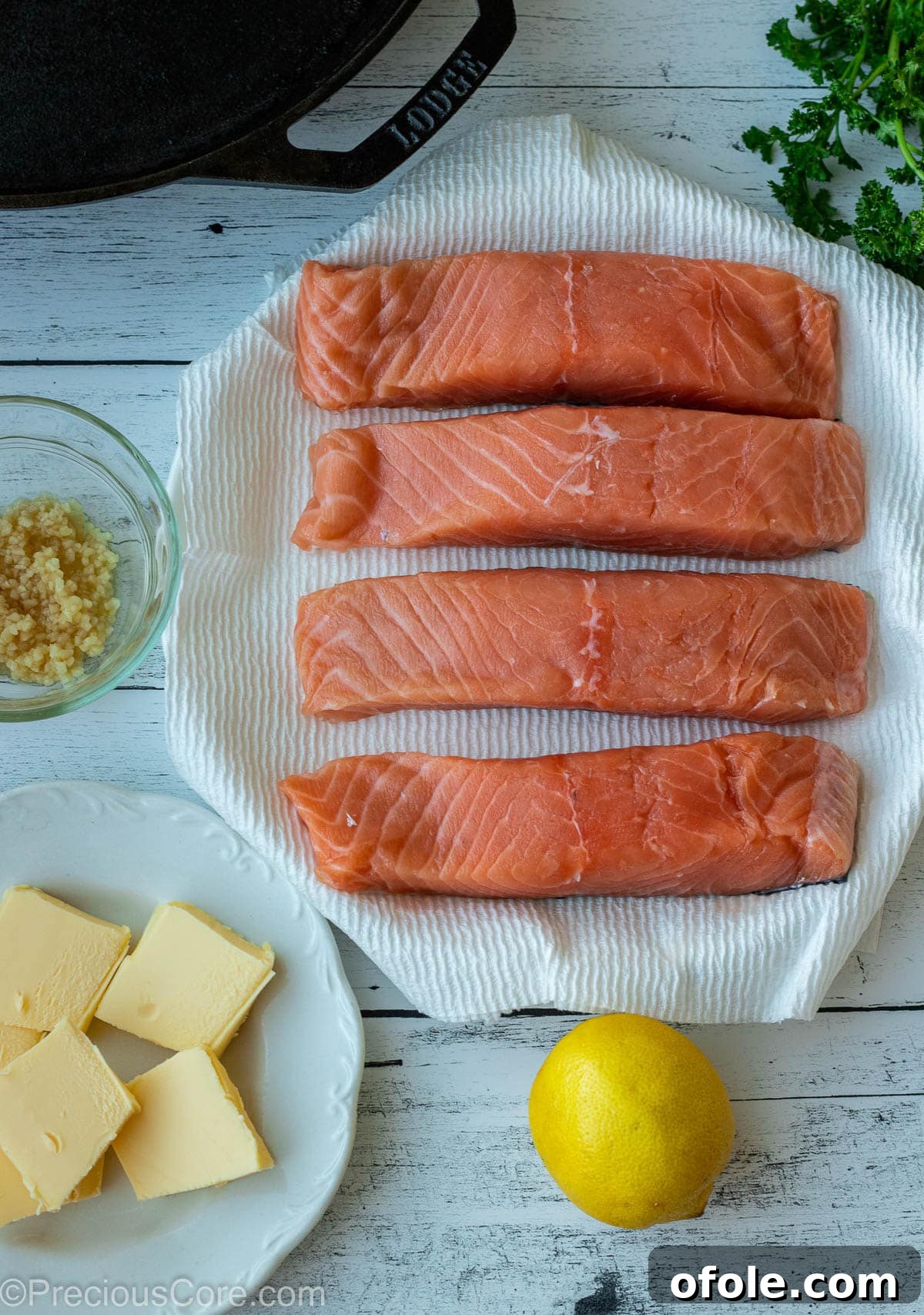
- Salmon: The foundation of our meal. Both fresh and frozen salmon fillets work beautifully. Opting for frozen salmon can sometimes be a superior choice as it’s often flash-frozen immediately after being caught, locking in freshness and nutrients. If using frozen, remember to thaw it properly (see section below) to ensure even cooking and optimal texture. Aim for fillets roughly 6 ounces each and about 1-inch thick for consistent results.
- Butter: This is where the richness comes from! Generous amounts of good quality butter are essential for creating that luscious, velvety sauce that coats every flake of salmon. We recommend using salted butter for an enhanced flavor profile, but unsalted butter can be used if you prefer to control the salt content more precisely.
- Fresh Lemon: Do not compromise on this! Freshly squeezed lemon juice is paramount for that bright, zesty flavor that defines this dish. Bottled lemon juice simply doesn’t compare. Additionally, garnishing with fresh lemon zest before serving adds an aromatic lift and intense lemon flavor without adding excessive sourness. Always zest your lemon before juicing it for ease.
- Minced Garlic: The aromatic backbone of our sauce. Freshly minced garlic provides a wonderful depth of flavor, perfectly complementing the lemon and butter. It’s a non-negotiable ingredient that adds warmth and complexity. For the best taste, mince fresh cloves rather than using pre-minced garlic.
- Olive Oil: Used for searing the salmon to achieve a beautiful golden crust. A good quality extra virgin olive oil works perfectly.
- Salt and Pepper: Simple, yet crucial for seasoning the salmon and balancing the flavors of the sauce. Use freshly ground black pepper for the best aroma.
- Fresh Parsley (for garnish): A sprinkle of fresh, vibrant parsley not only adds a pop of color but also a fresh, herbaceous note that brightens the entire dish.
Find the exact quantities and detailed measurements for each ingredient in the comprehensive recipe card at the bottom of this article.
Tips for Thawing Salmon Properly
Proper thawing is key to cooking salmon perfectly, ensuring it cooks evenly and maintains its delicate texture. Here are a couple of reliable methods:
- Overnight in the Refrigerator (Recommended): This is the safest and most recommended method. Simply transfer your vacuum-sealed frozen salmon from the freezer to the refrigerator and let it thaw overnight, typically for 8-12 hours. This slow thawing prevents bacterial growth and preserves the salmon’s quality.
- Quick Thaw in Cold Water: If you’re short on time, the cold water method is a great alternative. First, remove the salmon from its vacuum-sealed packaging. Place the fish in a sealable plastic bag (if it’s not already in one) to prevent it from getting waterlogged. Submerge the sealed bag in a bowl of cold water, ensuring the water completely covers the fish. Change the water every 15-30 minutes to keep it cold and accelerate thawing. Depending on the thickness of the fillets, this process usually takes about 30 minutes to an hour. Never use hot water, as this can start cooking the fish unevenly and compromise its texture.
Step-by-Step Guide to Perfect Lemon Butter Salmon
Achieving restaurant-quality Lemon Butter Salmon at home is surprisingly simple, requiring just four main steps. Your entire family will adore this flavorful and easy fish dinner!
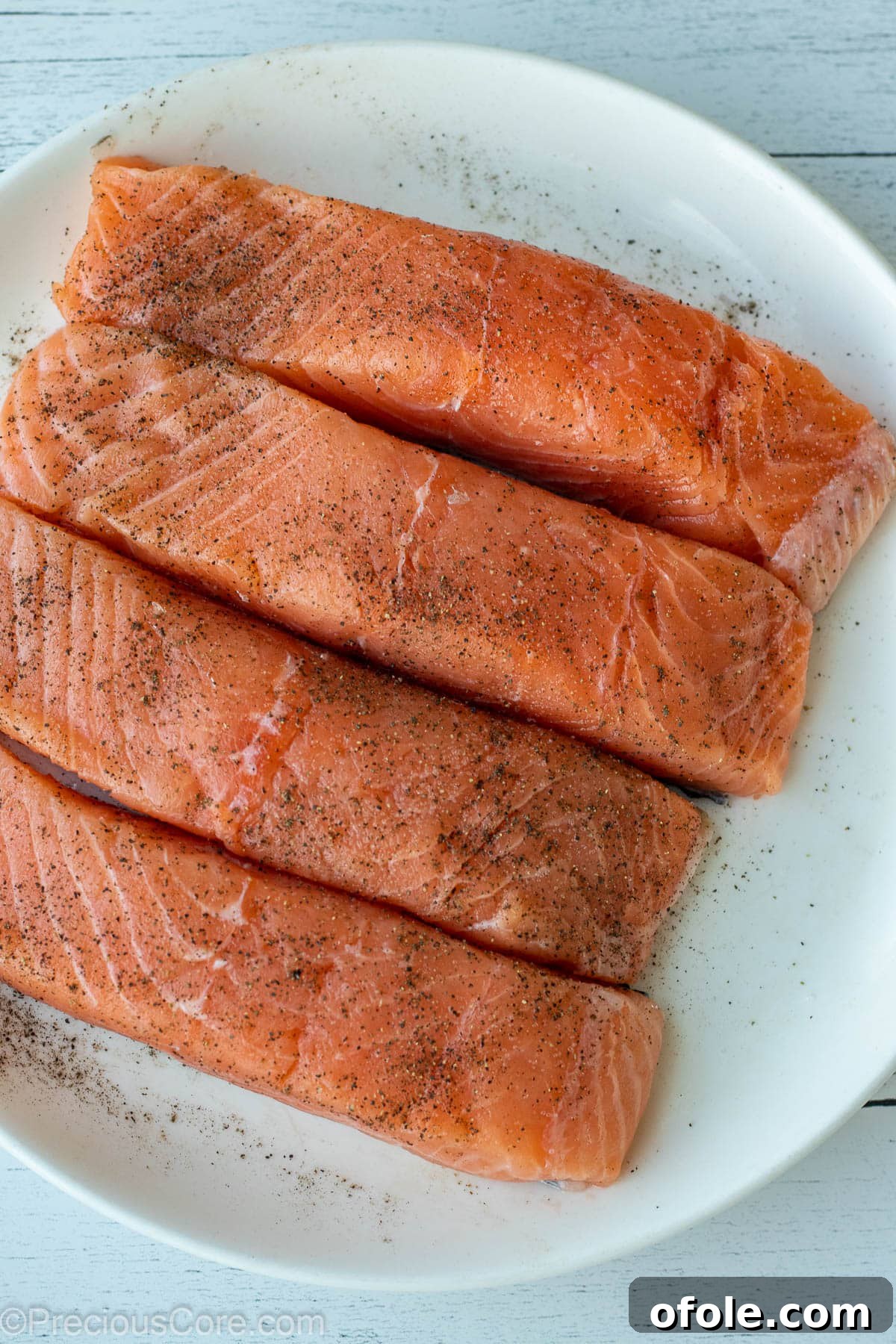
1. Prepare the Salmon: Begin by allowing your salmon fillets to come to room temperature for about 15-20 minutes; this promotes more even cooking. Crucially, pat the salmon thoroughly dry with paper towels on all sides. This step is vital for achieving a beautiful, crispy sear. Once dry, generously season both sides of each fillet with salt and freshly ground black pepper.
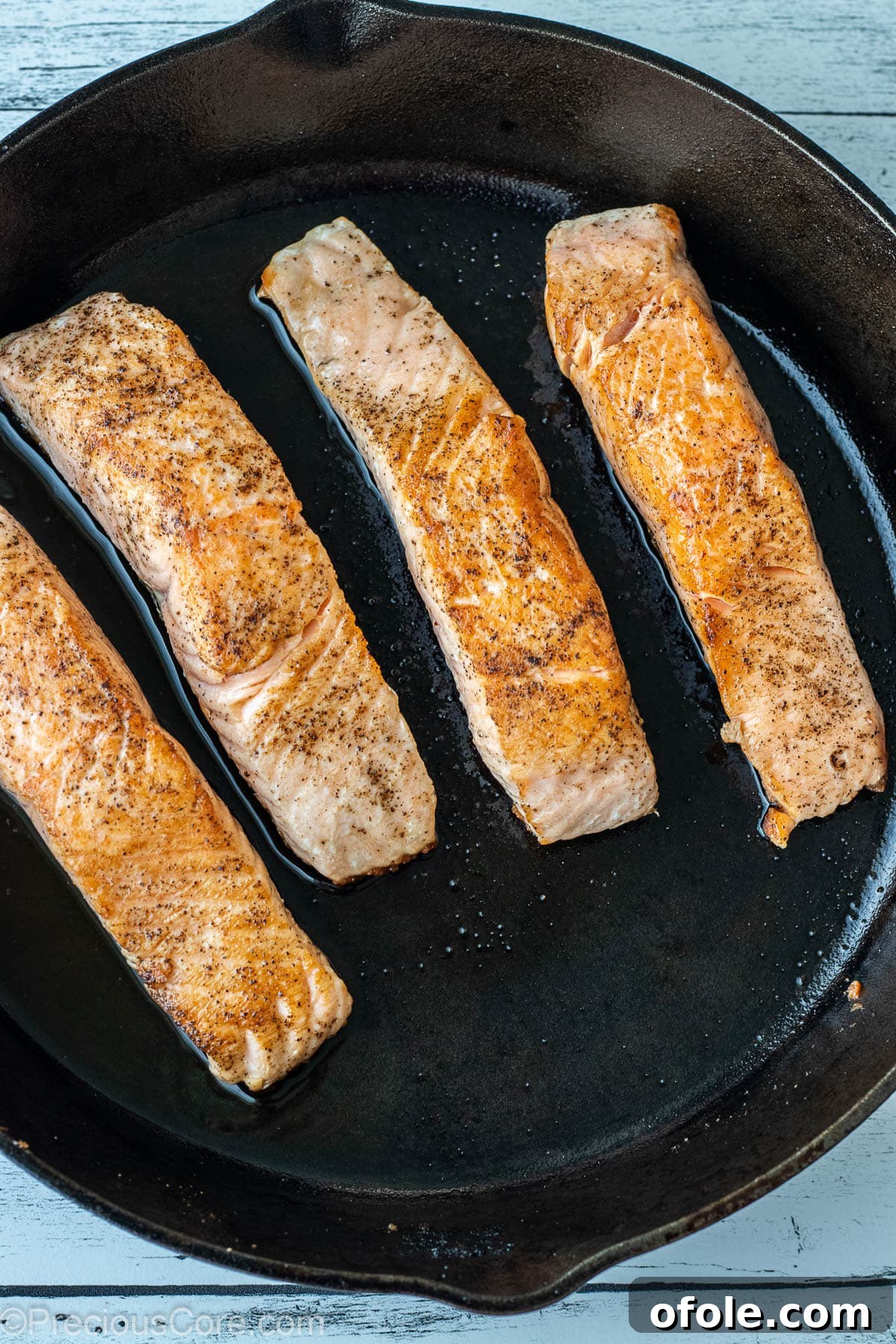
2. Pan-Sear to Perfection: Heat a large cast iron, stainless steel, or non-stick skillet over medium-high heat until it’s smoking hot. Add the olive oil and swirl to coat the bottom of the pan. Carefully place the seasoned salmon fillets, skin-side down (if your fillets have skin), into the hot pan. Sear undisturbed for about 3-4 minutes until the skin is crispy and the flesh turns opaque about one-third of the way up. Flip the salmon to the other side and cook for an additional 2-3 minutes, depending on thickness, until it’s nearly cooked through.
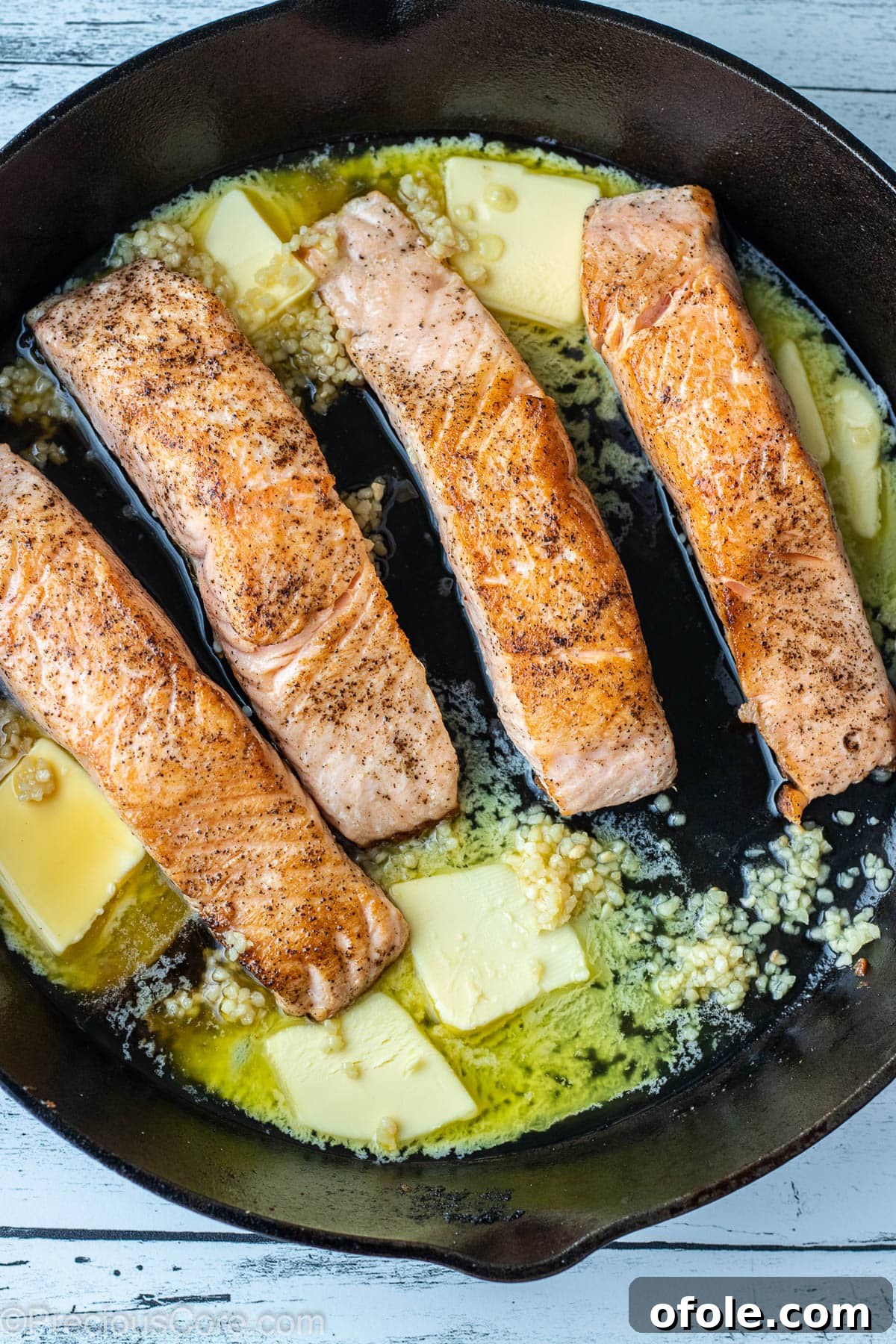
3. Infuse with Butter and Garlic: Reduce the heat to medium-low. Add the butter and minced garlic to the pan, letting the butter melt gently around the salmon. As the butter melts and the garlic becomes fragrant (be careful not to burn it), use a spoon to baste the salmon generously with this aromatic garlic butter. Continue basting for about 1-2 minutes, allowing the flavors to penetrate the fish and create a rich, glossy coating.
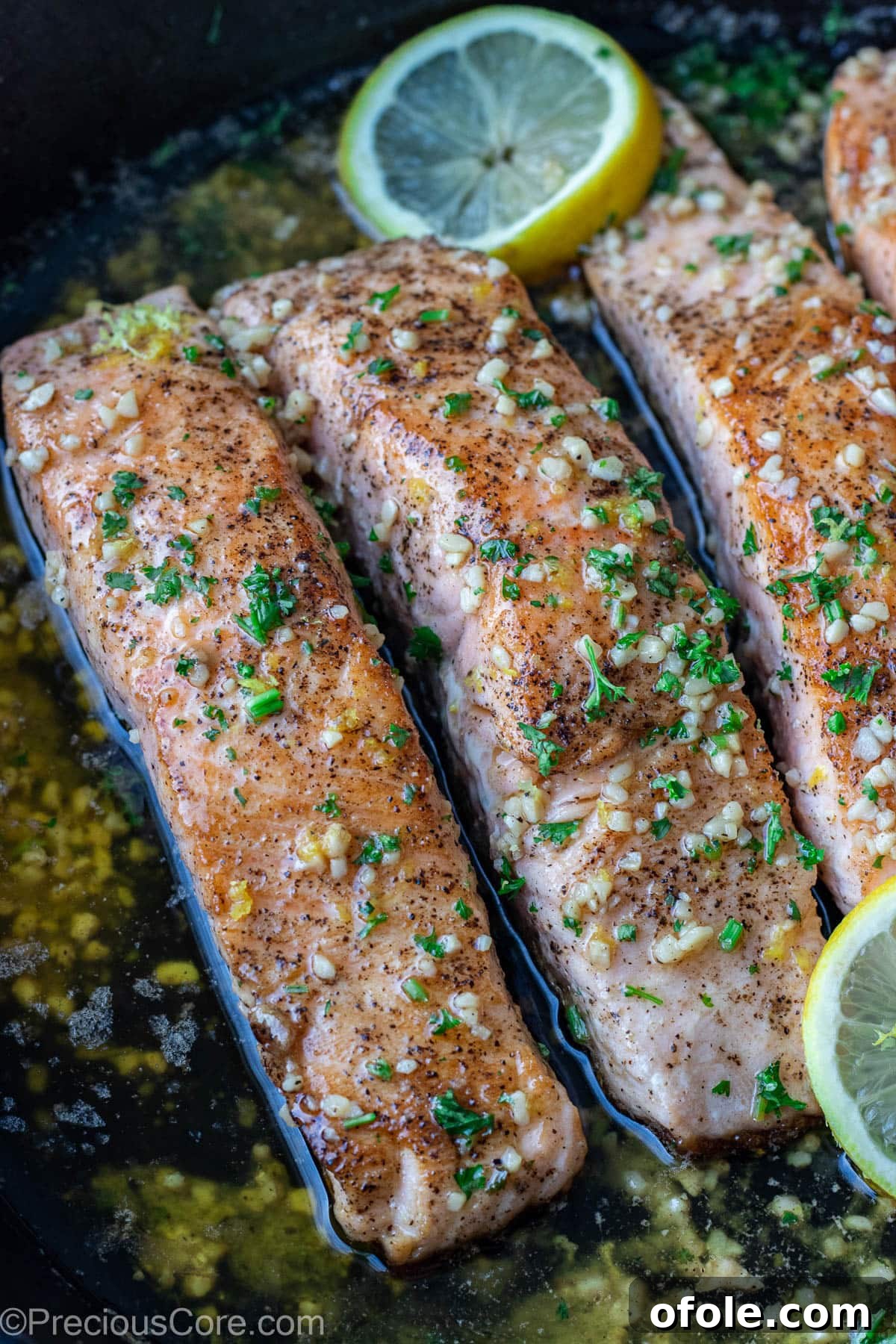
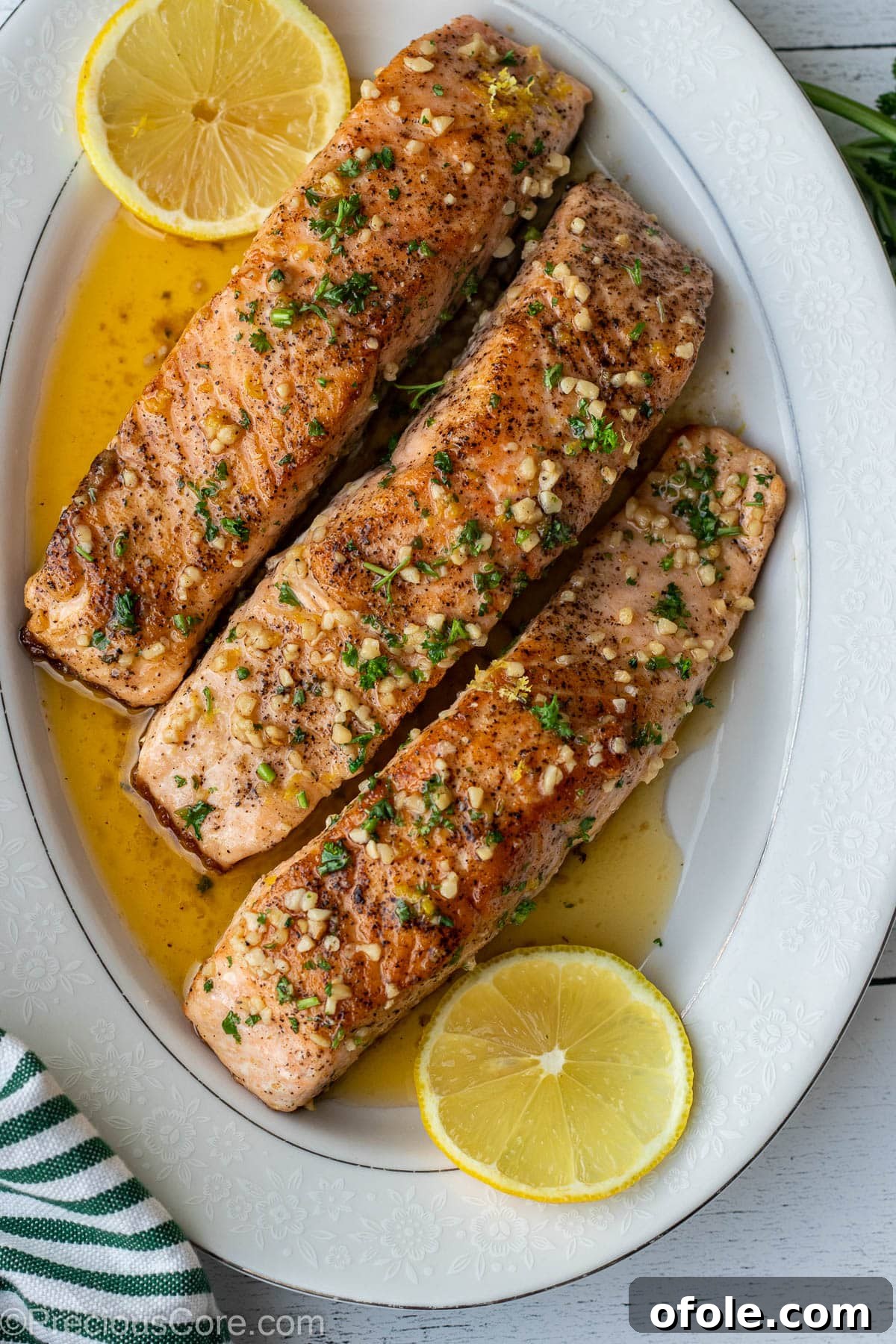
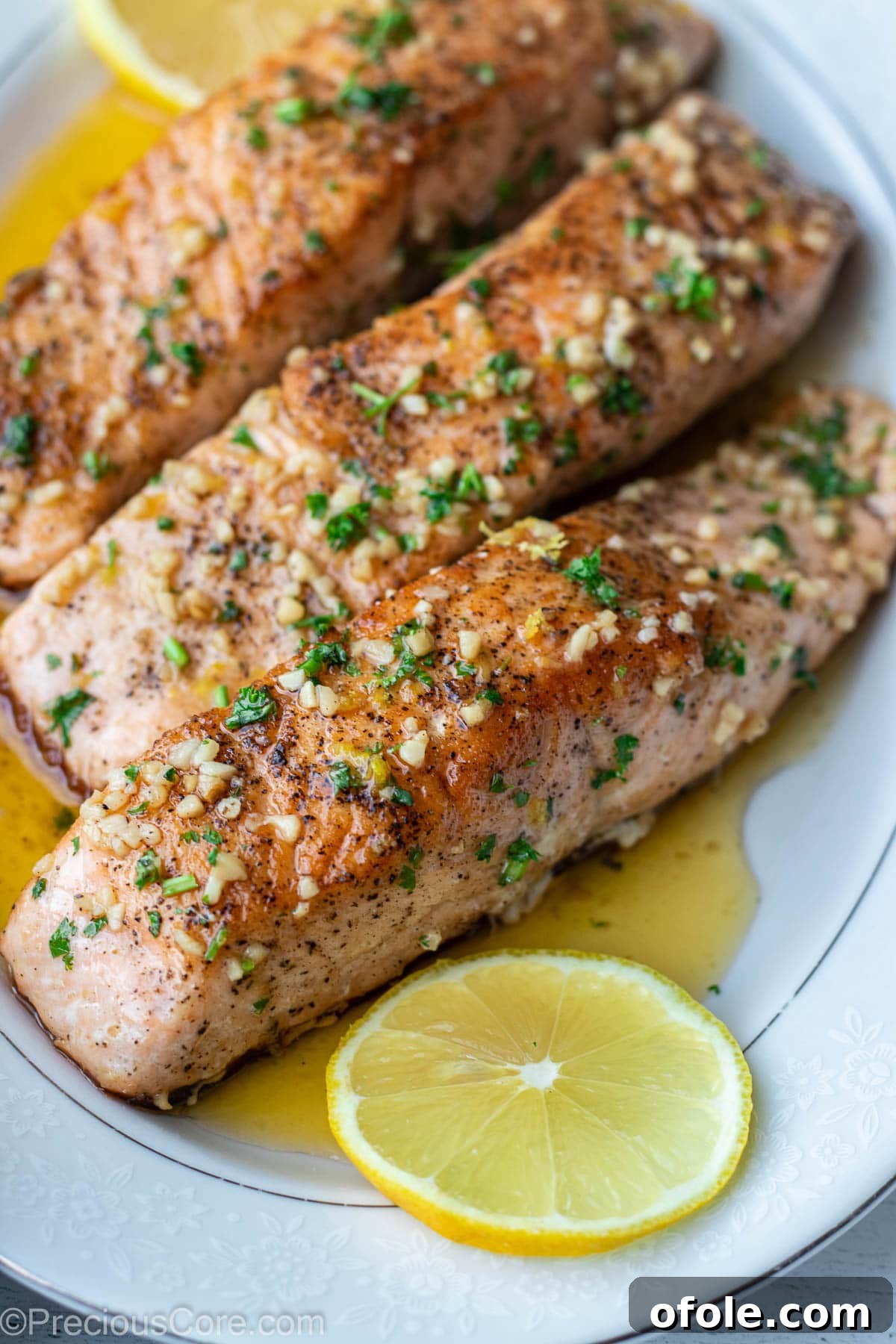
4. Finish and Serve: Remove the pan from the heat. Immediately sprinkle the fresh lemon juice over the salmon fillets. This touch of acidity brightens the dish and brings all the flavors into harmony. Garnish with a sprinkle of freshly minced parsley and a dash of lemon zest for an extra aromatic flourish. You can also add a few fresh lemon slices to the platter for presentation. Serve your exquisite Lemon Butter Salmon warm and enjoy!
Hint: Salmon cooks surprisingly quickly, so vigilance is key to prevent overcooking. A general guideline of 3-4 minutes on the first side and 2-3 minutes on the second side often hits the sweet spot for perfectly flaky and moist salmon. Only extend cooking times if you are dealing with unusually thick salmon fillets (over 1 inch).
Crafting the Irresistible Lemon Butter Sauce
While the recipe above incorporates the sauce directly into the pan, you can also prepare a separate, dedicated lemon butter sauce to drizzle over your salmon, or any other fish, chicken, or vegetables. This offers greater control over consistency and flavor intensity:
- First, gently melt unsalted butter in a small saucepan over low heat. Using unsalted butter allows you to season the sauce precisely to your taste.
- Once melted, add a teaspoon or two of finely minced garlic and sauté for about 30 seconds until fragrant, being careful not to brown it.
- Remove the pan from the heat and stir in freshly squeezed lemon juice to taste. Start with one tablespoon and add more if you desire a tangier sauce.
- Season the sauce generously with salt and freshly ground black pepper. Taste and adjust as needed.
To further enhance your lemon butter sauce, consider adding fresh herbs like finely chopped dill or chives, which pair wonderfully with salmon. A pinch of red pepper flakes can introduce a subtle warmth, while a teaspoon of lemon zest can intensify the citrus aroma without adding extra liquid.
Mastering Salmon Doneness: A Cooking Guide
Cooking salmon to perfection means achieving a balance between safety and succulence. The FDA recommends cooking salmon to a minimum internal temperature of 145 degrees Fahrenheit for food safety. However, for a truly tender, juicy, and flaky result, many chefs prefer to cook salmon to a slightly lower internal temperature, typically around 125-130 degrees Fahrenheit.
This is because residual heat, known as “carryover cooking,” will continue to cook the fish even after it’s removed from the heat source. By removing it at a slightly lower temperature, you ensure it reaches optimal doneness without becoming dry or tough.
- Using a Meat Thermometer: The most accurate way to check for doneness is with an instant-read meat thermometer inserted into the thickest part of the fillet. Aim for 125-130°F for medium-rare to medium, knowing it will rise to 135-140°F after resting. For those who prefer fully cooked salmon but still want it moist, remove it around 140°F.
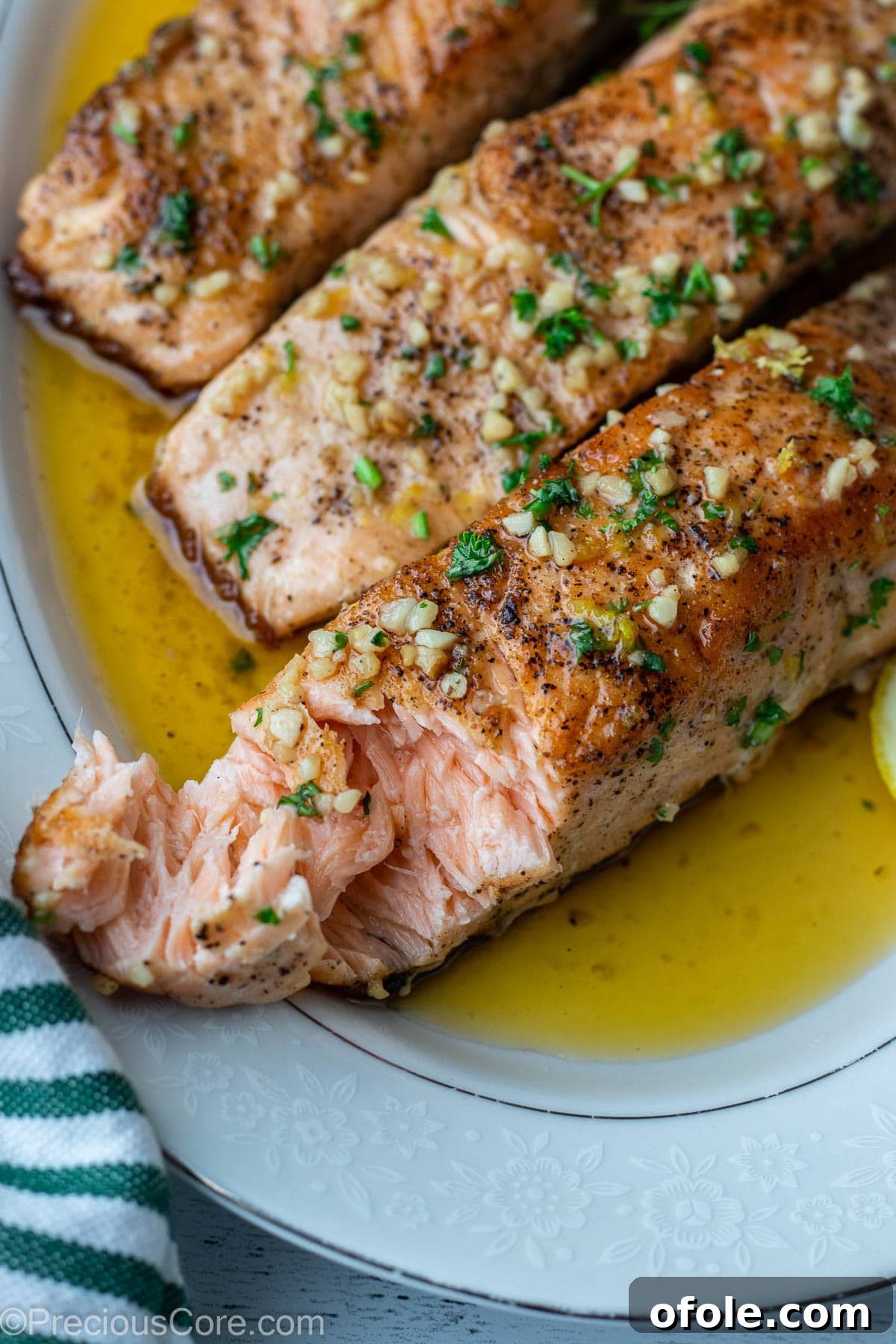
- Visual Cues: If you don’t have a thermometer, observe the fish. Cooked salmon will change from translucent to opaque. You can also gently flake the fish with a fork at its thickest point. If it flakes easily and the flesh separates into moist, tender sections, it’s done. A little translucency in the very center is often desirable for a juicier texture.
Remember, the goal is moist, flaky salmon, not dry and rubbery. A slightly undercooked fillet is preferable to an overcooked one, as you can always cook it a little longer, but you can’t reverse overcooking.
Smart Salmon Buying Guide
Choosing the right salmon is fundamental to the success of your dish. Here’s what to look for when you’re at the fish counter or grocery store:
- Wild-Caught vs. Farm-Raised: Whenever possible, opt for wild-caught salmon. It generally has a richer flavor, firmer texture, and a more vibrant color due to its natural diet. If wild-caught isn’t available or is out of your budget, look for responsibly farm-raised salmon. Labels such as “responsibly farmed,” “certified sustainable,” or those from organizations like the Aquaculture Stewardship Council (ASC) or Monterey Bay Aquarium Seafood Watch program indicate better environmental practices.
- Appearance: Fresh, high-quality salmon will have a bright, vibrant color (ranging from deep orange to rich red, depending on the type). The flesh should be firm and spring back when gently pressed. Avoid salmon that looks dull, has brown spots, or appears mushy. If buying whole salmon, its eyes should be clear, not cloudy, and the gills bright red.
- Smell: Fresh salmon should smell like a clean ocean breeze, not overtly fishy. A strong, pungent “fishy” odor is a sign that the salmon is past its prime.
- Skin: If purchasing salmon with skin on, the skin should be shiny and intact, without any significant discoloration or tears. The skin can provide additional flavor and helps protect the flesh during cooking.
- Source: Whenever possible, buy from reputable fishmongers or stores with a high turnover of seafood, ensuring freshness.
Understanding Different Types of Salmon
Salmon is broadly categorized into two main groups: Pacific Salmon (primarily wild-caught) and Atlantic Salmon (mostly farm-raised). While wild Atlantic salmon once thrived, overfishing and habitat destruction have made it rare, leading to a prevalence of farm-raised varieties today.
There are six primary species of salmon, each with unique characteristics:
- Sockeye (Red) Salmon: Known for its deep red flesh and intense flavor, sockeye has a firm texture and lower fat content than other species. It’s excellent for grilling or pan-searing due to its robust flavor.
- Pink (Humpback) Salmon: The most abundant and smallest of the Pacific salmon, pink salmon has a pale, rosy flesh and a delicate flavor. It’s often canned but also delicious fresh, particularly in quick-cooking dishes.
- King (Chinook) Salmon: The largest and fattiest of the Pacific salmon, king salmon boasts a rich, buttery flavor and a tender, flaky texture. Its high oil content makes it incredibly moist and flavorful, ideal for baking, grilling, or poaching.
- Chum (Dog) Salmon: With a lighter color and firm texture, chum salmon has a milder flavor than sockeye or king. It’s often used for smoking, canning, or for fish roe, but also good fresh.
- Silver (Coho) Salmon: Featuring a vibrant orange-red flesh and firm texture, coho salmon has a moderate fat content and a delicate, less intense flavor than king or sockeye. It’s versatile and works well in most cooking methods.
- Atlantic Salmon (Salmo salar): Predominantly farm-raised globally, Atlantic salmon has a milder flavor, fattier flesh, and softer texture compared to its wild Pacific counterparts. Its consistent quality and year-round availability make it a popular choice.
For a specific wild-caught salmon experience, check out this flavorful Grilled Sockeye Salmon recipe.
The Abundant Health Benefits of Salmon
Beyond its delicious taste, salmon is a nutritional powerhouse, making it an excellent choice for a healthy diet. It’s widely recognized for its high content of omega-3 fatty acids, particularly EPA and DHA, which are crucial for heart health, brain function, and reducing inflammation throughout the body. Regular consumption of salmon can help lower blood pressure, reduce the risk of heart disease, and support cognitive health.
Furthermore, salmon is an outstanding source of high-quality protein, essential for muscle repair, growth, and overall bodily function. It also provides a wealth of vitamins and minerals, including:
- Vitamin D: Important for bone health and immune function.
- B Vitamins: A full spectrum of B vitamins (B3, B5, B6, B9, B12) crucial for energy production and nerve function.
- Selenium: An antioxidant mineral that supports thyroid health.
- Potassium: Important for blood pressure control.
Incorporating salmon into your diet a few times a week is a simple yet effective way to boost your nutrient intake and support your overall well-being. This Lemon Butter Salmon recipe makes enjoying these benefits incredibly easy and delicious!
Delicious Fish Substitutions for Salmon
If salmon isn’t available or you’re looking to try something different, this versatile lemon butter sauce and cooking method work wonderfully with several other types of fish. Each substitution will offer a slightly different texture and flavor profile, but all will be delicious:
- Trout: Similar to salmon in texture and flavor, often with a slightly milder taste.
- Flounder Fish: A very mild, delicate white fish that will soak up the lemon butter sauce beautifully.
- Red Snapper: Offers a firm, flaky texture and a sweet, nutty flavor that pairs well with citrus.
- Tilapia: A lean, mild white fish that cooks quickly and is a good canvas for rich sauces.
- Halibut: A firm, meaty white fish with a delicate flavor, perfect for soaking up rich sauces without becoming overwhelmed.
- Hake: A flaky, white fish with a mild taste and firm texture, excellent for pan-searing.
- Cod: A popular white fish known for its mild flavor and flaky texture, which makes it very versatile.
Experiment with your favorite white fish to find a new weeknight favorite!
Exciting Flavor Variations
This Lemon Butter Salmon recipe is a fantastic base for creativity. Feel free to experiment with these variations to customize the flavors to your liking:
- Lime Butter Salmon: Swap out lemon juice and zest for fresh lime. Lime offers a slightly more tart and aromatic citrus punch that creates a wonderfully bright and tangy sauce.
- Different Seasonings on Fish: Before searing, try seasoning your salmon with various spice blends. Options include Old Bay seasoning (for a classic seafood flavor), lemon pepper seasoning (for an extra citrus boost), Italian seasoning (for an herbaceous touch), or Cajun seasoning (for a vibrant, spicy kick). If using a pre-mixed seasoning, be mindful of its salt content and adjust the added salt accordingly.
- Spicy Lemon Butter Salmon: For those who enjoy a little heat, add a pinch or two of crushed red pepper flakes or a dash of cayenne pepper to the butter and garlic mixture. This will infuse the sauce with a pleasant warmth that perfectly complements the rich flavors.
- Herb Garden Freshness: Beyond parsley, consider adding other fresh herbs to your sauce or as a garnish. Fresh dill is a classic pairing with salmon, while thyme or rosemary can add an earthy, savory note.
Looking for more fish variations? Don’t miss our Lemon Butter Tilapia, Garlic Butter Tilapia, and Pan Seared Tilapia recipes for more seafood inspiration.
Recommended Kitchen Equipment
While this recipe is adaptable, having the right tools can make a significant difference in your cooking experience and the final outcome:
I personally love using a large cast iron skillet for this recipe because it distributes heat incredibly evenly and retains heat beautifully, resulting in a superior sear. A 12-inch cast iron skillet allows me to comfortably cook up to four salmon fillets at once, making it perfect for family meals or entertaining. This is the cast iron skillet I use, and it’s the same versatile pan I rely on for my Pan Seared Lamb Chops and Pan Seared Boneless Pork Chops.
If you don’t have a cast iron skillet, a heavy-bottomed stainless steel skillet or a good quality non-stick skillet will also work effectively. The most important consideration is to ensure your chosen skillet is large enough to accommodate all your salmon fillets without overcrowding the pan. Overcrowding can lower the pan’s temperature, leading to steamed rather than seared fish, preventing that desirable crispy crust.
Other useful tools include a good pair of tongs or a fish spatula for easy flipping, and an instant-read meat thermometer for precise doneness.
Top Tip for Flawless Salmon
Always, always, pat your salmon fillets thoroughly dry with paper towels before seasoning and cooking them. This step is non-negotiable for achieving that coveted golden-brown, crispy exterior when pan-searing. Excess moisture on the surface of the fish will steam it rather than sear it, preventing a delicious crust from forming and leaving you with a less desirable texture. Take an extra minute to ensure your salmon is as dry as possible for a truly perfect sear.
Frequently Asked Questions
Salmon is incredibly versatile and pairs beautifully with a wide range of flavors. A simple seasoning of salt and pepper is often all it needs to shine. Beyond that, it harmonizes wonderfully with citrus notes like lemon and lime, aromatic spices such as garlic and onion powder, and fresh herbs like parsley, dill, thyme, basil, and rosemary. Other popular flavor pairings include soy sauce, ginger, honey, maple syrup, and various spice blends like Cajun or Old Bay.
A classic lemon butter sauce is deceptively simple yet profoundly delicious. Its core components are butter, fresh lemon juice, salt, and pepper. Many variations include additional ingredients such as minced garlic for an aromatic kick, and fresh herbs like parsley, dill, or rosemary to add depth and freshness. Some also add a touch of white wine or chicken broth for a more complex liquid base.
Both butter and oil can be excellent choices for cooking salmon, and often, a combination yields the best results. Oil (like olive oil or avocado oil) has a higher smoke point, making it ideal for initially searing the salmon at higher temperatures to achieve a crispy skin and golden crust without burning. Butter, on the other hand, provides unparalleled flavor and richness, but it has a lower smoke point and can burn quickly. A common technique is to sear the salmon in oil first, then add butter and aromatics like garlic and herbs towards the end of cooking, using the melted butter to baste the fish, infusing it with flavor.
Absolutely! Salmon is one of the healthiest foods you can include in your diet. It’s renowned for being an excellent source of omega-3 fatty acids (EPA and DHA), which are vital for heart health, brain function, and reducing inflammation. It’s also packed with high-quality protein, essential for muscle repair and growth, and rich in important vitamins and minerals such as Vitamin D, B vitamins (B12, B6, niacin), and selenium. These nutrients contribute to improved bone health, energy production, and immune system support.
Storing and Reheating Leftover Salmon
If you happen to have any leftover Lemon Butter Salmon, proper storage and reheating are crucial to maintain its quality and flavor. Cooked salmon can be stored in an airtight container in the refrigerator for up to 2-3 days.
When reheating, avoid high heat or microwaves if possible, as these can dry out the fish. The best methods for reheating include:
- Oven: Preheat your oven to a low temperature, around 275-300°F (135-150°C). Place the salmon in an oven-safe dish, cover it loosely with foil to retain moisture, and bake for 10-15 minutes, or until just warmed through.
- Skillet: Gently warm the salmon in a non-stick skillet over low heat with a tiny bit of butter or a splash of water, covered, until heated through.
Leftover salmon is also fantastic served cold on salads, in sandwiches, or flaked into pasta dishes.
More Delicious Fish Recipes
If you enjoyed this Lemon Butter Salmon, you’ll love exploring these other fantastic fish dishes:
Sheet Pan Salmon and Broccoli
Pan Grilled Salmon
Baked Cajun Salmon
Lemon Butter Tilapia
Pan Seared Lamb Chops
Pan Seared Ribeye Steaks
Perfect Side Dishes for Lemon Butter Salmon
Lemon Butter Salmon pairs beautifully with a variety of side dishes, offering endless possibilities to complete your meal. Here are some of my favorite accompaniments that perfectly complement the rich, zesty flavors of the salmon:
- Mango Avocado Salsa
- Easy Coconut Rice
- Buttermilk Mashed Potatoes
- Sautéed Vegetables
If you make this incredible Lemon Butter Salmon recipe, please consider leaving a comment and a star rating below! Your feedback helps others discover delicious meals. You can also share your creation on Instagram and tag me @preciouscore. I absolutely love hearing from you and seeing your culinary triumphs!
Lemon Butter Salmon
10 mins
10 mins
20 mins
4 servings
Rate
Print Recipe
Equipment
-
12-inch skillet
Ingredients
- 4 salmon fillets, 6 oz each
- ¼ teaspoon salt
- ¼ teaspoon ground black pepper
- 3 Tablespoons olive oil
- 6 Tablespoons salted butter*
- 1 Tablespoon minced garlic
- 1-2 Tablespoons lemon juice, freshly squeezed
- ⅛ teaspoon black pepper (for sauce)
- 1 Tablespoon minced parsley (for garnish)
- Lemon zest for garnish
Instructions
-
Allow salmon to come to room temperature for about 20 minutes. Pat each fillet thoroughly dry with paper towels.
-
Season both sides of the salmon with ¼ teaspoon of salt and ¼ teaspoon of ground black pepper.
-
Place a cast iron, stainless steel, or non-stick skillet on medium-high heat. Heat the pan until it’s very hot and slightly smoking. Add the olive oil to the pan.
-
Carefully add the seasoned salmon to the hot pan, skin side down if using salmon with skin. Cook on the first side for 3-4 minutes until golden and crispy. Flip to the other side and cook for an additional 2-3 minutes, depending on thickness.
-
Reduce the heat to medium-low. Add the butter and minced garlic to the pan. As the butter melts, spoon the melted butter and fragrant garlic over the salmon, basting for about 1-2 minutes to infuse the flavors.
-
Remove the pan from the heat. Sprinkle the fresh lemon juice over the salmon and garnish with minced parsley and lemon zest.
-
Serve warm immediately and enjoy!
Notes
2. For ease, always zest your lemon first before attempting to juice it.
3. Bringing salmon to room temperature before cooking is important for even doneness throughout the fillet.
Nutrition
Carbohydrates: 1g |
Protein: 34g |
Fat: 38g |
Saturated Fat: 14g |
Polyunsaturated Fat: 6g |
Monounsaturated Fat: 16g |
Trans Fat: 1g |
Cholesterol: 139mg |
Sodium: 356mg |
Potassium: 858mg |
Fiber: 0.1g |
Sugar: 0.1g |
Vitamin A: 678IU |
Vitamin C: 3mg |
Calcium: 32mg |
Iron: 2mg
Additional Info
Tried this recipe?
Mention @preciouscore or tag #PreciousCore!