
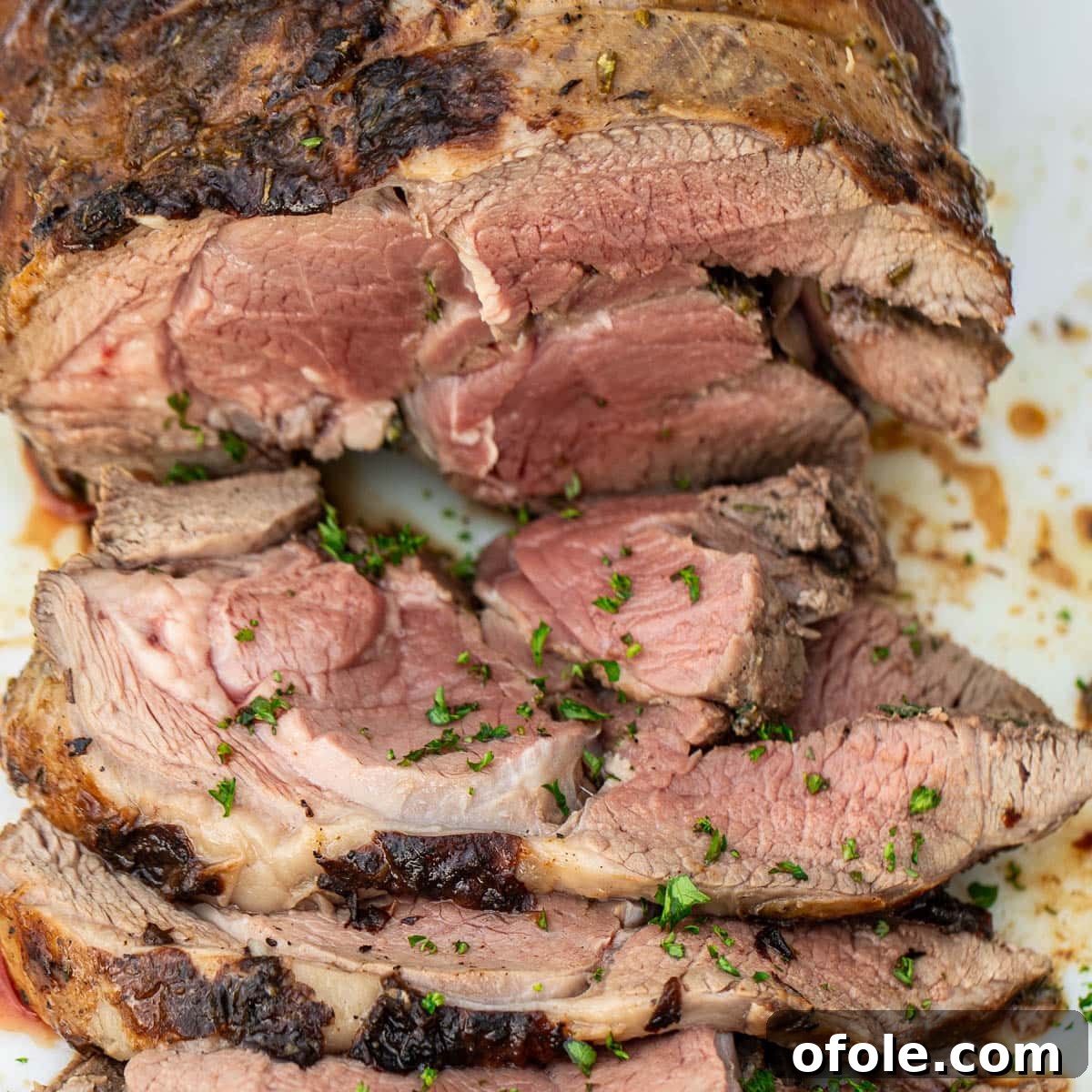
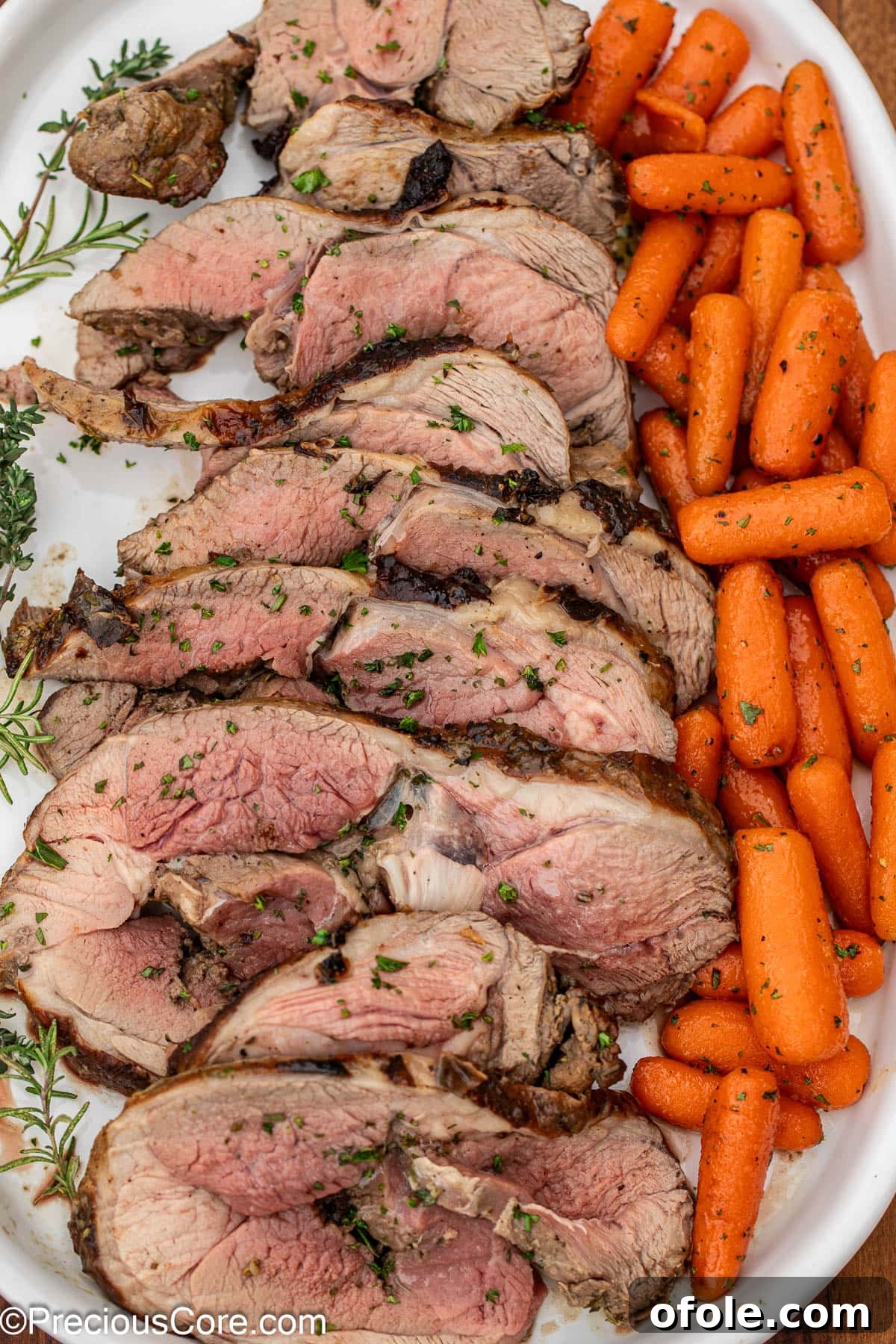
Prepare a truly unforgettable main course for your next celebration with this exquisite Roasted Boneless Leg of Lamb. This recipe transforms a simple cut of meat into a showstopping centerpiece, boasting rich flavors and tender texture that will impress every guest.
Infused with a vibrant blend of aromatic fresh herbs, pungent minced garlic, and bright lemon juice, this lamb roast is exceptionally succulent and bursting with flavor. It’s an ideal choice for significant holidays such as Christmas or Easter dinner, as well as other cherished special occasions.
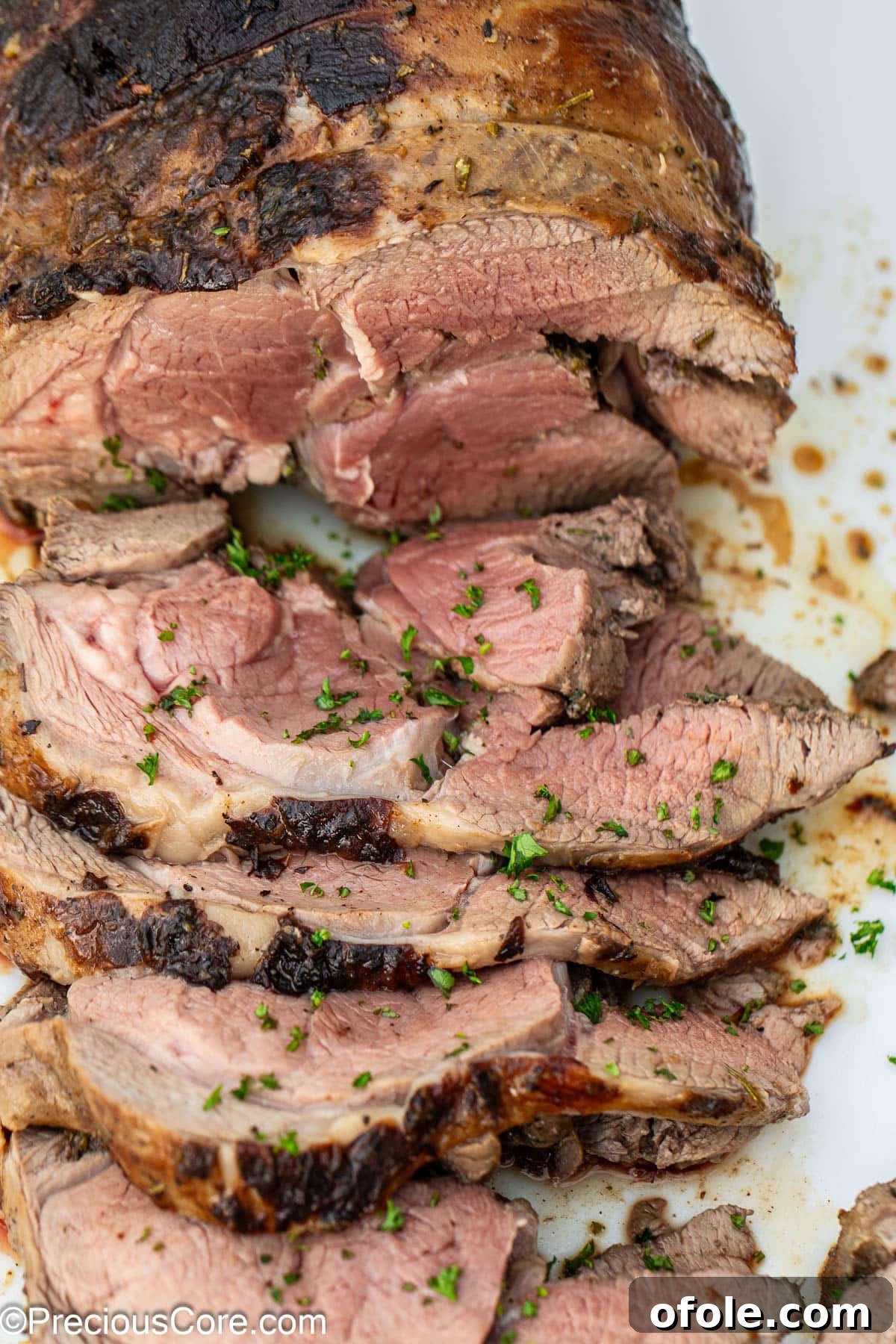
This rich and tender leg of lamb promises to be the culinary highlight at any dinner party, making it perfect for festive occasions like Easter, Christmas, or even a romantic Valentine’s Day meal. Enhance your hearty meal by pairing it with classic sides such as Rosemary Garlic Mashed Potatoes or wholesome Sautéed Vegetables. For another delicious lamb option, explore our popular Pan Seared Lamb Chops recipe.
Table of Contents
- Boneless Leg of Lamb Recipe
- Why You’ll Love This Recipe
- Essential Ingredients for a Flavorful Roast
- Step-by-Step: How to Master Roasted Boneless Leg of Lamb
- Substitutions and Creative Variations
- Achieving Perfection: Your Leg of Lamb Cooking Guide
- Pro Tips for an Unforgettable Lamb Roast
- Recipe Frequently Asked Questions
- Serving Suggestions: What to Pair with Your Lamb
- More Delightful Recipes to Explore
- Roasted Boneless Leg of Lamb Recipe Card
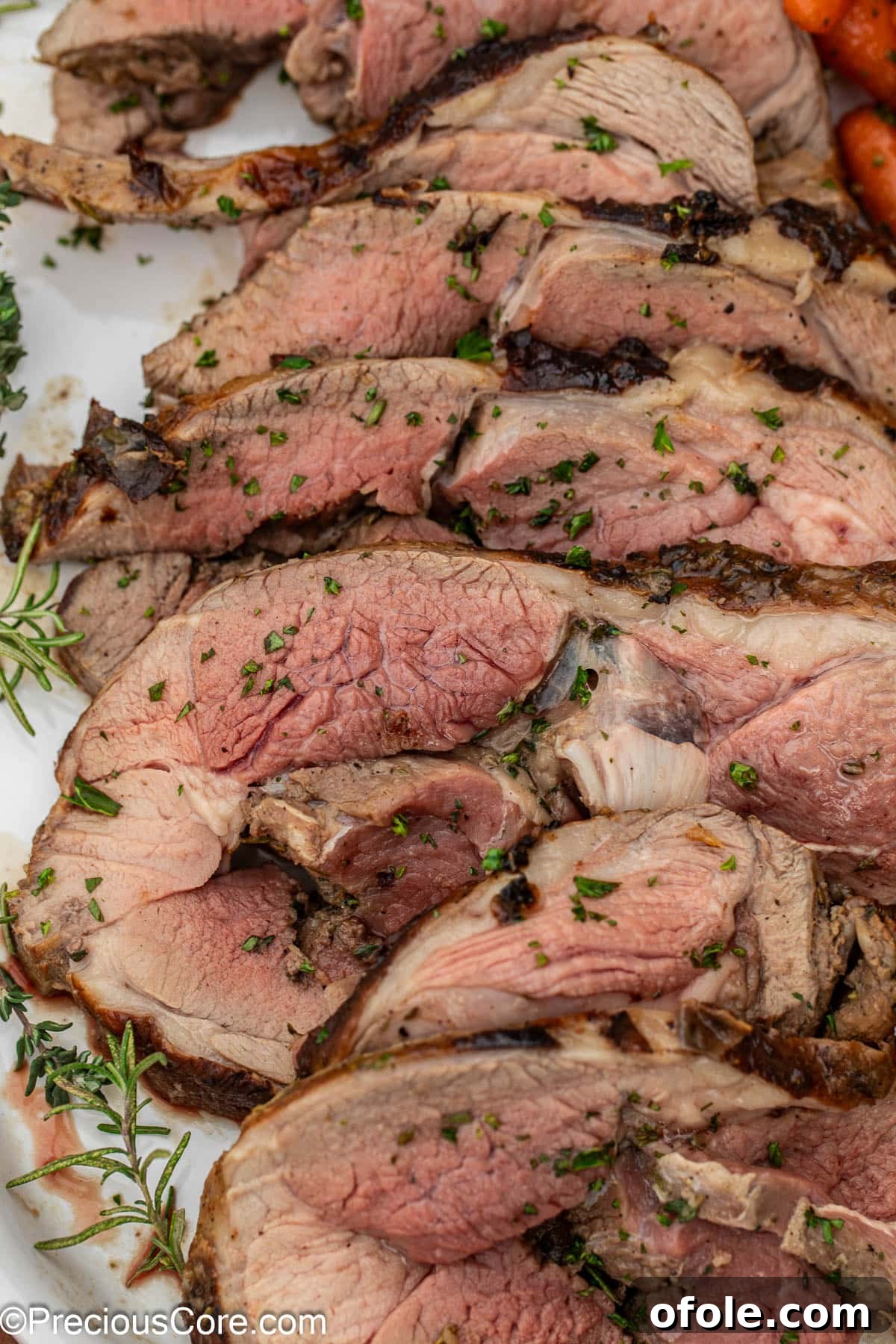
The Ultimate Boneless Leg of Lamb Recipe
Cooking larger cuts of meat can often feel daunting, especially for those new to roasting. However, this boneless leg of lamb recipe is designed with simplicity in mind, featuring easy-to-follow steps that guarantee success for cooks of all experience levels. You’ll be amazed at how effortlessly you can create a restaurant-quality meal right in your own kitchen.
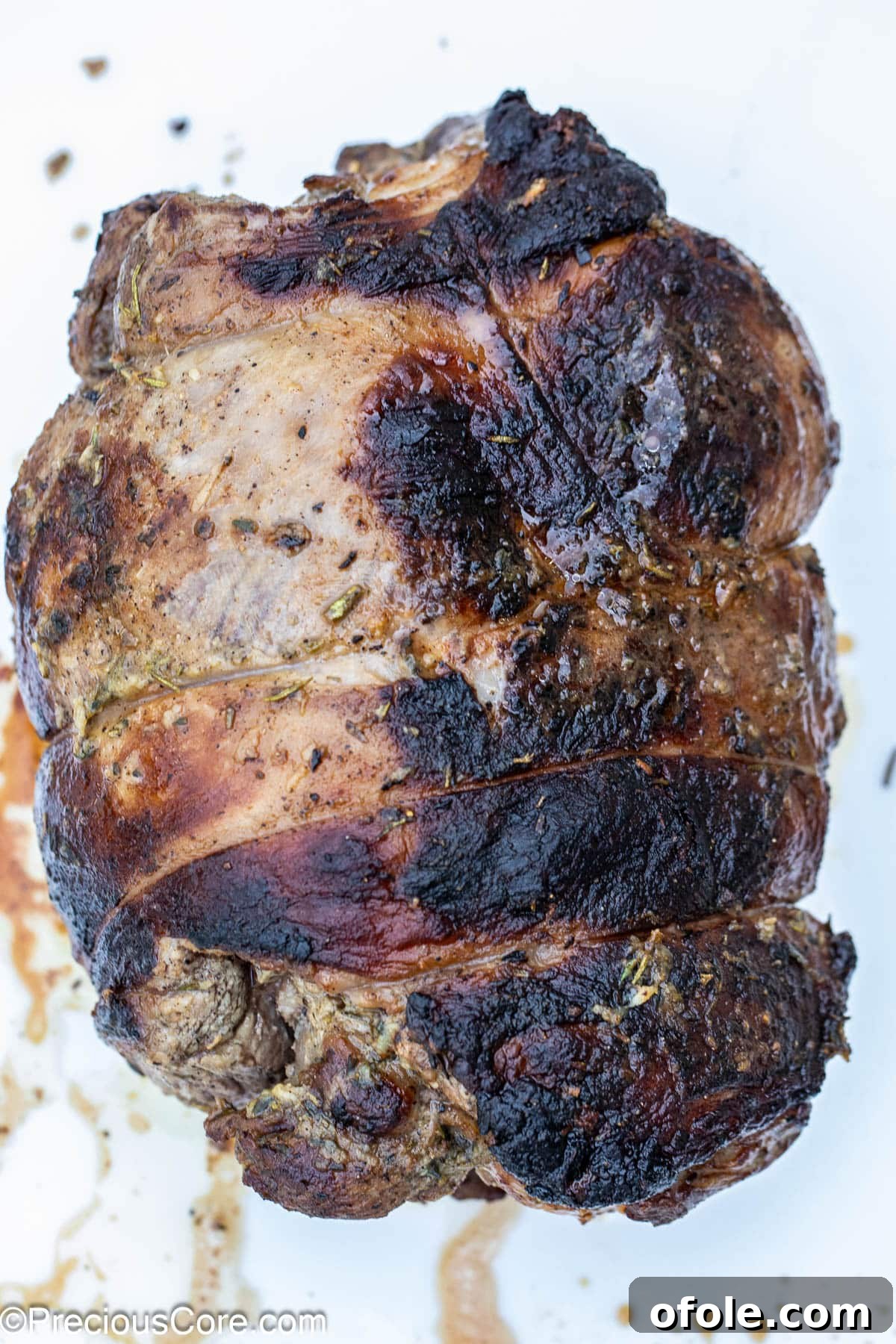
A key technique in this recipe involves searing the lamb in a cast-iron skillet before transferring it to the oven. This crucial step creates a deep, caramelized crust on the exterior, not only enhancing the visual appeal with a gorgeous color but also effectively locking in all the succulent juices. The result is a profoundly flavorful and moist roast every time.
Why You’ll Adore This Roasted Boneless Leg of Lamb
Beyond its impressive flavor and elegant appearance, there are many reasons why this roasted boneless leg of lamb will become a treasured recipe in your culinary repertoire:
- Minimal Hands-On Time: Despite its sophisticated outcome, this lamb roast requires surprisingly little active preparation. The majority of the process involves marinating the meat, which can be done ahead of time, allowing for a stress-free cooking experience on the day of your event.
- Stunning Presentation: If your goal is to dazzle your family and friends, this recipe is a guaranteed winner. Even with a straightforward list of ingredients, it yields an impressive, generously sized roast that makes a magnificent centerpiece for holiday tables or intimate gatherings. Its golden-brown crust and juicy interior are truly a feast for the eyes.
- Incredibly Versatile: This tender, juicy roast pairs beautifully with an extensive range of side dishes, offering ample room for your culinary creativity. Whether you opt for rich buttered leeks, vibrant glazed carrots, a crisp mixed green salad, or hearty roasted potatoes, this lamb adapts perfectly. Moreover, any delicious leftovers can be transformed into gourmet tacos, flavorful sandwiches, or even a savory lamb ragu, making it a truly economical and flexible meal.
Essential Ingredients for a Flavorful Roast
To craft this remarkably flavorful and tender entrée, you’ll only need a handful of readily available ingredients, each playing a crucial role in developing the lamb’s exquisite taste profile:
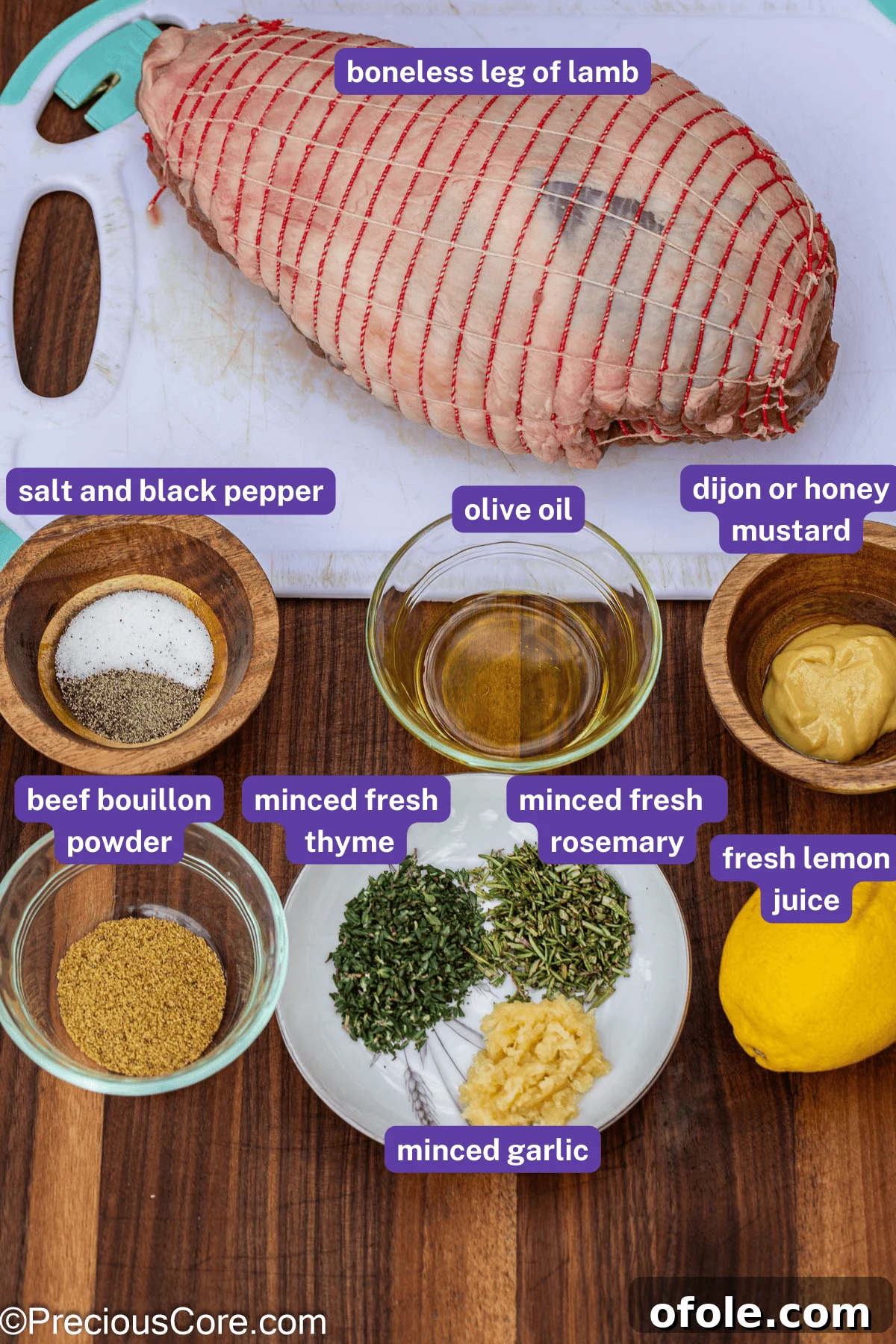
- Boneless Leg of Lamb: Opting for a boneless cut significantly reduces cooking time compared to a traditional bone-in roast. When butterflied, it provides a larger surface area, allowing the aromatic marinade to penetrate deeply into the meat for maximum flavor infusion. You can typically find boneless leg of lamb at most grocery stores, or you can ask your butcher to debone it for you, or even butterfly it directly.
- Fresh Rosemary and Thyme: These delicate yet potent herbs are classic partners for lamb. Their fragrant notes beautifully complement the meat’s natural richness, adding depth and an earthy aroma that is synonymous with gourmet roasting.
- Lemon Juice: The bright acidity of fresh lemon juice is not just for flavor; it acts as a natural tenderizer, helping to break down meat fibers and ensuring better absorption of the marinade. It also introduces a refreshing zest that brightens the entire dish, cutting through the richness of the lamb. Consider adding a pinch of lemon zest to the marinade for an even more intense citrus punch.
- Fresh Garlic: There’s no substitute for the robust, pungent flavor of fresh garlic cloves. Minced fresh garlic provides a profound umami kick and aromatic complexity that dried garlic powder simply cannot replicate. It’s an indispensable component of this flavorful marinade.
- Mustard (Honey or Dijon): A touch of mustard brings a delightful tanginess that perfectly balances the sweetness of the herbs and the brightness of the lemon. It also acts as an emulsifier in the marinade, helping all the flavors meld together and adhere beautifully to the lamb. Both honey mustard for a hint of sweetness or Dijon mustard for a sharper, more classic flavor work wonderfully.
You will also need common pantry staples like high-quality salt, freshly ground black pepper, and good olive oil. For precise measurements and additional details, be sure to consult the comprehensive recipe card provided below.
Step-by-Step: How to Master Roasted Boneless Leg of Lamb
Even if this is your very first time preparing a lamb roast, you can achieve perfect results with confidence. Follow these clear, step-by-step instructions, accompanied by helpful photos, to create your own magnificent Roasted Boneless Leg of Lamb:
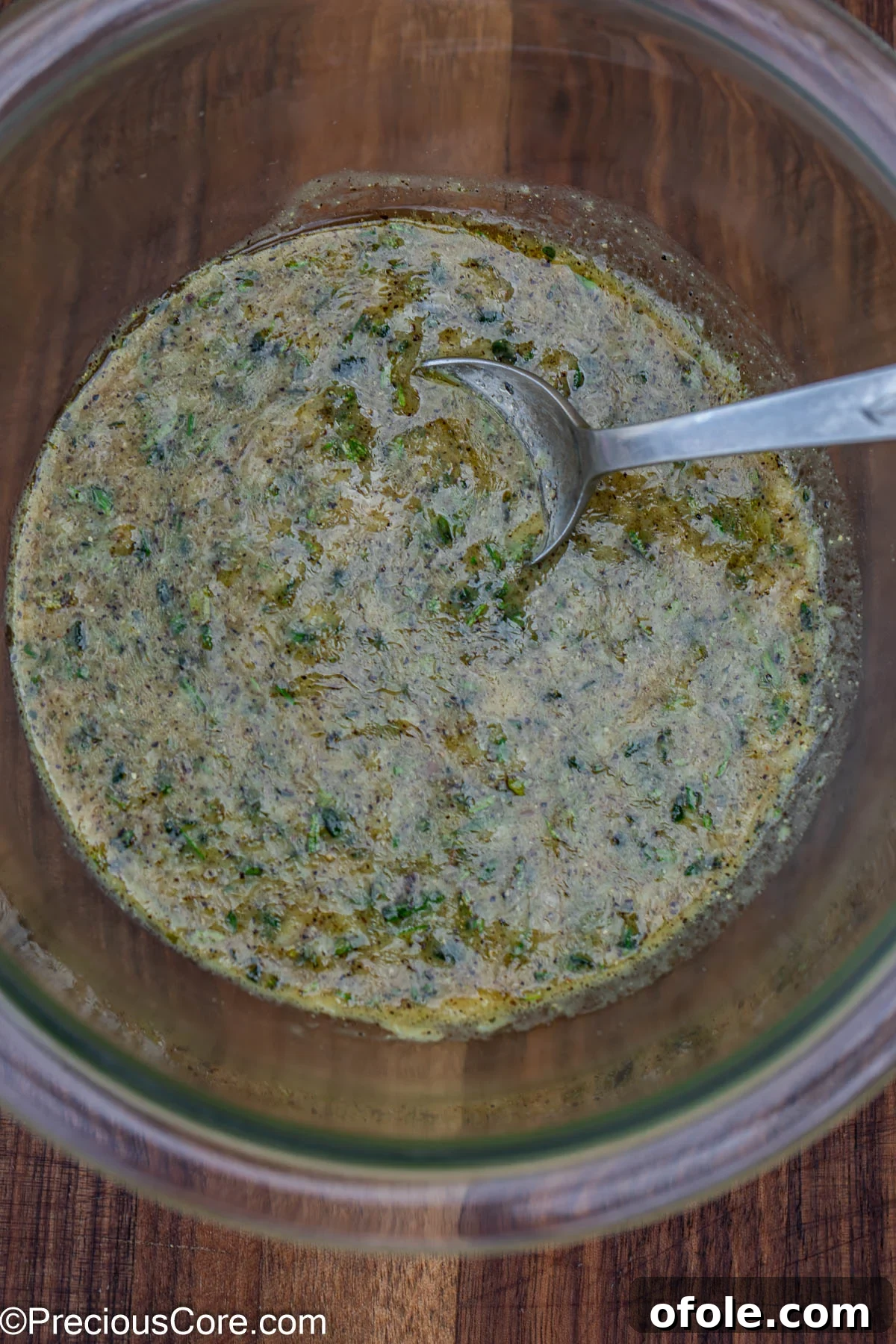
- Prepare the Marinade: In a small mixing bowl, combine all the marinade ingredients: lemon juice, olive oil, honey or Dijon mustard, minced garlic, fresh rosemary, fresh thyme, salt, black pepper, and beef bouillon powder. Whisk until thoroughly combined, ensuring all the flavors are well integrated.
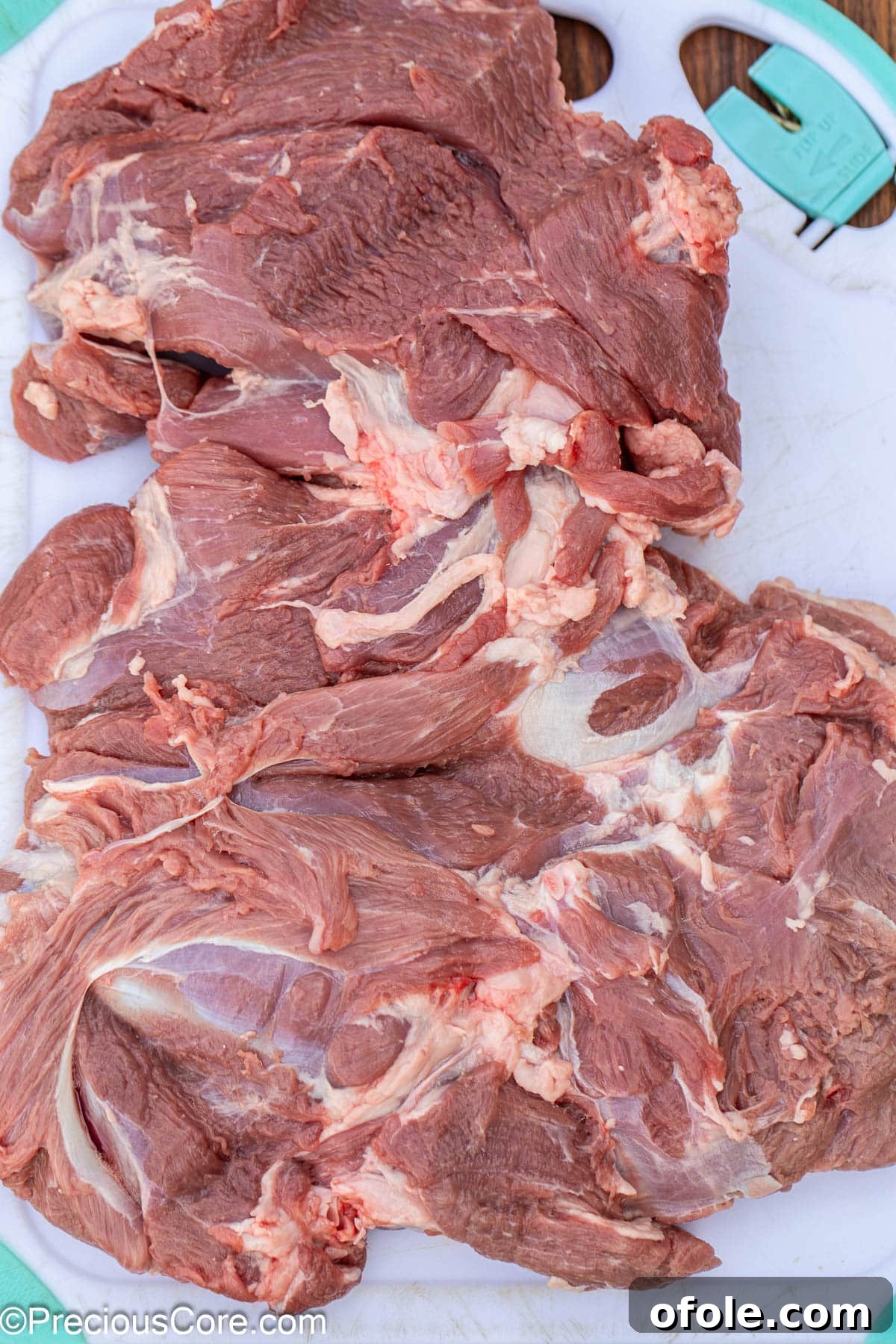
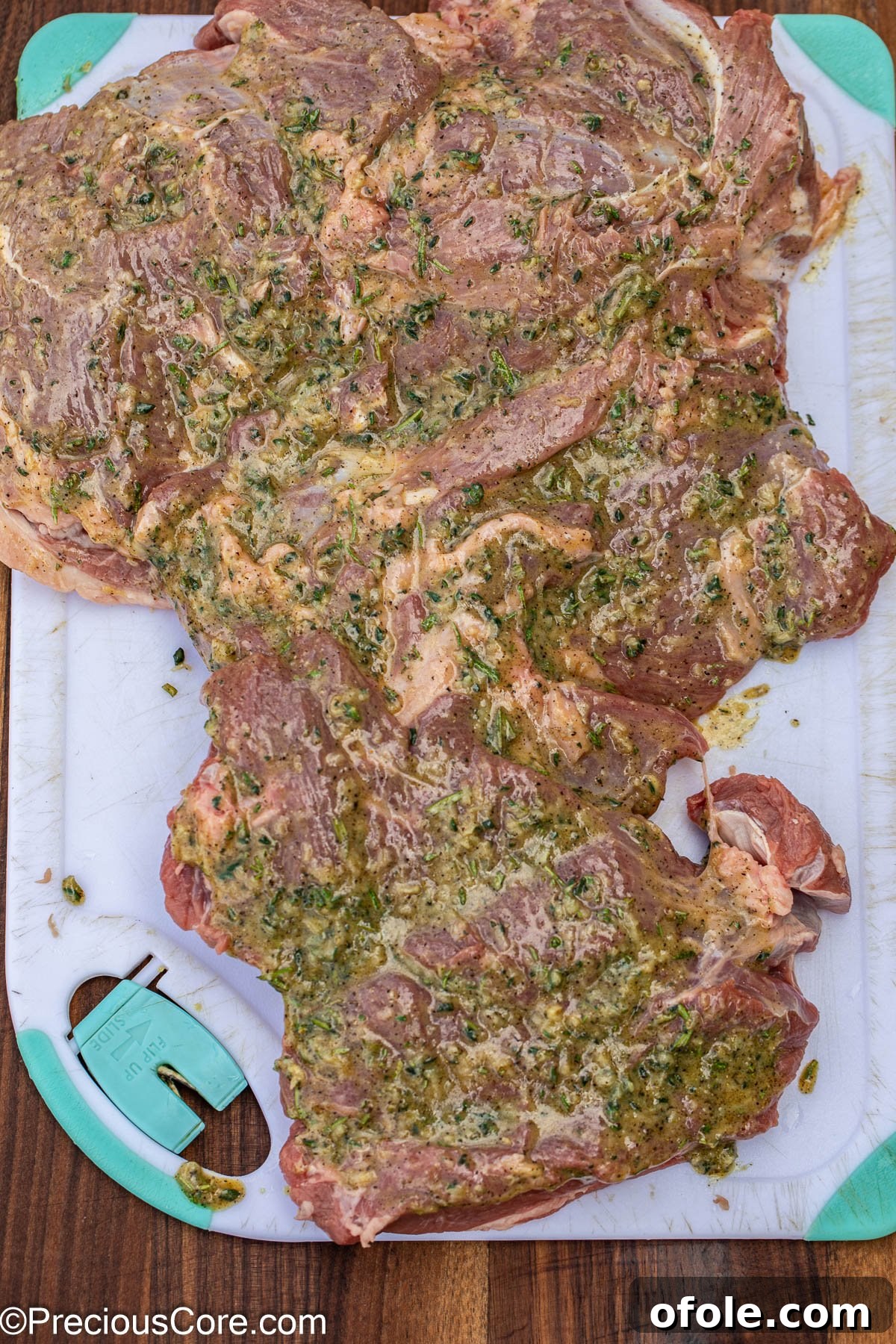
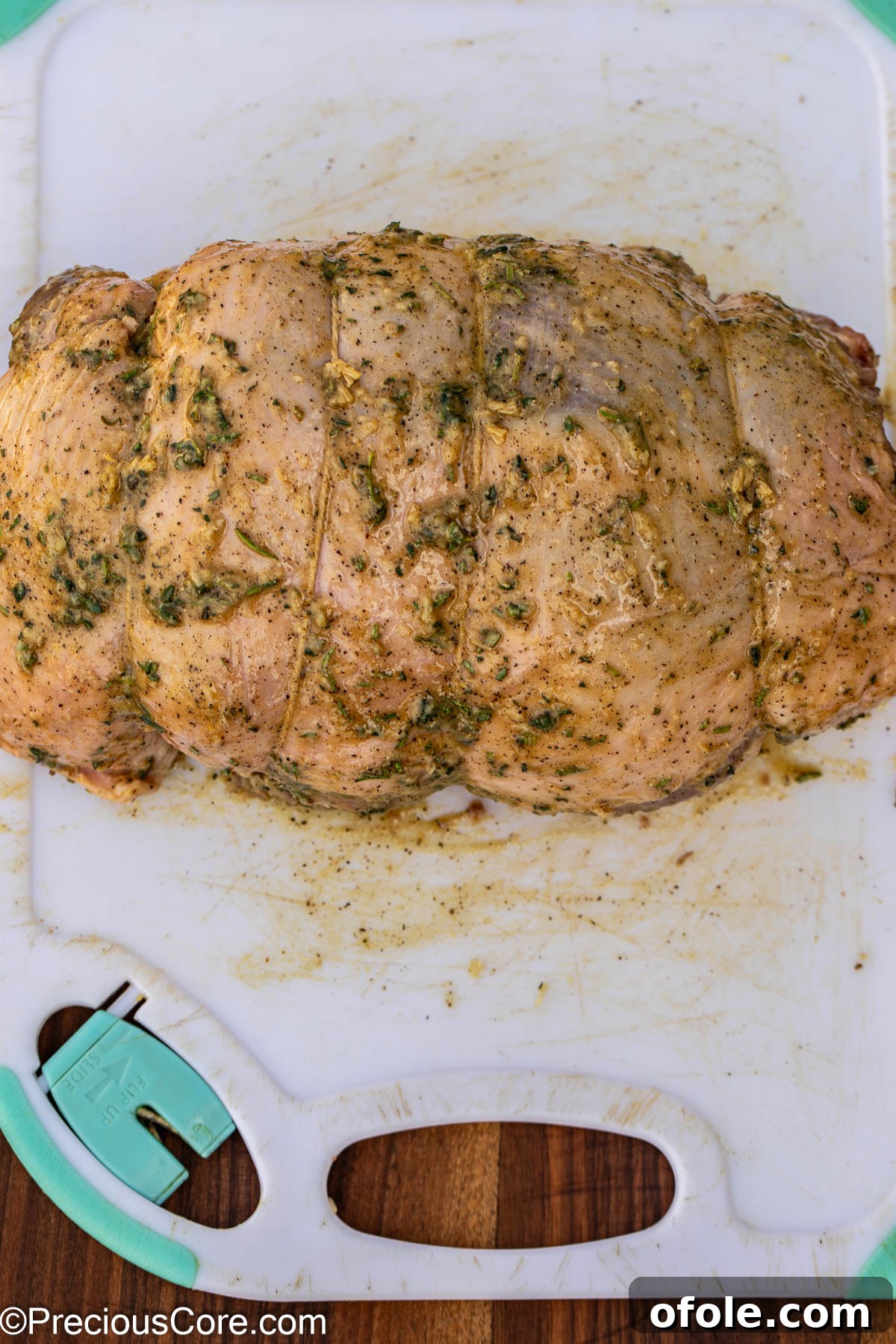
- Butterfly and Season the Lamb: Carefully unroll and butterfly your boneless leg of lamb so it lies flat on a clean surface, with the interior facing upwards. This technique maximizes the surface area for flavor. Generously rub two-thirds of the prepared marinade over the entire interior surface of the butterflied lamb.
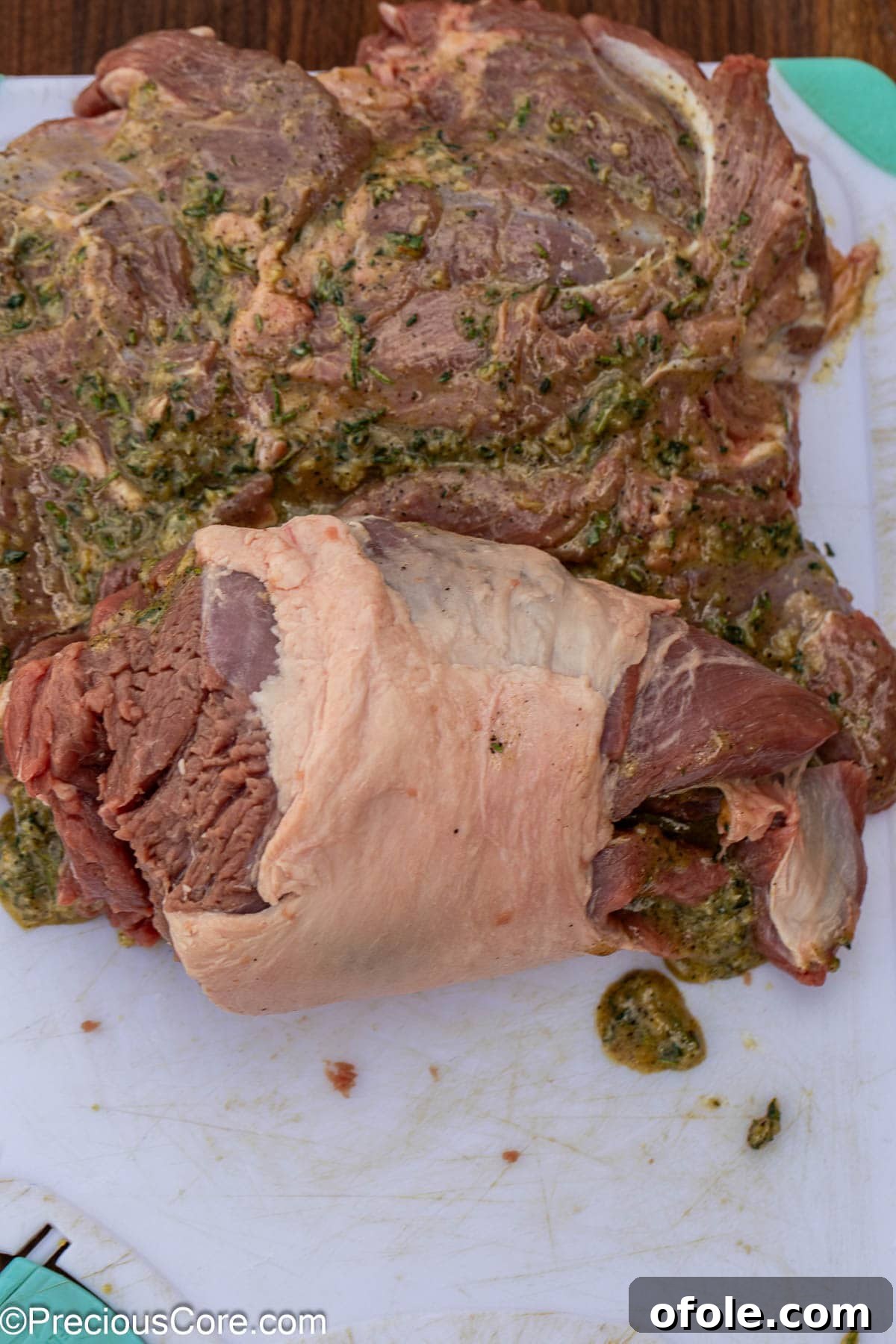
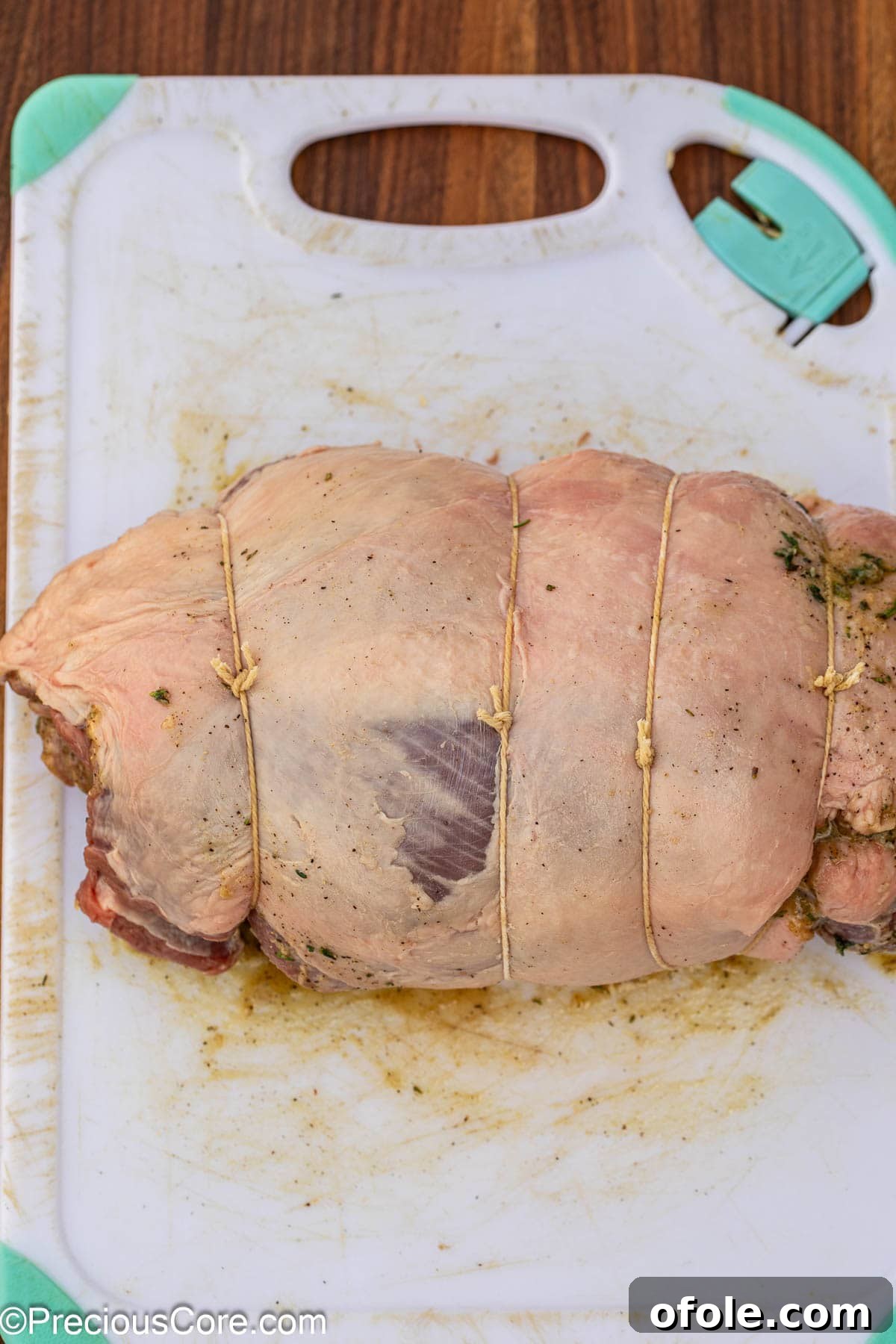
- Roll and Secure: Starting from one of the shorter sides, tightly roll the lamb into a compact log shape. Secure this roll firmly with kitchen twine, tying knots every 1 to 2 inches along the length to maintain its shape during cooking. Finally, brush the remaining marinade over the exterior of the tied lamb, reserving about 1 tablespoon for basting if desired.
Top Tip: Butterflying a Leg of Lamb
To butterfly a leg of lamb, make a deep, lengthwise cut along the side of the meat, being careful not to cut all the way through. Open it up like a book. This method significantly reduces cooking time and allows for more uniform seasoning and cooking.
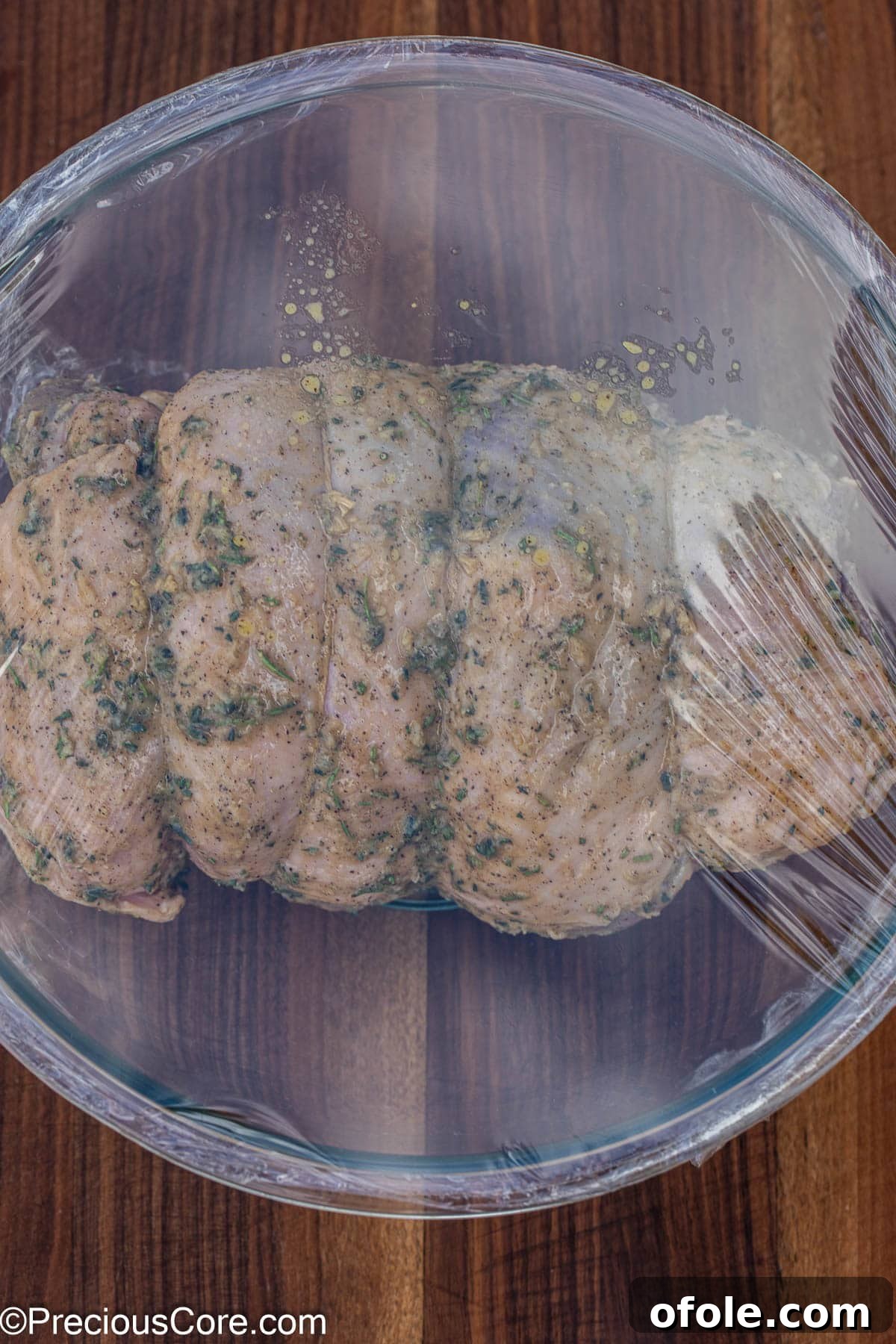
- Marinate for Maximum Flavor: Transfer the seasoned and tied lamb into a large mixing bowl. Cover the bowl tightly with plastic wrap and refrigerate it. Allow the lamb to marinate overnight for the deepest flavor, or for at least 2 hours if you’re short on time. This step is crucial for tenderizing the meat and infusing it with all the delicious herb and garlic flavors.
- Bring to Room Temperature and Preheat Oven: One hour before you plan to cook, remove the lamb from the refrigerator and let it sit at room temperature. This helps the lamb cook more evenly. In the meantime, preheat your oven to 350°F (180°C).
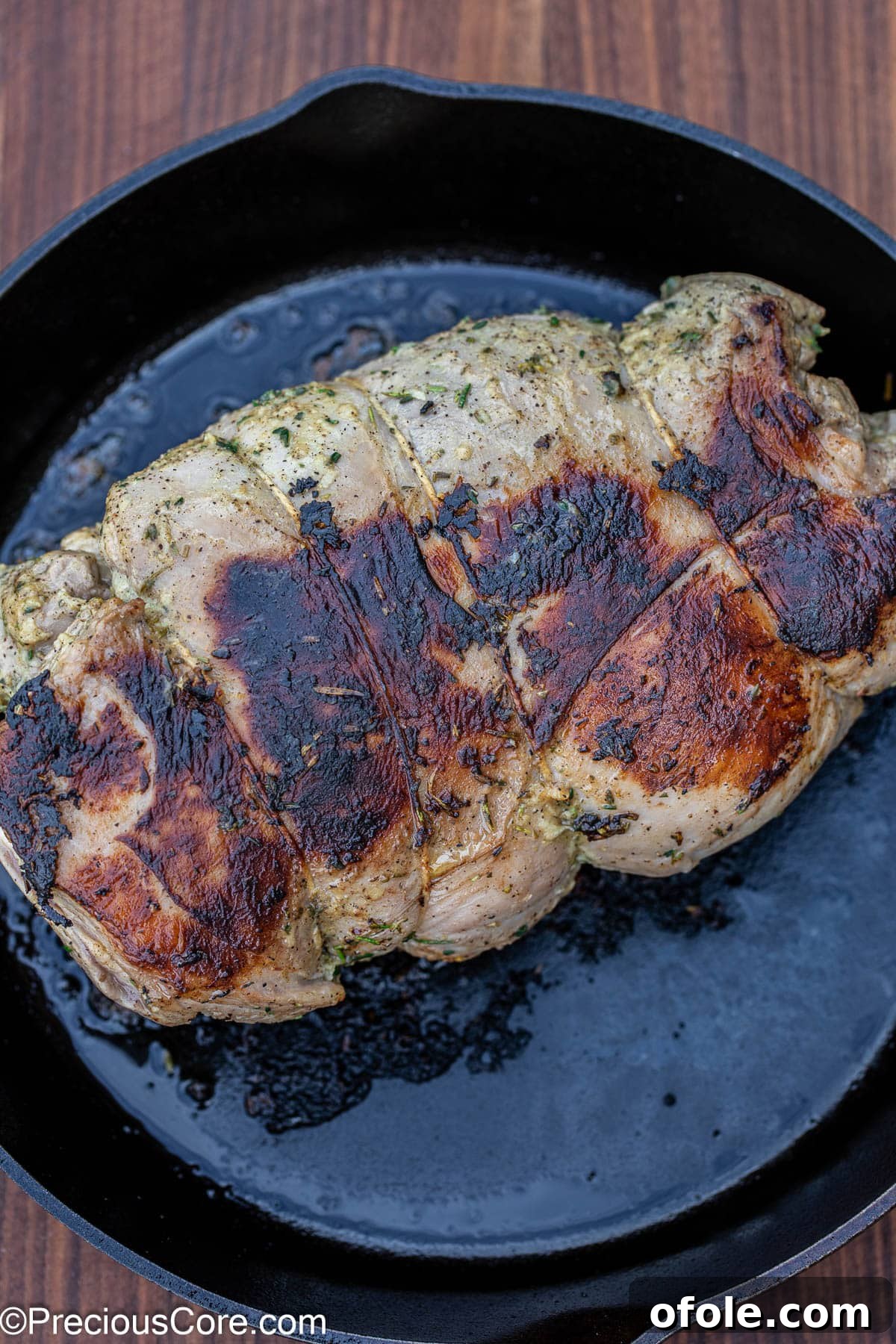
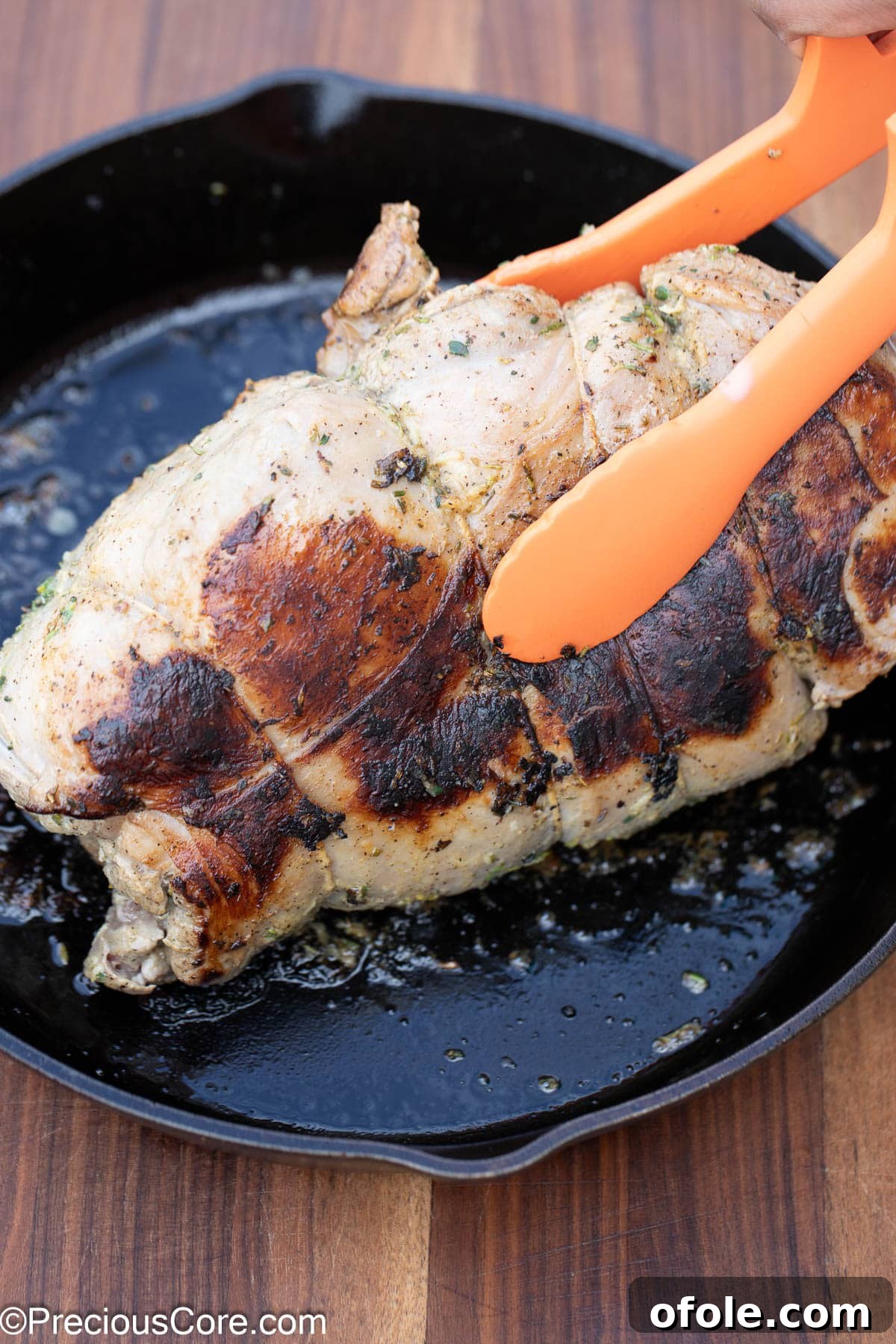
- Sear for a Golden Crust: Place a 12-inch oven-safe skillet (preferably a cast-iron skillet) over medium-high heat until it is smoking hot. Add 1 tablespoon of olive oil to the hot skillet. Carefully place the lamb in the skillet and sear each side for about 4 minutes until a deep, golden-brown crust forms. Use tongs to lift and sear all sides of the lamb, including the ends, for 3-4 minutes each. Searing is essential for creating a beautiful color and locking in juices.
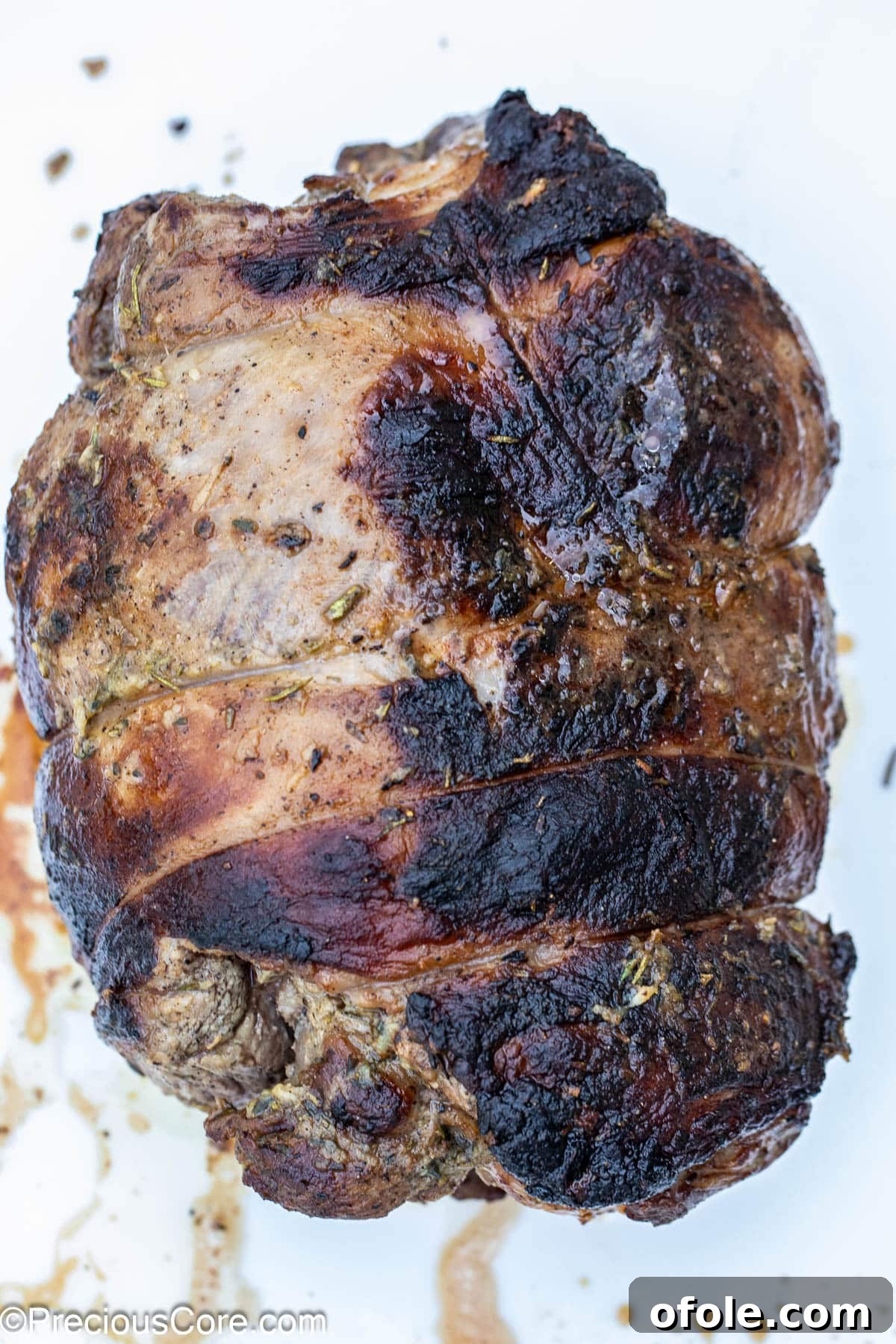
- Roast to Perfection: Loosely cover the seared lamb in the skillet with aluminum foil. Transfer the skillet to your preheated oven. Roast for 30 minutes. After the first 20 minutes, remove the foil and continue roasting uncovered for an additional 10 minutes, or until it reaches your desired level of doneness. The exact cooking time will vary based on your preferred internal temperature; refer to the detailed lamb cooking guide below. Always use an instant-read meat thermometer to accurately check the internal temperature. If you don’t have an oven-safe skillet, you can transfer the seared lamb to a roasting pan.
Top Tip: The Importance of Resting
Once your lamb is out of the oven, allow it to rest for a crucial 10 to 15 minutes before you begin slicing. This resting period allows the meat fibers to relax and reabsorb all those delicious juices, resulting in a more tender, moist, and flavorful roast.
Substitutions and Creative Variations
This roasted boneless leg of lamb recipe is wonderfully adaptable, allowing you to customize it to your taste or what you have on hand. Don’t hesitate to experiment with these delicious ideas:
- Bone-In Leg of Lamb: If you prefer, a bone-in leg of lamb can certainly be used. Keep in mind that bone-in cuts typically require a longer cooking time. However, by relying on an accurate meat thermometer, you’ll know precisely when your roast is perfectly cooked, regardless of the bone.
- Add a Spicy Kick: For those who love a bit of heat, easily incorporate cayenne pepper, crushed red pepper flakes, or a smoky chili powder into the marinade blend. Start with a small amount and adjust to your desired spice level.
- Create a One-Pan Meal: Streamline your cooking by turning this into a one-pan wonder. After searing the lamb, arrange quick-cooking vegetables like chopped potatoes, carrots, onions, bell peppers, or asparagus around the meat in the same pan. They will roast alongside the lamb, soaking up all the savory drippings and creating an incredibly aromatic and flavorful complete dinner.
- Herb Variations: While rosemary and thyme are classic, feel free to experiment with other fresh herbs. Fresh oregano, marjoram, or even a hint of mint (especially if serving with a mint sauce) can add interesting dimensions to the flavor profile.
- Citrus Zest: For an even more pronounced lemony flavor, grate some fresh lemon zest directly into the marinade along with the juice. The zest contains essential oils that offer a more intense and aromatic citrus note.
- Wine or Broth in the Pan: For extra moisture and to create a flavorful pan sauce, add about half a cup of red wine, white wine, or beef broth to the bottom of your roasting pan during the last 30 minutes of cooking. This liquid will deglaze the pan and catch the delicious drippings.
Achieving Perfection: Your Leg of Lamb Cooking Guide
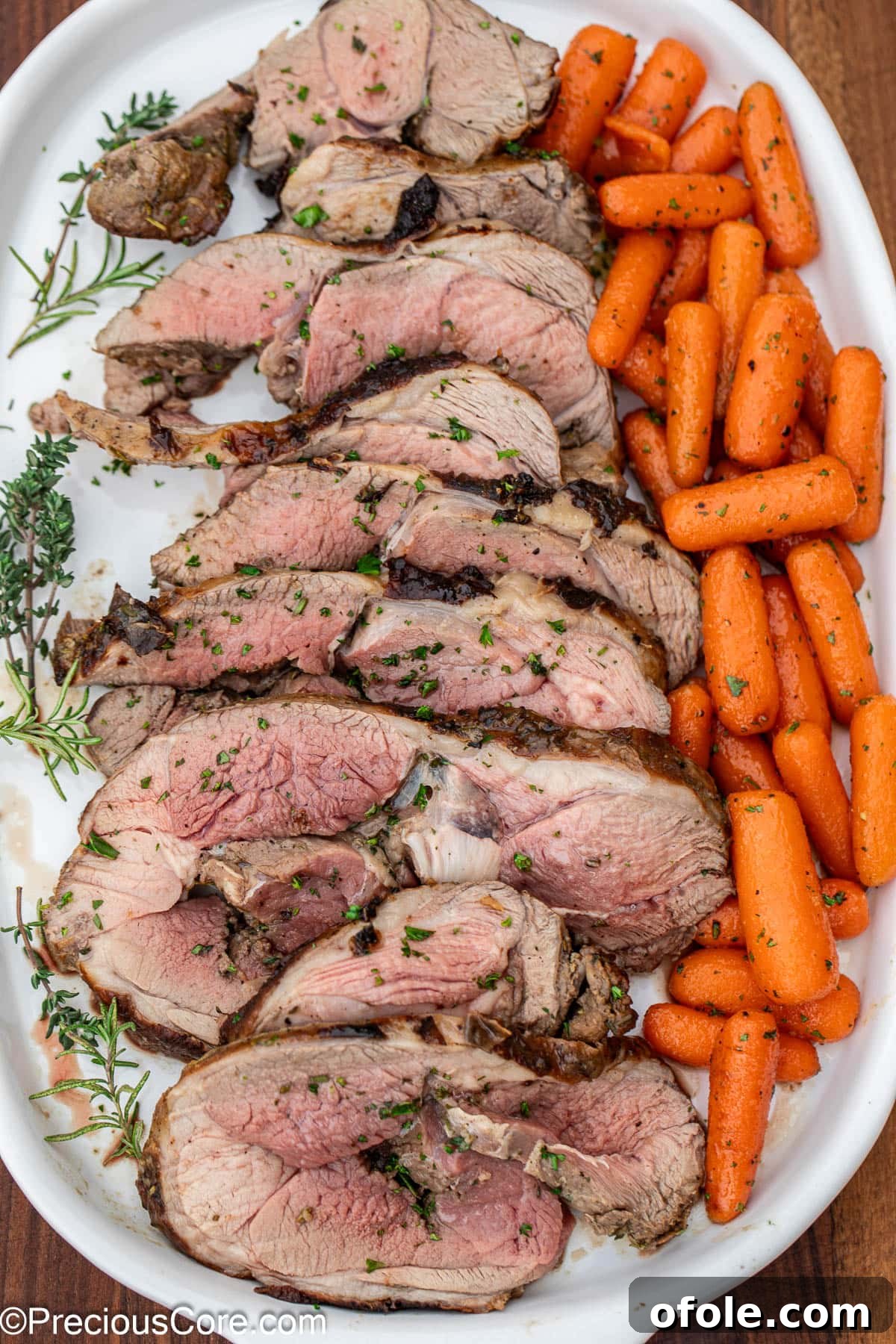
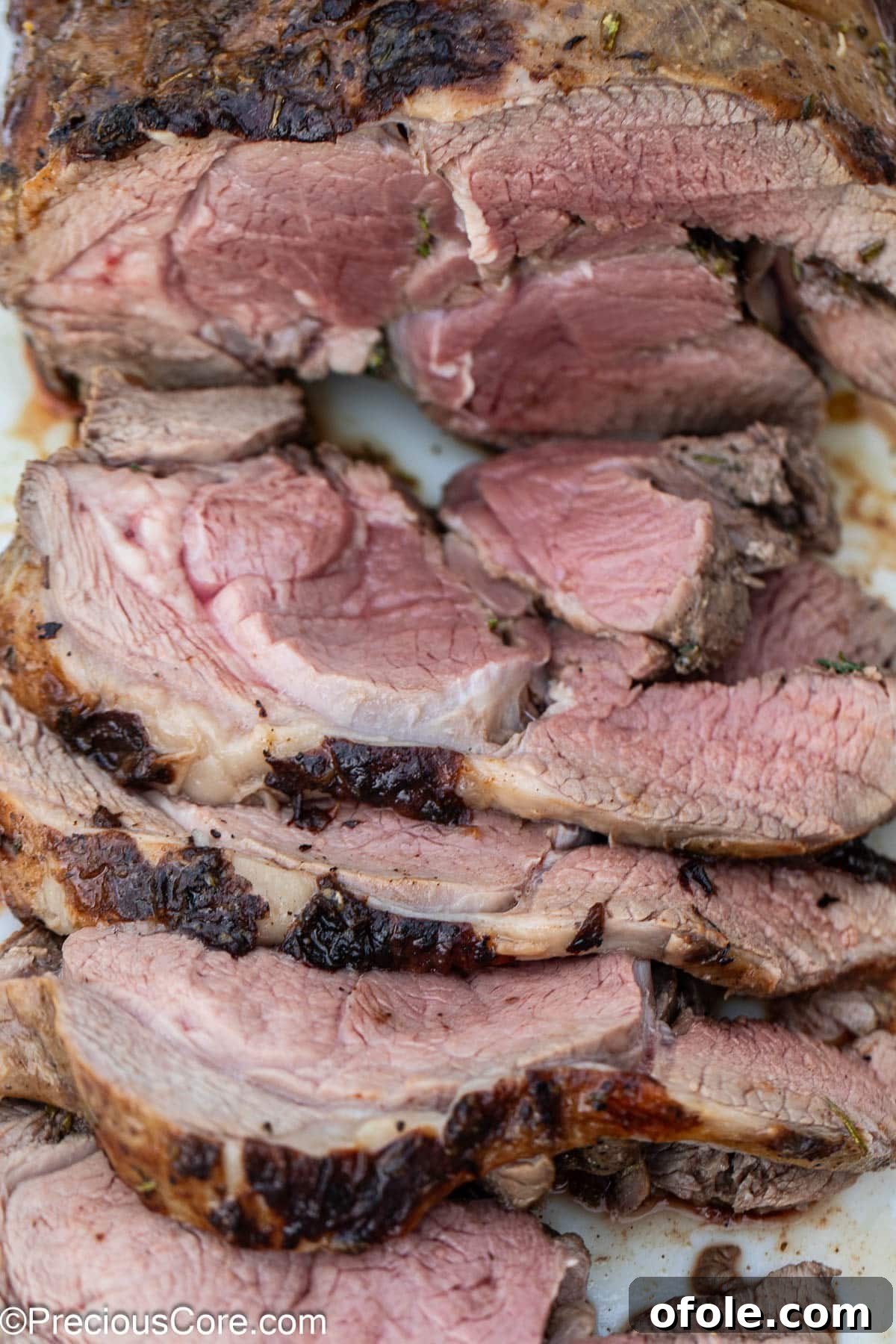
The ideal doneness for lamb is a matter of personal preference, and a reliable instant-read meat thermometer is your best friend in achieving it. Always insert the thermometer into the thickest part of the meat, avoiding any bones (if present), and check a few different spots to ensure an accurate reading. Here’s a guide to help you reach your preferred level of doneness:
- Rare: 125°F (51.6°C) – The center of the lamb will be a vibrant red, gradually fading to pinkish towards the outer edges. This is for those who enjoy their lamb very tender and juicy with a strong lamb flavor.
- Medium-Rare: 130°F (54.4°C) to 135°F (57.2°C) – At this stage, the center will be a warm pink, subtly transitioning to a brownish hue as it approaches the exterior. This is often considered the optimal doneness by many chefs for its balance of tenderness and flavor.
- Medium: 135°F (57.2°C) to 140°F (60°C) – Similar to medium-rare, but with a lighter pink center and a more uniformly brown exterior. The lamb will still be quite tender and juicy.
- Medium-Well: 150°F (65.5°C) to 155°F (68.3°C) – At this point, you will see virtually no pink remaining in the meat. The lamb will be firm and cooked through, yet still retain some moisture.
- Well-Done: 155°F (68.3°C) to 165°F (73.8°C) – The lamb will be consistently brown throughout, both inside and out. While less juicy, some prefer this doneness for a firmer texture.
Important Note on Carry-Over Cooking
It is crucial to remember that the lamb leg will continue to cook even after it has been removed from the oven. This phenomenon, known as “carry-over cooking,” means the internal temperature will rise by several degrees during the resting period. Therefore, I highly recommend taking your lamb out of the oven when its internal temperature is about 5-10°F (2-5°C) lower than your desired final temperature. This foresight will help you achieve the perfect level of doneness and prevent overcooking.
Pro Tips for an Unforgettable Lamb Roast
Elevate your roasted boneless leg of lamb from great to extraordinary with these expert tips:
- Always Use a Meat Thermometer: This is arguably the most critical tool for perfect roasting. Relying solely on visual cues can easily lead to undercooked or overcooked meat. An instant-read meat thermometer ensures you hit your desired internal temperature precisely, guaranteeing a tender and juicy result every time.
- Choose the Right Cookware: A heavy-bottomed, oven-safe skillet, ideally cast iron or a braiser, is highly recommended. This allows you to sear the lamb on the stovetop and then transfer it directly to the oven without having to switch pans, minimizing dirty dishes and preserving all those delicious pan drippings.
- Prioritize Resting Time: Once the lamb is out of the oven, resist the urge to slice it immediately. Allow the roast to rest for 10-15 minutes, loosely tented with foil. This crucial step permits the meat’s juices to redistribute throughout the cut, resulting in maximum tenderness and juiciness when you finally carve it.
- Pat the Lamb Dry: Before applying the marinade and especially before searing, ensure the surface of your lamb is thoroughly patted dry with paper towels. A dry surface is key to achieving that beautiful, crispy, deep-brown crust during searing.
- Don’t Rush the Marinade: While a minimum of 2 hours is fine, marinating the lamb overnight in the refrigerator will yield the most profound and integrated flavors. Plan ahead for this step to unlock the full potential of your marinade.
- Preheat Your Oven Adequately: Always ensure your oven is fully preheated to the correct temperature before placing the lamb inside. An adequately heated oven helps the lamb cook evenly and contributes to a good crust.
Recipe Frequently Asked Questions
A boneless leg of lamb is not automatically butterflied. “Boneless” simply means the bone has been removed. However, this recipe specifically calls for butterflying it, which means it’s cut lengthwise and opened up flat, like a book. Butterflying allows for a larger surface area, making it easier to marinate the inside of the meat and then roll it up for an even roast. If you’re not comfortable butterflying it yourself, your butcher can usually do it for you, or you can often purchase it pre-butterflied.
While searing before roasting isn’t strictly mandatory, it comes with several significant benefits that I strongly recommend. The process of searing, or browning, the exterior of the lamb at a high temperature, creates a rich, caramelized crust. This not only deepens the flavor profile of the meat but also greatly enhances its visual appeal. More importantly, searing helps to “seal” the exterior, which assists in locking in the internal juices, ensuring a more succulent and tender roast.
Leg of lamb and lamb chops both come from the same animal, but they are different cuts and thus exhibit slight variations in taste and texture. The leg of lamb, typically sourced from the rear legs, is generally leaner and often has a milder lamb flavor, making it a good choice for those who might find the “gamey” taste of lamb to be too strong. When roasted, it becomes incredibly tender and its flavor can deepen beautifully. Lamb chops, on the other hand, usually come from the rib or loin section and often contain a greater proportion of fat, which contributes to a more pronounced and sometimes stronger “gamey” flavor. Both are delicious, but the leg offers a different culinary experience.
Serving Suggestions: What to Pair with Your Lamb
This magnificent roasted boneless leg of lamb is a versatile centerpiece that pairs beautifully with a wide array of side dishes. Here are some fantastic options to complete your meal:
Rosemary Garlic Mashed Potatoes
Fried Carrots
Garlic Butter Green Beans
Garlic Herb Rice
More Delightful Recipes to Explore
If you loved this Roasted Boneless Leg of Lamb recipe, you’ll surely enjoy these other fantastic meat dishes:
Pan Seared Ribeye Steaks
Pan Seared Lamb Chops
Pan Seared Boneless Pork Chops
Baked Dry Rub Ribs
If you make this recipe, please consider leaving a star rating below. Your feedback helps others discover the recipe, and I always love hearing from you! Thank you!
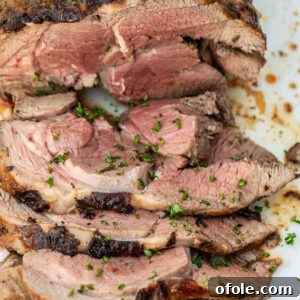
Roasted Boneless Leg of Lamb
With a simple blend of garlic, fresh herbs, and lemon juice, this Roasted Boneless Leg of Lamb is unbelievably delicious and tender. Serve it with creamy mashed potatoes or your favorite side dish for an elegant dinner perfect for any gathering.
Ingredients
- 4-5 pound boneless leg of lamb
- 2 Tablespoons fresh lemon juice
- 2 Tablespoons olive oil
- 1 Tablespoon honey mustard or Dijon mustard
- 6 garlic cloves, minced
- 1¼ teaspoons salt
- 1 teaspoon ground black pepper
- 1 Tablespoon fresh minced rosemary
- 1 Tablespoon fresh minced thyme
- 2 teaspoons beef bouillon powder
- 1 Tablespoon olive oil for searing
Instructions
- Make the Marinade: In a small mixing bowl, combine the lemon juice, olive oil, honey mustard or Dijon mustard, salt, black pepper, minced garlic, rosemary and thyme, and beef bouillon powder. Mix thoroughly until well combined.
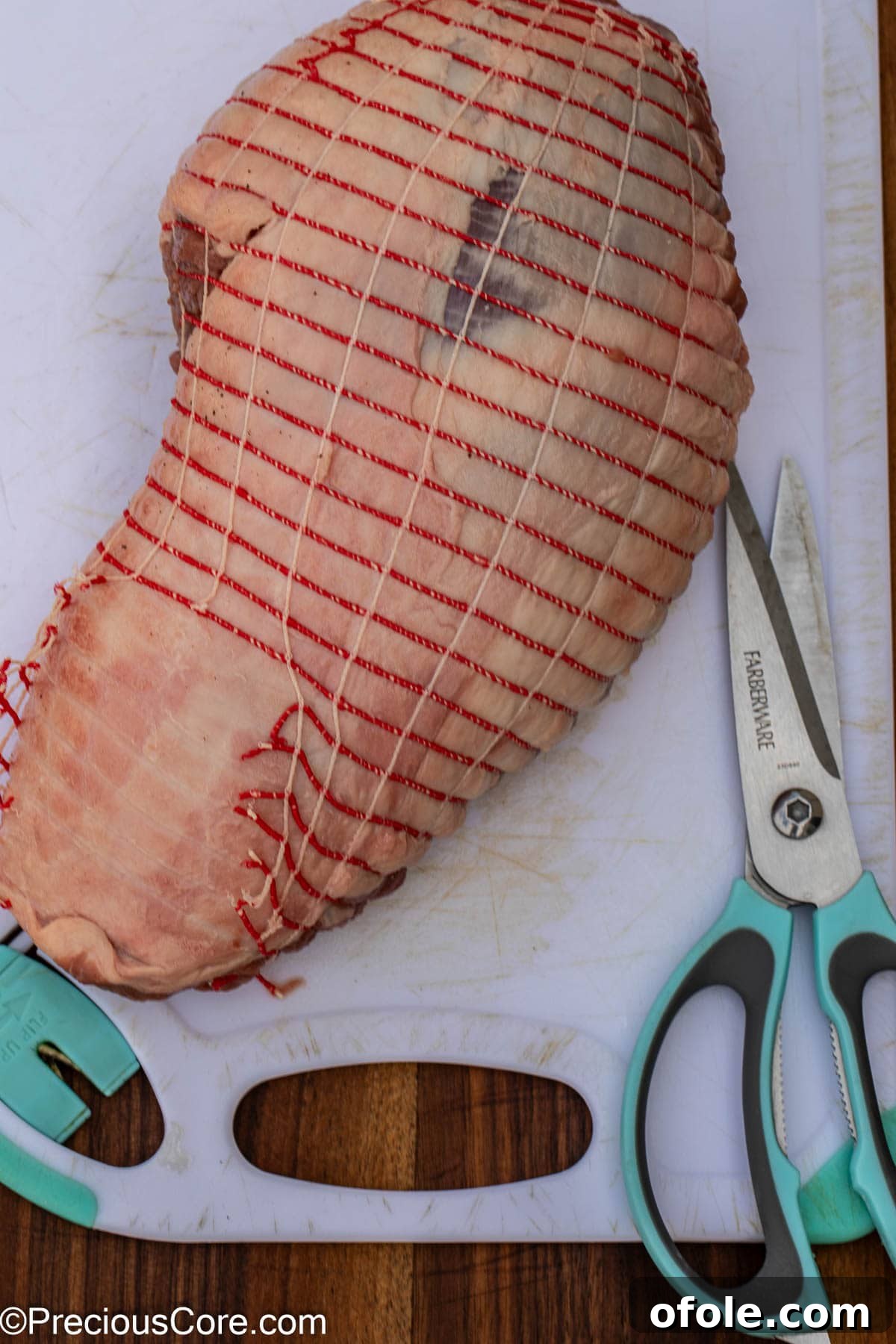
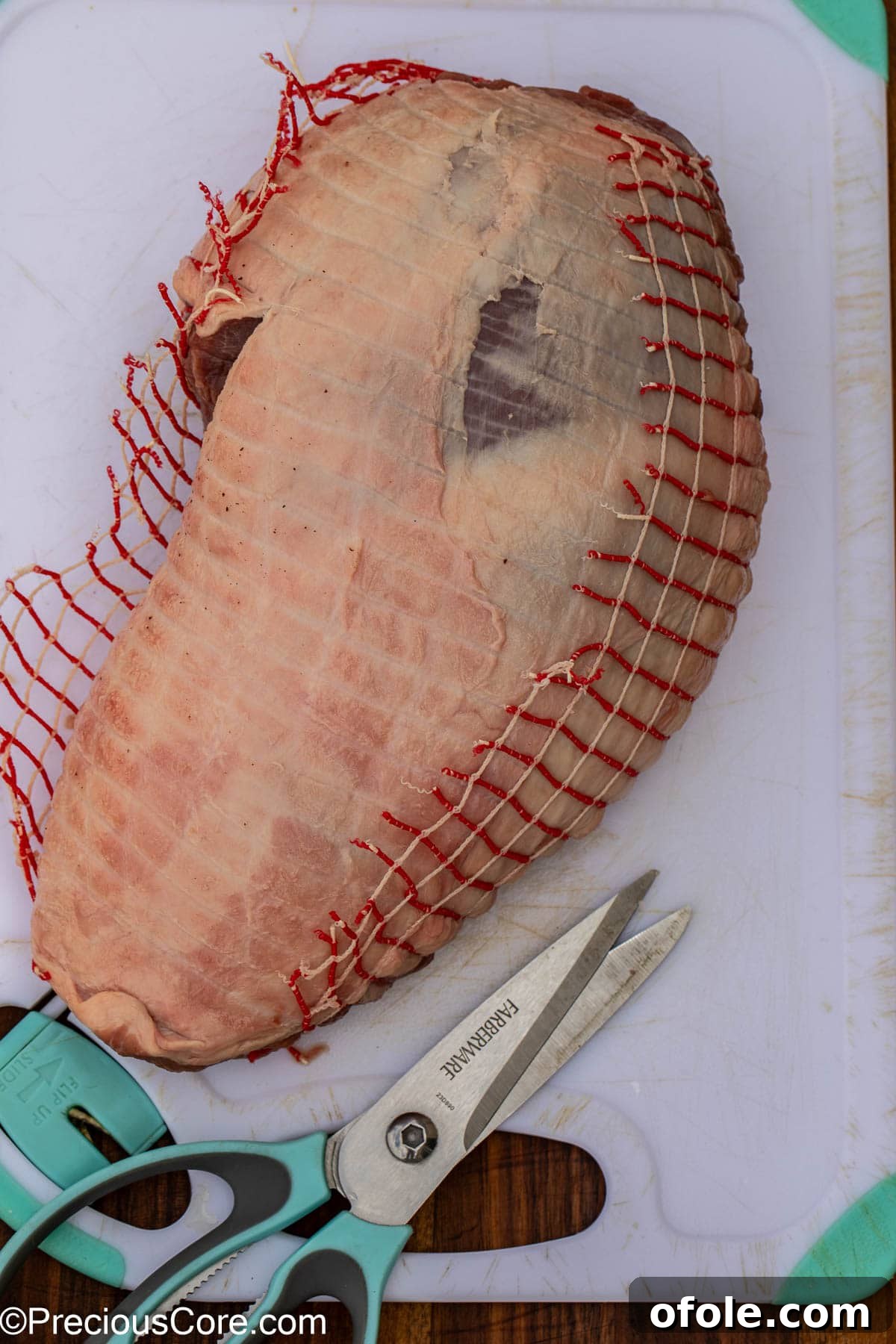
- Prep and Season Lamb: Using kitchen scissors or a knife, carefully remove any netting from the lamb. Butterfly the lamb so it lies flat with its interior facing you. Brush two-thirds of the marinade onto the lamb’s interior. Starting from the shorter side, roll the lamb tightly into a log shape. Secure it firmly with kitchen twine, leaving a 1-2 inch gap between each tie. Brush more of the marinade on the exterior of the lamb, reserving about 1 tablespoon for basting later.
- Let It Marinate: Place the seasoned lamb into a large mixing bowl. Tightly wrap the bowl with plastic wrap and refrigerate it to marinate overnight, or for at least 2 hours.
- Bring To Room Temperature: One hour before cooking, remove the lamb from the fridge to allow it to come to room temperature. In the meantime, preheat your oven to 350°F (180°C).
- Sear The Lamb: Heat a 12-inch oven-safe skillet, preferably a cast-iron skillet, on medium-high heat until it is smoking hot. Add the remaining 1 tablespoon of olive oil. Place the lamb in the skillet and sear for 4 minutes until a deep color develops. Flip it over and cook for another 4 minutes. Using tongs, lift and support the lamb to sear both sides for 3-4 minutes each.
- Roast: Loosely cover the lamb with aluminum foil. Transfer the skillet (or a roasting pan, if you’ve moved the lamb) to the preheated oven and roast for 30 minutes. After the first 20 minutes, remove the foil and continue roasting uncovered for another 10 minutes, or until it reaches your desired doneness. Refer to the lamb cooking guide in the notes section for temperature guidance.
- Rest: Once roasted, transfer the lamb to a cutting board, cover it loosely with foil, and let it rest for 10-15 minutes. This allows the juices to redistribute. Remove the twine, slice the lamb into desired portions, and serve warm.
Notes
Boneless Leg Of Lamb: You can purchase a boneless leg of lamb or ask your butcher to remove the bone for you. For this recipe, I used a boneless leg of lamb. You can also buy a butterflied leg of lamb directly, saving you a step.
Cast Iron Skillet: If you don’t have a cast iron skillet, a cast iron braiser or any other heavy, oven-safe cooking pan that can transition from stovetop to oven will work well.
Leg of Lamb Cooking Guide:
- Rare: 125°F (51.6°C) – Red center, pinkish towards edges.
- Medium-Rare: 130°F (54.4°C) to 135°F (57.2°C) – Pink center, slight brown towards exterior.
- Medium: 135°F (57.2°C) to 140°F (60°C) – Lighter pink center, brown exterior.
- Medium-Well: 150° (65.5°C) to 155° F (68.3°C) – No pink visible.
- Well-Done: 155°F (68.3°C) to 165°F (73.8°C) – Uniformly brown throughout.
Remember to account for carry-over cooking: remove lamb 5-10°F below desired final temperature.
Nutrition
Additional Info
Tried this recipe?
Mention @preciouscore or tag #PreciousCore!