
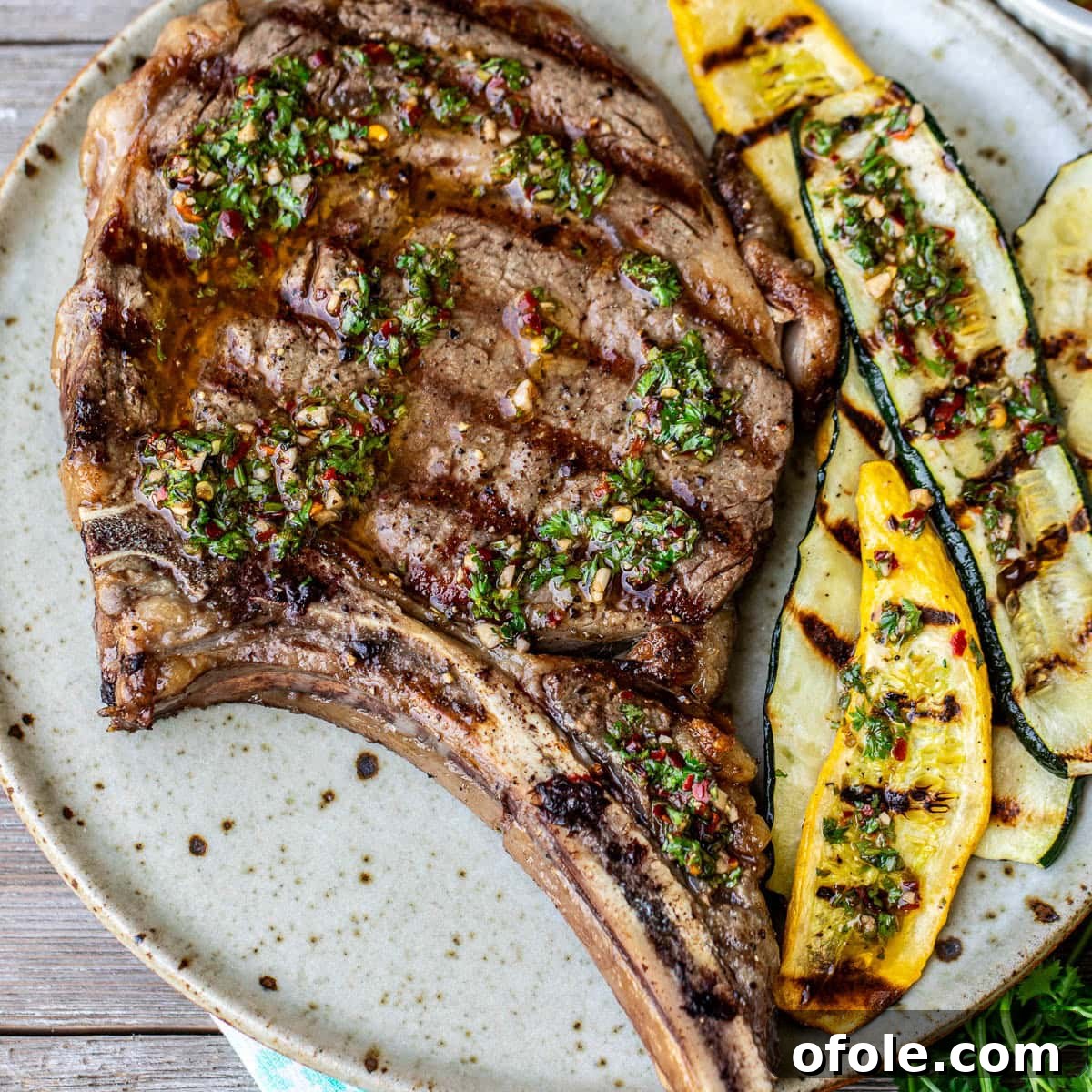
There’s nothing quite like a perfectly cooked steak – juicy, tender, and bursting with rich flavor. But when you elevate that experience to a Bone-In Ribeye Steak, you’re not just making dinner; you’re crafting an unforgettable culinary masterpiece. The bone acts as a natural insulator, ensuring a more even cook while infusing the meat with an unparalleled depth of flavor and keeping it incredibly moist. It’s the secret ingredient for a truly phenomenal steak that rivals any high-end restaurant.
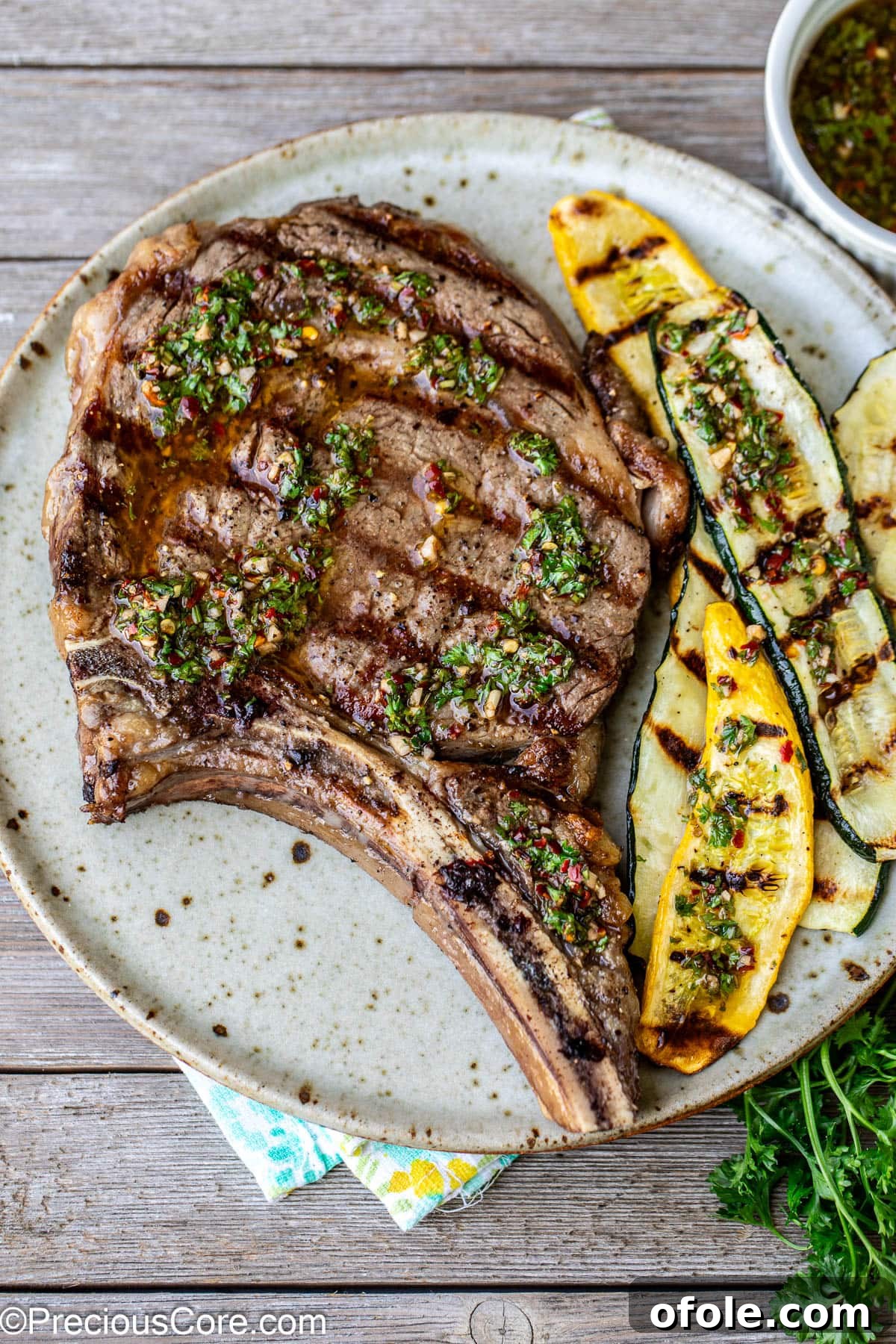
Whether you’re a seasoned grill master or just starting your steak journey, this comprehensive guide will walk you through every step to achieve the steak of your dreams right in your own kitchen or backyard. Forget crowded restaurants and expensive bills; with our expert tips and various cooking methods, you can consistently prepare a thick-cut, flavorful, and incredibly tender bone-in ribeye. It’s much easier than you might think, and the results are truly rewarding.
If you’re as passionate about steak as we are, be sure to explore our other fantastic steak recipes. Craving a comforting weeknight meal? Try our delightful Steak and Pasta. For a quick and satisfying lunch, our Ribeye Steak Sandwich is an absolute must-try! And if you love the convenience of a one-pot dish, don’t miss our savory Steak Fried Rice!
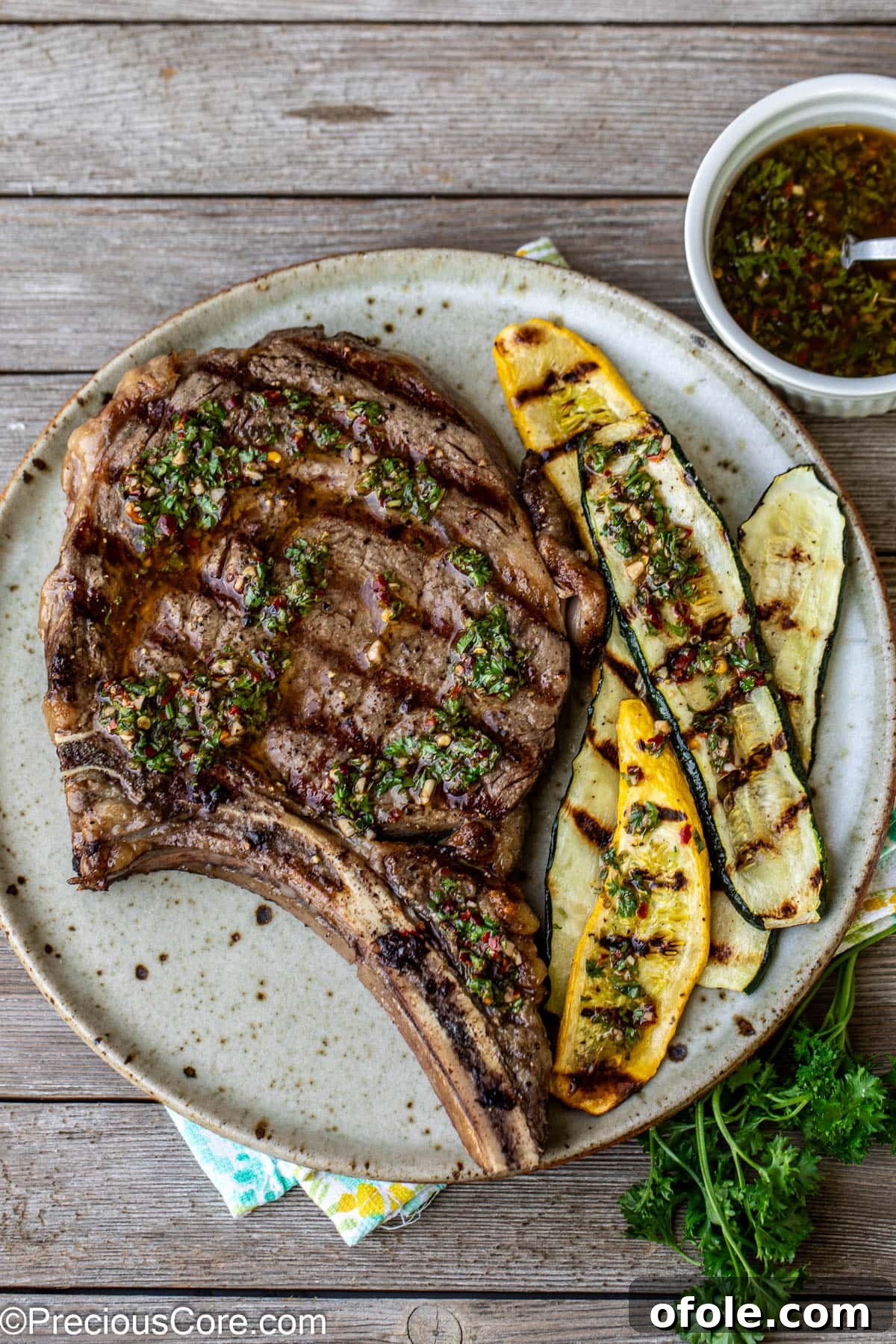
Bone-In Ribeye Steak: The King of Steaks
Ribeye steaks are celebrated for their exceptional flavor and succulent texture, making them a top choice for steak enthusiasts worldwide. What sets a ribeye apart is its generous marbling – those fine streaks of intramuscular fat that melt into the meat during cooking, imparting incredible juiciness and a rich, buttery taste that even surpasses leaner cuts like filet mignon in terms of pure flavor intensity. You might also know this magnificent cut by other evocative names such as Tomahawk steak (a ribeye with a long, frenched bone) or Cowboy steak (a slightly shorter bone-in ribeye), both hinting at its substantial and impressive nature.
This premium cut is sourced from the rib section of the cow, specifically from under the front section of the backbone. This anatomical location is characterized by less active muscle groups and higher fat content, directly contributing to the ribeye’s inherent tenderness, robust taste, and overall superior quality. The strategic presence of the bone not only adds to the aesthetic appeal of the steak but also plays a crucial role in enhancing the cooking process and the final eating experience, insulating the meat and infusing it with deeper flavors.
Cooking a bone-in ribeye is an ideal choice for elevating any dining occasion, whether it’s a grand celebration, a romantic dinner, or simply a night when you’re craving an indulgent, hearty meal. This comprehensive guide covers both popular indoor cooking methods, such as meticulous pan-searing and the precision of oven-finishing (often as part of a reverse sear), and authentic outdoor grilling techniques, including both gas and charcoal. Our goal is to empower you to master this exquisite steak, regardless of your culinary setup. For the absolute best results, we highly recommend sourcing your steaks from a reputable local butcher shop, where you can often find prime cuts and receive expert advice. However, a good quality bone-in ribeye can also be readily found at most well-stocked grocery stores.
Essential Ingredients for a Perfect Bone-In Ribeye
Crafting an incredible bone-in ribeye doesn’t demand an extensive or exotic list of ingredients. The true beauty of this cut lies in its inherent flavor and quality, which truly shines through with just a few simple, yet high-quality, additions. When it comes to seasoning a great steak, the philosophy of “less is more” holds true, allowing the rich, natural beefy notes to take center stage without being overwhelmed.
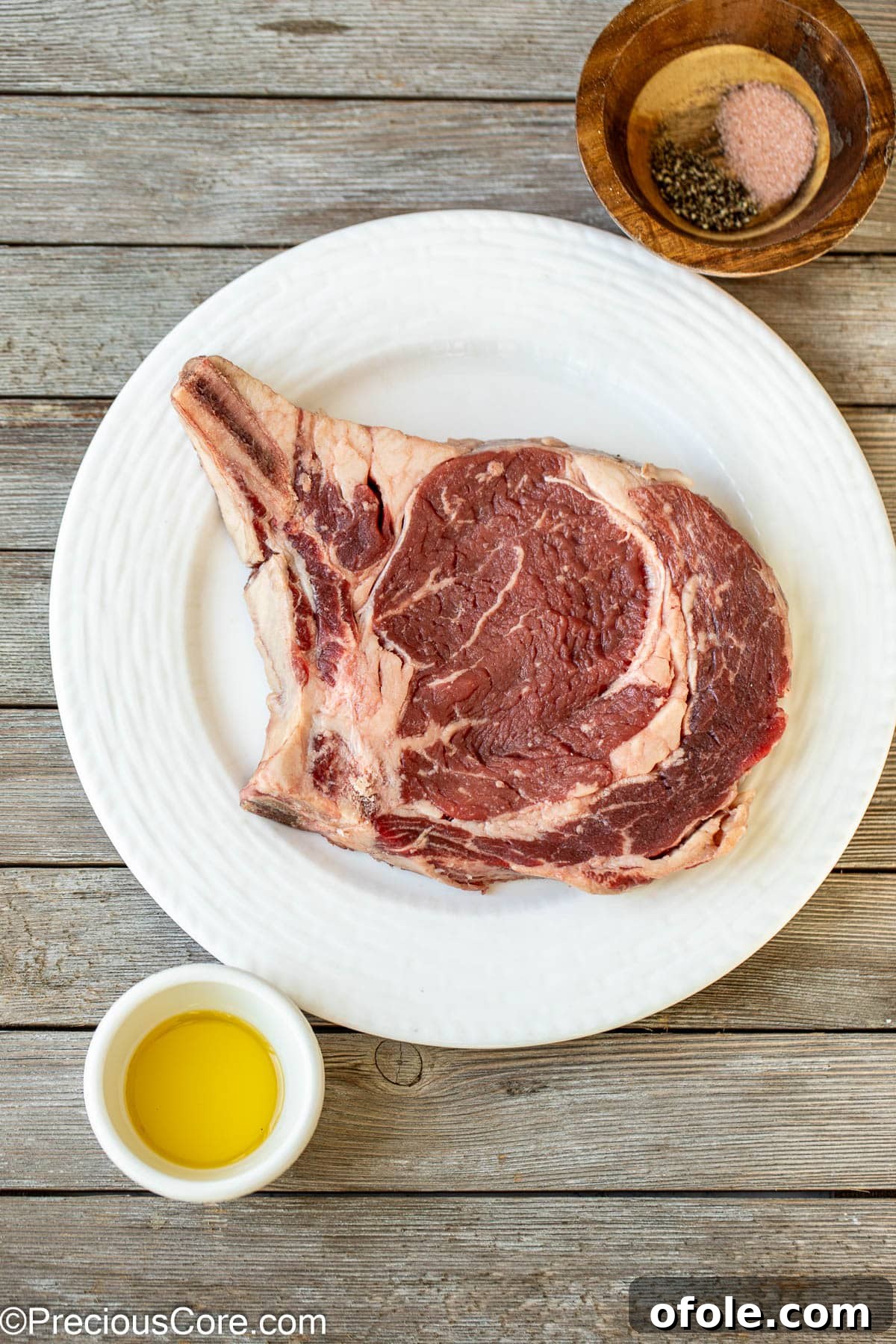
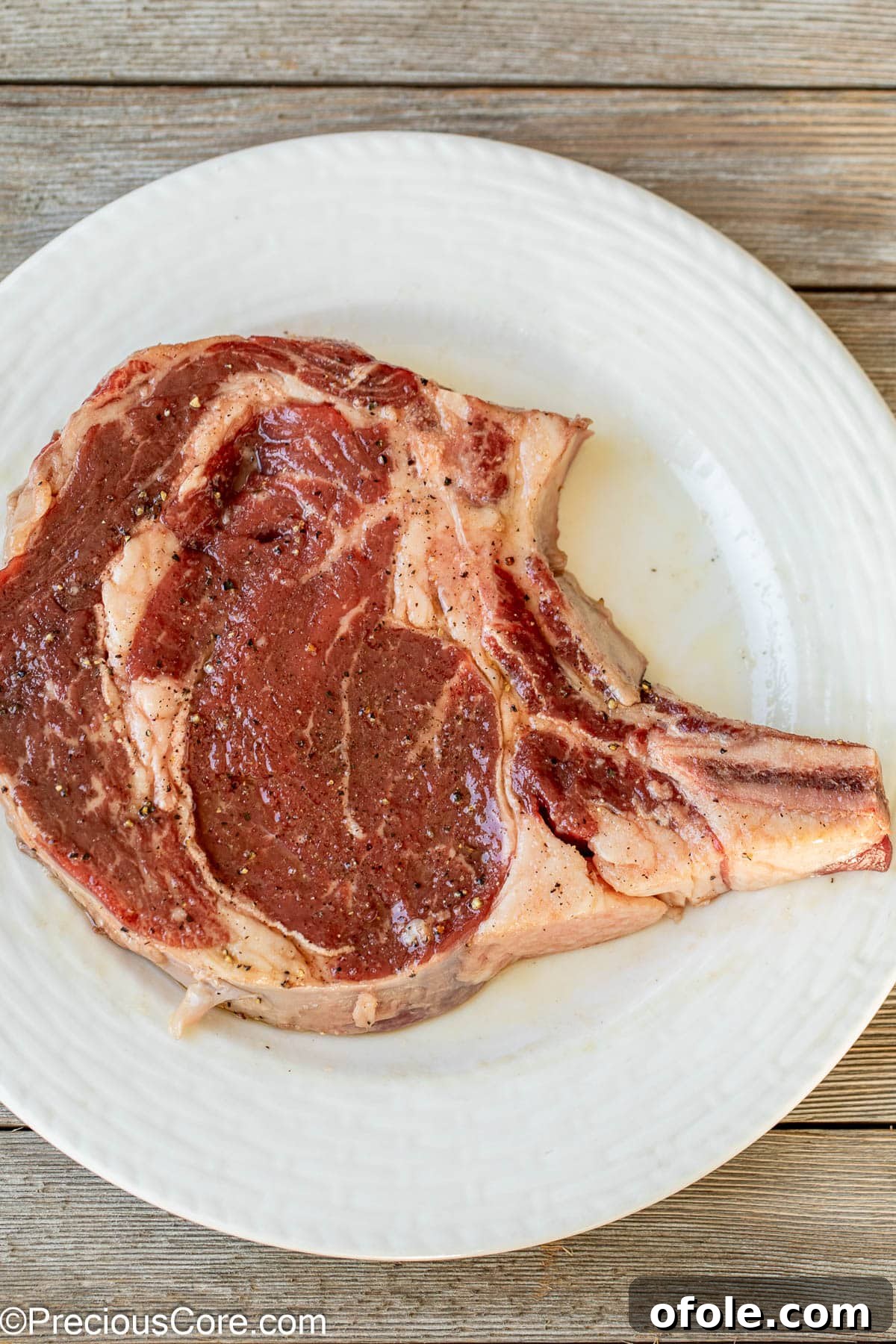
- Bone-In Ribeye Steaks: For a recipe designed to serve approximately 4 people, aim for about 1 to 1.5 pounds of bone-in ribeye steak. The ideal thickness is crucial for optimal results, typically ranging from 1 to 1.5 inches. A thicker cut allows for a superior sear, develops a more pronounced crust, and provides greater control over the internal doneness, preventing the steak from cooking too quickly.
- High-Quality Olive Oil: Extra virgin olive oil is an excellent choice for its flavor and high smoke point, though a good quality regular olive oil works well too. It serves multiple vital purposes in steak preparation: it helps the seasonings adhere evenly to the meat, facilitates the creation of that desirable, deeply browned crust, and prevents the steak from sticking to your skillet or grill grates. You’ll need enough to lightly coat both sides of the steak.
- Coarse Salt: We highly recommend using a good quality coarse salt, such as Kosher salt, sea salt (like flaky Maldon), or the pink Himalayan salt used in this recipe. Coarse salt distributes more evenly over the steak’s surface, creates a delightful textural contrast, and contributes significantly to forming that irresistible, flavorful crust. If using fine table salt, remember it is denser and saltier by volume, so you’ll need to use a slightly lesser quantity than what a recipe suggests for coarse salt.
- Freshly Ground Black Pepper: Opt for freshly ground black pepper over pre-ground varieties, as it offers a far more vibrant, pungent, and aromatic flavor. This simple, yet powerful, classic seasoning is the perfect complement to salt, working in harmony to enhance and highlight the natural, delicious flavors of the beef without overpowering them.
Elevate Your Ribeye: Flavor Variations & Enhancements
While a perfectly seasoned bone-in ribeye often needs little else to impress, these thoughtful variations offer exciting ways to customize and further enhance its already incredible flavor profile. Feel free to experiment with these additions to discover your absolute favorite steak experience.
- Butter vs. Oil: If you’re primarily grilling your steak over direct heat, olive oil is generally sufficient to prevent sticking and aid in browning. However, for stovetop cooking (especially in a cast-iron skillet) or oven-baked methods, incorporating butter can be a transformative addition. Melted butter, particularly when used for basting, contributes a profound richness and nutty depth of flavor, while also assisting in the creation of an even more luxurious, golden-brown crust. A common technique is to start with oil for the initial high-heat sear, then add butter towards the end of cooking for basting and flavor infusion.
- Additional Seasonings: The natural richness and beefy flavor of bone-in ribeye mean it doesn’t *require* a multitude of extra seasonings, but a carefully selected pinch can add wonderful complexity. Consider introducing a touch of smoked paprika for a subtle, earthy smokiness, a dash of garlic powder or onion powder for a savory depth, or a hint of tarragon for an aromatic, almost licorice-like twist. It’s often best to add these more delicate powdered spices and herbs towards the very end of the cooking process, as they can burn at high temperatures and develop a bitter taste if exposed to intense heat for too long.
- Fresh Herbs: Infuse your steak with incredible, fresh aromas by employing robust fresh herbs such as whole sprigs of rosemary or thyme. If cooking the meat in a hot skillet or oven, add these herb sprigs directly to the pan alongside melted butter or oil during the last few minutes of cooking. The heat will gently release their essential oils, deeply infusing the basting liquid and subsequently the steak with their fresh, earthy, and pungent flavors. This method allows the herb flavor to permeate the steak beautifully without direct contact.
- Garlic Infusion: For an even deeper, more savory, and aromatic flavor, consider adding finely minced garlic cloves to your hot pan (especially a cast-iron skillet) during the final stages of cooking. Use the melted butter or oil in the pan, now infused with the fragrant garlic, to baste the ribeye continuously. This technique imparts a rich, roasted garlic essence directly into the steak. Crucially, add the garlic towards the very end of cooking (the last minute or two) since it cooks very quickly and can easily burn, turning bitter if overcooked.
Mastering the Art of Cooking a Bone-In Ribeye Steak
Achieving a perfectly cooked bone-in ribeye steak at home is a culinary triumph that’s more attainable than you might imagine. There are several fantastic methods to choose from, each offering a slightly different result in terms of crust, texture, and flavor profile. No matter your preferred approach, a few fundamental preparation and finishing steps remain universally consistent for exceptional steak perfection.
Universal Preparation Steps: Always begin by allowing your bone-in ribeye steak to come to room temperature for at least 30-60 minutes before you start cooking. This crucial step promotes a more even cook from the very edges to the center of the steak. Next, pat the steak thoroughly dry on all sides with paper towels; removing all excess surface moisture is absolutely critical for achieving a magnificent, deeply browned, and crispy crust (the Maillard reaction). Finally, drizzle both sides of the steak generously with high-quality olive oil, then season liberally and evenly with coarse salt and freshly ground black pepper. After cooking, always transfer the steak to a cutting board, cover it loosely with aluminum foil, and allow it to rest for at least 5-10 minutes. This resting period is unequivocally vital for the internal juices to redistribute throughout the meat, preventing them from flowing out when you slice, resulting in a more tender, succulent, and intensely flavorful steak.
1. The Classic Pan-Seared Method
- Preheat Your Skillet: Place a heavy-bottomed skillet, preferably a cast-iron skillet, over medium heat and allow it to preheat for at least 5-10 minutes. This initial gentle heating ensures the pan is uniformly hot, eliminating cold spots. Increase the temperature to medium-high just before you’re ready to add the steak.
- Prepare for Searing: Drizzle a thin layer of olive oil (about 1 tablespoon) into the smoking hot pan and tilt it to evenly coat the bottom. Wait until the oil just begins to shimmer and lightly smoke, which indicates it has reached the ideal searing temperature. Carefully place the prepped steaks into the hot pan, being mindful of potential splattering.
- Sear and Baste: Cook the steaks for approximately 3-5 minutes on the first side, allowing a deep, rich, and flavorful crust to form. Resist the urge to move or flip the steak too soon – patience is key for a perfect sear. Once a beautiful crust has developed, carefully flip the steak. At this stage, you can add a tablespoon or two of unsalted butter, along with fresh herbs like rosemary or thyme sprigs, and crushed garlic cloves to the pan. Allow the butter to melt and foam, then use a spoon to continuously baste the steak with the flavorful butter mixture as it cooks on the second side. Continue cooking until your desired doneness is reached, using a meat thermometer for accuracy.
2. The Precision Oven Method (Reverse Sear)
The reverse sear method is widely celebrated for consistently yielding incredibly tender, evenly cooked steaks from edge to center, crowned with a beautiful, crisp crust. This technique involves slowly baking the steak in the oven to gently bring it up to temperature, followed by a final, rapid high-heat sear.
- Slow Bake: Preheat your oven to a low temperature, typically between 250-275°F (120-135°C). Place the prepped bone-in ribeye steaks on a wire rack that is set over a sturdy baking sheet. This setup allows for even air circulation around the steak. Bake for approximately 35-50 minutes, with the exact time depending on the steak’s thickness, until the internal temperature reaches about 110-120°F (43-49°C) for a medium-rare target. An instant-read meat thermometer is essential for precise temperature monitoring during this phase.
- Prepare for Searing: While the steaks are nearing their target oven temperature, heat a heavy-bottomed skillet (a cast-iron skillet is ideal) on your stovetop over high heat for several minutes until it’s screaming hot. Add a splash of olive oil and allow it to shimmer and just begin to lightly smoke.
- High-Heat Sear: Carefully transfer the ribeyes directly from the oven into the preheated, screaming hot skillet. Sear them quickly and aggressively, typically for less than 1 minute per side, or even as little as 30 seconds, to create that stunning, flavorful, and deeply caramelized crust. This final step is very fast and requires your full attention to prevent any burning.
3. The Backyard Gas Grill Method
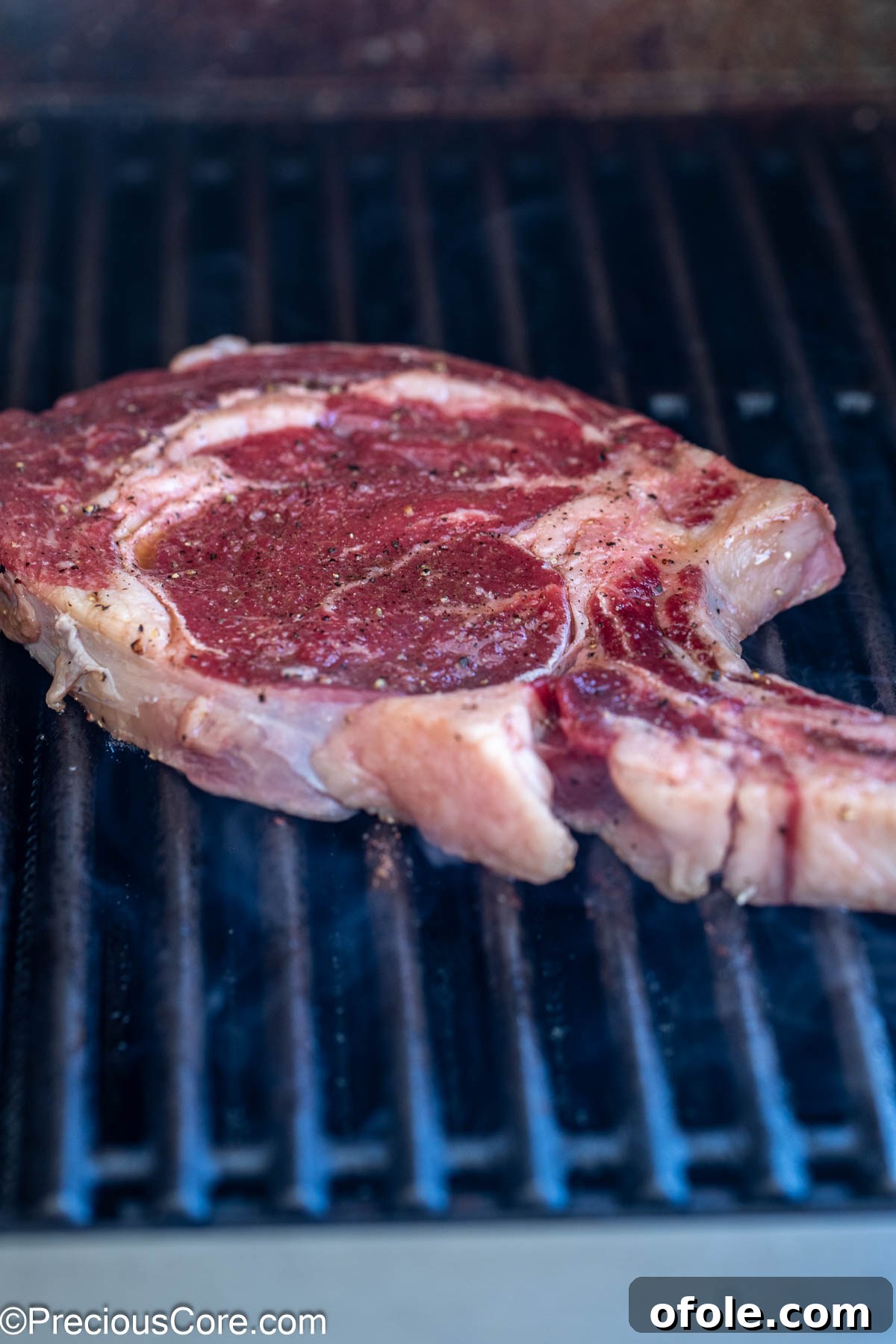
- Preheat and Prepare: Begin by preheating your gas grill to a high heat setting, ensuring that the grill grates are thoroughly hot before you place any meat on them. While the grill is heating, prepare your bone-in ribeye as described in the universal preparation steps: bring to room temperature, pat dry, and season liberally with olive oil, salt, and pepper.
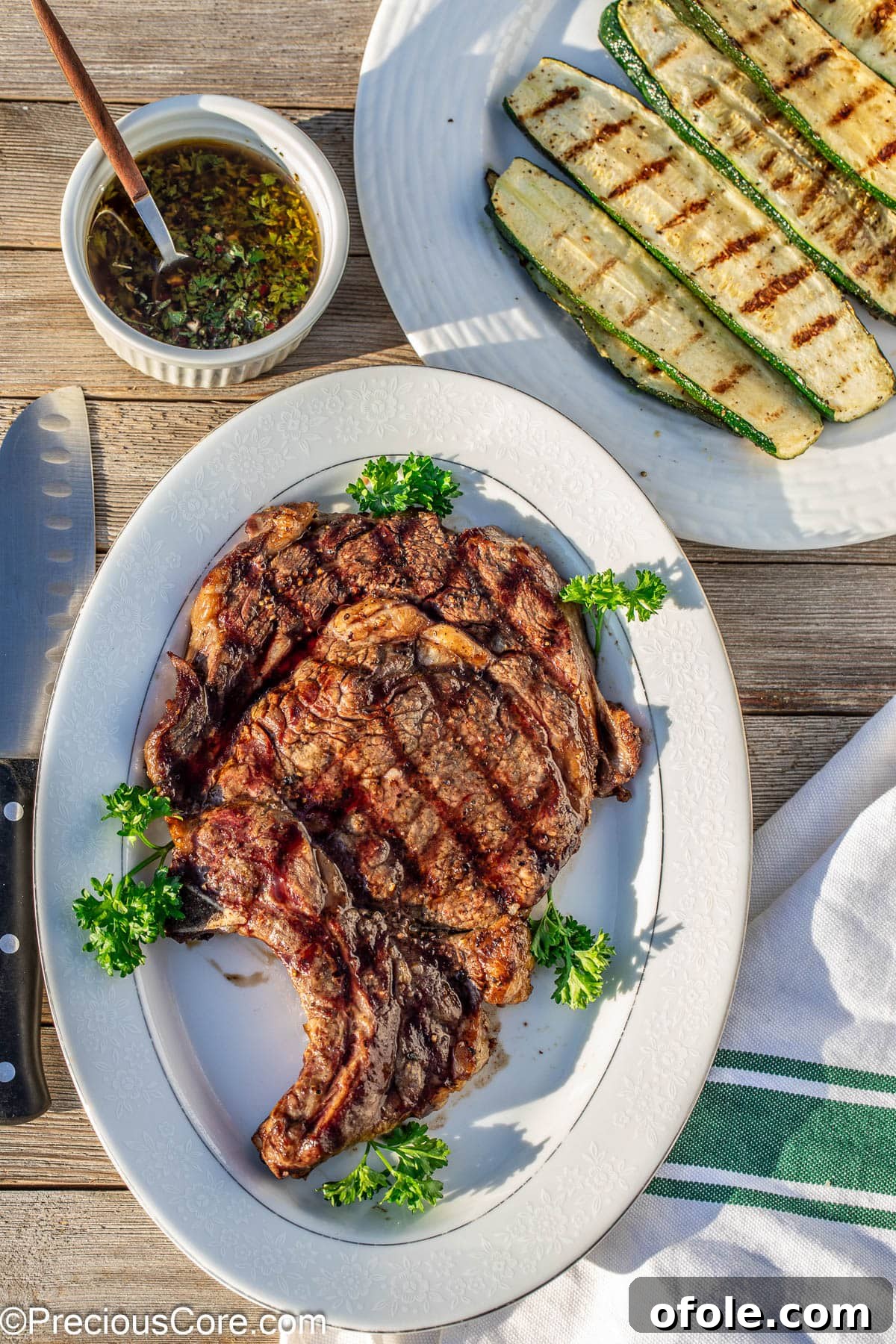
- Direct Heat Searing: Carefully place the seasoned steak directly over the hottest part of the grill. Grill for approximately 4 to 6 minutes per side, with the exact time depending on the thickness of your steak and your desired level of doneness. Flip the steak only once to ensure even cooking and to allow those distinct, beautiful grill marks to develop. Avoid excessive flipping, as this can prevent a good crust from forming and hinder uniform cooking.
- Check Doneness: Use an instant-read meat thermometer to accurately check the internal temperature of the steak, referring to our detailed steak doneness guide below. Once the desired temperature is almost reached (accounting for carryover cooking), remove the steak from the grill.
4. The Authentic Charcoal Grill Method
- Set Up Two-Zone Cooking: For charcoal grilling, it’s absolutely essential to prepare your grill for two-zone cooking. This means piling your hot, lit coals to one side of the grill for direct, high heat, while leaving the other side empty to create an area for indirect, lower heat. This intelligent setup allows you to both aggressively sear and gently finish cooking your steak. Prepare your steaks as usual following the universal prep steps.
- High-Heat Sear: Place the bone-in ribeyes directly over the hottest coals to achieve an incredible, intense sear and a robust, flavorful crust. Cook for a short burst of 1-2 minutes per side. This rapid, high-heat exposure will quickly caramelize the exterior, creating a complex flavor profile and effectively locking in the internal juices.
- Indirect Finishing: Once the steaks have developed a beautiful sear, carefully move them to the cooler, indirect heat side of the grill. Close the lid to allow the ambient heat to circulate, and continue to grill for an additional 4-7 minutes per side, or until the steak reaches your desired internal temperature. You can flip the steaks once during this indirect cooking phase to promote even cooking, but constant flipping is unnecessary and can interfere with the gentle cooking process.
Top Tip: Always pat your steak thoroughly dry with paper towels before seasoning and cooking. Removing surface moisture is the secret to achieving that coveted crispy, flavorful crust through the Maillard reaction!
Your Essential Steak Temperature Guide
Cooking steak to your exact preferred level of doneness is paramount for a truly perfect dining experience. The most accurate and reliable way to determine doneness is by utilizing an instant-read meat thermometer. It’s important to remember a key principle: the internal temperature of the steak will continue to rise by a few degrees (typically 5-10°F or 3-6°C) even after it has been removed from the heat source. This phenomenon is known as “carryover cooking,” so always aim to pull your steak off the heat slightly before it reaches your absolute target internal temperature.
- Rare: 120-125°F (49-52°C) – At this stage, the center of the steak remains cool and a vibrant, bright red. The texture is exceptionally tender, and the steak is incredibly juicy.
- Medium Rare: 130-135°F (54-57°C) – The center will be warm and a rich red color, gradually transitioning to a deep pinkish-red towards the edges. This level of doneness is often considered the ideal sweet spot for ribeye, offering maximum tenderness and juiciness.
- Medium: 140-145°F (60-63°C) – The center of the steak will be warm and uniformly pink throughout. The meat will feel firm to the touch but will still retain noticeable juiciness.
- Medium Well: 150-155°F (66-68°C) – At medium well, the meat is largely cooked through, with only slight, faint hints of pink remaining in the very center. The texture will be considerably firmer.
- Well Done: 160-165°F (71-74°C) – The meat is entirely browned inside and out, cooked thoroughly, and will feel quite firm to the touch. Minimal pink will be present, if any.
When accurately checking the steak’s temperature, insert the tip of your thermometer into the thickest part of the meat, being exceptionally careful to avoid touching the bone. The bone conducts heat differently and can lead to an inaccurate or misleading temperature reading for the actual meat.
The Traditional Finger and Palm Method for Doneness
If you find yourself without a reliable meat thermometer, the finger and palm method offers a traditional, albeit less precise, way to gauge your bone-in ribeye’s doneness. This tactile technique relies on comparing the firmness of the cooked steak to the feel of your palm in various relaxed or tensed positions. While it requires some practice to master, it can serve as a useful quick guide in a pinch.
- Raw Steak: Relax your hand completely. Now, gently press the fleshy part of your palm directly below your thumb. This soft, highly yielding sensation is comparable to how a raw steak would feel.
- Medium-Rare Steaks: Gently touch the tip of your thumb to the tip of your middle finger. Observe how the fleshy part of your palm (below the thumb) firms up slightly. This sensation should feel similar to a medium-rare steak.
- Medium Steaks: Next, touch the tip of your thumb to the tip of your ring finger. The palm will feel firmer still, offering a good approximation for a medium-cooked steak.
- Medium-Well Steaks: Finally, touch the tip of your thumb to the tip of your pinky finger. This creates the firmest sensation on your palm, which is akin to the texture of a medium-well steak.
While this method can be a helpful guideline for experienced cooks, it’s inherently subjective and its accuracy can vary from person to person. For the most consistently accurate results, especially when cooking valuable cuts like bone-in ribeye, an instant-read thermometer is always the superior tool. If you have both, feel free to use the palm method as a quick initial check, then confirm with your thermometer for ultimate confidence.
Expert Tips for the Perfect Bone-In Ribeye
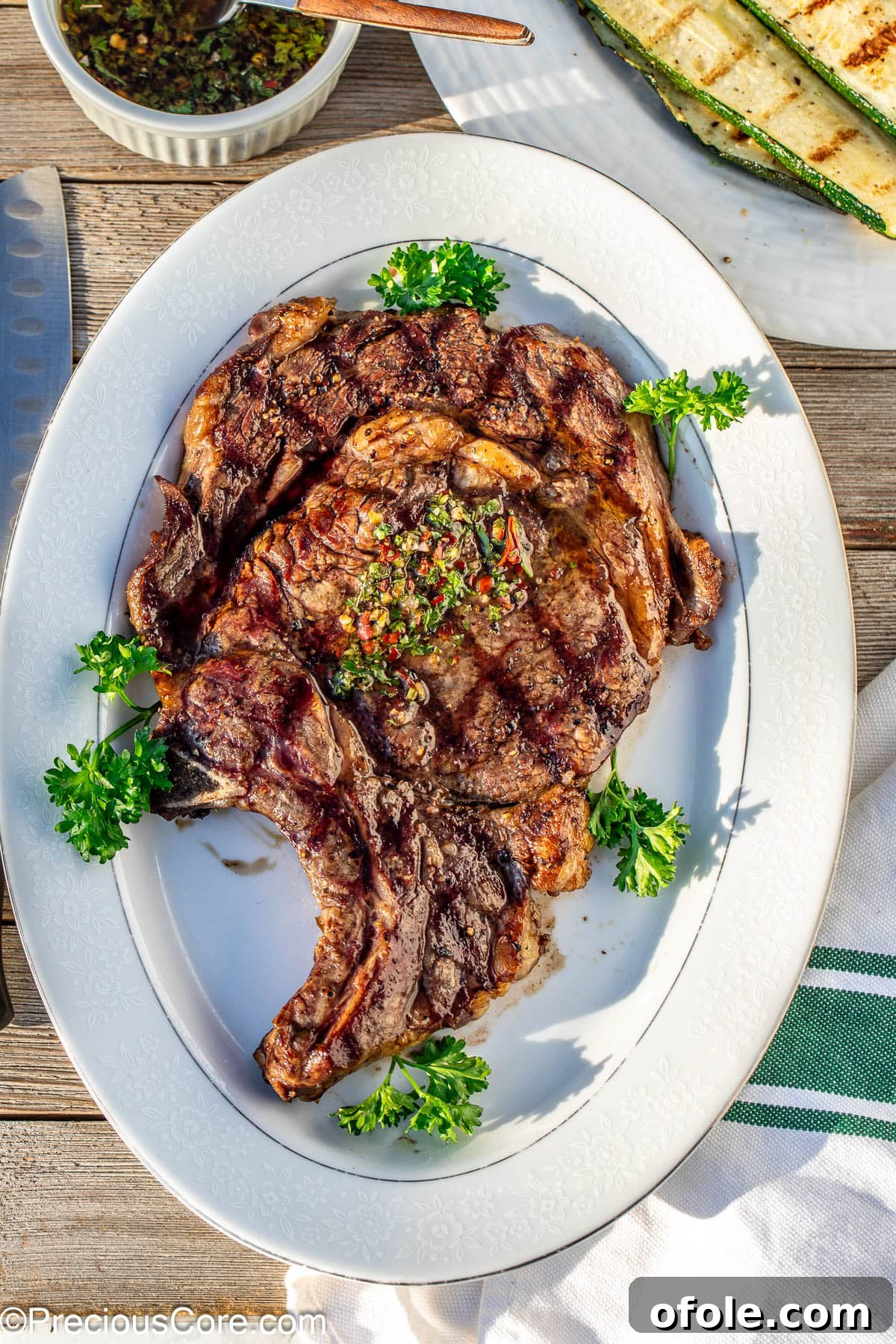
Achieving steakhouse-quality results at home for your bone-in ribeye is not just a dream – it’s entirely possible with these essential tips. Paying close attention to these finer details in preparation and cooking can make a significant difference in the final taste, texture, and overall enjoyment of your magnificent steak.
- Understand Carryover Cooking: It’s crucial to remember that your steak continues to cook even after you remove it from the direct heat source. This phenomenon, known as “carryover cooking,” can raise the internal temperature of the steak by an additional 5-10°F (3-6°C). To prevent your steak from inadvertently overcooking, always aim to pull it off the heat slightly before it reaches your desired final internal temperature. A reliable instant-read meat thermometer is your most valuable tool here for precise timing.
- Never Cut to Check Doneness: Resist the powerful urge to slice into the center of your steak to check for doneness. Doing so will cause those precious, flavorful juices – which are essential for a tender and succulent steak – to escape immediately. This leads to a significantly drier and less enjoyable eating experience. Instead, rely solely on your accurate meat thermometer and the tactile touch test described previously.
- Proper Storage and Reheating: Store any leftover bone-in ribeye steak in an airtight container in the refrigerator for up to 3-4 days to maintain its freshness. For reheating, absolutely avoid the microwave, as it will inevitably result in a rubbery, unpleasant texture. Instead, the best method for reheating steak is a gentle “reverse sear” approach:
- Gently reheat the steak in a low-temperature oven, around 250°F (120°C), until it is just warmed through (check with a thermometer, aiming for about 100-110°F internal).
- Then, transfer the steak to a screaming hot skillet (like cast iron) with a small amount of butter or oil for a quick, high-heat sear on each side (only 30-60 seconds per side). This revives the crust and brings the steak back to its best possible texture.
- Patience for the Crust: When cooking your steaks in a pan or on the grill, allow them sufficient, uninterrupted time on each side without constantly flipping. This extended, direct contact with the hot surface is absolutely crucial for developing that desirable, deeply browned, and intensely flavorful crust, which is the result of the Maillard reaction.
- Don’t Crowd the Pan or Grill: If you are cooking multiple steaks, ensure there is ample space between each one on the cooking surface. Crowding the pan or grill grates will significantly lower the surface temperature, leading to the meat steaming rather than searing. This prevents the formation of a proper crust and results in a less flavorful steak. Cook in batches if necessary to maintain consistent high heat.
Bone-In Ribeye Steak: Frequently Asked Questions
The “best” way to cook a bone-in ribeye honestly comes down to individual personal preference and the cooking equipment you have available. All the methods detailed comprehensively in this guide – pan-searing on the stovetop, the precision of a reverse sear in the oven, and grilling (using both gas and charcoal) – are excellent techniques. Each method offers slightly different textural outcomes and unique flavor nuances. For an incredibly deep, uniform crust combined with an exceptionally moist interior, the reverse sear method is frequently praised. For that authentic smoky flavor and beautiful, classic char marks, grilling is truly unbeatable.
Absolutely, yes! Keeping the bone intact provides several significant culinary advantages that enhance the overall quality of the steak. Firstly, the bone acts as a natural insulator, which helps the steak to cook more evenly throughout and prevents the thinner edges from overcooking prematurely before the center reaches your desired doneness. Secondly, the bone itself, particularly the marrow and connective tissues close to it, imparts a rich, savory, and umami-packed flavor to the surrounding meat as it slowly cooks. This natural infusion of deeper flavor and additional moisture results in a consistently juicier, more tender, and profoundly more delicious steak compared to its boneless counterpart.
Generally speaking, a high-quality bone-in ribeye, with its inherent exceptional marbling (intramuscular fat) and naturally robust, rich flavor, does not typically require a marinating process. Its natural juiciness and intense beefy taste are often best highlighted and celebrated with just simple seasonings, such as coarse salt and freshly ground black pepper, perhaps complemented by a touch of olive oil, fresh herbs, or garlic. Marinades are usually employed for leaner or tougher cuts of meat to add moisture, tenderize, or introduce specific flavor profiles. For a premium ribeye, the primary focus should be on employing proper cooking techniques and, crucially, avoiding overcooking, which allows its unparalleled natural deliciousness to truly shine through.
Perfect Pairings: What to Serve with Your Bone-In Ribeye
A magnificent bone-in ribeye steak deserves equally delicious and complementary accompaniments. While perfectly grilled zucchini is always a fantastic choice, here are some other superb side dishes that will elevate your steak dinner into an extraordinary and memorable meal:
Rosemary Garlic Mashed Potatoes
Pan Fried Brussels Sprouts With Bacon
Honey Whole Wheat Dinner Rolls
Brown Sugar Honey Glazed Carrots
Garlic Butter Green Beans
More Irresistible Steak Recipes to Explore
- Pan Seared Flank Steak
- Steak and Pasta
- Pan Seared Ribeye Steaks
- Steak and Scrambled Eggs
- Steak Fried Rice
We love hearing from you! If you make this exquisite Bone-In Ribeye Steak, please consider leaving a star rating below. Your feedback not only helps others discover this recipe but also brightens our day! Thank you for your support!
To receive this recipe and more delicious content directly in your inbox, please subscribe to our newsletter via our main subscription page. We respect your privacy and will never share your email address.
Subscribe to our Newsletter
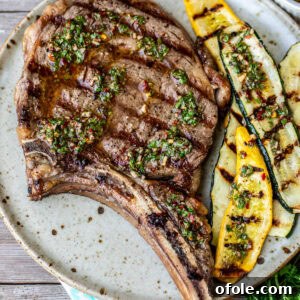
Bone-In Ribeye Steak
A well-cooked bone-in ribeye steak is undeniably juicy and melt-in-your-mouth tender. The bone infuses extra flavor and keeps the meat incredibly moist, resulting in a phenomenal, unforgettable steakhouse-quality experience at home. This guide covers multiple cooking methods to help you achieve perfection.
Prep Time: 15 mins
Cook Time: 15-20 mins
Total Time: 30-35 mins
Servings: 4 servings
Equipment
- Gas grill (or cast iron skillet, oven, charcoal grill as alternative)
- Instant-read meat thermometer
- Tongs
- Cutting board
- Aluminum foil
Ingredients
- 1-1.5 pound bone-in ribeye steak (1 to 1.5 inches thick)
- 1 Tablespoon high-quality olive oil
- ½ – 1 teaspoon coarse salt (like Kosher or sea salt, to taste)
- ¼ teaspoon freshly ground black pepper (to taste)
- Optional: 2 Tablespoons unsalted butter, 2 sprigs fresh rosemary or thyme, 2 cloves garlic (minced) for basting
Instructions
- Prepare the Steak: Bring the steak to room temperature for at least 30-60 minutes before cooking. Pat the steak thoroughly dry on all sides with paper towels to remove all excess moisture, which is key for a good crust.
- Season: Drizzle olive oil generously over both sides of the steak, then season liberally and evenly with coarse salt and freshly ground black pepper. Press the seasonings gently into the meat to ensure they adhere.
- Preheat Grill (Gas Grill Method as featured for quick recipe card): Preheat your gas grill to high heat, ensuring the grates are thoroughly hot.
- Grill: Place the seasoned steak on the hot grill. Grill for 4-6 minutes per side for medium-rare doneness (internal temperature 130-135°F), or until the internal temperature reaches your desired level (refer to the Steak Temperature Guide in the full post). Flip only once to achieve a great crust and even cooking.
- Rest: Transfer the cooked steak to a plate or cutting board. Cover loosely with aluminum foil and allow it to rest for at least 5-10 minutes before slicing and serving. This resting period is crucial for the juices to redistribute, ensuring a tender and juicy result.
- For detailed instructions on other superb cooking methods such as Pan-Seared, Oven Reverse Sear, or Charcoal Grill, please refer to the comprehensive sections within the main article above.
Notes
Achieving a perfect bone-in ribeye requires precision and attention to detail. Remember to always use an instant-read meat thermometer for accuracy. For specific guidance on pan-searing, oven reverse searing, or charcoal grilling your bone-in ribeye, consult the detailed instructions and expert tips provided throughout this comprehensive post.
Additional Info
Course: Dinner, Main Course
Cuisine: Western, American
Tried this recipe?
We’d love to see your creations! Mention @preciouscore or tag #PreciousCore on Instagram!