
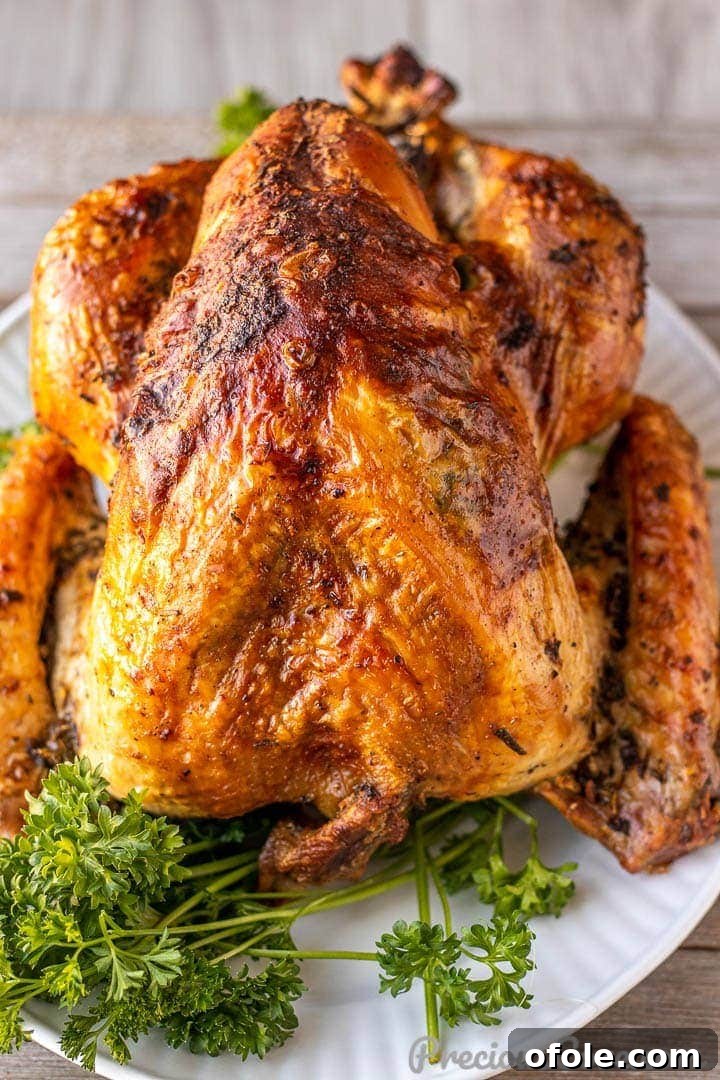
Herb Roasted Turkey: Your Ultimate Guide to a Flavorful Feast
Prepare to impress your family and friends with this incredibly flavorful Herb Roasted Turkey. This recipe transforms an ordinary turkey into an extraordinary culinary masterpiece, leaving everyone at your table absolutely loving every tender, juicy bite. Infused with aromatic herbs and savory minced garlic, this turkey is perfectly seasoned to deliver a truly unforgettable meal that will become a cherished tradition.
Whether you’re planning a grand Thanksgiving celebration, a festive Christmas dinner, a delightful Easter brunch, or simply a special meal any time of the year, this herb roasted turkey is designed for success. Its rich flavor profile, succulent meat, and perfectly crispy skin make it a standout centerpiece that promises to delight every palate.
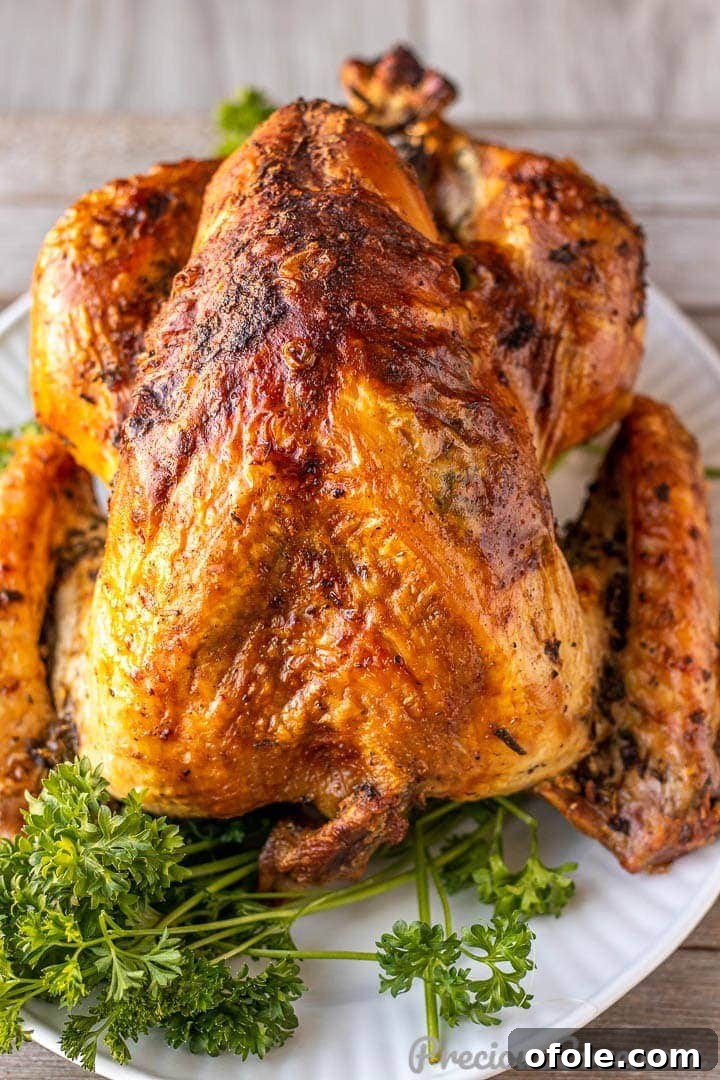
Elevate your meal by serving this magnificent roast turkey with classic, comforting sides. We highly recommend pairing it with creamy Buttermilk Mashed Potatoes, vibrant Garlic Butter Green Beans, and sweet Fried Carrots for a complete and harmonious dining experience that truly celebrates the season.
Looking for more show-stopping roast recipes to expand your culinary repertoire? Explore our collection including the succulent Perfect Roast Chicken, elegant Herb Roasted Duck, and convenient Roasted Turkey Thighs, each offering unique flavors and easy-to-follow instructions.
Table of Contents
- Introduction to Herb Roasted Turkey
- Why This Herb Roasted Turkey Recipe Shines
- Essential Ingredients for a Superb Herb Roasted Turkey
- Step-by-Step Guide: How To Make Herb Roasted Turkey
- Ensuring Perfection: How To Tell If Your Turkey is Done
- Mastering the Carve: How To Carve a Turkey
- Best Sides To Serve With Herb Roasted Turkey
- Tips for a Flawless Herb Roasted Turkey
- Common Turkey Roasting Questions Answered
- Storage and Reheating Your Leftover Turkey
- More Delicious Turkey Recipes
- Irresistible Roasted Chicken Recipes
- Important Tools for Making Roast Turkey
- Herb Roasted Turkey Recipe Card
Introduction to Herb Roasted Turkey
Roasting a whole turkey can seem like a monumental task, especially for those new to holiday cooking. However, with the right recipe and a few key techniques, you can achieve a beautifully golden-brown, incredibly succulent turkey that will be the undisputed star of your festive feast. This herb roasted turkey recipe is meticulously designed to be straightforward yet remarkably rewarding, focusing on maximizing both flavor and moisture. We will guide you through every essential step, from properly preparing your turkey and thawing it safely, to expertly crafting the perfect garlic herb butter that guarantees not only crispy skin but also consistently tender and juicy meat. Get ready to conquer your turkey roasting fears and impress everyone at the table!
Why This Herb Roasted Turkey Recipe Shines
What sets this particular Herb Roasted Turkey apart from other recipes? The secret lies in a generous, aromatic application of homemade garlic herb butter. This meticulously crafted compound butter, brimming with fresh rosemary, thyme, parsley, and finely minced garlic, serves multiple vital functions. Firstly, it deeply infuses the turkey meat with an incredible, complex flavor profile. Secondly, and equally important, it melts directly into the turkey, self-basting the bird from within and contributing significantly to that coveted crispy, golden-brown skin. Unlike many traditional roasting methods that can sometimes result in dry or bland turkey, our method ensures a consistently juicy bird from the delicate breast meat to the richer thighs. The subtle yet impactful addition of bouillon powder further deepens the savory notes, creating an umami-rich experience in every single bite. This recipe is accessible enough for even novice cooks to achieve stunning results, yet sophisticated enough to satisfy seasoned chefs. It’s the ultimate combination of simplicity, flavor, and guaranteed succulence.
Essential Ingredients for a Superb Herb Roasted Turkey
To prepare the most flavorful and perfectly roasted turkey with irresistibly crispy skin, gathering the correct, high-quality ingredients is paramount. Each component plays a specific role in achieving culinary perfection. Here’s a detailed look at what you’ll need and the importance of each ingredient:
- Turkey (8-9 pounds / 3-4 kg): Begin with a premium-quality turkey. If you’re using a frozen bird, it is absolutely crucial to ensure it is completely thawed following safe thawing guidelines (typically in the refrigerator) before you start. A properly thawed turkey guarantees even cooking and allows the flavors to penetrate the meat thoroughly. This size turkey is ideal for serving approximately 8-10 people generously, making it perfect for most family gatherings.
- Unsalted Butter (16 Tablespoons / 2 sticks), Room Temperature: We exclusively recommend unsalted butter. This gives you complete command over the total salt content in your dish, preventing it from becoming overly salty. Using butter at room temperature is essential, as its softened consistency makes it effortlessly blend with the other ingredients and allows for smooth, even application both under and over the turkey’s skin.
- Fresh Minced Garlic (1 Tablespoon): Garlic is a potent flavor enhancer. When minced, it releases its pungent, aromatic oils, which permeate the turkey meat, adding a foundational layer of savory depth that beautifully complements the fresh herbs.
- Fresh Herbs: Rosemary (1 Tablespoon, minced), Thyme (1 Tablespoon, fresh, plucked from stems), Parsley (2 Tablespoons, minced): These vibrant, aromatic herbs are the very heart and soul of our herb-roasted flavor profile. When incorporated into the butter and strategically placed inside the turkey cavity, they release their fragrant essential oils. This process infuses the meat with a delicate yet distinct herbaceous essence, creating a truly memorable aroma and taste. For optimal flavor, always opt for fresh herbs over dried.
- Chicken Bouillon Powder (2 teaspoons / Stock Powder): This is our celebrated secret ingredient for an unparalleled depth of savory umami flavor. It significantly elevates the turkey’s overall taste, ensuring a rich, profound flavor that permeates every fiber of the bird. It’s a game-changer for enhancing complexity.
- Salt (1 teaspoon): Essential for proper seasoning, salt plays a critical role in bringing out and intensifying all the lovely natural flavors of the turkey and herbs. Always adjust the quantity to your personal preference, keeping in mind that the bouillon powder also contributes to the overall saltiness.
- Ground Black Pepper (1/2 teaspoon): Freshly cracked black pepper provides a subtle yet distinct spice and a pleasant aromatic kick, beautifully rounding out and balancing the rich flavor profile of the garlic herb butter.
- Fresh Lemon (1/2): A fresh lemon, half of which is squeezed over the turkey’s exterior before roasting and potentially placed in the cavity, brightens the overall flavors. Its acidity also contributes to a slight tenderizing effect on the meat and adds a delightful citrusy aroma.
- Fresh Herb Sprigs (1 handful, for stuffing cavity – e.g., 2 sprigs rosemary, 4 sprigs thyme, 1 sprig sage): These whole sprigs, placed within the turkey’s cavity, contribute aromatic steam from the inside during the roasting process, further enhancing the herbal infusion of the meat.
For the precise measurements of each ingredient, please refer to the detailed Herb Roasted Turkey recipe card at the conclusion of this comprehensive article.
Step-by-Step Guide: How To Make Herb Roasted Turkey
Follow these meticulously detailed steps to create a show-stopping herb roasted turkey that’s not only bursting with flavor but also boasts that coveted, perfectly crispy, golden-brown skin. Precision and patience are your best allies for this culinary endeavor:
- Prepare Your Turkey for Roasting:
If your turkey is frozen, the absolute first step is to ensure it is completely thawed. The USDA advises thawing in the refrigerator, budgeting approximately 24 hours for every 4-5 pounds (1.8-2.3 kg) of turkey. Once thawed, remove it from the refrigerator and let it sit at room temperature for about 1-2 hours before roasting. This critical step promotes significantly more even cooking, preventing dry spots, and allows the herb butter to adhere smoothly to the skin. Thoroughly pat the turkey dry with paper towels, both inside the cavity and all over its exterior. Excess moisture prevents crispy skin. Squeeze half a fresh lemon over the turkey’s surface; this subtle acidity brightens flavors and subtly aids tenderization.
- Craft Your Aromatic Garlic Herb Butter:
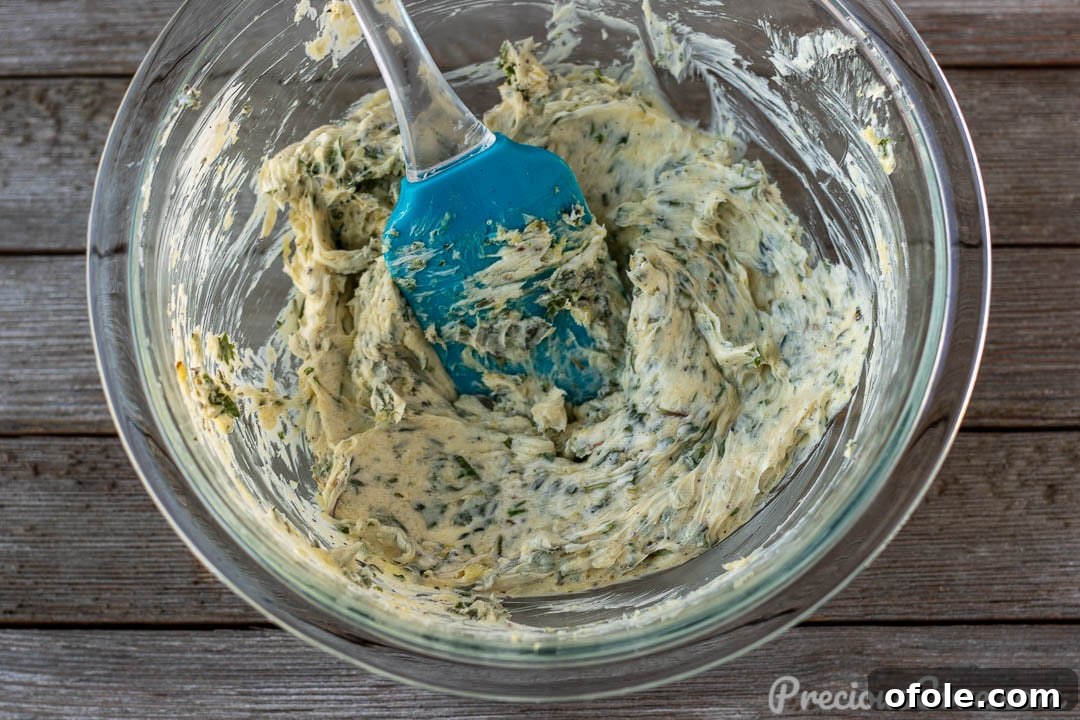
In a medium-sized mixing bowl, combine the softened (room temperature) unsalted butter, finely minced garlic, meticulously chopped fresh rosemary, thyme leaves carefully plucked from their stems, minced fresh parsley, chicken bouillon powder, a teaspoon of salt, and freshly ground black pepper. Using a spoon or spatula, thoroughly mix all these ingredients until they are perfectly blended and you have a smooth, wonderfully fragrant compound butter. This flavorful mixture is truly the secret weapon behind our irresistibly juicy and aromatic turkey.

Our meticulously crafted garlic herb butter, ready to infuse your turkey with rich flavor. - Master the Butter Application:
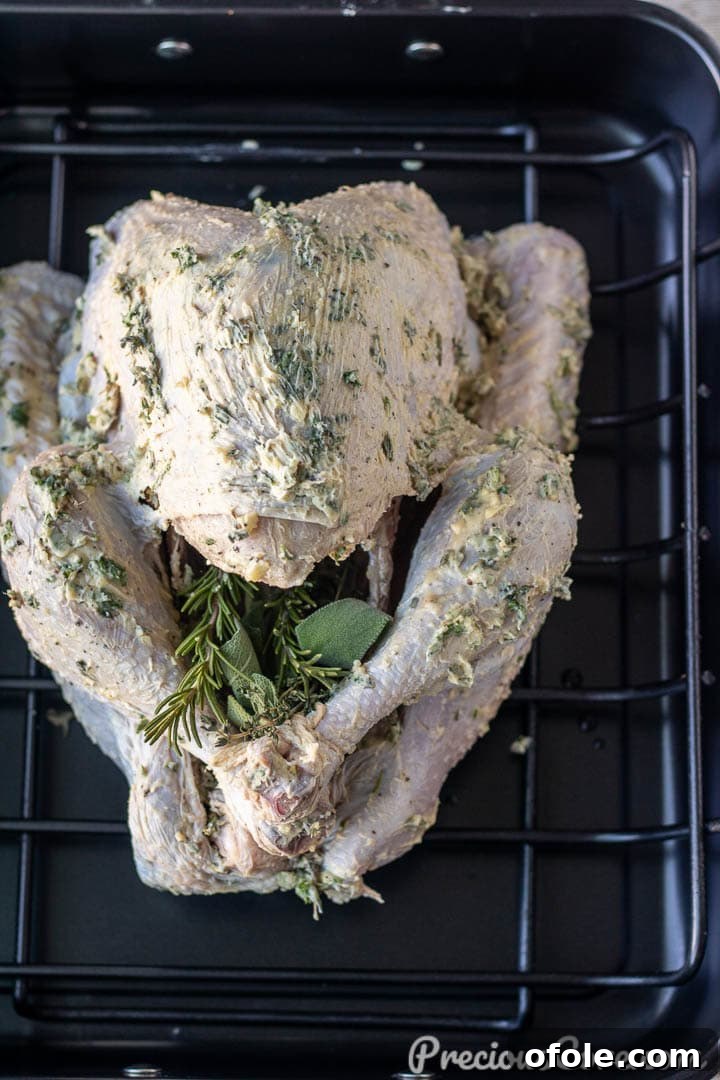
This step is crucial for flavor and moisture. Gently and carefully loosen the skin over the turkey breast and thighs, creating pockets without fully detaching the skin from the meat. Using your hands or a spoon, generously rub a substantial amount of the prepared garlic herb butter directly onto the meat under the skin. This ensures that the robust flavor penetrates deep into the turkey and provides internal basting for ultimate juiciness. Next, apply the remaining butter evenly all over the exterior of the turkey, ensuring every inch is coated. This external layer will contribute to that beautiful golden-brown, crispy skin. Remember to reserve approximately 2 tablespoons of this magnificent butter for basting later in the roasting process.
The turkey generously coated with the savory herb butter, prepared for roasting. - Prepare the Turkey for Roasting (Trussing and Stuffing):
To prevent them from overcooking and burning, carefully tuck the turkey wings underneath the bird’s back. This also helps the turkey cook more uniformly. For added aromatic depth, place the squeezed lemon half and a handful of fresh herb sprigs (such as rosemary, thyme, and sage) directly into the turkey’s cavity. These aromatics will release fragrant steam during roasting, subtly perfuming the meat from within. Finally, secure the legs of the bird together with butcher’s twine. This simple trussing technique helps the turkey maintain its compact shape throughout cooking, contributing to more even heat distribution and a more appealing final presentation.
- Initial High-Heat Roast:
Preheat your oven to a high temperature of 450°F (230°C). Carefully transfer the prepared and buttered turkey to a large, sturdy roasting pan. Ideally, use a pan with a V-rack or a flat rack to elevate the turkey; this allows for optimal air circulation around the entire bird, promoting even cooking and crispier skin. Roast the turkey at this high temperature for the first 30 minutes. This initial burst of intense heat is crucial for quickly crisping the skin, initiating a beautiful golden-brown coloration, and locking in juices.
- Lower Heat Roast and Basting:
After the initial 30 minutes, carefully remove the turkey from the hot oven. Using a pastry brush, liberally apply the reserved 2 tablespoons of garlic herb butter all over the turkey’s golden skin. This fresh layer of butter adds another dimension of flavor and moisture. Immediately reduce the oven temperature to 350°F (180°C). Return the turkey to the oven and continue roasting for approximately an additional 1 to 1.5 hours. The cooking time will vary depending on your turkey’s exact weight and your oven’s calibration. The turkey is fully cooked when a reliable meat thermometer, inserted into the thickest part of the thigh (ensuring it does not touch the bone), registers a safe internal temperature of 165°F (70°C).
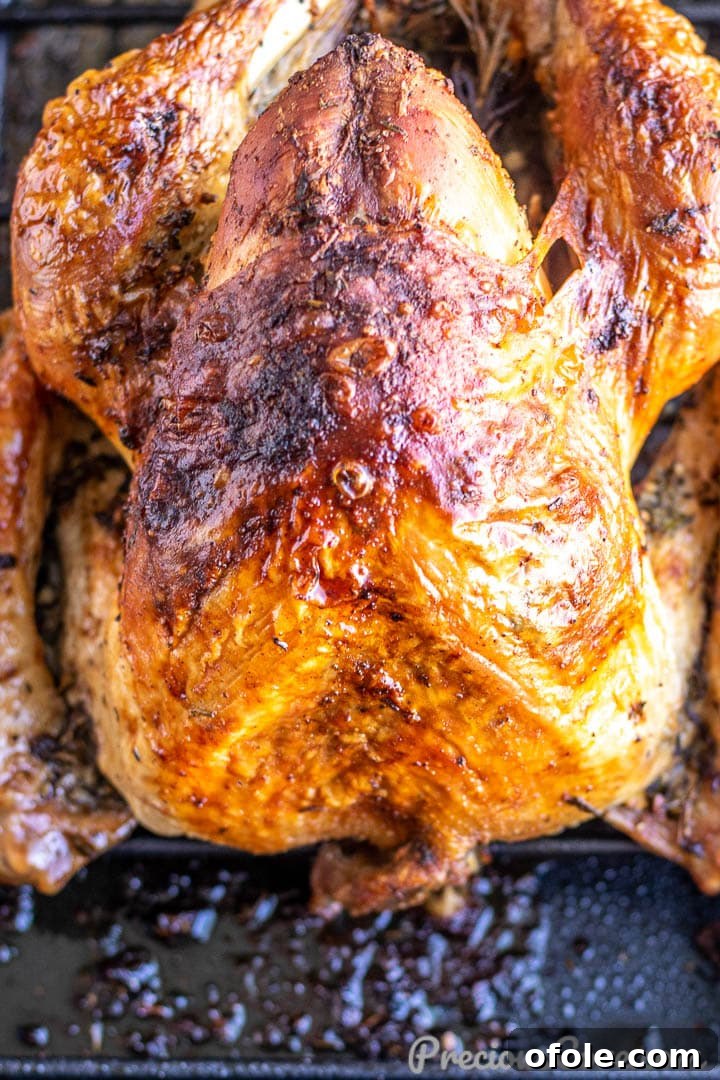
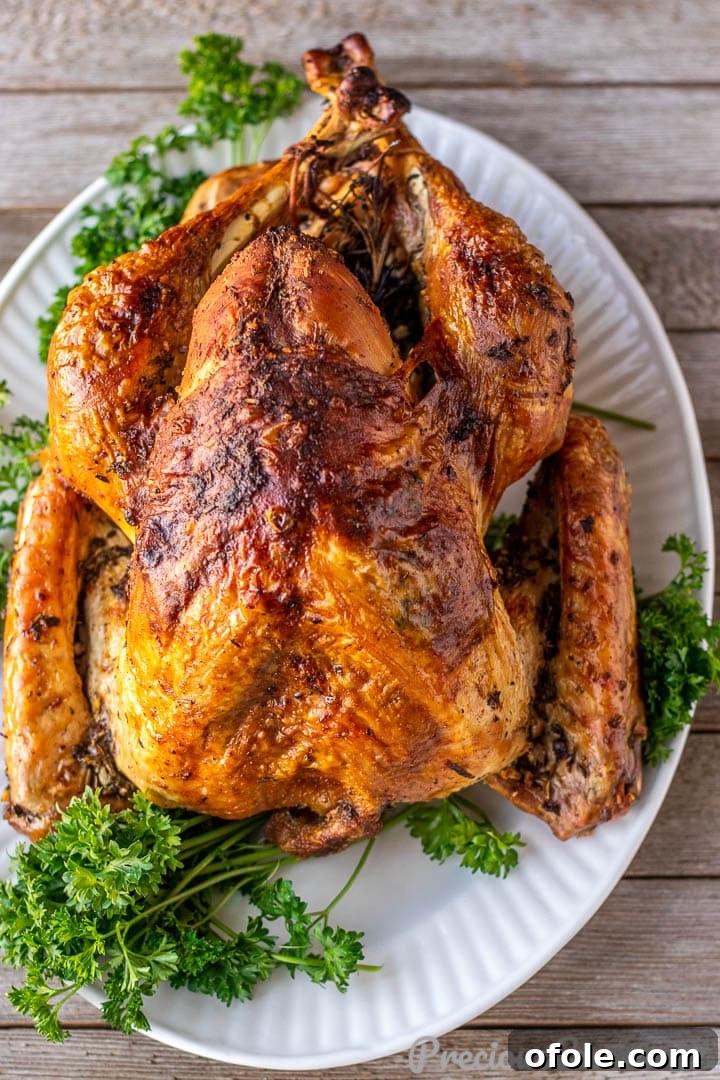
The beautifully golden-brown turkey, freshly out of the oven and looking magnificent. - Crucial Resting Period:
Once your turkey reaches the safe internal temperature, immediately remove it from the oven. Transfer the entire bird to a large cutting board or serving platter. Loosely tent the turkey with aluminum foil; this helps to retain heat while allowing residual cooking to occur and, most importantly, allows the precious juices to redistribute throughout the meat. Let the turkey rest undisturbed for a minimum of 20-30 minutes before you begin carving. This resting period is absolutely critical; skipping it will cause all the delicious juices to escape when you slice, resulting in a significantly drier turkey. Patience here will be rewarded with an exceptionally tender and juicy bird.
Allowing the turkey to rest after roasting is crucial for achieving maximum juiciness and tenderness.
Ensuring Perfection: How To Tell If Your Turkey is Done
Properly cooking a turkey to the correct internal temperature is not just about taste; it’s vital for food safety. Undercooked poultry can pose health risks, while overcooked turkey can be dry and unappealing. Here are the most reliable methods to accurately determine if your herb roasted turkey is perfectly done and safe to eat:
- Utilize a Reliable Meat Thermometer: This is unequivocally the most accurate and highly recommended method for checking turkey doneness. Insert a high-quality, instant-read meat thermometer into the thickest part of the turkey thigh, being extremely careful to avoid touching any bone, as bone conducts heat differently and can give a false reading. The turkey is officially done and safe to consume when the internal temperature consistently registers 165°F (approximately 70°C). For added assurance, you can also check the thickest part of the breast, aiming for the same target temperature.
- Observe the Juices for Clarity: While not as precise as a thermometer, this traditional method can offer a helpful visual cue. After the turkey has rested, carefully make a small, discreet slit into the thickest part of the turkey breast or thigh. Gently press on the area. If the juices that run out are perfectly clear (meaning no pink or reddish tinge), it’s a strong indication that the turkey is likely cooked through. If the juices appear cloudy or still reddish, the turkey will need a bit more time in the oven.
- The “Wiggle Test” for Leg Looseness: Another traditional method, primarily useful for larger birds, is to gently grasp a turkey leg and give it a slight wiggle. If the leg feels notably loose in its socket and moves with relative ease, it suggests that the connective tissues have broken down sufficiently, indicating the turkey is probably cooked through. However, always confirm with a meat thermometer.
Always prioritize the reading from a calibrated meat thermometer for definitive food safety, especially when preparing a meal for a gathering.
Mastering the Carve: How To Carve a Turkey
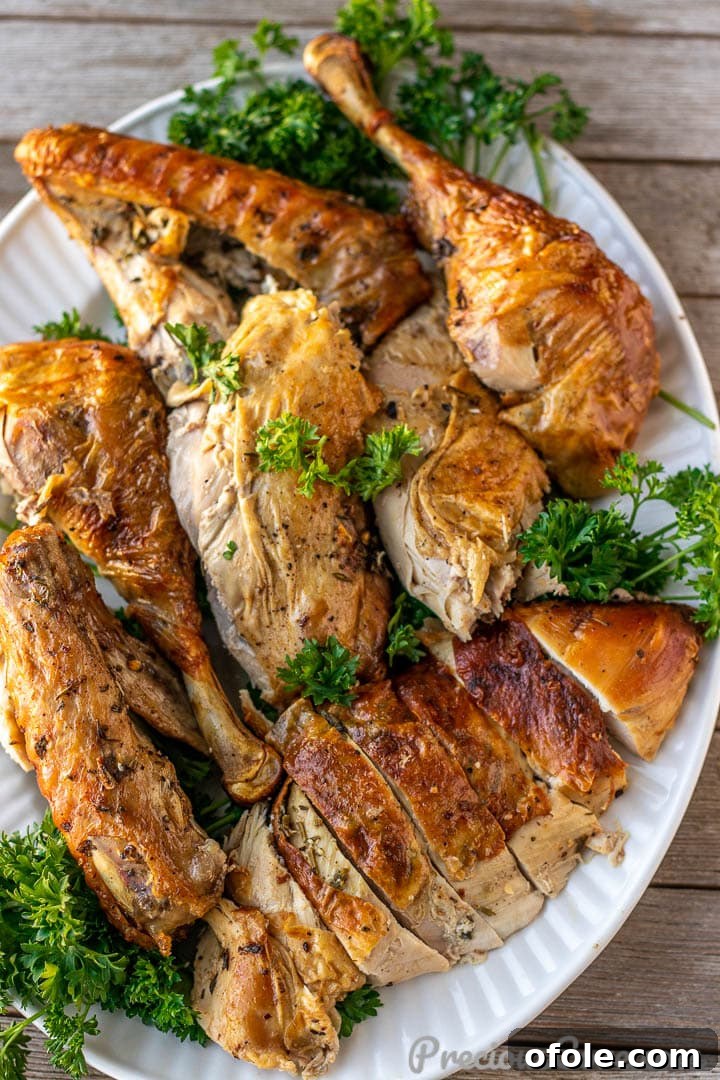
Carving a beautifully roasted turkey can be an impressive display of skill, and with a few straightforward techniques, you can present perfectly sliced, juicy meat ready for your guests. Remember, the absolute key to tender, juicy turkey is allowing it to rest for a full 20 to 30 minutes after roasting before you even consider carving. This critical resting period allows the muscle fibers to relax and reabsorb all the delicious juices that have gathered in the center of the bird during cooking. For carving, you’ll need a very sharp carving knife and a secure cutting board (place damp paper towels or a kitchen towel underneath to prevent it from slipping). Here’s a comprehensive step-by-step guide to carving your turkey like a pro:
- Detach the Legs and Thighs: Begin by positioning the turkey with the breast facing upwards. Locate the natural joint where the leg and thigh connect to the main body of the turkey. Using your sharp carving knife, carefully cut through the skin and meat, gently pulling the entire leg-thigh section away from the body to fully expose the joint. Once you clearly identify the joint, cut directly through it to completely detach the leg-thigh piece. Repeat this process for the leg and thigh on the other side of the turkey.
- Separate Thigh from Drumstick: Place the detached leg-thigh piece, skin-side up, onto your cutting board. Locate the joint that connects the drumstick to the thigh. With precision, cut through this joint to separate these two distinct parts.
- Slice the Thigh Meat (Optional): For a more refined presentation and easier serving, you can carefully slice the dark thigh meat off the bone into smaller, even pieces. Alternatively, for a more rustic and hearty feel, you can leave the thigh pieces whole.
- Remove the Wings: Identify where each wing attaches to the breast section of the turkey. Cut precisely through the joint to cleanly remove the wings. You can choose to separate the individual wing sections at their joints if preferred, or serve them whole as appealing, smaller portions.
- Carve the Breast Meat: This is often the most anticipated part. To begin, make a shallow, horizontal cut across the bottom of one breast, parallel to your cutting board, extending all the way to the breastbone. This cut will serve as a foundational guide for your subsequent slices. Next, starting from the top of the breast (near the collarbone), make smooth, vertical slices downwards, following the natural curve of the breastbone. Always cut against the grain of the meat. As you slice, the breast meat will naturally come away in neat, uniform pieces, guided by your initial horizontal cut. Repeat this entire process for the other turkey breast.
- Arrange and Garnish for Presentation: Artfully arrange all the carved turkey slices and pieces (breast, thigh, and drumstick) onto a large, elegant serving platter. To elevate its visual appeal and introduce a fresh, inviting aroma, garnish generously with fresh sprigs of herbs such as rosemary, thyme, or parsley. Your masterpiece is now ready to be proudly presented and enjoyed!
Best Sides To Serve With Herb Roasted Turkey
A truly magnificent roasted turkey deserves an equally impressive array of side dishes that complement its rich, herbaceous flavors without overpowering them. Here are some of our absolute favorite pairings, carefully selected to create a harmonious and unforgettable holiday meal:
Rosemary Garlic Mashed Potatoes
Creamy, velvety, and infused with the same aromatic rosemary and garlic used in the turkey, these mashed potatoes are a match made in heaven. They absorb the turkey’s juices beautifully.
Sautéed Vegetables
A vibrant medley of lightly sautéed seasonal vegetables, such as asparagus, green beans, or colorful bell peppers, adds a fresh, crisp texture and a healthy, balancing element to your rich meal.
Fried Carrots
Sweet, tender, and subtly caramelized, these fried carrots offer a delightful and warm contrast to the savory turkey. Their natural sweetness is enhanced through the cooking process.
3 Cheese Mac and Cheese
For an unapologetically indulgent and utterly comforting feast, a creamy, luscious three-cheese mac and cheese is an absolute holiday must-have. Its rich texture and nostalgic flavor are perfect with turkey.
Garlic Butter Green Beans
Simple yet elegantly prepared, these tender green beans, lightly coated in savory garlic butter, offer a fresh, subtly crunchy, and flavorful complement that enhances rather than overpowers the turkey.
Cornbread Without Buttermilk
A soft, fluffy, and slightly sweet cornbread provides a wonderful textural contrast and a comforting, savory-sweet flavor that perfectly soaks up all the delicious turkey juices and gravy.
Tips for a Flawless Herb Roasted Turkey
Achieving a perfectly roasted turkey involves more than just diligently following a recipe; it’s also about incorporating a few smart techniques and understanding the science behind the cook. Here are some expert tips to ensure your herb roasted turkey is consistently moist, incredibly flavorful, and boasts that utterly irresistible crispy skin:
- Ensure a Fully Thawed, Room Temperature Turkey: This tip is paramount and cannot be overstated. A turkey that is completely thawed and has been allowed to sit at room temperature for 1-2 hours before entering the oven will cook significantly more evenly. This crucial step prevents certain parts from drying out while others are still cooking, ensuring consistent tenderness throughout the entire bird.
- Never Skip the Butter Under the Skin: This is arguably the most impactful step for achieving both a juicy and flavorful turkey. By applying the herb butter directly onto the meat underneath the skin, it melts directly into the muscle fibers, effectively basting the turkey from the inside out. This method ensures that the robust garlic and herb flavors penetrate deep into the meat, contributing immensely to both moisture and tenderness, and is key to that desirable crispy skin.
- Pat Your Turkey Bone Dry for Ultimate Crispy Skin: Moisture is the absolute enemy of crispy skin. Before you apply any butter or seasonings, use plenty of paper towels to thoroughly pat the entire surface of your turkey, inside and out, until it is as dry as possible. This meticulous drying process allows the skin to crisp up beautifully in the hot oven, rather than steam.
- Employ a High-Heat Start, Then Finish Low: Begin roasting your turkey at a higher temperature, specifically 450°F (230°C). This initial blast of intense heat helps to quickly crisp the turkey skin, rendering the fat underneath and developing that gorgeous golden-brown color. After this initial phase, reduce the oven temperature to 350°F (180°C). This lower, more consistent heat allows the turkey to cook through gently without overcooking or drying out the delicate meat.
- Baste Sparingly, or Not at All After Initial Application: While some initial basting is helpful (especially with the reserved herb butter), opening the oven too frequently to baste allows a significant amount of heat to escape. This prolongs the overall cooking time and can actually contribute to a drier turkey. Stick to brushing on the reserved butter midway through the lower temperature cook, and generally resist the urge to constantly open the oven door.
- A Meat Thermometer is Your Best Friend: Eliminate all guesswork from turkey roasting by using a reliable, instant-read meat thermometer. It is your most essential tool. Always insert it into the thickest part of the turkey thigh (being careful to avoid touching any bone) to ensure the turkey reaches a safe and perfectly cooked internal temperature of 165°F (70°C).
- The Non-Negotiable Resting Period: This is a critical step that many home cooks unfortunately skip. After removing your turkey from the oven, transfer it to a large cutting board and loosely tent it with aluminum foil. Let it rest for a minimum of 20-30 minutes before beginning to carve. This resting period allows the muscle fibers to relax and, most importantly, for the flavorful juices that have migrated to the center of the bird during cooking to redistribute evenly throughout the meat. If you carve immediately, all those delicious juices will simply run out, leaving you with disappointingly dry meat.
- Utilize a Roasting Rack: A good quality roasting rack (preferably a V-rack) elevates the turkey above the bottom of the pan. This setup allows hot air to circulate freely all around the entire bird, promoting truly even cooking and ensuring that the skin on the bottom of the turkey gets just as crispy as the top. It also keeps the turkey from sitting in its own juices, preventing soggy skin.
Common Turkey Roasting Questions Answered
Roasting a turkey can sometimes bring up a few questions, especially if it’s not a frequent endeavor. Here are answers to some of the most common queries to help you on your way to turkey perfection:
- How long does it typically take to thaw a frozen turkey?
The safest and most recommended method for thawing a frozen turkey is in the refrigerator. A general guideline is to allow approximately 24 hours of thawing time for every 4-5 pounds (1.8-2.3 kg) of turkey. Therefore, an 8-9 pound turkey, as used in this recipe, would typically require about 2 to 2.5 days to fully thaw in the refrigerator. Never thaw a turkey at room temperature on the counter, as this allows the outer layers to enter the “danger zone” for bacterial growth while the inside remains frozen.
- Is it necessary to brine my turkey for this recipe?
While brining (either wet or dry) is a popular technique for adding moisture and flavor to turkey, this specific recipe’s generous application of garlic herb butter both under and over the skin is expertly designed to achieve a similarly juicy and flavorful result without the additional step of brining. The butter effectively bastes the turkey from the inside. If you are accustomed to brining and prefer to do so, you certainly can, but be sure to significantly reduce or omit the added salt in the herb butter mixture to prevent over-salting your turkey.
- What should I do if my turkey skin isn’t crisping up as expected?
If you find that your turkey skin isn’t developing that beautiful crispness, revisit a few key steps. First, ensure your turkey was thoroughly patted dry before applying any butter or seasonings. Any residual moisture will steam the skin rather than crisp it. Second, verify that your oven temperature is accurate (an oven thermometer can help). If necessary, and only during the last 15-20 minutes of cooking, you can carefully increase the oven temperature to 400-425°F (200-220°C) to help crisp the skin, but keep a very close eye on it to prevent burning.
- Can I stuff the turkey cavity with traditional bread stuffing?
For optimal food safety, it is generally recommended to cook traditional bread stuffing separately in a baking dish. Stuffing a turkey cavity with bread-based stuffing makes it considerably more difficult for the turkey to reach a safe internal temperature evenly, and the stuffing itself also needs to reach a minimum internal temperature of 165°F (70°C). This can significantly prolong cooking time and potentially lead to an overcooked turkey or undercooked stuffing. For this recipe, we recommend stuffing the cavity only with aromatics like fresh herb sprigs, lemon halves, or onion quarters, which provide flavor and moisture without posing a food safety risk.
Storage and Reheating Your Leftover Turkey
Leftover roasted turkey is a culinary treasure, perfect for sandwiches, salads, soups, and more! To ensure you enjoy your leftovers safely and deliciously:
- Safe Storage: It is critical to allow your roasted turkey to cool completely within two hours of cooking. Once cool, carve all the meat off the bones. Store the carved turkey meat in airtight containers in the refrigerator for up to 3-4 days. For longer-term storage, freeze sliced turkey meat in freezer-safe bags or containers for up to 3-4 months. Label with the date for best quality.
- Gentle Reheating: To reheat, we recommend slicing the turkey meat (if not already sliced) and placing it in a baking dish. Add a splash of chicken broth or water to the dish – this is key to keeping the turkey moist and preventing it from drying out. Cover the dish tightly with aluminum foil and heat in a preheated 300-325°F (150-160°C) oven until the turkey is warmed through. For smaller portions, you can also gently reheat in the microwave with a little broth, or in a covered pan on the stovetop over low heat. Avoid high heat reheating, which can make the turkey tough.
More Delicious Turkey Recipes
If you’re a devoted fan of turkey, you’ll undoubtedly love exploring these other fantastic and diverse turkey recipes from our cherished collection. Each offers a unique take on this versatile poultry, perfect for different occasions and preferences:
Baked Turkey Breast
Ideal for smaller gatherings, weeknight dinners, or when your family primarily prefers white meat. This baked turkey breast recipe is simple, straightforward, and consistently yields succulent results.
Oven Baked Turkey Wings
For a robustly flavorful and wonderfully tender dark meat option, these oven-baked turkey wings are seasoned to absolute perfection, making them a fantastic alternative or addition to a whole bird.
The Best Juicy Roast Turkey
Delve into another highly acclaimed method for achieving an incredibly juicy roast turkey that promises to impress every single guest and become a cherished part of your holiday tradition.
Roasted Turkey Thighs
Focusing entirely on the intensely flavorful dark meat, this recipe for perfectly roasted turkey thighs is a fantastic, fuss-free option for a weeknight dinner or a smaller, more intimate meal.
If you cherish this Herb Roasted Turkey recipe, we also highly recommend you check out our exquisite Herb Roasted Duck for another delightful and flavorful poultry option that’s perfect for special occasions!
Irresistible Roasted Chicken Recipes
Once you’ve mastered the art of roasting turkey, expanding your poultry repertoire to include chicken is a natural next step. Chicken offers incredible versatility and is perfect for weeknight dinners or smaller gatherings. Explore these fantastic roasted chicken recipes that are sure to become family favorites:
- Perfect Roast Chicken: A foundational recipe for a consistently juicy and flavorful whole roast chicken, ideal for any occasion.
- Herb Roasted Chicken: Infused with aromatic herbs, this recipe brings a delightful fragrance and deep flavor to your roasted chicken, mirroring the principles of our delicious turkey.
Important Tools for Making Roast Turkey
Having the right kitchen tools at your disposal can dramatically simplify the turkey roasting process and significantly contribute to a smoother, more successful, and enjoyable culinary experience. Here are some essential items we highly recommend for making your perfect roast turkey:
- Roasting Pan with Rack: A robust, high-quality roasting pan, ideally equipped with a V-rack or a flat rack, is indispensable. The rack elevates the turkey, allowing hot air to circulate freely around the entire bird. This ensures uniform cooking and promotes the development of beautifully crispy skin on all sides, while also collecting those invaluable drippings for making delicious gravy.
- Meat Thermometer: This is arguably the single most crucial tool for roasting poultry safely and perfectly. An accurate, instant-read meat thermometer takes all the guesswork out of determining doneness. It ensures your turkey reaches the precise internal temperature required for food safety (165°F / 70°C) without overcooking, guaranteeing juicy results every time.
- Large Serving Platter: After all your hard work, a grand and spacious serving platter is essential for beautifully presenting your magnificent roasted turkey at the dinner table. It allows you to arrange the carved meat elegantly and showcases your culinary achievement.
- Butcher’s Twine (Kitchen Twine): This simple yet effective tool is used for trussing your turkey. Tying the turkey legs together and tucking in the wings helps the bird maintain a compact shape. This not only aids in more even cooking by protecting delicate parts from overcooking but also results in a more appealing and professional presentation.
- Sharp Carving Knife: A good quality, exceptionally sharp carving knife (ideally a long, thin-bladed one) is absolutely indispensable for effortless and clean slicing. A dull knife will tear the meat, while a sharp one allows for smooth, precise cuts, ensuring beautifully presented turkey slices.
- Large Cutting Board: A sturdy and generously sized cutting board is necessary for both preparing and carving your turkey. Look for one with a well or groove around the perimeter to efficiently catch any delicious juices that may run off during carving, keeping your countertop clean.
- Pastry Brush: A simple pastry or basting brush is incredibly useful for evenly applying the flavorful garlic herb butter over the turkey’s skin, ensuring every part gets coated for maximum crispness and flavor.
Herb Roasted Turkey Recipe Card
Herb Roasted Turkey
This Herb Roasted Turkey is loaded with incredible flavor from a savory garlic herb butter. It’s perfect for Thanksgiving, Christmas, Easter, or any special dinner where you want a truly spectacular centerpiece!
Cook Time: 1 hr 30 mins
Total Time: 1 hr 50 mins
Yields: 8 servings
Ingredients
Instructions
- Preheat your oven to 450° Fahrenheit (230° Celsius).
- Ensure the turkey is completely thawed and at room temperature. Pat it thoroughly dry with paper towels, then squeeze lemon juice over the entire turkey.
- Prepare the garlic herb butter: In a medium bowl, combine the softened butter, minced garlic, rosemary, thyme, parsley, chicken bouillon powder, salt, and black pepper. Mix until well combined and fragrant.
- Carefully loosen the turkey skin over the breasts and thighs. Rub a generous amount of the garlic herb butter directly onto the meat under the skin. Then, rub the remaining butter all over the exterior of the turkey. Reserve about 2 tablespoons of this butter for basting.
- Tuck the turkey wings underneath the bird’s back to prevent burning and ensure even cooking.
- Tie the turkey legs together using kitchen twine to help the bird maintain its shape during roasting.
- Stuff the turkey cavity with the handful of fresh herb sprigs and the squeezed lemon half (if using).
- Transfer the prepared turkey to a large roasting pan, ideally one fitted with a rack.
- Roast the turkey at 450°F (230°C) for the first 30 minutes. This high heat helps to crisp the skin.
- After 30 minutes, carefully remove the turkey from the oven. Brush the reserved 2 tablespoons of garlic herb butter generously over the entire turkey.
- Reduce the oven temperature to 350°F (180°C). Return the turkey to the oven and continue roasting for an additional 1 to 1.5 hours. The turkey is done when a meat thermometer inserted into the thickest part of the thigh (without touching bone) registers 165°F (70°C).
- Once cooked, remove the turkey from the oven, transfer it to a large cutting board, and tent it loosely with aluminum foil. Let it rest for at least 20-30 minutes before carving to allow the juices to redistribute, ensuring a tender and juicy bird.
Notes
For absolute accuracy and food safety, always rely on a meat thermometer. Insert it into the thickest part of the turkey thigh (avoiding bone); the turkey is done when it reaches 165°F (70°C). A visual test: cut a small slit in the turkey breast; if the juices run clear, the turkey is cooked through.
Nutrition Facts
(Nutritional information is an estimate and may vary based on specific ingredients, portion sizes, and preparation methods.)
- Calories: 705 kcal
- Carbohydrates: 8g
- Protein: 110g
- Fat: 25g
- Saturated Fat: 5g
- Polyunsaturated Fat: 6g
- Monounsaturated Fat: 10g
- Trans Fat: 0.03g
- Cholesterol: 304mg
- Sodium: 952mg
- Potassium: 1265mg
- Fiber: 2g
- Sugar: 4g
- Vitamin A: 270IU
- Vitamin C: 3mg
- Calcium: 77mg
- Iron: 5mg
Additional Info
- Course: Main Dish, Dinner
- Cuisine: American, Holiday
We genuinely hope you cherish this Herb Roasted Turkey recipe as much as we do, and that it brings immense joy and flavor to your table! Your feedback means the world to us and helps our community of home cooks. If you try this recipe, please consider leaving a star rating and sharing your experience in the comments below. Thank you for your support!
This post contains affiliate links, which means we may earn a small commission if you make a purchase through our links, at no extra cost to you.