
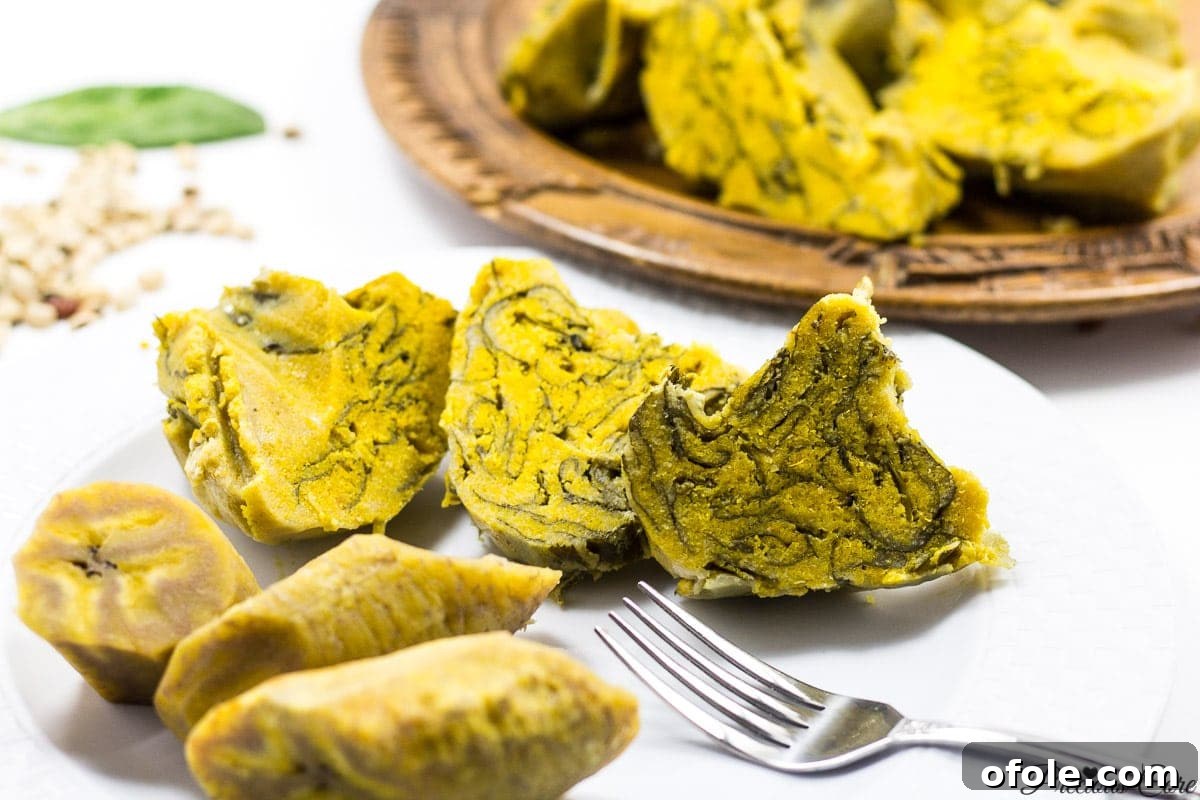
Authentic Cameroonian Koki Beans: A Delightful Black-Eyed Pea Pudding Recipe
Ah, Koki Beans! Just the mention of it brings a wave of nostalgia. This beloved dish is a true culinary gem from Cameroon, a rich and savory pudding crafted from humble black-eyed peas. For anyone who has experienced its unique flavor, it’s more than just food; it’s a taste of home, a vibrant memory that lingers long after the last bite. Its irresistible taste makes it a perpetual favorite, often disappearing from the kitchen as soon as it’s prepared, finding its happy resting place in a contented belly.
The Universal Appeal of Black-Eyed Peas
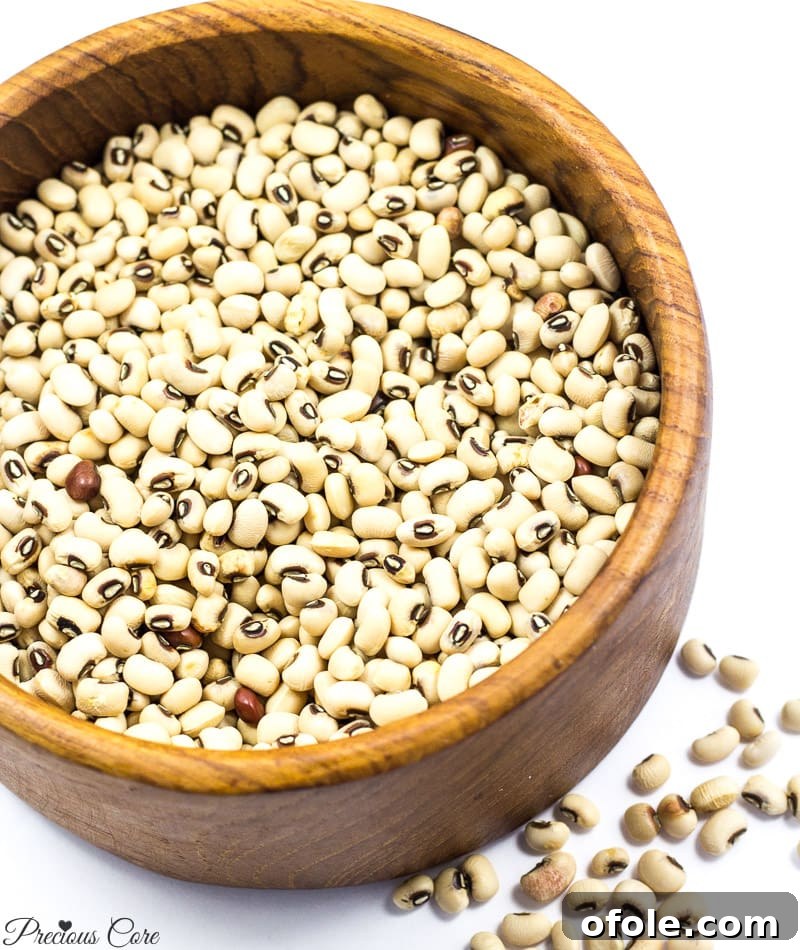
My joy knew no bounds when I discovered the global recognition of Koki Beans’ primary ingredient: black-eyed peas. While we lovingly call them “koki beans” in Cameroon, they are known as “black-eyed peas” in the United States and “moin moin beans” in Nigeria, where they form the base of a similar delectable pudding called Moin Moin. This culinary commonality highlights the ingredient’s versatility and widespread appreciation across different cultures, each adapting it to their unique culinary traditions. It’s fascinating to think that this humble legume connects so many diverse tables around the world.
Koki Beans: A Staple in Cameroonian Cuisine
In Cameroon, black-eyed peas are primarily celebrated for their role in creating Koki Beans or its delightful counterpart, Accra Beans (a type of fritter). Unlike other cultures that might opt for a hearty bean stew, Cameroonians prefer to transform these legumes by grinding them into smooth pastes, skillfully “hiding” them within savory puddings and fritters. This preference speaks to a culinary tradition that values texture and subtle flavor integration. When these black-eyed peas are meticulously prepared and transformed into the iconic Koki Beans pudding, the result is so extraordinary that it’s worth every effort.
The culinary parallels between Koki Beans and Nigerian Moin Moin are striking, both offering unique takes on steamed black-eyed pea puddings. While there are subtle differences in preparation and ingredients – for example, Moin Moin often incorporates onions and bell peppers, while traditional Koki Beans typically features minimal ingredients focusing on the pure taste of the beans and palm oil – both share a deeply satisfying, rich flavor profile. I affectionately refer to both as “African cakes,” reflecting their steamed, cake-like consistency and their esteemed place in West African cuisine. Their shared heritage and distinct deliciousness make them a testament to the region’s rich culinary tapestry.
The Unforgettable Taste Profile of Koki Beans
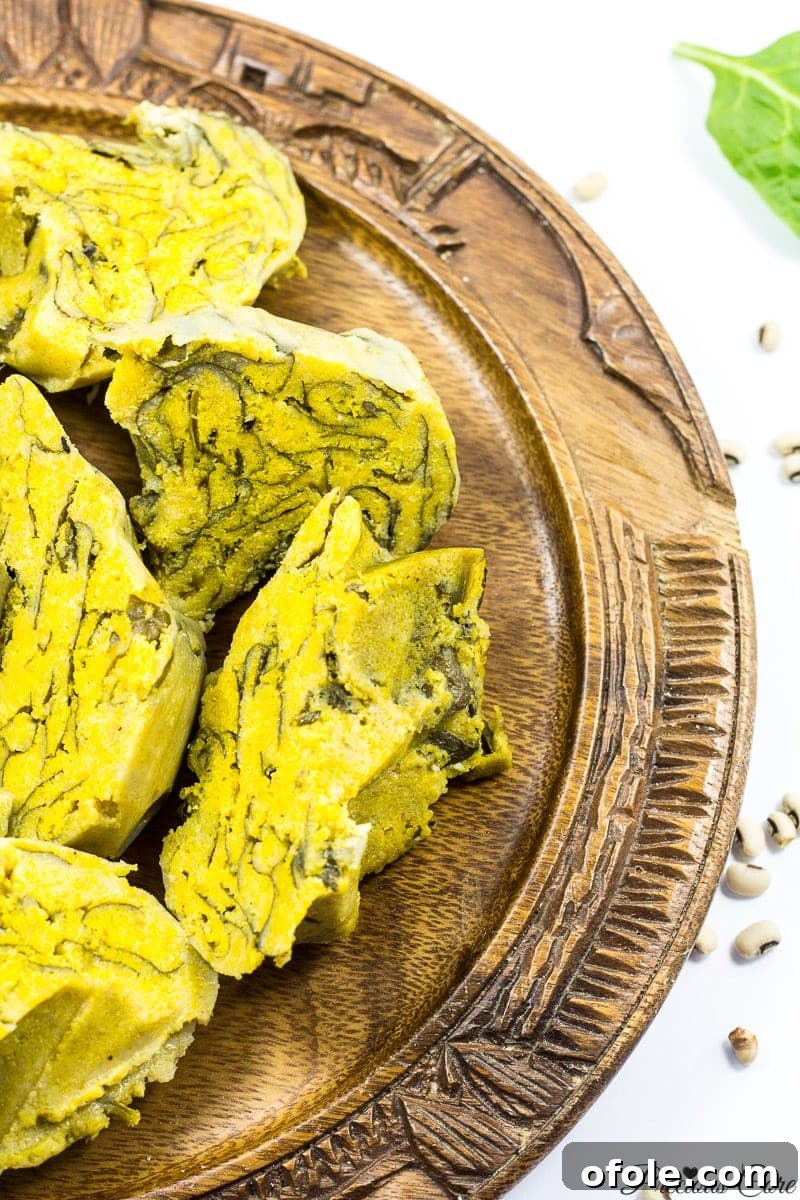
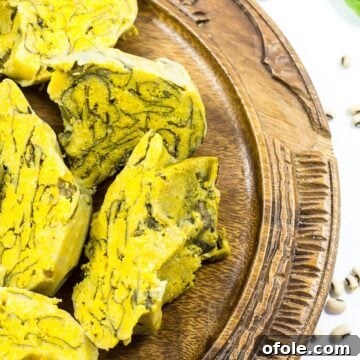
You might be wondering, what exactly does this magnificent pudding taste like? Prepare your senses for an experience like no other. Koki Beans offers a complex and highly satisfying flavor profile: it’s profoundly savory, with an earthy richness from the black-eyed peas and the distinctive aroma of palm oil. The addition of chili peppers introduces a delightful warmth and gentle spice, awakening the palate without overpowering the delicate flavors. Texturally, Koki Beans is moist, incredibly tender, and wonderfully spongy, a result of meticulous preparation that incorporates air into the bean paste. This unique combination of savory, spicy, moist, and spongy makes every bite a memorable journey.
Mastering the Preparation: The Art of Koki Beans
While the preparation of Koki Beans can seem time-consuming, particularly the initial stages, I assure you that the reward of each delicious bite makes every effort worthwhile. The most significant part of the work often involves preparing the black-eyed peas themselves. This crucial step includes peeling the beans to remove their outer skins, a process that ensures the pudding achieves its characteristic smooth and light texture. I’ve even put together a detailed video guide to walk you through my method for perfectly peeling the beans.
The Essential Step: Peeling the Black-Eyed Peas
My method for peeling the beans begins with a brief soak in water, typically for about 5 to 10 minutes. This softens the skins, making them easier to remove. Next, I transfer the soaked beans to a blender and pulse them for just a few seconds. The aim here isn’t to grind the beans but rather to gently agitate them, allowing the skins to separate from the peas without breaking down the beans themselves. This technique is incredibly efficient compared to manual peeling.
Once the beans are pulsed, I transfer them to a large bowl and fill it with water, ensuring the water level is well above the beans. The loose skins, being lighter, float to the surface. I then carefully drain these skins using a colander. This process is repeated multiple times, adding fresh water and draining the floating skins, until the beans are completely free of their outer coverings. This meticulous peeling is key to achieving the smooth, creamy texture that defines authentic Koki Beans. For a visual demonstration of this technique, be sure to watch the video.
Grinding to Perfection and Achieving Sponginess
With the beans perfectly peeled, the next step involves grinding them into a slightly grainy paste. For this, I rely on a powerful blender – it makes all the difference in achieving the ideal consistency. While I cannot directly embed interactive content here, I highly recommend investing in a good quality blender for this recipe. (Full disclosure: the original post included an affiliate link for a blender, which I’ve removed for compliance.)
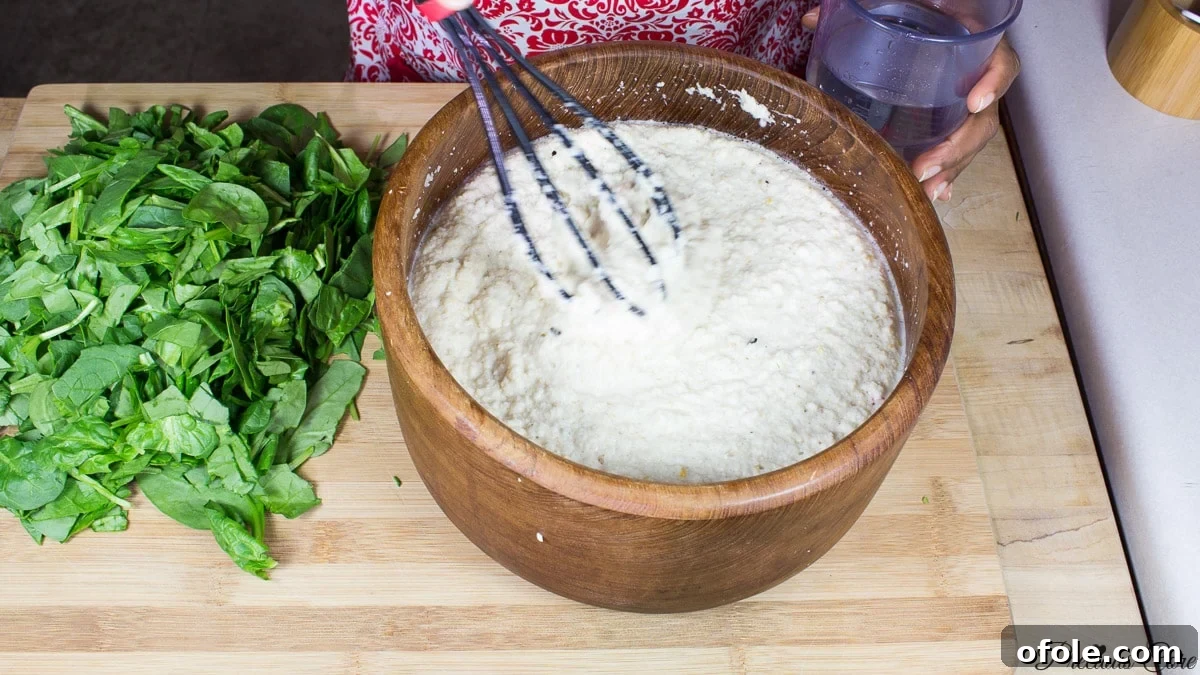
Once the beans are ground into a paste, the magic begins with vigorous whisking. Using an egg whisk, I beat the bean paste thoroughly, incorporating as much air as possible. This aeration is crucial for achieving the light, fluffy, and spongy texture that makes Koki Beans so delightful, reminiscent of the traditional Koki prepared by “Mami Koki’s” – the affectionate term for the incredible women who sell Koki Beans across Cameroon. Their skill in achieving this perfect texture is legendary, and this whisking step is our tribute to their expertise.
Key Ingredients and Flavor Harmony
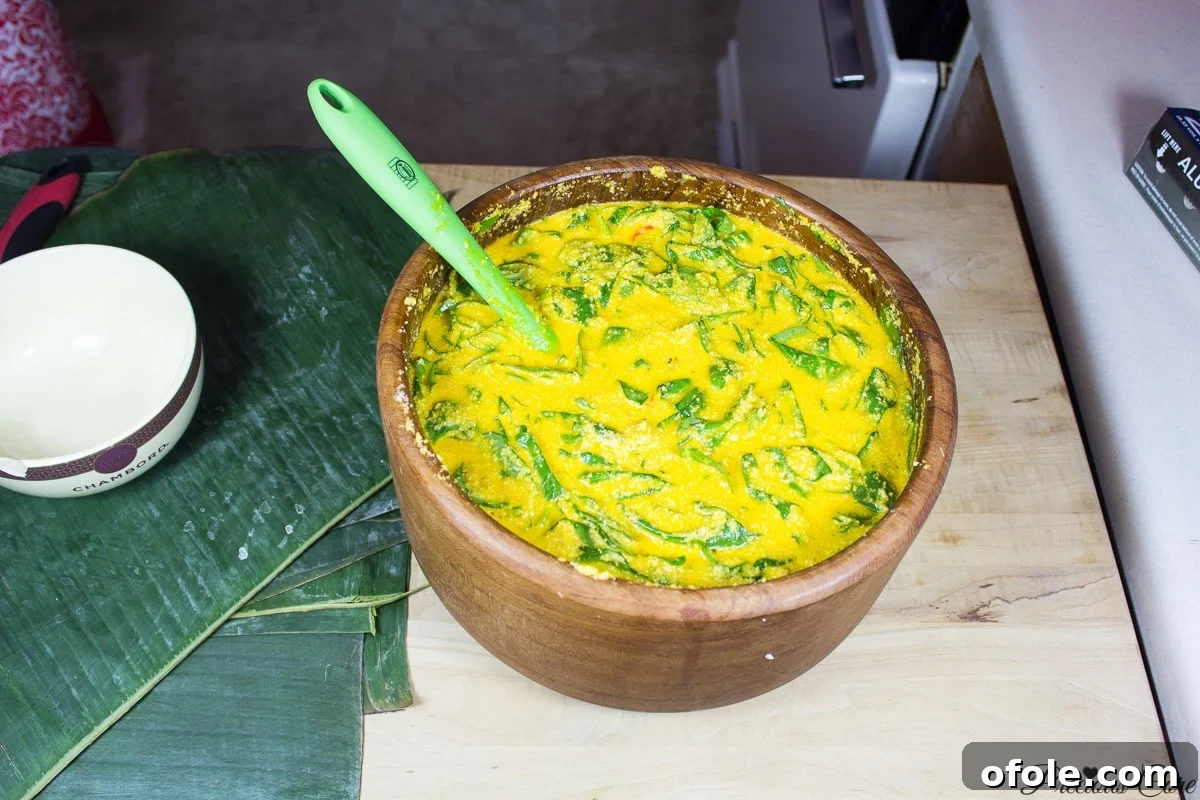
After the whisking, it’s time to introduce the remaining ingredients that bring Koki Beans to life. These include vibrant palm oil, salt, fresh spinach (serving as an excellent substitute for the traditional cocoyam leaves, which can be harder to find), and water. What’s remarkable about Koki Beans is its relatively low-maintenance ingredient list; it doesn’t require a multitude of components to achieve its rich flavor. While some individuals might opt to add Maggi (seasoning cubes) for an extra boost of umami, I find it entirely unnecessary. The traditional recipe, and indeed the most authentic taste, is achieved perfectly without them, allowing the natural flavors of the beans and palm oil to shine.
The Art of Wrapping Koki Beans
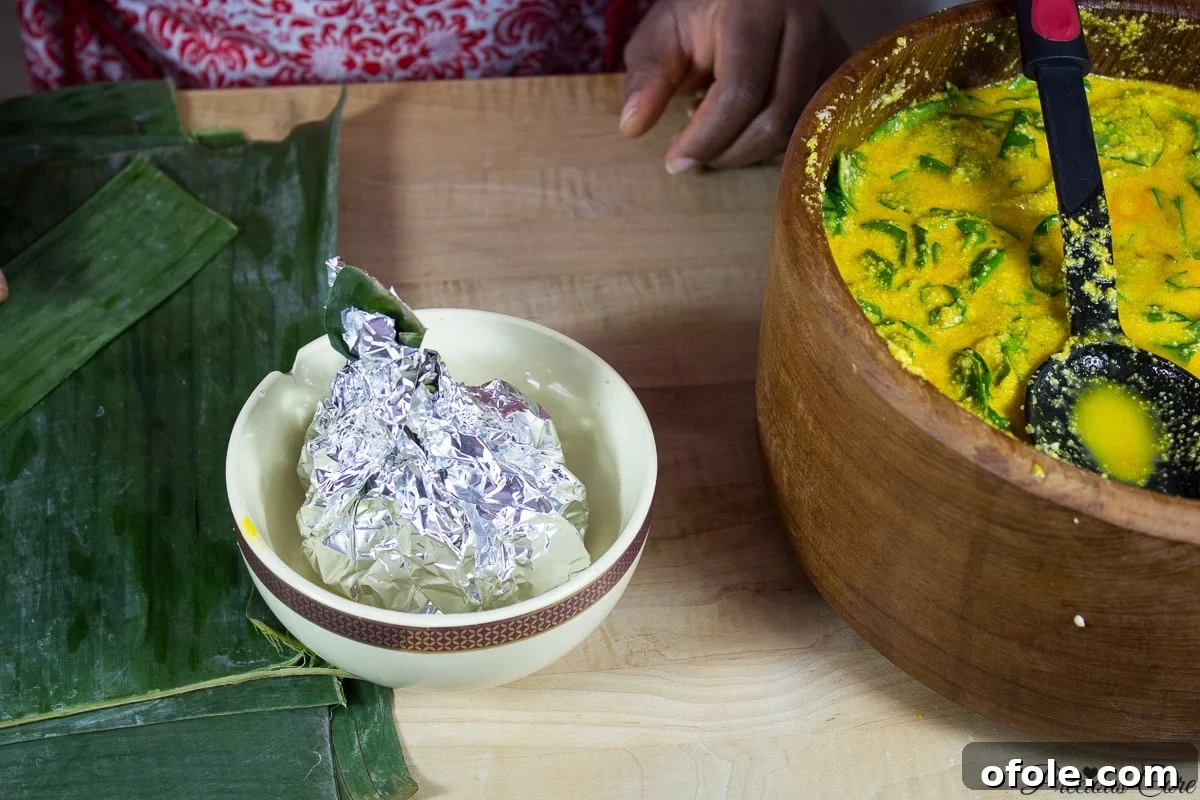
With the bean mixture perfectly prepared, the next step is wrapping, which plays a significant role in the steaming process and presentation. Traditionally, warmed plantain or banana leaves are used, imparting a subtle, earthy aroma to the pudding as it cooks. I personally prefer using a combination of banana leaves and foil paper, as the leaves add that authentic touch while the foil ensures a secure wrap and even cooking. If banana leaves are unavailable, fear not! High-quality aluminum foil, preferably non-stick, works wonderfully on its own to create perfectly steamed Koki bundles. The goal is to create neat, compact parcels that will steam beautifully.
Just look at that adorable little bundle, ready for steaming!
The Moment of Truth: Unraveling and Savoring
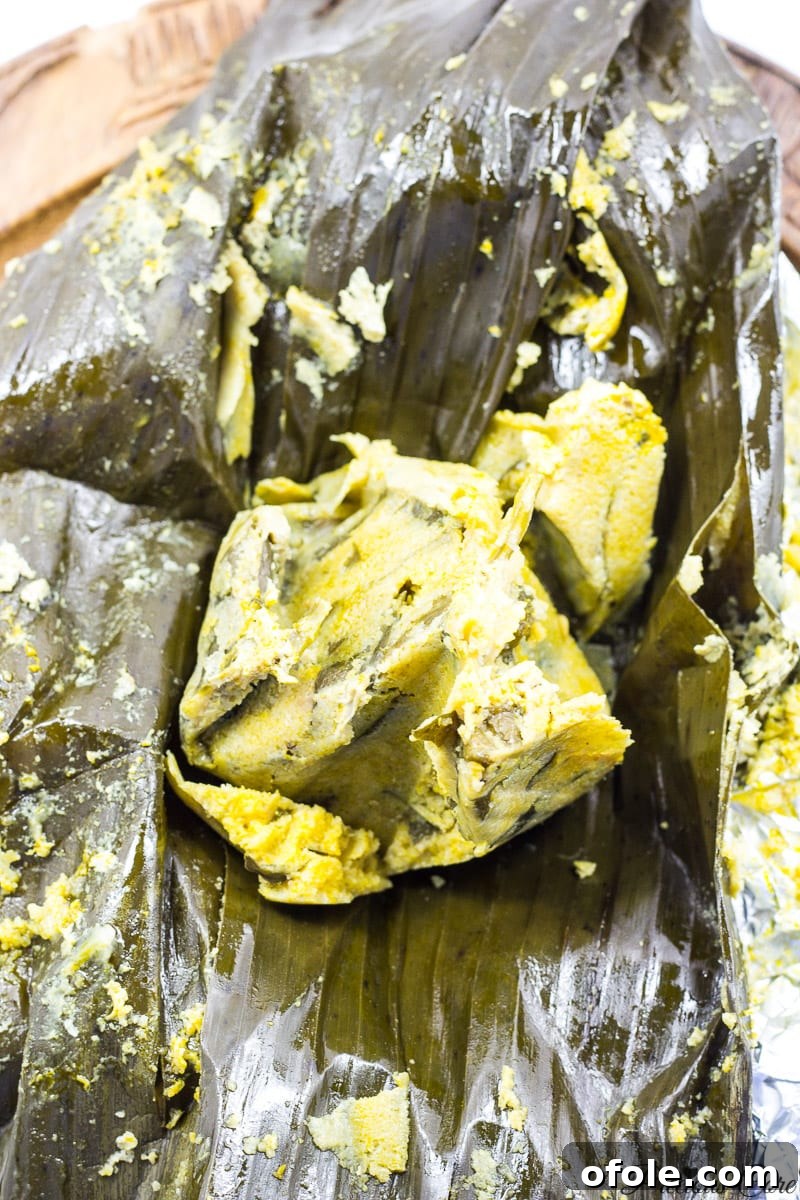
There’s a special kind of anticipation in unraveling a freshly steamed bundle of Koki Beans, especially while it’s still warm. The aromatic steam that rises, carrying the rich scents of palm oil, black-eyed peas, and subtle spice, is truly priceless. It’s a sensory delight that signals the imminent enjoyment of a truly satisfying meal. This moment, when the soft, vibrant pudding is revealed, is pure culinary bliss.
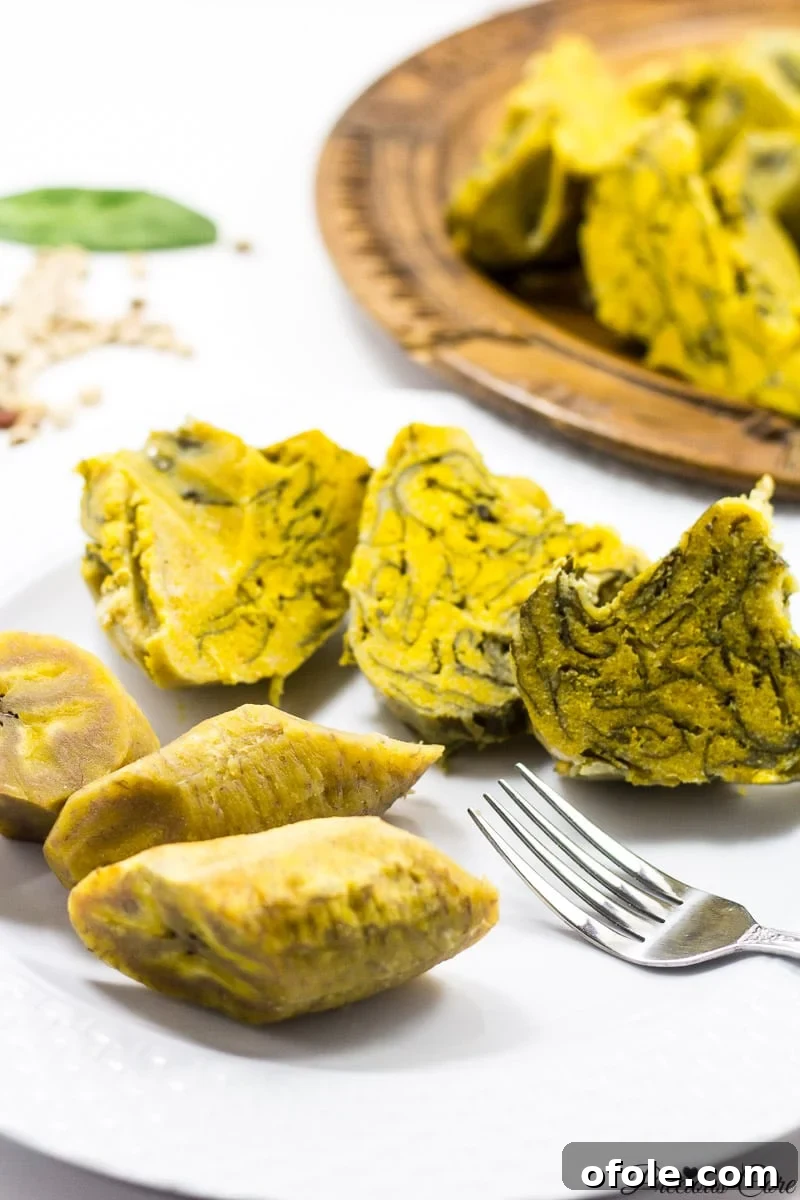
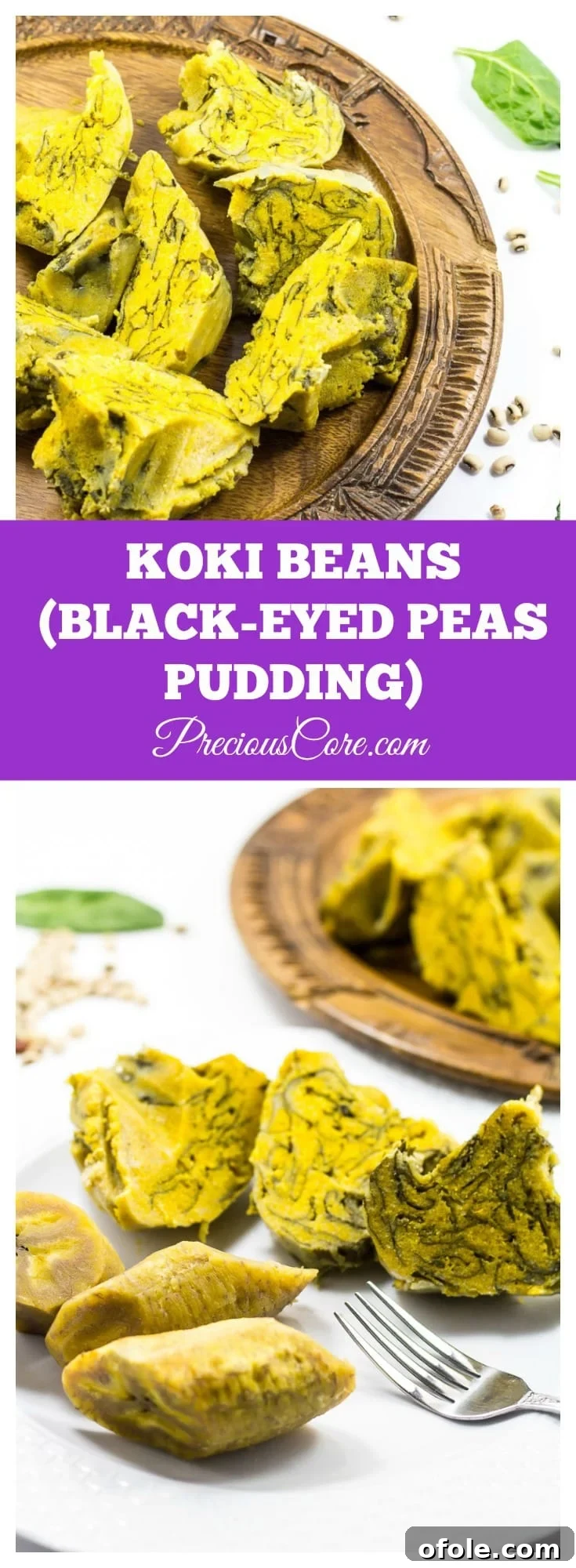
For me, the ultimate pairing for Koki Beans is simply boiled ripe plantains. Their natural sweetness and soft texture create a harmonious balance with the savory, spicy pudding. It’s a match made in heaven, truly. The combination is iconic in Cameroonian cuisine, and once you try it, you’ll understand why it’s a staple.
If you’re a visual learner, I invite you to watch the video of me preparing some delicious Koki Beans in my kitchen. It’s a great way to see the steps in action before you try it yourself. Below, you’ll find the comprehensive recipe to guide you through making this incredible dish at home.
Koki Beans Recipe
Rated 4.75 out of 5 stars by 4 reviewers.
A savory pudding made with black-eyed peas. It is moist, spongy, and so tasty, a true taste of Cameroon.
Prep Time: 1 hr
Cook Time: 1 hr 30 mins
Total Time: 2 hrs 30 mins
Servings: 12 bundles
Ingredients
- 8 cups black-eyed peas (koki beans) – peeled, soaked, and rinsed
- 1 1/2 cups palm oil
- 1 bag spinach (8 oz/227 grams)
- 1 1/2 – 2 tablespoons salt
- 6 cups water
- 5 chili peppers (or other hot pepper to taste, adjust quantity as desired for spice level)
For wrapping
- 1 bag frozen banana leaves and/or 1 roll aluminum foil (preferably non-stick)
Instructions
-
Place the soaked and peeled beans into a blender along with 4 cups of water and all the chili peppers. Blend into a coarse paste. You’ll need to blend your beans in batches. For example, if blending twice, use two cups of water for each batch. (For a detailed guide on how to wash and soak the beans before blending, please watch this video.)
-
Pour the freshly ground beans into a large mixing bowl.
-
Gently warm the palm oil until it’s fluid, but do not bleach it (i.e., do not heat it to the point of smoking). Set aside to cool slightly.
-
Chop the spinach into large, manageable chunks. You can adjust the amount of spinach according to your preference. Set aside.
-
Add salt to the bean paste. Using an egg whisk, vigorously mix the paste to incorporate air. This step is vital for achieving a light and spongy texture in your Koki Beans.
-
Gradually add the warmed palm oil into the bean paste while continuously whisking. Continue mixing until the oil is thoroughly incorporated and the paste takes on a uniform, slightly airy consistency. At this point, taste the mixture to ensure it’s adequately salted; it should taste slightly saltier than desired, as the flavor will mellow during cooking. Adjust salt if needed.
-
Now, gently fold in your chopped spinach into the bean mixture, ensuring it’s evenly distributed.
-
Prepare your banana leaves for wrapping by gently warming them over a low flame or by immersing them in hot water. This makes them pliable and less prone to tearing. Wash them thoroughly and cut them into rectangular shapes suitable for wrapping. If you are using only aluminum foil, this step is not necessary.
-
To wrap the koki, place a rectangular piece of foil paper into a small, deep bowl, pressing it lightly to conform to the bowl’s shape. Lay a banana leaf rectangle (or another piece of foil) on top of the first foil. Pour approximately one cup of the bean mixture into the center. Carefully bring together all the edges of the inner banana leaf or foil, then gather the edges of the outer foil paper to form a secure, compact bundle.
-
Line a large pot with extra foil paper or banana leaves to prevent burning and to help with even steaming. Place the wrapped Koki bundles into the pot. Pour in about two cups of hot water, ensuring it doesn’t cover the bundles entirely but provides enough steam. Cover all the bundles with more foil paper to trap the steam effectively, then bring the water to a boil. After about 15 minutes, add another 1-2 cups of hot water. Let the Koki cook for 1 1/2 to 2 hours, checking occasionally to ensure the water hasn’t dried out and the bundles aren’t burning.
-
Once cooked, carefully unravel a bundle and serve warm. Koki Beans pairs exceptionally well with boiled ripe plantains or any starchy side dish of your choice. Enjoy your authentic Cameroonian Koki Beans!
Notes
To yield eight cups of soaked beans for this recipe, you will typically need to start with four cups of dried beans.
For a smaller batch of Koki Beans, simply halve all the ingredients in the recipe.
Optional ingredients such as Maggi (seasoning cubes) and onions can be added if desired. However, traditional Koki is often made without them and tastes perfectly delicious as is, allowing the natural flavors to shine.
Nutrition
Calories: 623 kcal | Carbohydrates: 69 g | Protein: 27 g | Fat: 28 g | Saturated Fat: 14 g | Polyunsaturated Fat: 3 g | Monounsaturated Fat: 10 g | Sodium: 2140 mg | Potassium: 1371 mg | Fiber: 13 g | Sugar: 8 g | Vitamin A: 2275 IU | Vitamin C: 11 mg | Calcium: 151 mg | Iron: 10 mg
Additional Info
Course: Main Course
Cuisine: Cameroonian
Calories: 623
We encourage you to try this delightful recipe and share your culinary journey! If you recreate this dish, consider sharing your photos on social media. (Originally posted on March 31, 2016, and updated to enhance your cooking experience.)