
Echoes of Yesteryear: Revisiting Childhood Memories from Cameroon
The Melody of Innocence: A Song’s Transformation
Recently, a forgotten melody from my childhood resurfaced, bringing with it a flood of vivid memories. It was a particular song, one that my young friends and I, in our boundless enthusiasm, had affectionately – and quite literally – “murdered” with our heartfelt renditions back in the day. The lyrics, as they emerged from our eager young mouths, were a charming testament to our innocence and perhaps, our nascent grasp of the English language. We sang:
Waaaaanderfool Chiso
Saviour
Wanderfool miracool Chiso
Let us walk wit i
The pure joy of singing, the sheer unadulterated enthusiasm, far outweighed any concern for precise pronunciation. Our voices, a chorus of high-pitched sincerity, filled the air, each syllable a declaration of our youthful faith. It might amuse you to discover what we were actually striving to sing, the true words lying beneath our passionate, if somewhat garbled, interpretation:
Wonderful Jesus
Saviour
Wonderful miracle Jesus
Let us walk with Him
Back then, the intricate details of phonetics and correct diction held no sway over our young minds. Our sole ambition was to sing with all our hearts, to pour every ounce of our youthful energy into the performance, and, naturally, to captivate our audience. The smiles, the claps, and the simple act of communal singing were our truest rewards, cementing these moments in the precious archives of our memory. This innocent disregard for perfection, a common thread in childhood, allowed us to experience pure, unburdened joy, a feeling I often yearn for in the complexities of adulthood.
The Young Presbyterians: A Childhood Brotherhood
These cherished memories date back many years, to a time when I was an active member of “YP,” an acronym for Young Presbyterians. This was a vibrant group primarily composed of elementary-aged students, all part of the Presbyterian church community in Cameroon. The YP gatherings were more than just religious lessons; they were a crucible of friendship, discovery, and unbridled fun, shaping many of our early social experiences within the supportive embrace of the church.
My Brother, The Unconventional Conductor
Among the many characters within the YP group, my younger brother held a particularly memorable role: he was one of our conductors. In theory, his responsibility was to guide our singing with conventional hand gestures, ensuring we kept rhythm and harmony. However, his approach was anything but conventional. Instead of the typical up-and-down motions, he had developed a signature style, rolling his hands in expansive, circular motions, reminiscent of someone enthusiastically signing the song “Running Over.” Each energetic “hand roll” would culminate in a dramatic flourish, his palms opening wide as if he were trying to physically manifest the concept of “shine.”
He executed this unique conducting style with unwavering conviction, repeating the mesmerizing sequence over and over again as we belted out our beautifully “murdered” lyrics. It was a spectacle of youthful exuberance and individuality. His idiosyncratic direction, far from being a distraction, added an extra layer of hilarity and charm to our singing sessions. The entire experience was profoundly enjoyable, a vivid snapshot of the uninhibited creativity and lighthearted spirit that defined our YP days. These moments fostered a deep sense of camaraderie and belonging, making the church a second home filled with laughter and shared experiences.
A Tapestry of Community Life: Memories Beyond the Hymns
Now, many years later, as I reflect on those formative years, a wave of nostalgia washes over me. I find myself not only missing my YP days but also countless other facets of life from that simpler, richer past. These are the threads that weave together the vibrant tapestry of my childhood in Cameroon, painting a picture of community, spontaneity, and an unshakeable connection to the world around me.
Unplanned Festivities: The Joy of Open-Door Hospitality
One particular memory that always brings a smile to my face involves birthday parties. Back then, inviting a “few” kids for a birthday celebration almost invariably meant your house would swell to beyond its capacity. It wasn’t uncommon to send out a handful of invitations, only to find dozens of well-dressed, eager children spilling through your doors. This delightful phenomenon was a testament to the magical efficacy of word-of-mouth in Africa, where information, especially about a joyous event like a party, travels with astonishing speed and enthusiasm. People often “invited themselves,” not out of impoliteness, but out of a deep-seated cultural understanding that joy, especially in celebration, is meant to be shared expansively.
I recall my first daughter’s second birthday party with particular clarity. I was genuinely surprised, though perhaps I shouldn’t have been, by the sheer number of children who arrived, impeccably dressed and radiating excitement. Many were complete strangers to me, and I had no idea who their parents were. Yet, they had heard there was a celebration, and they came, transforming our modest gathering into a grand, spontaneous communal feast. This unscripted generosity of spirit, where every child was welcomed and every moment was shared, speaks volumes about the warmth and openness of the community I grew up in. It taught me early on the profound beauty of communal celebration, where the abundance of joy is always multiplied when shared with others, whether invited or not.
The Sensory Journey of the Local Market
I also miss the vibrant, chaotic symphony of shopping at the local market. It was an experience that engaged all senses, a far cry from the sanitized aisles of modern supermarkets. I miss the earthy aroma of fresh produce mingling with the scent of spices and the distant murmur of conversations. And yes, I even miss the peculiar sensation of dipping my feet into mud – not by choice, of course, but as an inevitable consequence of the rainy season turning the bustling pathways into muddy rivulets. It wasn’t the squishy discomfort of the mud itself that I long for, but rather the constant, unfiltered, and deeply grounding touch with nature.
The mud was a visceral reminder of being truly present, connected to the earth, and immersed in the raw, authentic pulse of daily life. It symbolized resilience, the natural ebb and flow of seasons, and the beautiful imperfections of a world less manicured. Navigating those muddy paths, balancing baskets, and exchanging banter with vendors was a ritual that fostered a profound sense of connection – to the land, to the people, and to a way of life that felt intrinsically real and unpretentious. This direct engagement with the elements, the earth beneath my feet, created memories that are as rich and textured as the market itself.
The Heartbeat of Neighborly Connections
Beyond the market, I deeply miss the genuine human connections that permeated daily life. I miss the smiles that were not just polite gestures but true reflections of warmth and welcome, radiating from the depths of people’s souls. I miss the culture of sharing, particularly being served food over and over again by generous neighbors, each dish a testament to their hospitality and care. These weren’t mere meals; they were acts of love, shared around communal tables, fostering bonds stronger than blood.
And then there were the “good mornings.” These weren’t solitary greetings but a veritable cascade of well-wishes, flying by every morning from one doorstep to another, weaving a sonic tapestry of community waking up. They were a daily ritual, a confirmation of presence, a communal acknowledgment of a new day shared. Each “good morning” was a small but significant thread in the fabric of social cohesion, a simple yet powerful affirmation of belonging and mutual respect that made every neighborhood feel like an extended family. These seemingly small gestures created a profound sense of belonging and support, a vibrant human network that felt truly invaluable.
Sacred Rhythms and Enduring Images
My childhood was also punctuated by sacred traditions and iconic images that have left an indelible mark on my memory, further enriching my understanding of community and the human spirit.
Easter Mornings and the Quest for “Chiso”
I distinctly miss the anticipation and excitement of waking up on Easter morning, eagerly preparing to “look for the risen Jesus.” This wasn’t a solitary spiritual contemplation but a communal journey, often involving a church service filled with joyous hymns and lessons. We would sing with gusto, sometimes even borrowing from our unique lyrical interpretations, songs like “the women went to the tomb but they couldn’t find Chiso.” This collective search, filled with childlike faith and shared wonder, transformed a religious holiday into an interactive, deeply personal experience for every young participant.
The act of “looking” for Jesus was symbolic, yet it felt profoundly real to our young hearts. It instilled a sense of shared purpose and a deep connection to the biblical narrative, making the story of Easter tangible and immediate. These annual rituals were not just about spiritual instruction; they were about fostering a sense of community, shared belief, and the beautiful simplicity of a child’s understanding of faith. The joy derived from these traditions was infectious, binding us together in a shared spiritual and cultural heritage.
The Enduring Grace of African Mothers
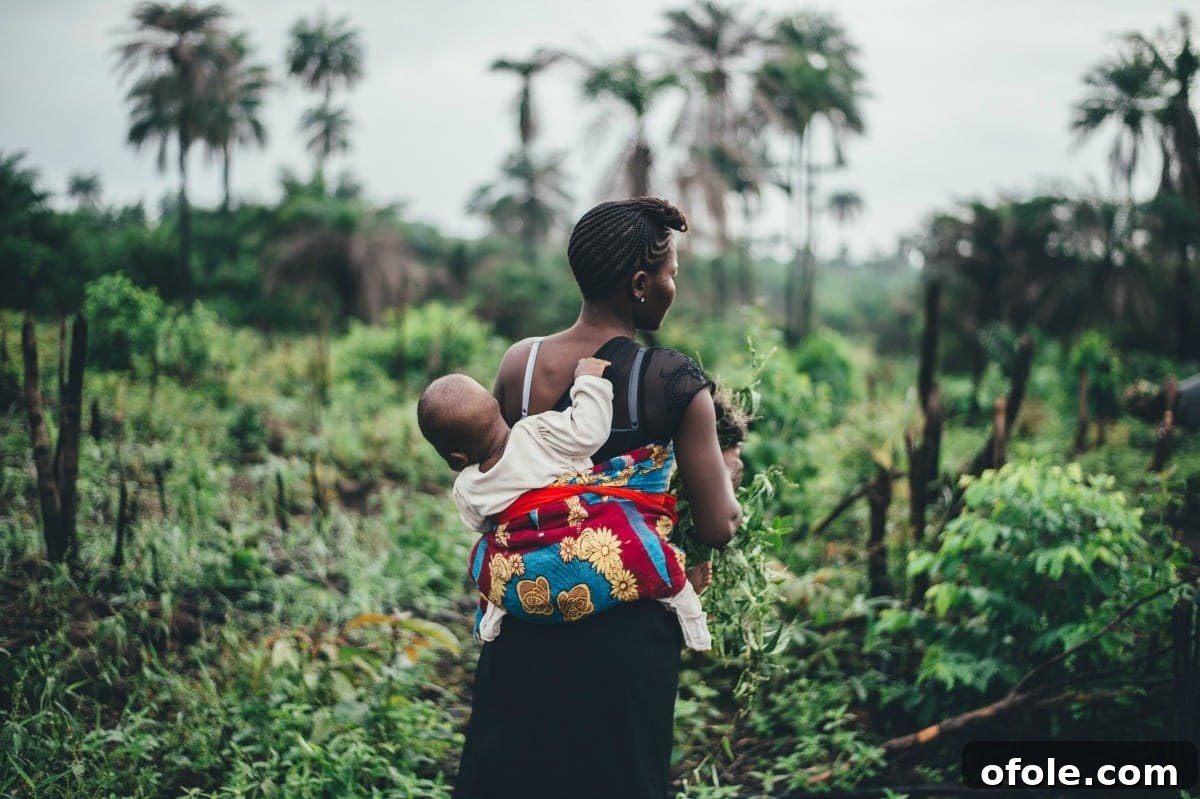
Another powerful image that remains etched in my mind, one I miss with a deep sense of admiration, is the sight of women with babies securely latched onto their backs. These formidable women moved with an effortless grace, going about their daily business – whether at the market, walking to church, or simply tending to chores – day in and day out. Their movements were a testament to their strength, resilience, and an incredible ability to multitask, embodying the very spirit of African womanhood.
This enduring image speaks volumes about motherhood, resourcefulness, and the seamless integration of childcare into the rhythms of daily life. It wasn’t just a practical method of carrying; it was a symbol of nurturing, constant connection, and the unwavering dedication of mothers who balanced work, family, and community responsibilities with remarkable fortitude. The rhythmic sway of their bodies, the peaceful slumber of the babies, and the purposeful strides of the women created a visual symphony of life, power, and tradition that I find myself continually drawn back to in my memories.
The Irresistible Pull of Home
Ultimately, what I miss most profoundly is my home, not just as a physical place, but as the embodiment of all these interconnected experiences. It’s the sum total of these “goodies” – the laughter, the community spirit, the simple joys, the unique traditions, and the authentic connections – that made that place so special and continues to draw me back in my thoughts and dreams. Home is where these foundational memories were forged, where my understanding of the world and my place within it began to take shape.
It’s the scent of the rain-soaked earth, the echo of children’s songs, the warmth of shared meals, and the profound sense of belonging that defines this feeling of home. It represents a simpler time, a deeper connection to humanity and nature, and a reservoir of joy that continues to enrich my life. These memories are not just nostalgic pangs; they are cornerstones of my identity, reminding me of the values and experiences that shaped who I am today.
What Do You Cherish From Your Past?
This journey down memory lane invariably leads to a universal question: What do you miss about your past? What are those specific sights, sounds, feelings, or traditions that, despite the passage of time, continue to resonate deeply within you? Perhaps it’s a childhood game, a family ritual, a beloved place, or a simple, everyday moment that now gleams with newfound significance. Sharing these fragments of our personal histories connects us, underscoring the universal human experience of cherishing the past and the enduring power of memory.
Take a moment to reflect on your own “Waaaaanderfool Chiso” moments, your own vibrant markets, or your own unique community traditions. What are the simple, yet profound, elements of your past that continue to bring a smile to your face, a warmth to your heart, or a quiet longing to your soul? The past, while unchangeable, remains a fertile ground for reflection, gratitude, and a deeper appreciation for the journey we’ve all embarked upon.