
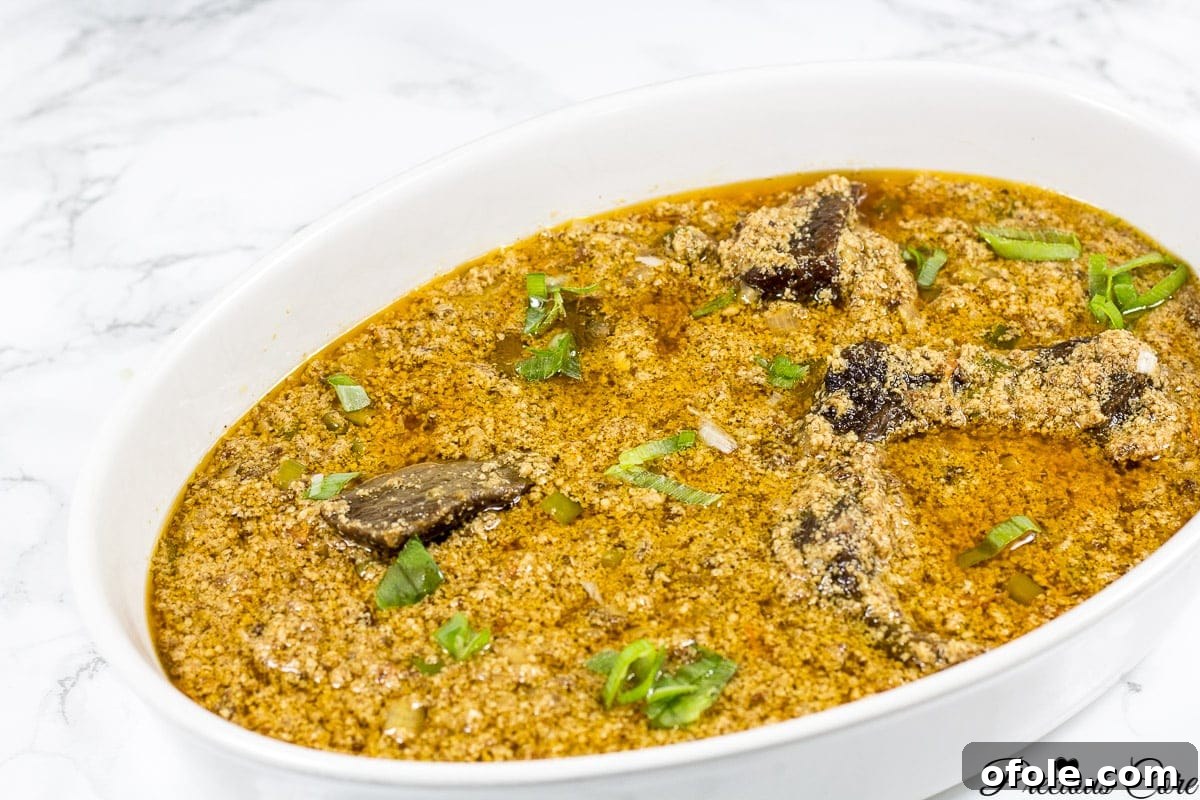
Welcome to a culinary journey that promises a burst of authentic West African flavor – our sensational Egusi Stew! This dish is a true masterpiece, known for its rich, luscious texture and profound savory taste that truly sets it apart. Imagine a stew so deeply satisfying, it instantly becomes a favorite family meal. Perfectly paired with fluffy steamed rice, tender boiled plantains, or even hearty yams, Egusi Stew offers a versatile and utterly delicious dining experience you won’t soon forget. It’s not just a meal; it’s an experience, a celebration of vibrant ingredients coming together in perfect harmony to create something truly extraordinary. Prepare to fall in love with its irresistible aroma and comforting warmth, making every spoonful a delight.
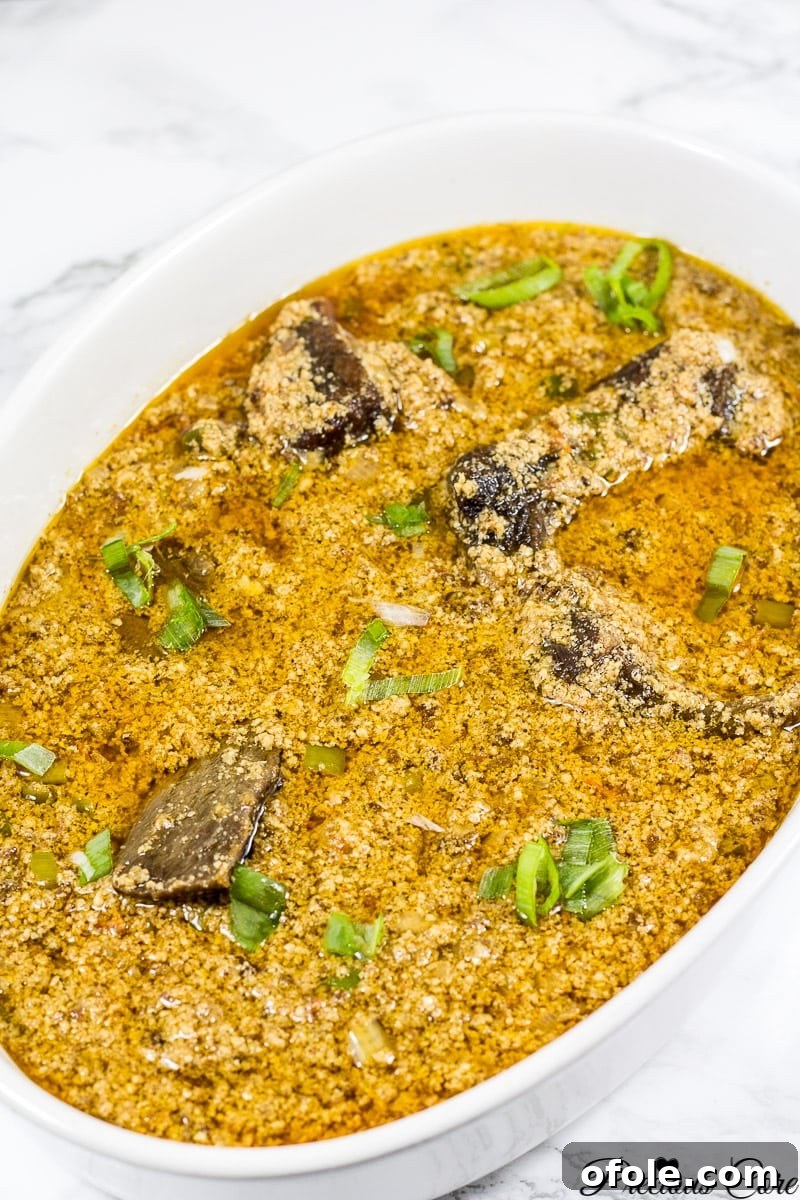
Discovering Egusi: A West and Central African Culinary Gem
For those unfamiliar with this remarkable ingredient, Egusi is a unique type of seed, often likened to a white variety of pumpkin seeds or simply known as melon seeds. These humble seeds are not just a staple but a cornerstone in the vibrant cuisines of West and Central African nations. They are revered for their ability to transform simple dishes into deeply flavorful and satisfying meals, offering a distinct nutty taste and a thickening agent that is unparalleled.
Egusi plays a pivotal role in a wide array of soups and sauces, forming the base of many beloved regional delicacies. Perhaps its most iconic use is in the creation of Egusi Soup, a national treasure in Nigeria. This hearty soup is traditionally crafted with finely ground melon seeds, a generous blend of ground crayfish for an umami depth, vibrant leafy greens, rich red palm oil, and sometimes, the earthy notes of locust beans. Each ingredient contributes to a complex flavor profile that is both robust and comforting, making it a staple on dining tables across the country.
Beyond the borders of Nigeria, Egusi continues to shine. In Cameroon, for instance, a popular delicacy known as Egusi Pudding showcases the seed in a different, equally delightful form. This savory pudding highlights the versatility of Egusi, proving it can be much more than just a soup base. Furthermore, Egusi is frequently incorporated into other traditional African dishes, such as okra soup and ogbono soup, where it adds depth, a creamy texture, and its signature nutty flavor, elevating these dishes to new heights.
Having Egusi in your pantry is like possessing a secret culinary weapon. Its inherent versatility means endless possibilities for creating diverse and delectable meals. From enriching stews to thickening soups, the unique dimension of taste and texture that Egusi brings to food is truly unbeatable. It’s an ingredient that inspires creativity and guarantees a rewarding culinary experience every time, a testament to its enduring appeal and fundamental role in African gastronomy.
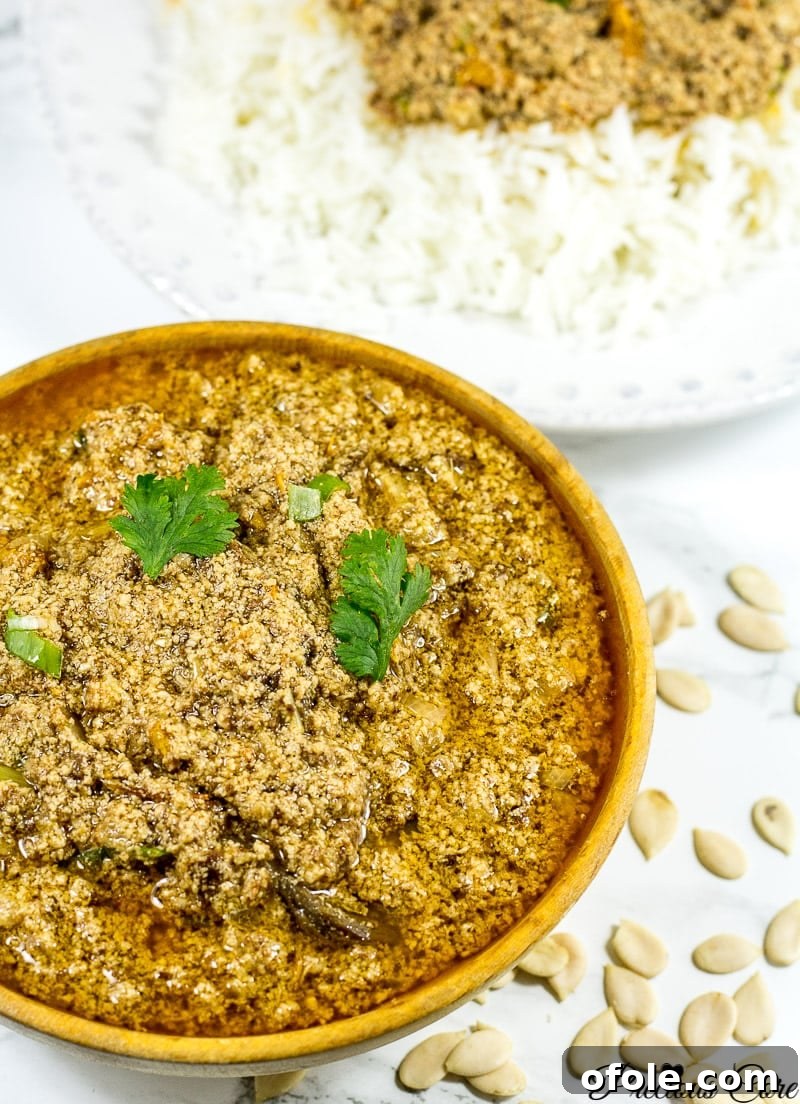
The Allure of Egusi Stew: A Hearty and Flavorful Delight
While Egusi is most famously associated with soups, this particular recipe introduces you to the glorious world of Egusi Stew – a distinct and equally captivating dish. Unlike its soup counterpart, Egusi Stew boasts a thicker, richer consistency, making it a more robust and satisfying offering. Let’s delve into what makes this Egusi stew truly exceptional and an absolute must-try for anyone seeking an authentic taste of African cuisine:
- Incredibly Luscious: The stew’s texture is wonderfully smooth and thick, coating your palate with every spoonful. This creaminess is a hallmark of perfectly prepared Egusi.
- Bursting with Garlicky Goodness: Fresh garlic, combined with ginger and other aromatics, infuses the stew with a warm, pungent flavor that is both inviting and deeply satisfying.
- Packed with Nutrients: Egusi seeds are a nutritional powerhouse, particularly high in protein, healthy fats, and essential minerals. This makes the stew not only delicious but also incredibly nourishing, contributing to a balanced diet.
- Surprisingly Easy to Make: Despite its complex flavor profile, this Egusi stew recipe is straightforward and accessible, even for novice cooks. With clear instructions, you can recreate this authentic dish in your own kitchen with confidence.
- Profoundly Savory: The combination of ground Egusi, ripe tomatoes, onions, spices, and your choice of protein creates a rich, umami-laden flavor that lingers deliciously, leaving you craving more.
- Versatile and Customizable: Whether you prefer a spicier kick or a milder flavor, this stew can be easily adapted to your taste. The choice of protein also allows for a range of dietary preferences, ensuring it can be enjoyed by everyone.
The beauty of this Egusi stew lies in its incredible versatility when it comes to serving. It pairs exquisitely with traditional African staples and international side dishes alike. Imagine serving your warm, aromatic Egusi stew over a bed of fluffy, perfectly cooked Jollof Rice, allowing the grains to soak up every drop of the rich sauce. It’s also magnificent with boiled or fried plantains, where their natural sweetness provides a delightful contrast to the stew’s savory depth. For a truly authentic experience, serve it alongside boiled yams or even a swallow food like fufu or eba, which are perfect for scooping up the luscious stew. It is, without a doubt, an all-around truly good stew that elevates any meal occasion.
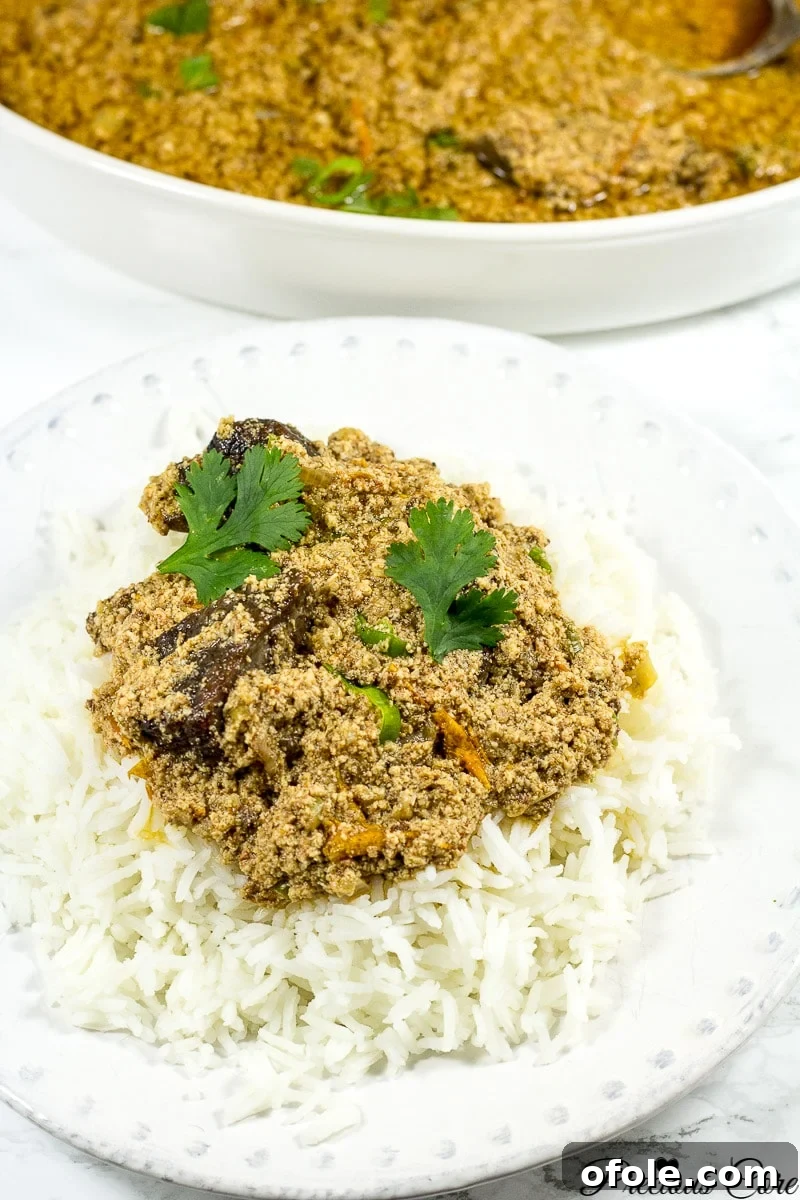
While this particular recipe features succulent beef, showcasing its robust flavor, the adaptability of Egusi stew is one of its greatest strengths. You are welcome to customize it with your preferred protein. Consider making egusi stew with tender chicken, flaky fish (such as hake or tilapia), or even lean turkey for a different twist. Each protein brings its unique texture and taste to the stew, allowing you to explore various culinary dimensions. For those seeking a plant-based option, substituting the meat with hearty mushrooms or a medley of vegetables creates an equally delicious and fulfilling vegan egusi stew. The world truly is your oyster when it comes to personalizing this incredible dish!
To guide you through every step of preparing this delightful dish, I’ve created a comprehensive video tutorial on my YouTube channel: YouTube.com/preciouskitchen. Watching the process can often clarify any questions and boost your confidence in the kitchen. Don’t forget to subscribe to my channel so you never miss out on any of my exciting new recipes and cooking tips!
Watch How to Make Egusi Stew:
Subscribe to my channel for more delicious recipes!
Subscribe Now
Explore More Hearty African Recipes
If you’ve enjoyed the rich flavors of Egusi Stew, you’ll love diving into these other fantastic African recipes that are sure to warm your heart and tantalize your taste buds. Each dish offers a unique glimpse into the diverse and delicious culinary traditions of the continent:
- Jollof Rice With Chicken: A vibrant and iconic West African rice dish, bursting with rich tomato flavor and often served with perfectly cooked chicken.
- Nigerian Beef Stew: A staple in Nigerian households, this robust and spicy stew is incredibly versatile and delicious, perfect with rice or other accompaniments.
- Cameroonian Pepper Soup: A light yet intensely flavorful soup, known for its aromatic spices and comforting warmth, often enjoyed with various meats or fish.
- PILAU: A fragrant and flavorful rice dish popular in East African cuisine, cooked with aromatic spices and often meat, creating a truly enticing meal.
- South African Malva Pudding Recipe: A sweet and sticky traditional South African dessert, featuring apricot jam and a creamy sauce, perfect for satisfying your sweet tooth.
Your feedback is incredibly valuable! If you take the time to make this savory Egusi Stew recipe, please consider leaving a star rating below. Your rating not only helps other home cooks discover this delightful dish but also provides me with wonderful insight into your culinary experience. Thank you for your support and happy cooking!
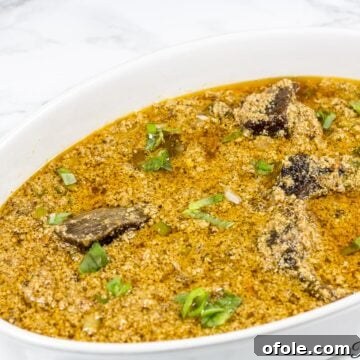
Egusi Stew (Mouthwatering West African Delight)
Pin Recipe
Rate
Print Recipe
Ingredients
- 1 1/2 cups ground egusi (melon seeds)
- 6 large tomatoes – chopped
- 1 medium onion – chopped
- 1-2 stems green onions – chopped, divided
- 5 cloves garlic – peeled
- 1 inch fresh ginger – peeled
- 1 habanero pepper (optional, adjust to taste)
- 2 Maggi seasoning cubes (or preferred bouillon cubes, 4g per cube)
- 1 cup vegetable oil or red palm oil
- 1/2 pound beef – cut into bite-sized pieces and pre-boiled with salt until tender. Remember to reserve the flavorful beef stock for use in this recipe, as it adds incredible depth.
- 1 teaspoon salt – or adjust to your personal taste
Instructions
-
Begin by preparing your aromatic base. In a blender or food processor, combine the peeled garlic cloves, fresh ginger, and half of the chopped green onions. Process until you achieve a smooth paste. Set this flavorful blend aside, as it will be essential for enhancing the stew’s taste.
-
Heat a sturdy pot over high heat. Pour in your chosen oil (vegetable or red palm oil) and allow it to heat up for approximately 4 minutes. A good indicator that the oil is ready is when it shimmers slightly.
-
Carefully add the remaining chopped onions to the hot oil. Sauté them for about 3 minutes, stirring occasionally, until they become soft and translucent. This step mellows their flavor and creates a sweet foundation for the stew.
-
Introduce the chopped tomatoes into the pot. Let them cook down, stirring periodically, until the tomatoes visibly shrink and begin to stick slightly to the bottom of the pot. This indicates that their moisture has reduced, concentrating their flavor and creating a rich tomato base.
-
Now, add the previously blended spices (garlic, ginger, and green onion paste) to the simmering tomato and onion mixture. Stir continuously for approximately 2 minutes. This brief cooking period helps to ‘bloom’ the spices, releasing their full aromatic potential and infusing the stew with deep, vibrant flavors.
-
It’s time for the star ingredient! Add the ground Egusi (without any added water at this stage) to the pot. Mix it thoroughly with the tomato and spice base. Continue to stir and cook the Egusi for about 5 minutes. Don’t worry if some of the Egusi mixture sticks to the bottom of the pot; this caramelization adds another layer of deliciousness to the stew. This step is crucial for developing the nutty flavor of the Egusi.
-
Pour in the pre-boiled beef along with its reserved stock. Next, add more water, starting with about 1 cup, to achieve your desired stew consistency. Keep in mind that as the stew simmers, some liquid will evaporate, so it’s often a good idea to make it slightly thinner than your final preference at this stage. Season the stew with salt, your Maggi seasoning cubes, and the habanero pepper (which can be added whole with the stem on to control the heat distribution, or ground for a spicier, more even kick).
Stir everything together until well combined. Cover the pot and allow the stew to simmer gently for 5 minutes, giving all the flavors time to meld beautifully.
-
Finally, stir in the remaining fresh green onions. Give it a good mix, then immediately turn off the heat. The residual warmth will gently cook the green onions, preserving their fresh flavor and vibrant color.
-
Your magnificent Egusi Stew is now ready to be enjoyed! Serve it warm with your favorite starchy accompaniment – be it fluffy boiled rice, sweet plantains, hearty yams, or traditional fufu. Prepare for a truly satisfying and memorable meal that celebrates the heart of West African cuisine.
Notes
2. To create a delightful vegan version of this Egusi stew, simply substitute the beef with a generous amount of mushrooms (such as cremini or button mushrooms) or a mix of your favorite hearty vegetables. Ensure your stock is vegetable-based for a fully plant-based meal.
Nutrition
Additional Info
Pin this recipe to your favorite board and share the love for African cuisine:
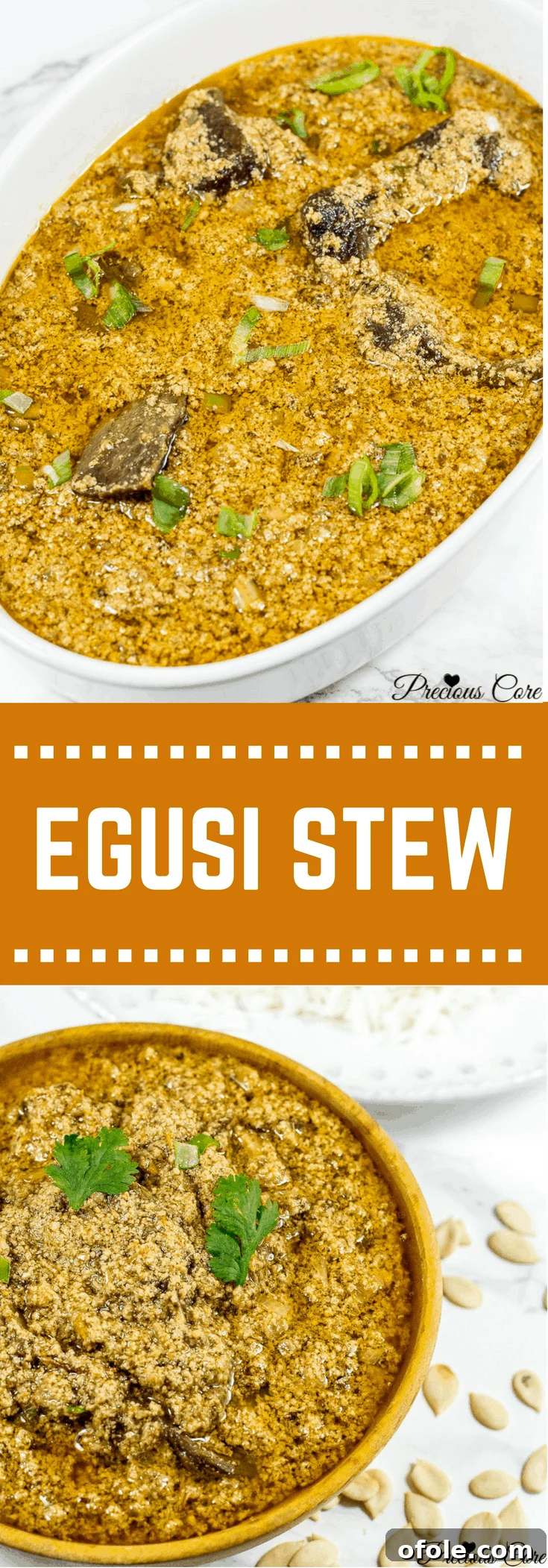
If you delight in making this incredible recipe, we would be thrilled to see your culinary creations! Please share a photo on Instagram and tag me at @preciouscore, or consider sharing your appetizing snapshot on my Facebook page. Your photos inspire others and bring a smile to my face. I’ll love to see your beautiful Egusi Stew!