
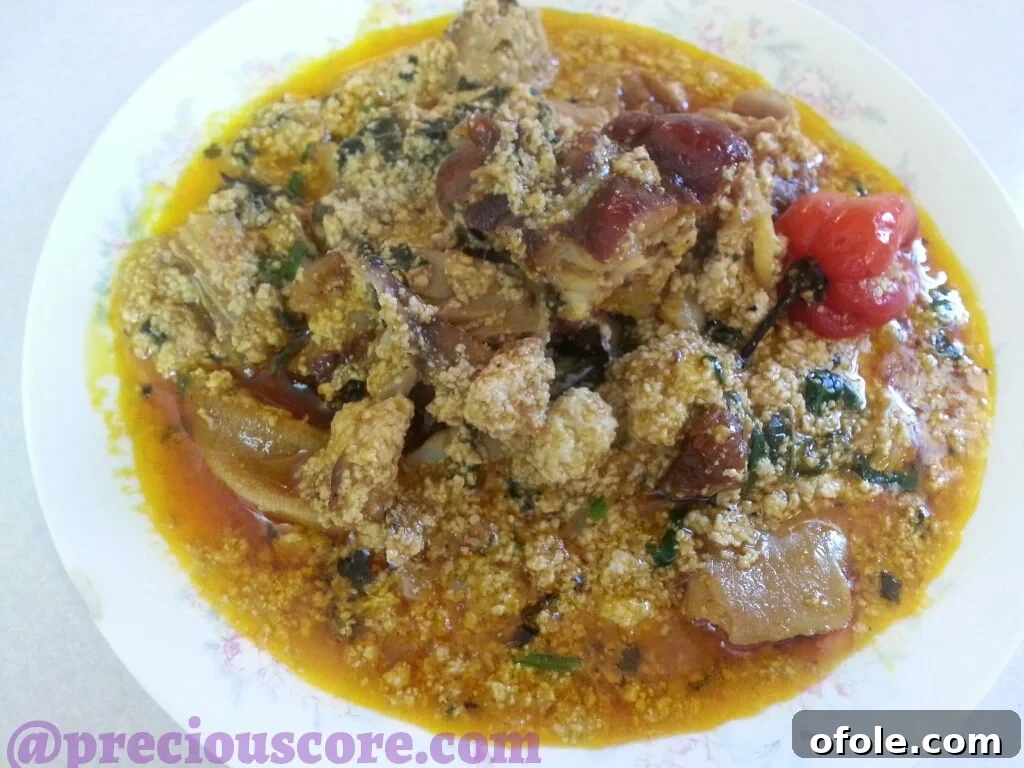
Ogbono Soup: A Culinary Journey into West Africa’s Heart
Welcome to the vibrant world of African cuisine, where flavors tell stories and meals unite families. Among the myriad of cherished dishes, Ogbono soup stands out as a true culinary gem, deeply ingrained in the hearts of many, including my own. This delightful, drawy soup evokes a spirit of jubilation and warmth in our home, a tradition lovingly passed down. My father, often the chairman of our family’s mealtime celebrations, would inevitably beam as he savored each spoonful, expertly combining it with steamed yellow pepper. Our collective affection for this soup led us to affectionately nickname it, “Soup of the Year” – a title it truly deserves for its unparalleled taste and comforting presence.
Ogbono soup isn’t just a meal; it’s an experience, a cultural staple savored across various West and Central African nations, particularly in Nigeria and Cameroon. Its unique texture and rich, earthy flavor profile make it a favorite for gatherings, celebrations, and everyday family dinners. For those new to African cuisine, preparing this soup can be a delightful adventure into the depths of traditional cooking.
Unveiling Ogbono: The Bush Mango Seed
At the heart of this iconic dish lies Ogbono, the seed of a wild species of mango, commonly known as “Bush Mango.” Scientifically termed Irvingia Gabonensis, these remarkable seeds are the cornerstone of the soup’s distinctive character and rich nutritional value. Grown predominantly in the tropical rainforests of Africa, the fruits of the bush mango tree are prized for their pulp and, most significantly, their seeds.
Once harvested, the kernels from these mango-like fruits are dried and often ground into a fine powder, which then forms the base of the beloved Ogbono soup. The magic of Ogbono lies in its mucilaginous properties; when cooked, it creates a unique, slimy, or “drawy” consistency that is highly sought after and defines the soup’s appeal. This texture, while perhaps surprising to newcomers, is what gives the soup its comforting mouthfeel and allows it to “draw” or stretch, making it perfect for pairing with various “swallow” foods.
Beyond Flavor: The Surprising Health Benefits of Ogbono
Years ago, a friend studying food science casually mentioned that Ogbono possesses weight loss properties. At the time, I didn’t give it much thought, but subsequent research revealed the astounding truth: our cherished “Soup of the Year” could actually contribute to a healthier lifestyle and aid in weight management! Indeed, the seeds of Irvingia Gabonensis are extensively studied and even used in the production of weight loss supplements – a quick search for its scientific name will confirm this fascinating fact.
The benefits extend beyond just weight loss. Ogbono seeds are a rich source of dietary fiber, which promotes satiety, aids digestion, and helps regulate blood sugar levels. They also contain healthy fats, proteins, and essential minerals, contributing to overall well-being. So, as you indulge in this yummy goodness, you’re not just enjoying a delightful meal; you’re also nourishing your body with a power-packed ingredient. This dual advantage of taste and health makes Ogbono soup an even more compelling addition to any diet.
A Taste of Perseverance: My Ogbono Market Adventure
The love for Ogbono often translates into a journey of discovery, and sometimes, a test of perseverance. I recall one memorable day in Yaounde, Cameroon’s bustling capital city, when my mother and I embarked on a mission to purchase Ogbono seeds. It was our first time buying them in an environment where French is predominantly spoken, and we were unsure of its local French name. Believing “Ogbono” was universally recognized, my mother confidently approached a trader and declared, “Je veux le Ogbono” (I want Ogbono).
The lady, however, had no clue what my mother was asking for. She, along with other sympathetic traders, began to suggest various spices and ingredients, none of which were what we sought. We sampled stall after stall, our knees growing weary from the extensive search, but our determination remained. After what felt like an eternity, we finally stumbled upon the precious seeds. That day taught me a valuable lesson: the love for Ogbono, indeed, can be the beginning of perseverance. This anecdote perfectly illustrates the cultural nuances and regional variations associated with traditional ingredients, making each culinary journey a unique story.
The Essence of Ogbono Soup: Texture, Tradition, and Variations
Ogbono soup is renowned for its uniquely slimy or “drawy” consistency, much like Okra soup. This gooey nature is precisely why many adore it, contributing to its distinct texture and ability to bind with “swallow” foods. While some variations of Ogbono soup are prepared without Egusi (ground melon seeds), I personally stick to my mother’s cherished recipe, which beautifully combines both.
This soup holds deep traditional roots, particularly among the Bayangi people in South West Cameroon, where it is a staple meal. The authentic traditional version often incorporates black pepper, locally known as “Tanchot,” lending the soup a profound ethnic flavor. Consequently, the soup is sometimes simply called “Tanchot.” Across different regions, the preparation can vary, incorporating diverse meats, fish, and leafy vegetables, each adding a unique dimension to this versatile dish. Whether you prefer it plain or with a rich assortment of proteins, Ogbono soup promises a hearty and satisfying culinary experience.
OGBONO AND EGUSI SOUP RECIPE: Your Guide to “Soup of the Year”
Ready to recreate this African masterpiece in your own kitchen? Follow this detailed recipe for a truly authentic and delicious Ogbono and Egusi soup.
Prep Time: 30 minutes
Cook Time: 40 minutes
Total Time: 70 minutes
Serves: 6-8
You’ll Need:
- 3/4 cup ground Ogbono: While pre-ground is convenient, grinding your own seeds in a blender is preferred for freshness and potency.
- 2 cups ground Egusi: (melon seeds)
- 1 cup chopped leafy greens: A blend of dried Okongobong leaves and fresh spinach was used here. Other options include bitter leaves or Ugu (fluted pumpkin leaves).
- Half cup blended crayfish: Coarsely ground for texture and flavor.
- 2 pounds assorted boiled meat/fish: Options include smoked fish, stock fish, smoked turkey, beef stripes (towel meat), goat meat, or fresh fish.
- 1 crayfish flavored seasoning cube: (e.g., Maggi Crevette) to enhance seafood notes.
- 2 small general seasoning cubes: For all-round flavor enhancement.
- Salt to taste: Adjust according to your preference and the saltiness of your meat stock.
- 1 cup palm oil: Essential for authentic color and flavor.
- 2 hot peppers: (e.g., Scotch bonnet or Habanero), finely chopped or blended, adjusted to your spice tolerance.
Now Let’s Cook Up Some “Soup of the Year”!
1. Prepare Your Greens: If using dried leaves like Okongobong, soak them in slightly warm water for about 15-20 minutes to rehydrate. My mother often used Okongobong leaves for their signature earthy flavor. While I typically prefer fresh greens, dried Okongobong offers a distinct traditional taste.
| Okongobong is often called “Ugu” in Nigeria, referring to fluted pumpkin leaves. |
2. Prepare Your Proteins: If you haven’t already, boil your assorted meats and fish until tender, seasoning them with salt and one seasoning cube. Once cooked, remove the meats and fish from the pot, reserving the rich stock. This stock will form the flavorful base of your soup.
3. Prepare the Egusi Paste: Begin by sifting or shaking your Egusi (ground melon seeds) in a colander to remove any undesirable particles, ensuring a smooth soup. Then, grind or blend your Egusi until finely powdered.
Here is the blended Egusi, ready for the next step:
Bring your pot of reserved meat stock to a gentle boil. While the stock is heating, add approximately 1/4 cup of water to your ground Egusi and mix thoroughly to form a really thick paste. This thick consistency is crucial if you desire charming Egusi chunks in your finished soup, reminiscent of Egusi Pudding. Avoid adding too much water at this stage, unless you prefer a completely smooth Egusi texture without chunks.
4. Cook the Egusi: Carefully add the thick Egusi paste in scoops to your boiling stock. Let this simmer for about five minutes. This allows the Egusi to cook through and form those desirable chunks.
5. Prepare the Ogbono: Next, prepare your ground Ogbono. My mother traditionally scatters the ground Ogbono directly into hot red palm oil. If you choose this method, ensure the oil is not excessively hot, as this can prevent the Ogbono from achieving its signature “draw.” Personally, I prefer mixing the ground Ogbono with boiling water or hot stock. Ladle some hot stock from the pot and gradually add it to the Ogbono, stirring vigorously until it forms a smooth, lump-free, slimy paste. This method helps activate its drawing properties effectively.
| The Yorubas in Nigeria often call Ogbono “Apon.” |
6. Combine Ogbono and Egusi: Gently add the prepared Ogbono paste to the boiling Egusi and stock mixture. Stir well to combine. You’ll immediately notice the soup begin to thicken and develop its characteristic drawy texture. “Soup of the year” is truly coming alive at this stage!
7. Add Flavors and Proteins: Now, incorporate your blended crayfish, hot peppers (to taste), and the remaining seasoning cubes. Remember, your meats were likely boiled with salt, so taste the soup before adding more salt. Adjust seasoning as desired.
If the soup appears too thick for your preference, gradually add a little water or more stock until you reach your desired consistency. Then, gently introduce the boiled assorted meats and fish back into the pot. Oh baby, the “fleshy things” are marrying the soup!
8. Incorporate Vegetables: Allow the meats and fish to simmer with the soup for about 2 minutes, allowing their flavors to meld beautifully. Then, add your chosen vegetables. Start with the rehydrated dried Okongobong leaves, stirring them in.
Finally, add the fresh spinach on top. Stir gently to combine.
9. Final Simmer and Serve: Let the soup simmer for just another two minutes to ensure the vegetables are cooked but still vibrant. And yahoo! Your very own, magnificent “Soup of the Year” is ready to be devoured!
Serving Your Ogbono Masterpiece
Ogbono soup is traditionally enjoyed with a variety of “swallow” foods, which are starches designed to be rolled into a ball and swallowed with the soup. One popular choice is Garri, also known as Eba. To prepare, simply boil some water and gradually mix it into cassava flour (Garri) until a firm, smooth dough is formed.
Serve your hot Ogbono soup generously alongside your Garri or other preferred swallows like Fufu, Pounded Yam, or Amala. Scoop a portion of the soup with a small ball of swallow, and savor the rich flavors and satisfying textures.
And enjoy this incredible journey into authentic African flavors!
Notes and Pro Tips:
- Black Pepper (Tanchot): While this recipe does not include it, adding a touch of black pepper, especially the traditional “Tanchot,” can infuse your soup with a deeper, more robust ethnic flavor, characteristic of some Cameroonian preparations.
- Consistency: The drawiness of Ogbono soup can vary based on the quality of the Ogbono and how it’s prepared. If your Ogbono isn’t drawing enough, ensure it’s properly ground and mixed thoroughly with hot liquid before adding to the main pot.
- Protein Variety: Feel free to experiment with different proteins. Smoked turkey, goat meat, and various types of fish can each bring a unique twist to the soup.
- Vegetable Choices: While Okongobong and spinach are recommended, other leafy greens like bitter leaf (parboiled to reduce bitterness) or waterleaf can also be used.
- Storage: Ogbono soup stores well in the refrigerator for up to 3-4 days and can be frozen for longer periods, making it an excellent meal prep option.
Thank you for joining me on this culinary exploration. I love sharing these cherished recipes with you!