
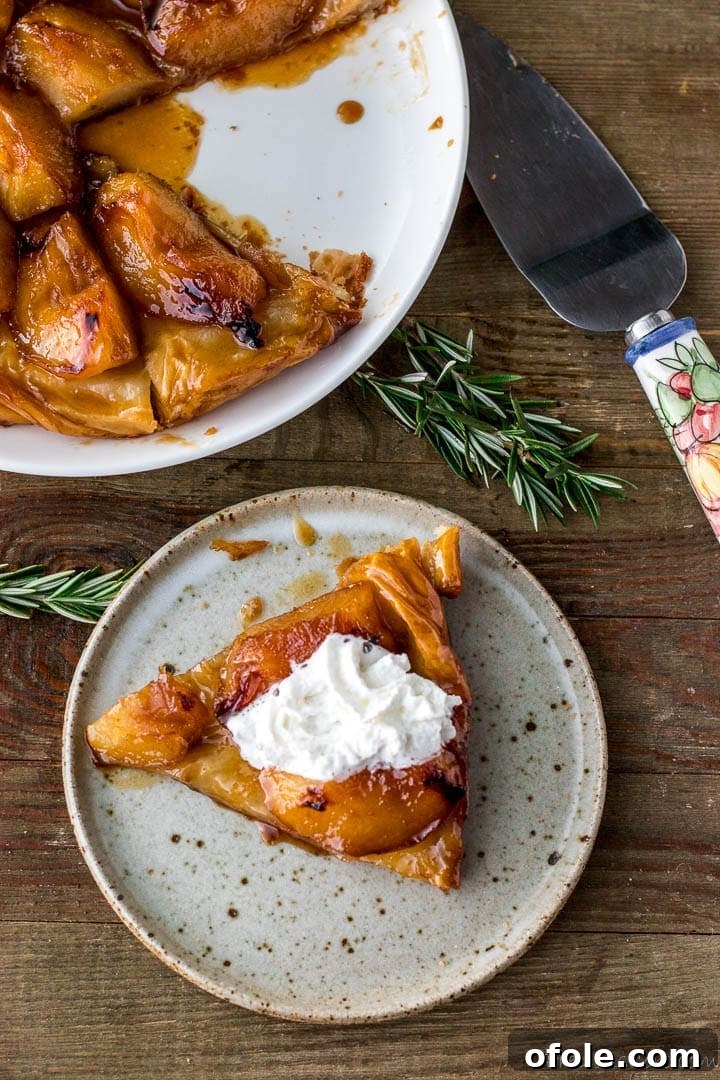
Tarte Tatin: The Ultimate Guide to Crafting This Exquisite French Caramel Apple Dessert
Imagine golden, tender caramelized apples nestled beneath a crisp, buttery puff pastry, each bite oozing with rich, bubbly caramel. This is the magic of Tarte Tatin, a classic French dessert that redefines the humble apple pie. Often described as an “upside-down apple pie,” Tarte Tatin is a culinary masterpiece that promises to impress guests and delight family, yet it’s surprisingly simple to prepare, requiring under an hour from start to finish. Get ready to elevate your dessert game with this iconic treat.
This post is sponsored by the French Ministry of Agriculture. #FranceBonAppetit
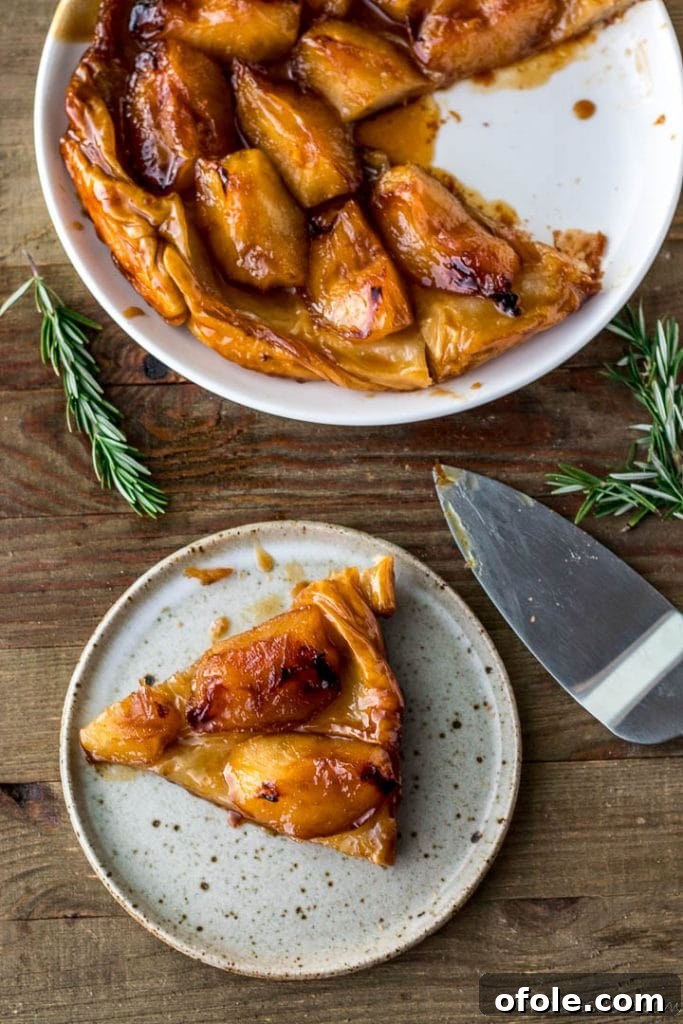
Discovering the Enchantment of Tarte Tatin
My journey with Tarte Tatin began, as many culinary adventures do, with a captivating television show. I vividly recall watching an episode of MasterChef where contestants were tasked with creating this very dessert. The sight of the beautifully arranged fruit, the glistening caramel, and its inherently elegant presentation instantly captivated me. However, the show’s narrative, emphasizing the dessert’s perceived difficulty, left me with a sense of intimidation. Were they merely employing a tactic to challenge the aspiring chefs?
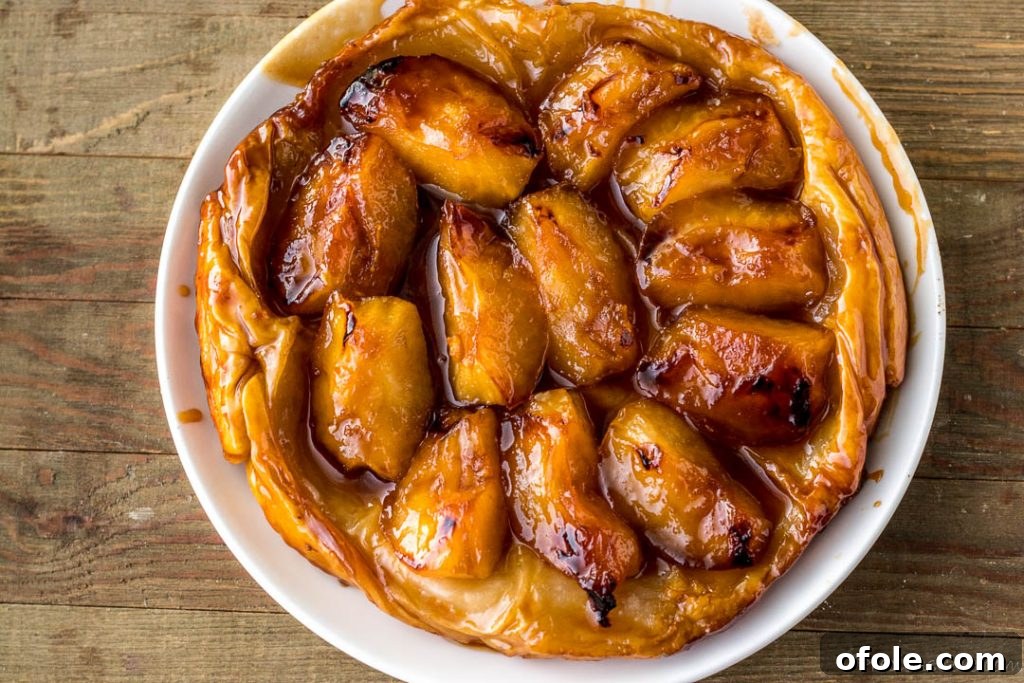
The delightful truth, which I soon discovered, is that Tarte Tatin is one of the most forgiving and straightforward desserts you can ever make. Contrary to popular belief, it doesn’t demand advanced pastry skills or an extensive list of exotic ingredients. In fact, it typically calls for just five simple components, comes together in less than an hour, and tolerates minor imperfections with grace. This exceptional blend of ease and elegance has firmly placed Tarte Tatin on my personal list of go-to desserts to prepare repeatedly, and I’m thrilled to share this beloved recipe with you.
Whether you’re celebrating a festive occasion like Christmas, New Year, Easter, or Thanksgiving, hosting a casual Sunday brunch, or simply craving a sophisticated yet comforting treat, Tarte Tatin is the perfect choice. Its impressive appearance belies its effortless preparation, making it ideal for both seasoned bakers and complete novices.
Recently, I’ve been particularly enjoying the authentic French groceries available at many local stores, including Trader Joe’s and Kroger (or Foods for Less here in California). Discovering a treasure trove of genuine French cheeses, artisan French butter, and delectable French macarons and cookies has been a true delight. The exceptional flavor profile of true French butter, in particular, has inspired me to delve deeper into classic French baking. It was with this exquisite butter that I simply had to make Tarte Tatin, a quintessential French dessert that perfectly showcases the rich, creamy notes of high-quality butter.
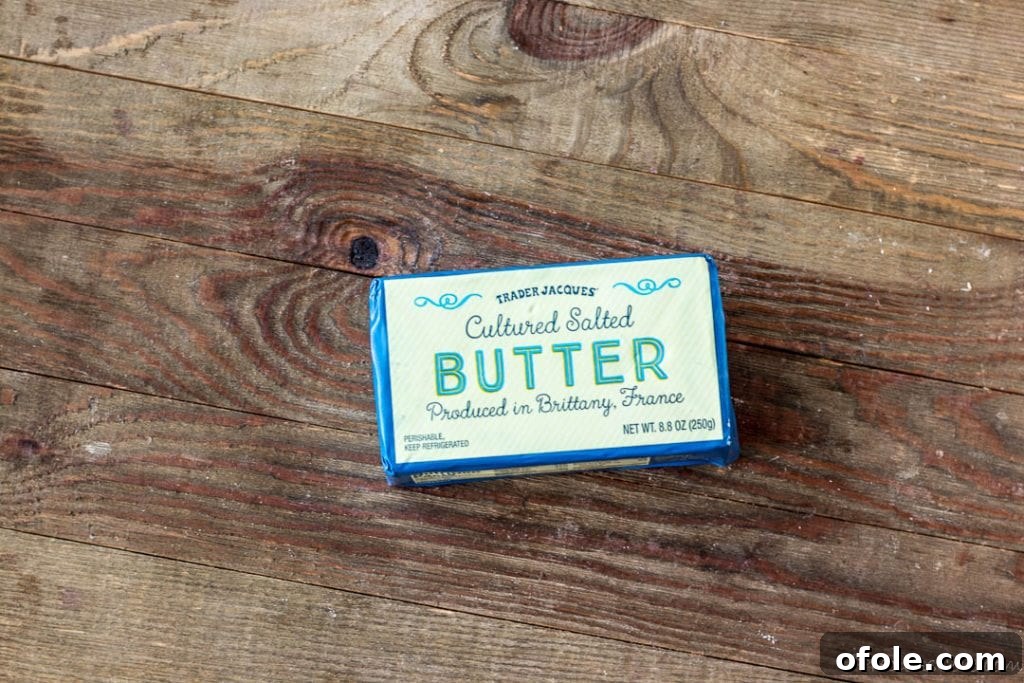
So, cast aside any intimidation you might feel when looking at its seemingly complex structure. Tarte Tatin, despite its fancy facade, is remarkably easy to create, promising a decadent reward for minimal effort.
What is Tarte Tatin? A Culinary History
Tarte Tatin is a renowned French dessert, essentially an “upside-down” tart featuring caramelized fruit (traditionally apples) baked beneath a layer of pastry. The magic happens after baking when the tart is inverted, revealing a stunning display of glossy, tender apples atop a golden, flaky crust. It’s an elegant dessert that traces its origins back to the late 19th century.
The legend attributes the invention of Tarte Tatin to the Tatin sisters, Stéphanie and Caroline, who ran a hotel and restaurant in Lamotte-Beuvron, France. As the story goes, Stéphanie Tatin, known for her absentmindedness, accidentally overcooked apples intended for a traditional apple pie. In a rush, she tried to salvage the dessert by placing a layer of pastry over the top of the caramelized apples and baking it. Upon serving, she simply inverted the pie, revealing the perfectly caramelized fruit on top. This “mistake” quickly became a signature dish, captivating diners with its unique presentation and irresistible flavor profile. While the exact details of its origin may be shrouded in legend, the resulting dessert is undeniably a masterpiece.
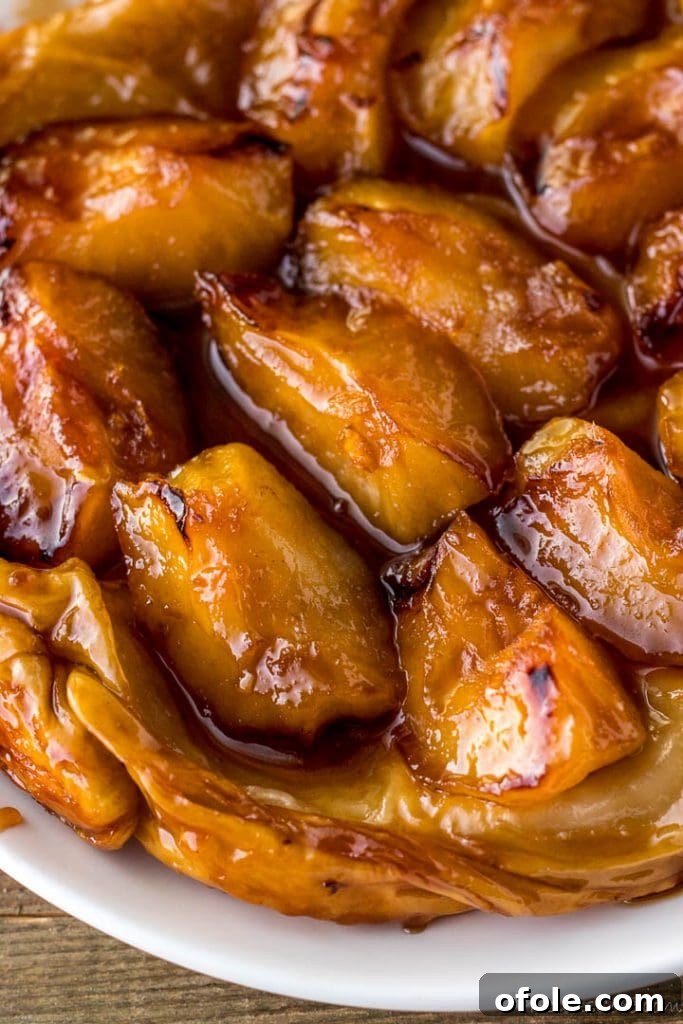
The flavor of Tarte Tatin is a harmonious blend of sweet, intensely rich caramel, beautifully balanced by a subtle tang from the apples. The edges of the pastry offer a delightful crunch, contrasting with the soft, yielding texture of the apples themselves. After baking, the apples retain their shape yet become incredibly tender, bathed in a luscious, ooey-gooey caramel sauce that is truly divine. Each bite offers a symphony of textures and tastes, making it a truly memorable dessert experience.
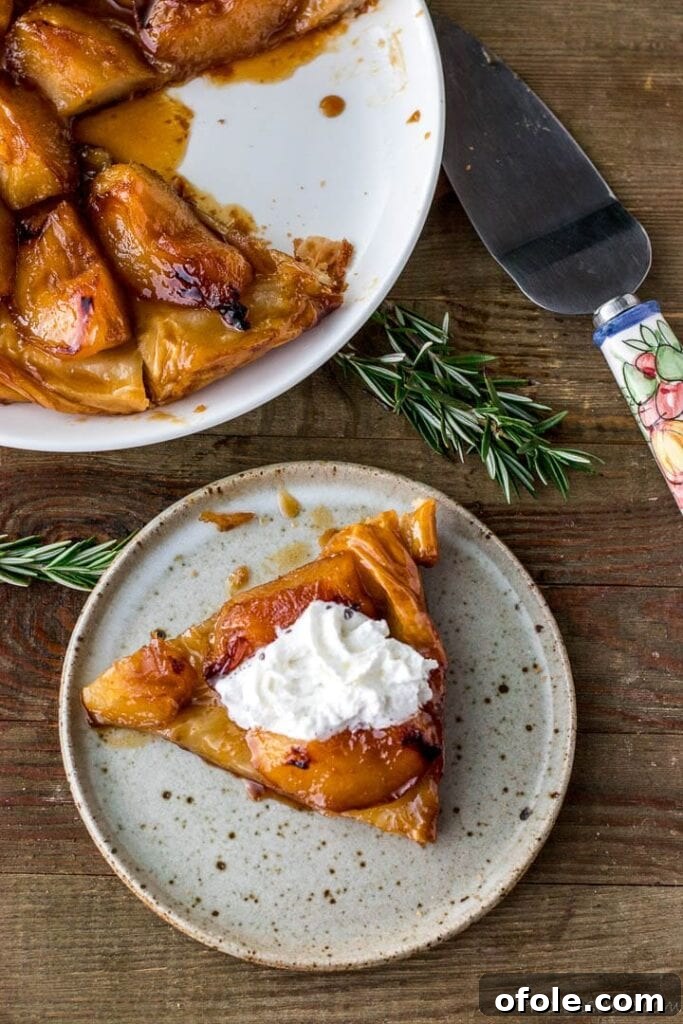
Essential Ingredients for a Perfect Tarte Tatin
Crafting an exquisite Tarte Tatin requires just five core ingredients, each playing a crucial role in achieving its signature flavor and texture. Focusing on quality ingredients will undoubtedly elevate your final product.
Butter: The Golden Foundation
Butter is more than just a fat in this recipe; it’s a key flavor component and the foundation of the caramel. I’ve become particularly fond of the imported French butter found in many grocery stores. Its rich, nuanced flavor is unmatched and can genuinely make baked goods taste exponentially better. French butter often has a higher fat content, which contributes to a creamier texture and a deeper, more complex flavor in the caramel. While French butter is highly recommended for an authentic taste, any high-quality butter (salted or unsalted) will work. If using unsalted butter, a pinch of salt can be added to the caramel to enhance its depth.
Granulated Sugar: Crafting the Irresistible Caramel
Plain granulated sugar is all you need to create the spectacular caramel base for Tarte Tatin. When heated with butter, it undergoes a transformation, caramelizing into a golden, bubbling sauce that beautifully coats and sweetens the apples. This caramel provides the iconic sticky, sweet, and slightly bitter notes that define the dessert.
Apples: The Heart of the Tart
The choice of apples is critical for a successful Tarte Tatin. You want apples that hold their shape well during baking and offer a good balance of sweetness and tartness. My personal favorites are Pink Lady and Honeycrisp apples. They maintain their firm texture and provide just enough acidity to cut through the richness of the caramel. Other excellent choices include Granny Smith (if you prefer a more tart flavor), Braeburn, Fuji, or Gala. Avoid apples that become too mushy when cooked, as they won’t hold up in the tart.
Vanilla Extract: A Hint of Aromatic Warmth
A generous splash of good quality vanilla extract adds a layer of warm, aromatic complexity to the caramel and apples. It’s a subtle yet essential flavor enhancer. Don’t be shy with it! For an even more profound flavor, consider using vanilla bean paste or even a whole vanilla bean, split and placed with the apples during cooking.
Puff Pastry: The Flaky Crown
There’s absolutely no need to make puff pastry from scratch for this recipe. High-quality store-bought puff pastry is widely available in the frozen section of most grocery stores and yields fantastic results. Puff pastry, also known as pâte feuilletée, is a light, airy, and flaky pastry made from laminated dough—layers of butter and dough repeatedly folded and rolled. You’ll typically only need one sheet for a single Tarte Tatin. Brands like Trader Joe’s often offer puff pastry with minimal ingredients, providing a cleaner flavor. Ensure your puff pastry is thawed according to package directions before use.
Step-by-Step Guide: How to Bake an Authentic Tarte Tatin
Follow these simple steps to create your own show-stopping Tarte Tatin:
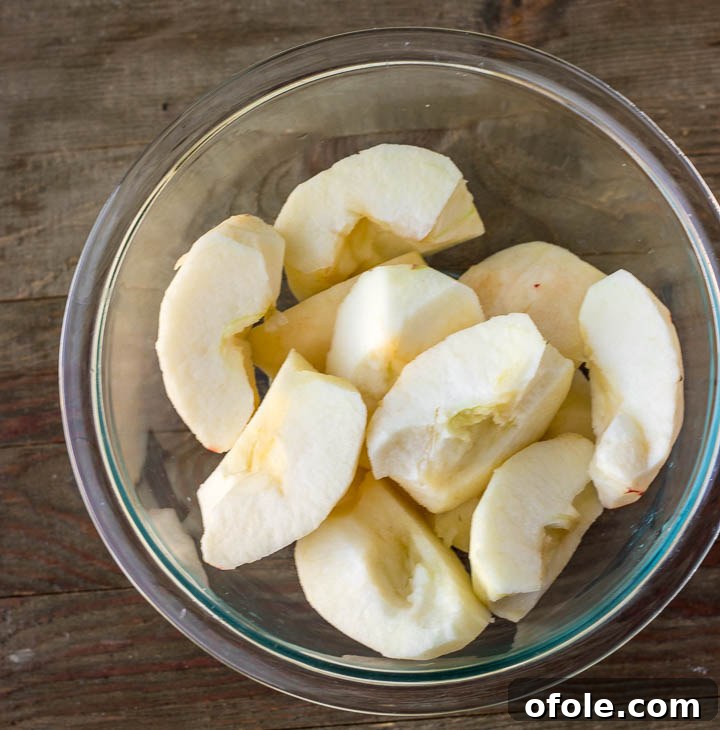
1. Prepare Your Apples: Begin by peeling and coring your chosen apples. The way you cut them depends on their size: cut large apples into quarters, medium apples into thirds, and very small apples into halves. The goal is to have substantial pieces that will create an impressive pattern when inverted.
2. Create the Caramel Base: In a cast-iron skillet (or another oven-safe skillet), combine the butter and granulated sugar.
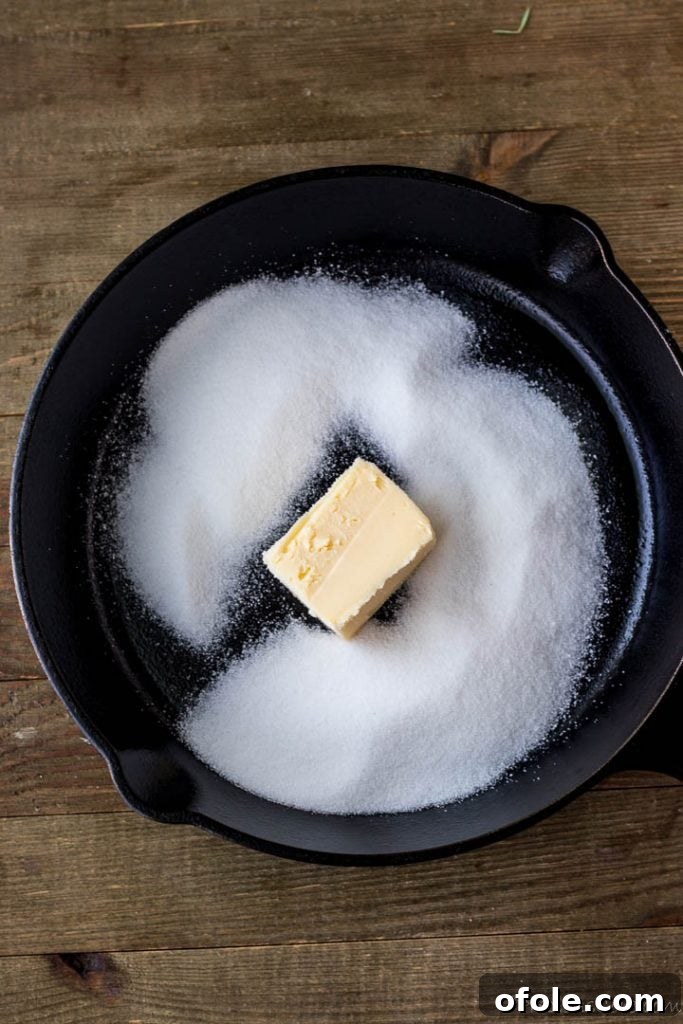
3. Melt and Combine: Place the skillet over medium heat. Stir continuously until the butter melts and combines thoroughly with the sugar, forming a syrupy mixture.
4. Arrange the Apples: Carefully arrange the apple slices in an attractive pattern over the melted butter and sugar in the skillet. You can place them tightly packed in concentric circles or in an overlapping design.
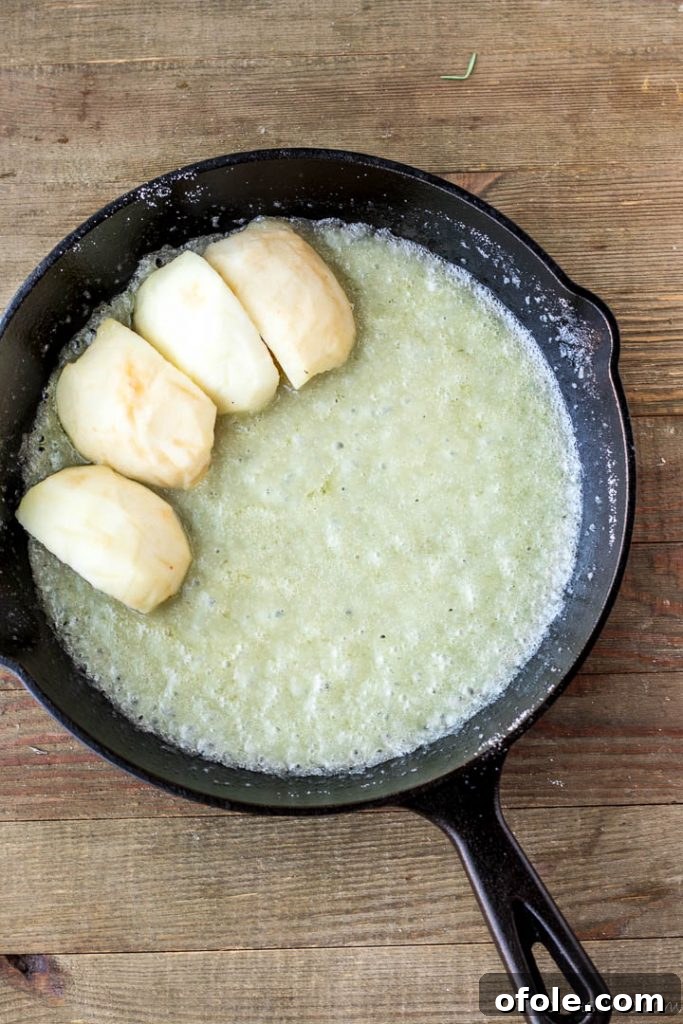
5. Caramelize on the Stovetop: Return the skillet to medium heat and allow the apples to cook. The sugar and butter will transform into a beautiful, amber caramel, coating the apples. This usually takes about 10 minutes. Watch closely to prevent burning.
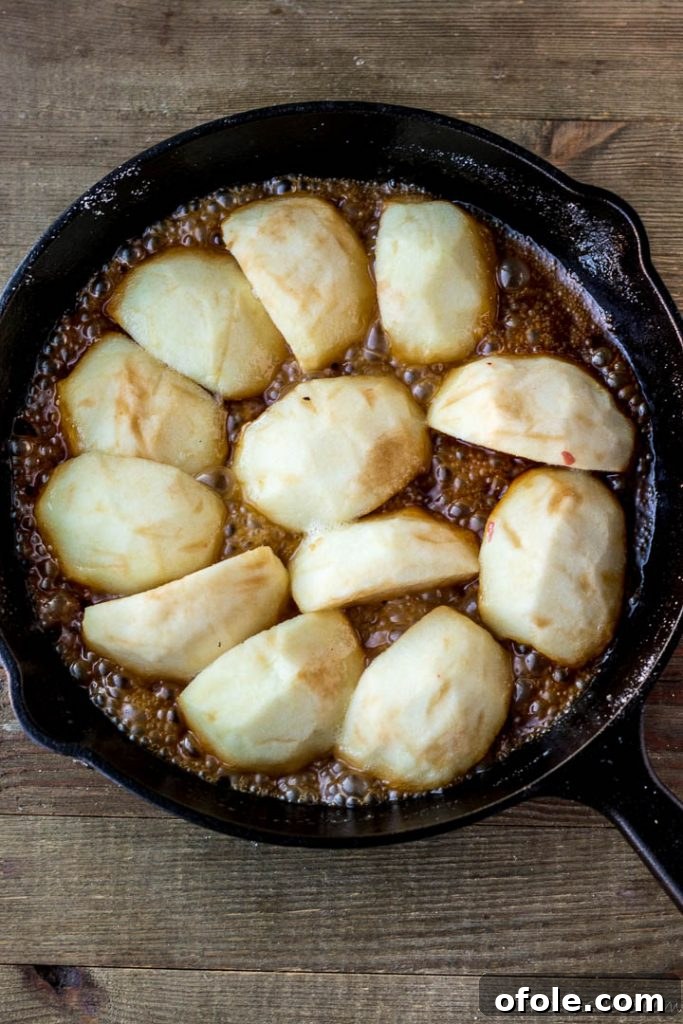
6. Add Vanilla: Once the caramel has formed, immediately remove the skillet from the heat. Drizzle a generous amount of vanilla extract over the apples. Important: Do not add vanilla extract while the skillet is still on the fire, as the alcohol in the extract can flare up.
7. Prepare the Puff Pastry: Lightly flour a clean work surface. Unroll your thawed puff pastry sheet and gently roll it out a bit further, ensuring it’s wide enough to completely cover the apples in your skillet, with a slight overhang.
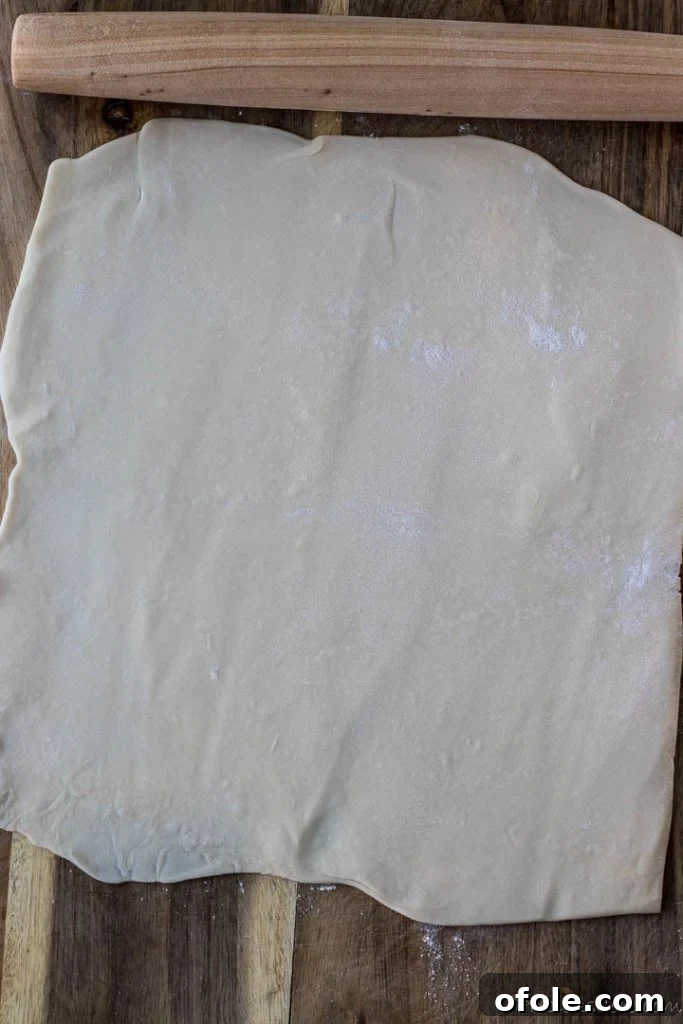
8. Cover the Apples: Carefully transfer the puff pastry over the apples. A helpful trick is to roll the pastry sheet loosely around your rolling pin, then unroll it directly over the skillet. Gently tuck the edges of the pastry down around the apples and into the sides of the skillet. This will create a sealed crust that holds everything together.
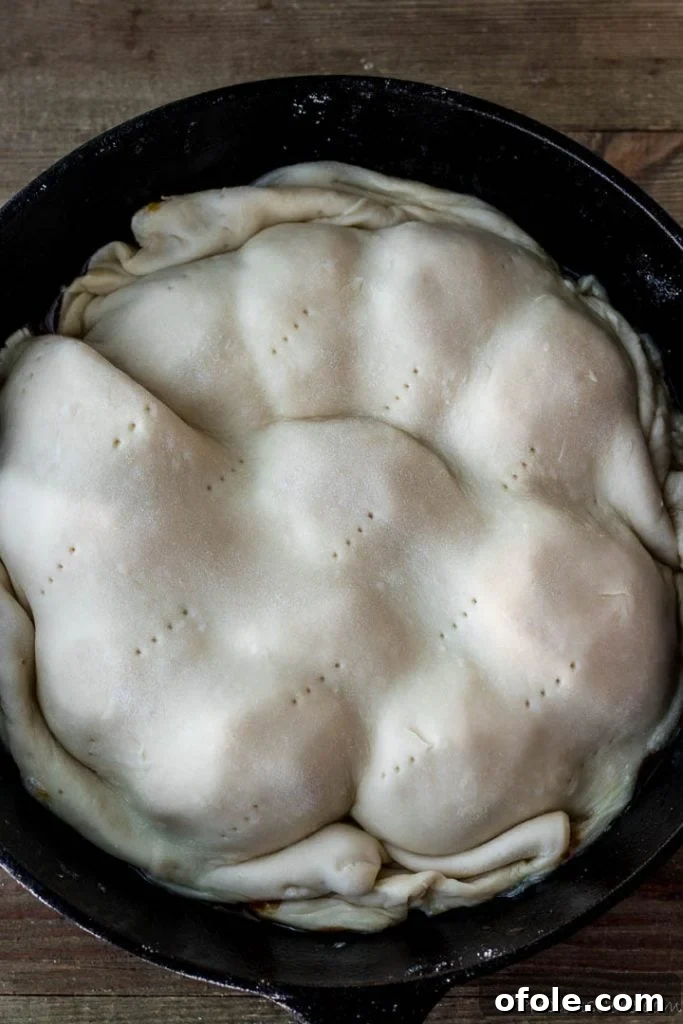
9. Bake to Golden Perfection: Place the skillet in a preheated 400°F (200°C) oven. Bake for approximately 15 minutes, or until the puff pastry is beautifully golden brown and puffed up.
10. Rest and Invert: Once baked, carefully remove the skillet from the oven. Let it rest for about 5 minutes. This crucial resting period allows the caramel to cool slightly and solidify just enough to prevent the apples from sticking, making the inversion process much smoother. To flip, place a large serving plate (larger than your skillet) upside down over the skillet. Using oven mitts, firmly grasp both the skillet and the plate, then swiftly and confidently flip them over together. The Tarte Tatin should release onto the plate, revealing the glorious caramelized apples on top.
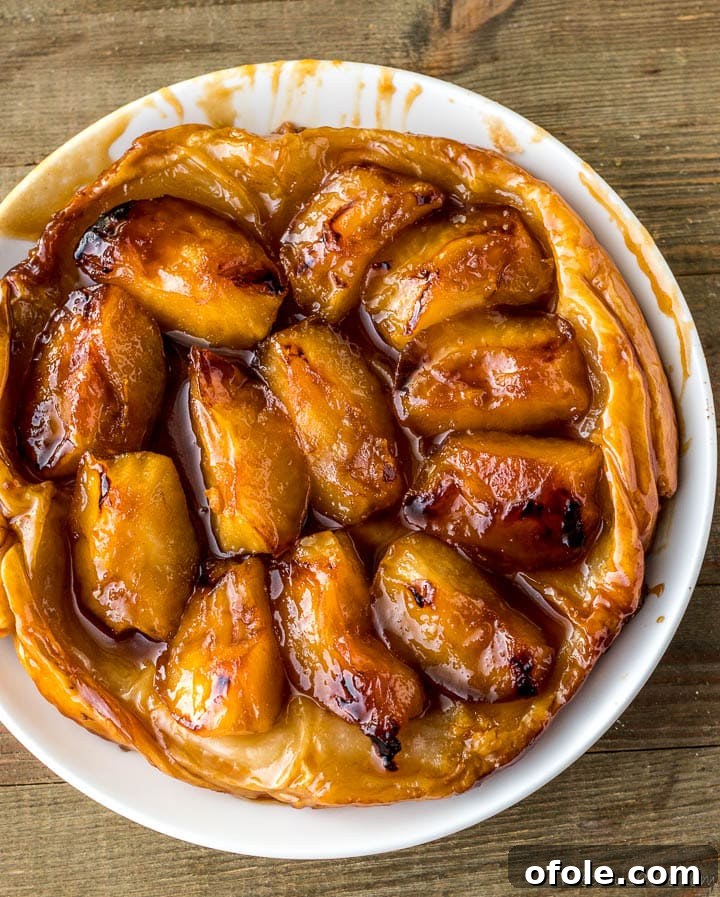
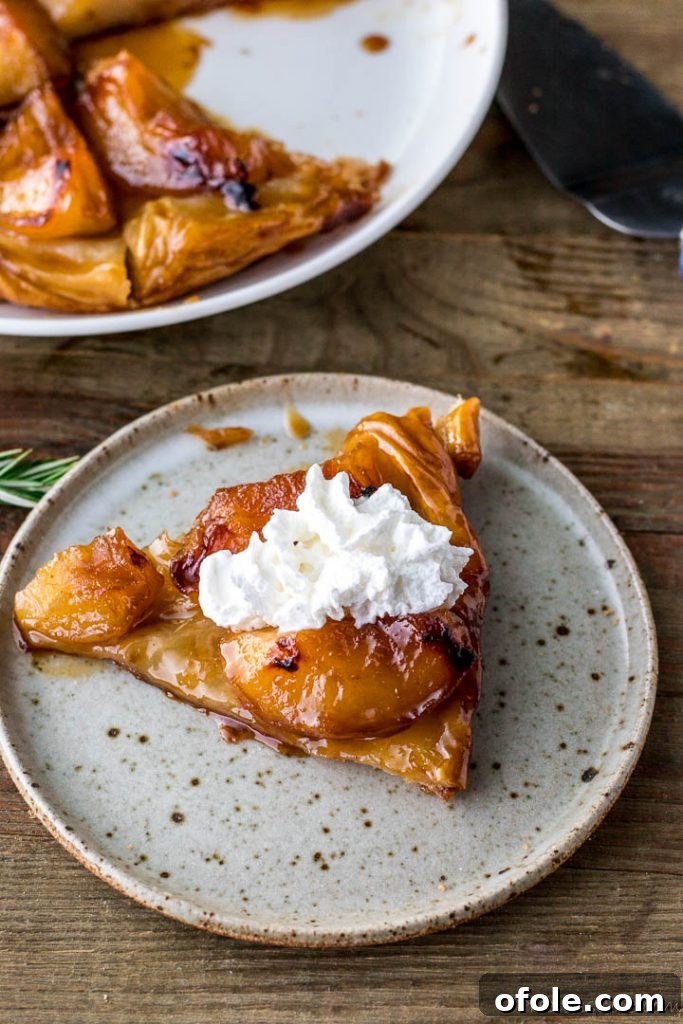
11. Final Touches and Serve: If any apple slices have shifted during the flip, gently arrange them back into place. Slice the Tarte Tatin and serve warm. It’s wonderful on its own, but truly exceptional when topped with a dollop of whipped cream or a scoop of vanilla ice cream.
As you can see, mastering Tarte Tatin is incredibly straightforward, resulting in a dessert that tastes and looks like it took hours of intricate work!
Mastering Your Tarte Tatin: Expert Tips for Success
While Tarte Tatin is forgiving, a few expert tips can ensure your dessert turns out perfect every time:
- Skillet Alternatives: If a cast-iron skillet isn’t available, an oven-safe skillet of a similar size can work. Be mindful that cooking times might vary slightly, so keep a close eye on it. Alternatively, you can prepare the caramelized apples in a regular skillet on the stovetop, then transfer them to a 9-inch round baking dish before topping with puff pastry and baking.
- Flavor Enhancements: To add more depth, try these aromatic additions:
- Place a cinnamon stick or a few star anise pods among the apples before covering with puff pastry. These will infuse a beautiful fragrance as the tart bakes.
- For an intense vanilla flavor, split open a vanilla bean and scrape the seeds into the butter and sugar, then place the pod with the apples before adding the pastry. If using a vanilla bean, you can omit the vanilla extract.
These subtle additions will release their flavors during baking, making your Tarte Tatin even more complex and delicious.
- Butter Choice: Both salted and unsalted butter work well. However, if using unsalted butter, adding a small pinch of salt (about 1/8 teaspoon) to the butter and sugar mixture significantly enhances the caramel’s flavor, making it richer and more balanced.
- Vanilla Extract Safety: Remember to always remove the skillet from the heat before adding vanilla extract. The alcohol content in most extracts can ignite if exposed to an open flame, posing a safety risk.
- Don’t Rush the Rest: Allowing the tart to rest for 5 minutes after baking is crucial. This brief cooling period allows the hot caramel to set slightly, ensuring a clean flip and preventing the apples from separating or making a mess.
Beyond Apples: Creative Tarte Tatin Variations
While apples are the traditional choice, the Tarte Tatin method is wonderfully versatile and can be adapted to various other fruits. Experiment with seasonal produce to create unique and equally delicious variations:
- Pears: Firm pears like Bosc or Anjou work beautifully, offering a slightly different sweetness and texture.
- Peaches: When in season, ripe peaches create a wonderfully juicy and aromatic tart. Be gentle when handling them as they soften quickly.
- Plums: Plums, especially slightly tart varieties, provide a lovely contrast to the sweet caramel and can create a stunning color.
- Apricots: Small and delicate, apricots make for a charming and flavorful tart, particularly when a hint of almond extract is added.
For adventurous cooks, savory Tarte Tatin variations with ingredients like caramelized onions, tomatoes, or even root vegetables are also possible, offering a delightful twist on this classic technique.
Perfect Pairings: What to Serve With Tarte Tatin
Tarte Tatin is undeniably delicious on its own, a standalone dessert that needs no embellishment. However, for those looking to elevate the experience, pairing it with certain accompaniments can take it to the next level:
- Whipped Cream: A cloud of lightly sweetened whipped cream provides a cool, airy contrast to the warm, rich tart.
- Vanilla Ice Cream: A scoop of premium vanilla bean ice cream slowly melting into the warm caramel and apples is a classic and irresistible combination.
- Crème Anglaise (Custard Sauce): A silky, rich custard sauce or a creamy bread pudding sauce (which often shares a similar base of cream, egg yolks, and sugar) complements the tart beautifully, adding an extra layer of decadence.
- Crème Fraîche: For a slightly tangy, less sweet option, a dollop of crème fraîche offers a sophisticated counterpoint to the caramel’s sweetness.
Recipe: Tarte Tatin
Tarte Tatin
Caramelized Apples atop flaky pastry oozing with caramel deliciousness. Tarte Tatin is like an upside down apple pie. This French dessert is the recipe to make to impress. It can be made in under one hour!
Cook: 25 mins
Total: 45 mins
Servings: 8 servings
Ingredients
- 4 tablespoons butter
- 1/2 cup granulated sugar
- 3 large apples (or six medium ones) – Pink Lady or Honeycrisp apples recommended
- 1 tablespoon vanilla extract
- 1 sheet puff pastry, thawed
Instructions
- Preheat oven to 400 degrees F (200 degrees C).
- Peel and core apples. Cut large apples into quarters. If using medium apples, cut them into thirds.
- Place the butter and sugar in a cast iron skillet on medium heat and let the butter melt. Stir to combine the melted butter and sugar.
- Arrange the apple slices over the butter and sugar and let them cook until caramel forms at the bottom, about 10 minutes.
- Carefully remove the cast iron skillet from the heat then drizzle the tablespoon of vanilla extract over the apples.
- Roll out the puff pastry sheet to be wider so it completely covers the apples.
- Carefully carry and place the puff pastry sheet over the apples. (A tip: roll the pastry over a rolling pin then carefully unroll the sheet over the apples.) Tuck the edges of the pastry under the apples.
- Place the cast iron skillet in the preheated oven. Bake until the pastry is puffy and golden brown, about 15 minutes.
- Carefully remove the tarte tatin from the oven. Let it rest for about 5 minutes then flip it onto a plate. (To do this, place a large plate over the cast iron skillet then carefully turn the skillet over the plate.)
- Arrange any slices of apples back into place if they fall out of place after flipping.
- Slice and serve. You can serve slices of Tarte Tatin topped with whipped cream or ice cream if you like.
Notes
- If you do not have a cast iron skillet, try these other ideas:
a. You could use another kind of oven safe skillet. With this method, cooking times may vary so watch the skillet closely.
b. Cook the caramelized apples in a regular skillet then transfer to a nine-inch round baking dish. Top with the puff pastry, tuck in the edges and bake.
- For more flavor, try these ideas:
a. Place a cinnamon stick on the apples before adding the puff pastry.
b. Split open a vanilla bean and place on the apples before covering with a Puff Pastry. (If you choose to use a vanilla bean, no need to use vanilla extract).
c. Place a couple of anise seeds on top of the apples before adding the puff pastry.
If you add any of these options, they will release their flavor into the Tarte Tatin as it bakes and make it taste even better.
- Salted or unsalted butter works well in this recipe. However, if you use unsalted butter, add a pinch of salt to the butter and sugar. A pinch of salt will make caramel taste even better.
- DO NOT add the vanilla extract while the apples are still on the fire. This might flare up since most vanilla extracts contain alcohol. Add the vanilla AFTER you remove the skillet from the fire.
Nutrition
|
Carbohydrates: 36g
|
Protein: 2g
|
Fat: 18g
|
Saturated Fat: 7g
|
Polyunsaturated Fat: 2g
|
Monounsaturated Fat: 8g
|
Trans Fat: 0.2g
|
Cholesterol: 15mg
|
Sodium: 122mg
|
Potassium: 96mg
|
Fiber: 2g
|
Sugar: 20g
|
Vitamin A: 212IU
|
Vitamin C: 3mg
|
Calcium: 9mg
|
Iron: 1mg
Additional Info
Cuisine: French
Calories: 307
Embrace French Flavors in Your Kitchen
There you have it – a comprehensive guide to making Tarte Tatin, a dessert that truly embodies French culinary elegance without requiring a trip to France. Its impressive presentation and delectable flavors make it perfect for entertaining, yet its simple preparation means you can enjoy it anytime you desire a special treat.
I wholeheartedly encourage you to try making this wonderful dessert. Your tastebuds will undoubtedly thank you for the experience. Don’t forget to explore your local grocery stores for authentic French ingredients, especially high-quality French butter, to bring a piece of France right into your home.
Thanks to the French Ministry of Agriculture for sponsoring this post!
Tried this recipe? Mention @preciouscore or tag #PreciousCore!